French Fries - Guide For The Home Cook
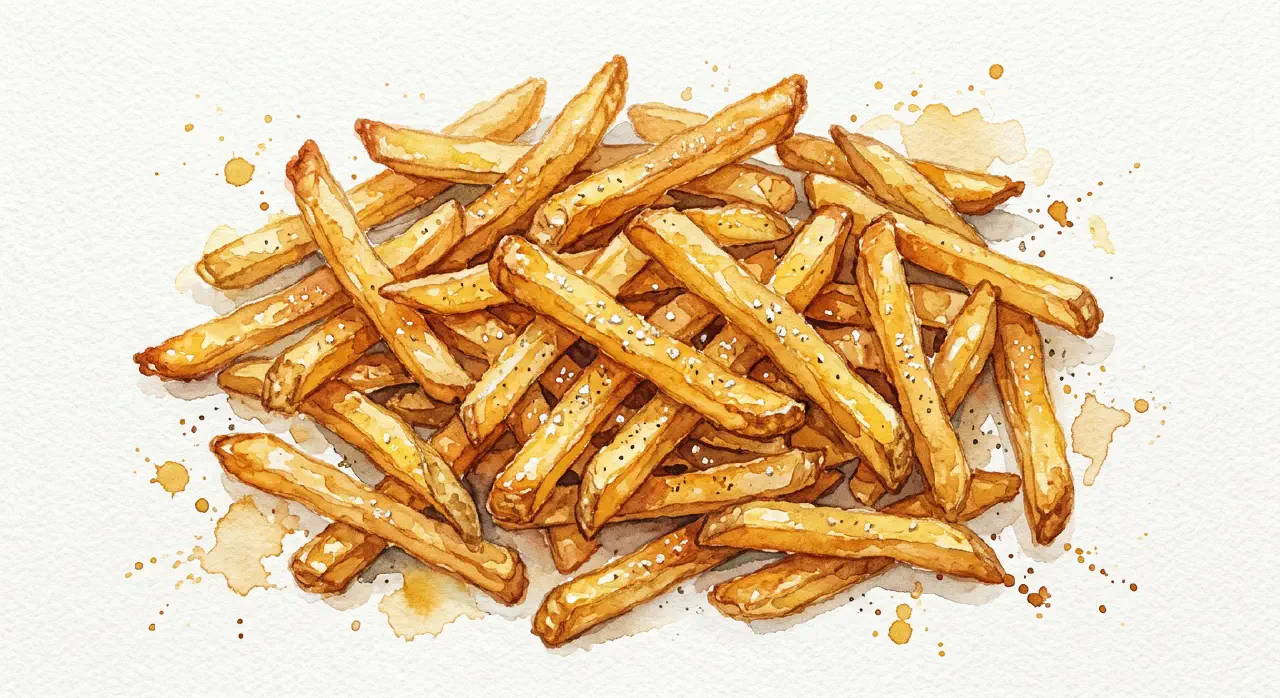
French Fries © kvalifood.com
The difference between a soggy fry and a great one comes down to four variables: the right potato, dry surface, correct oil temperature, and two frying stages. None of it is complicated, but all of it matters.
The Potato
Use a high-starch, floury variety. In practice:
- North America: Russet Burbank
- UK: Maris Piper
- Europe/Australia: Agria or Bintje
Avoid waxy potatoes (new potatoes, fingerlings, Charlotte) - they fry dense and greasy.
Do not store raw potatoes in the fridge before frying. Cold storage converts starch to sugar, causing premature browning and increasing acrylamide.
The Method
1. Cut
Uniform sticks, 10-13 mm square for Belgian-style; 6-8 mm for thinner fries. Inconsistent cuts mean some are raw while others overcook.
2. Soak
Submerge the cut strips in cold water for at least 30 minutes, ideally 1-2 hours. This removes surface starch and reducing sugars - both cause the exterior to blacken before the interior cooks. The water will go cloudy; that’s the point.
3. Dry
Drain and dry thoroughly - towel, salad spinner, or spread on a rack. Wet potato hitting hot oil splatters, drops the oil temperature, and produces steam instead of crust.
4. First fry - cook the interior
Oil at 140-160°C. Fry in batches for 5-8 minutes until cooked through but pale. Do not crowd the pan. The fries should be soft and have no color - this is correct.
5. Rest
Drain on a wire rack for at least 5 minutes. The surface dries further as steam escapes. This step can be done hours ahead or overnight in the fridge.
6. Second fry - build the crust
Oil at 180-190°C. Fry for 2-3 minutes until deep golden. The Maillard reaction needs a dry surface and high heat - both are now in place.
7. Salt immediately
Salt the moment the fries come out of the oil, while the surface is still wet. The hot oil film holds the salt. Salting raw potato draws out moisture and ruins the drying step.
Oil
| Oil | Notes |
|---|---|
| Beef tallow | Best flavor; stable at high heat; the traditional Belgian and pre-1990 McDonald’s choice |
| Refined peanut oil | Excellent neutral option; high smoke point |
| Lard | Good stability and flavor; similar to tallow |
| Refined sunflower or canola | Decent neutral options; degrade faster with reuse |
Avoid unrefined or extra-virgin oils - they smoke at frying temperatures.
Troubleshooting
| Problem | Cause | Fix |
|---|---|---|
| Soggy, no crust | Surface moisture; oil too cool; skipped rest | Dry more thoroughly; check oil temp; rest between fries |
| Black outside, raw inside | Too much sugar on surface; oil too hot | Soak longer; lower first-fry temperature |
| Greasy | Oil too cool; not drained properly | Maintain temperature; drain on wire rack, not paper |
| Sticks together in the pan | Overcrowded; wet surface | Smaller batches; dry more thoroughly |
See Also
- French Fries - Definitive Guide - full reference with history, regional varieties, flavor chemistry, and nutrition