Steak - Home Cook Guide
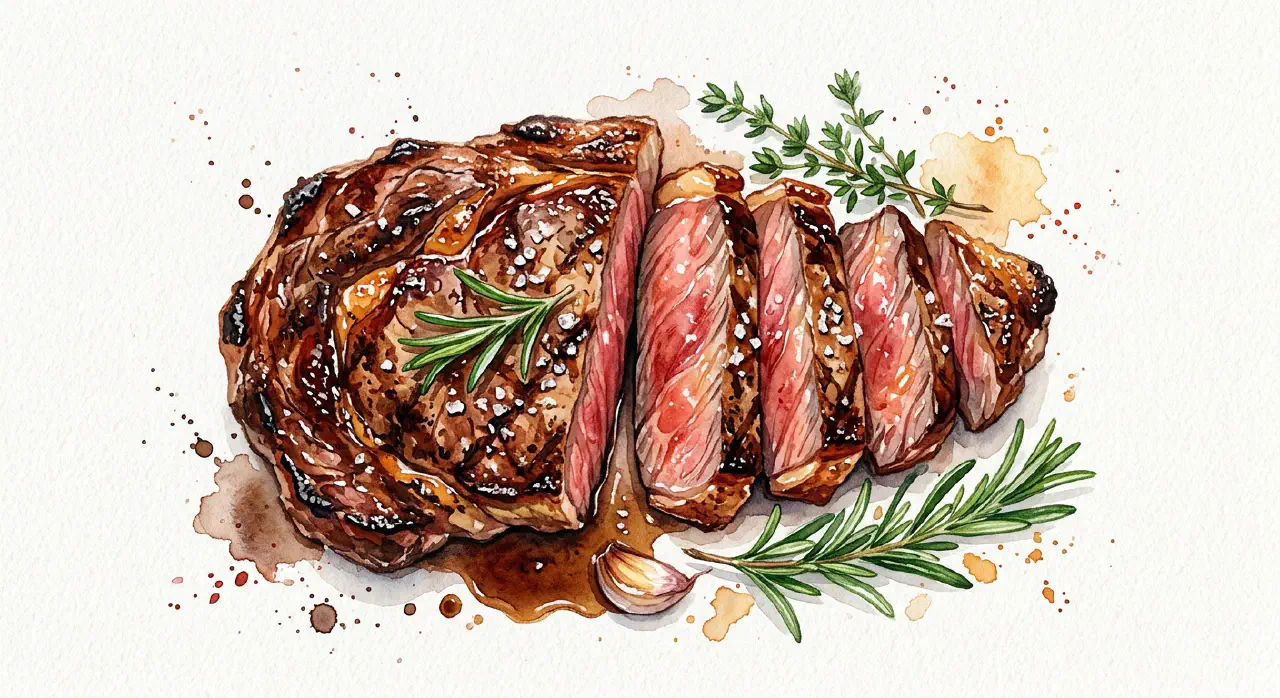
Steak © kvalifood.com
A good steak at home is achievable with any decent pan, a thermometer, and four rules: dry the surface, use high heat, pull early, and rest. Everything else is refinement. This guide covers the three methods realistically available to most home cooks, the cuts worth buying, and the handful of details that separate a great result from a mediocre one.
The Four Rules
- Pat the steak completely dry before it hits the pan. Moisture on the surface steams instead of browning - this is the most common home cook mistake.
- Use a hot pan. Not warm. Not medium. Ripping hot. Preheat cast iron for at least 5 minutes on high before the steak goes in.
- Pull 5-10 °F before your target. The steak keeps cooking after it leaves the heat. Pull at 120-125 °F (49-52 °C) for medium-rare.
- Rest 5 minutes minimum. Cutting immediately loses most of the juice onto the board.
Doneness Temperatures
| Doneness | Pull from heat | After resting |
|---|---|---|
| Rare | 115-118 °F (46-48 °C) | 125 °F (52 °C) |
| Medium-rare | 120-125 °F (49-52 °C) | 130-135 °F (54-57 °C) |
| Medium | 130-135 °F (54-57 °C) | 140-145 °F (60-63 °C) |
| Well-done | 150 °F+ (65 °C+) | 160 °F+ (71 °C+) |
Medium-rare is the target for almost every premium cut. Fat renders, proteins are just set, and the steak retains maximum moisture. Above 160 °F (71 °C), the proteins squeeze out their moisture irreversibly and the result is dry.
A probe thermometer is not optional equipment - it is the only reliable way to hit the target.
Method 1 - Pan-Sear (Everyday)
Best for steaks under 1.5 inches thick. Fast, simple, no outdoor setup required.
- Salt the steak at least 45 minutes before cooking, or up to overnight in the fridge uncovered. Pat completely dry before cooking.
- Preheat a cast iron pan over medium heat for 3 minutes, then crank to high for 2 minutes.
- Add a high-smoke-point oil (refined avocado, grapeseed). When it just begins to smoke, add the steak.
- Sear 2-3 minutes per side without moving it. Flip once when the steak releases cleanly.
- In the last minute: add 2 tablespoons butter, 2 garlic cloves, a sprig of thyme. Tilt the pan and spoon the foaming butter over the steak continuously for 60-90 seconds.
- Pull at the target temperature. Rest on a wire rack for 5 minutes.
Best cuts: Ribeye, New York strip, flat iron.
Method 2 - Reverse Sear (Thick Steaks)
Best for steaks 1.5 inches or thicker. Takes longer but produces edge-to-edge even doneness impossible with pan-searing alone.
- Season and place the steak on a wire rack over a sheet pan. Refrigerate uncovered overnight if possible.
- Place in a 250-275 °F (120-135 °C) oven until the internal temperature reaches 115-120 °F (46-49 °C) - about 25-40 minutes depending on thickness.
- Remove from the oven and rest 5 minutes at room temperature. The surface will dry out further, which improves the sear.
- Sear in a screaming-hot cast iron pan with oil, 60-90 seconds per side. Baste with butter.
- No additional rest needed - serve immediately.
Best cuts: Thick ribeye, cowboy steak, filet mignon, New York strip over 1.5 inches.
The reverse sear’s main advantage: the final sear only needs to build crust, not cook the interior. This gives a deep, even brown crust without the grey overcooked band that pan-searing thick steaks often produces.
Method 3 - Charcoal Grill (Flavor)
Best when flavor is the priority. Charcoal produces smoke compounds that gas and stovetop cannot replicate.
- Build a two-zone fire: coals on one side, nothing on the other.
- Sear over direct heat, 2-3 minutes per side, for grill marks and crust.
- Move to the indirect side to bring the interior to temperature without burning.
- Rest.
For thin steaks (under 1 inch), direct heat only is fine. For anything thicker, use the two-zone setup.
Best cuts: Ribeye, New York strip, skirt steak, hanger steak.
Cuts Worth Buying
| Cut | Fat level | Best method | Notes |
|---|---|---|---|
| Ribeye | High | Pan-sear, grill, reverse sear | Most forgiving - marbling protects against overcooking |
| New York strip | Medium | Pan-sear, grill | Boldest beef flavor; slightly leaner than ribeye |
| Filet mignon | Very low | Pan-sear, reverse sear | Most tender; needs butter basting to compensate for lack of fat |
| Flat iron | Medium | Pan-sear | Excellent value; nearly as tender as filet |
| Skirt / flank | Low | Hot grill | Must be sliced thinly across the grain; serve no more than medium |
Buy the thickest steak available - 1.5 inches is better than 1 inch. Thin steaks overcook before the exterior browns. If your butcher’s counter shows thin-cut steaks, ask if they can cut thicker.
Salt and Seasoning
- Salt at least 45 minutes before cooking, ideally overnight in the fridge uncovered.
- Use kosher salt - it sticks to the surface and distributes evenly.
- Black pepper goes on just before cooking - pepper in contact with a hot pan for too long turns bitter.
- Nothing else is needed. A good steak needs no marinade or rub.
Equipment Essentials
| Item | Notes |
|---|---|
| Cast iron pan | Essential for stovetop methods - holds heat when the cold steak lands |
| Instant-read thermometer | The only reliable guide to doneness |
| Wire rack + sheet pan | Needed for reverse sear; also useful for resting |
| Tongs | Never pierce the steak with a fork - use tongs |
See Also
- Steak - Cooking Methods Guide - full encyclopedic guide covering all methods in depth