Massaman Curry with Lamb Shoulder (Gaeng Massaman Gae)
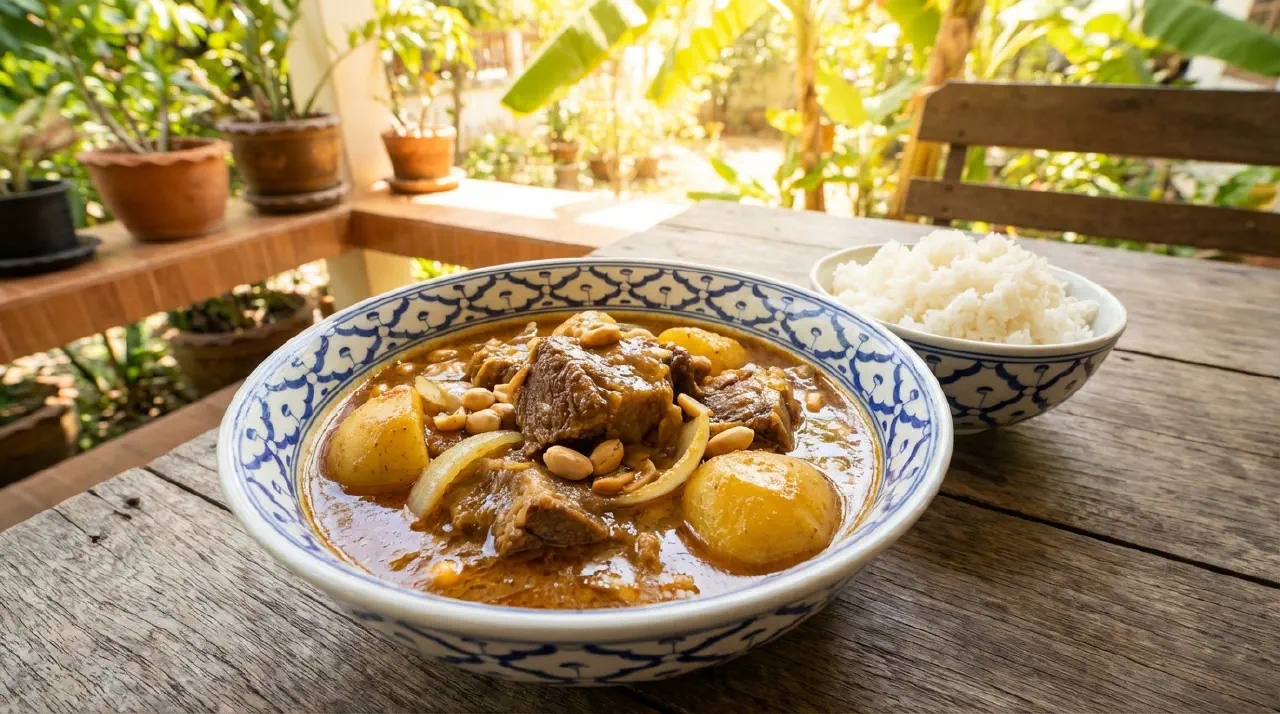
Massaman Curry with Lamb Shoulder (Gaeng Massaman Gae) © kvalifood.com
A rich, stewy Thai curry that is less soupy and less fiery than most Thai curries. The lamb is braised until fork-tender, then combined with a coconut-based curry sauce, potatoes, onions, and peanuts. Massaman has roots in southern Thai Muslim cuisine.
Ingredients
Serves 4
Curry
- 700 g lamb shoulder, cut into 5 cm cubes
- 6 dl coconut milk
- 1 recipe massaman curry paste (below), (or 5-6 Tbsp store-bought)
- 1 tsp salt
- Water, as needed
- 3 Tbsp palm sugar, finely chopped, packed
- 1-2 Tbsp fish sauce
- 1-2 Tbsp tamarind juice
- 1 bay leaf
- 1 large potato (or sweet potato), cut into large chunks
- 2 ¼ dl onion, cut into 1 ½ cm-wide strips
- 60 ml roasted peanuts, plus extra, for garnish
- Jasmine rice (or rice vermicelli), for serving
Massaman Curry Paste
- 1 tsp coriander seeds
- 1 tsp cumin seeds
- 1/4 tsp white peppercorns
- 10 large dried chilies, seeded
- 1 tsp salt
- 3 Tbsp lemongrass, thinly sliced
- 2 Tbsp galangal, finely chopped
- 2 tsp cilantro roots, finely chopped
- 3/4 tsp ground cinnamon
- 1/4 tsp ground cloves
- 1/8 tsp ground nutmeg
- 1/4 tsp ground cardamom
- 60 ml shallots, finely chopped
- 2 Tbsp garlic, finely chopped
- 1 tsp shrimp paste (gapi)
Directions
Make the Curry Paste
Toast the coriander seeds in a dry pan over medium-high heat, stirring constantly, until aromatic and slightly darkened, about 4 minutes. Cool on a plate. Repeat with the cumin seeds.
Grind the toasted coriander, toasted cumin, and white peppercorns into a fine powder. Set aside.
Grind the dried chilies into a powder using a spice grinder, or soak them in water for at least an hour to soften.
If using dry, ground chilies: In a mortar and pestle, pound the salt, lemongrass, galangal, and cilantro roots into a fine paste. Add the ground chilies and all the ground spices. Pound to combine. Add the shallots and garlic and pound into a fine paste. Add the shrimp paste and pound to mix.
If using soaked chilies: Drain and pat dry. Cut into small pieces. Pound the chilies and salt in a mortar and pestle into a rough paste. Add the ground spices to absorb the liquid and keep pounding into a fine paste. Add the lemongrass, galangal, and cilantro roots and pound to a fine paste. Add the shallots and garlic and pound to a fine paste. Add the shrimp paste and pound to mix.
Make the Curry
Place the lamb in a pot with 1/2 cup of the coconut milk, 1 Tbsp of the curry paste, and the salt. Add enough water to cover the lamb. Bring to a simmer and braise, loosely covered, for 1 1/2 hours or until fork-tender. Add more water as needed to keep the lamb submerged. Remove the lamb with a slotted spoon and set aside. Reserve the cooking liquid.
In a separate pot, reduce 3/4 cup of the coconut milk over medium heat until very thick and the clear coconut oil starts to separate from the white portion, 10-15 minutes. If the separation does not happen, just proceed after reducing until thick.
Add the remaining curry paste to the reduced coconut milk and cook over medium-low heat for 3-4 minutes, stirring constantly, until the paste is very thick. Add the remaining 1 1/4 cups coconut milk, 2 Tbsp of the palm sugar, 1 Tbsp of the fish sauce, 1 Tbsp of the tamarind juice, and the bay leaf. Stir and bring to a boil.
Add the potato, onion, cooked lamb, and enough of the reserved cooking liquid to almost cover the meat. Simmer for 15 minutes or until the potato is done. Taste and adjust seasoning with the remaining palm sugar, fish sauce, and tamarind juice.
Stir in the peanuts and remove from the heat. Serve in bowls with extra peanuts on top, alongside jasmine rice.
Notes
- Cooking the lamb separately from the curry sauce keeps the curry’s colour more vibrant.
- The curry should be strongly seasoned - rice will soften its flavour when eaten together.
- Before potatoes became widely available in Thailand, yellow-fleshed sweet potato was the classic choice. Either works well.
- Massaman traditionally uses chicken, beef, lamb, or goat - never pork, out of respect for its southern Thai Muslim origins. That said, pork shoulder works if you want to try it.
- The entire dish can be made a day ahead and reheated. The flavour improves overnight.
See Also
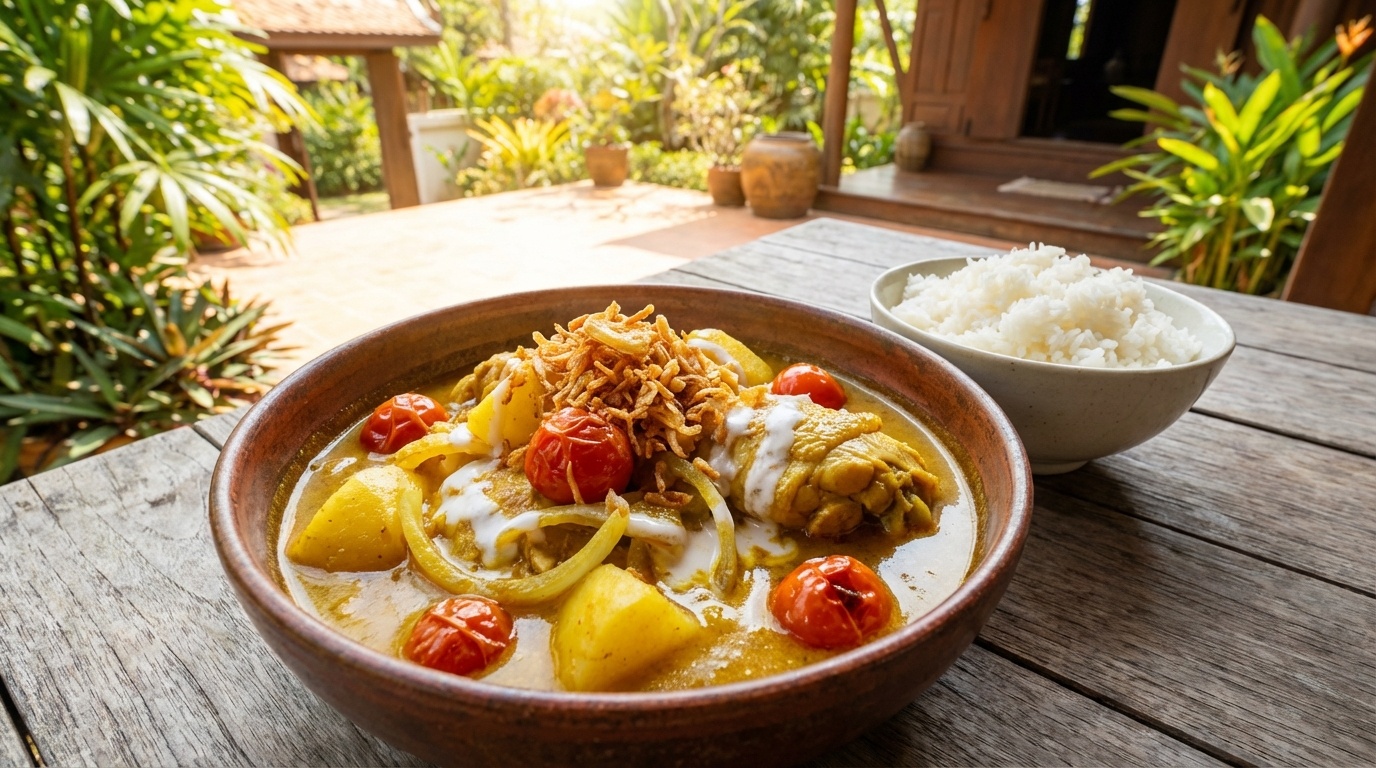
Yellow Curry with Chicken and Potato (Gaeng Garee)
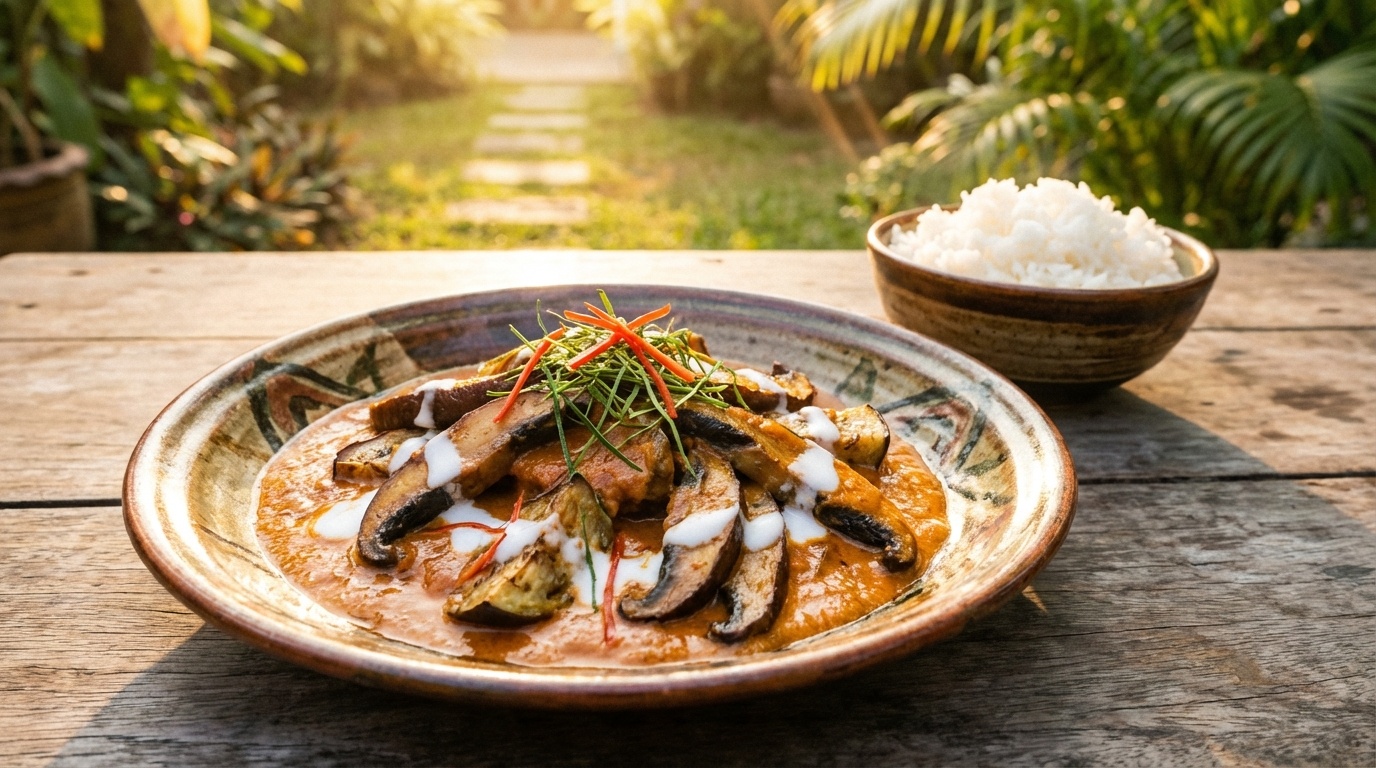
Panang Curry with Portobello Mushrooms and Eggplant
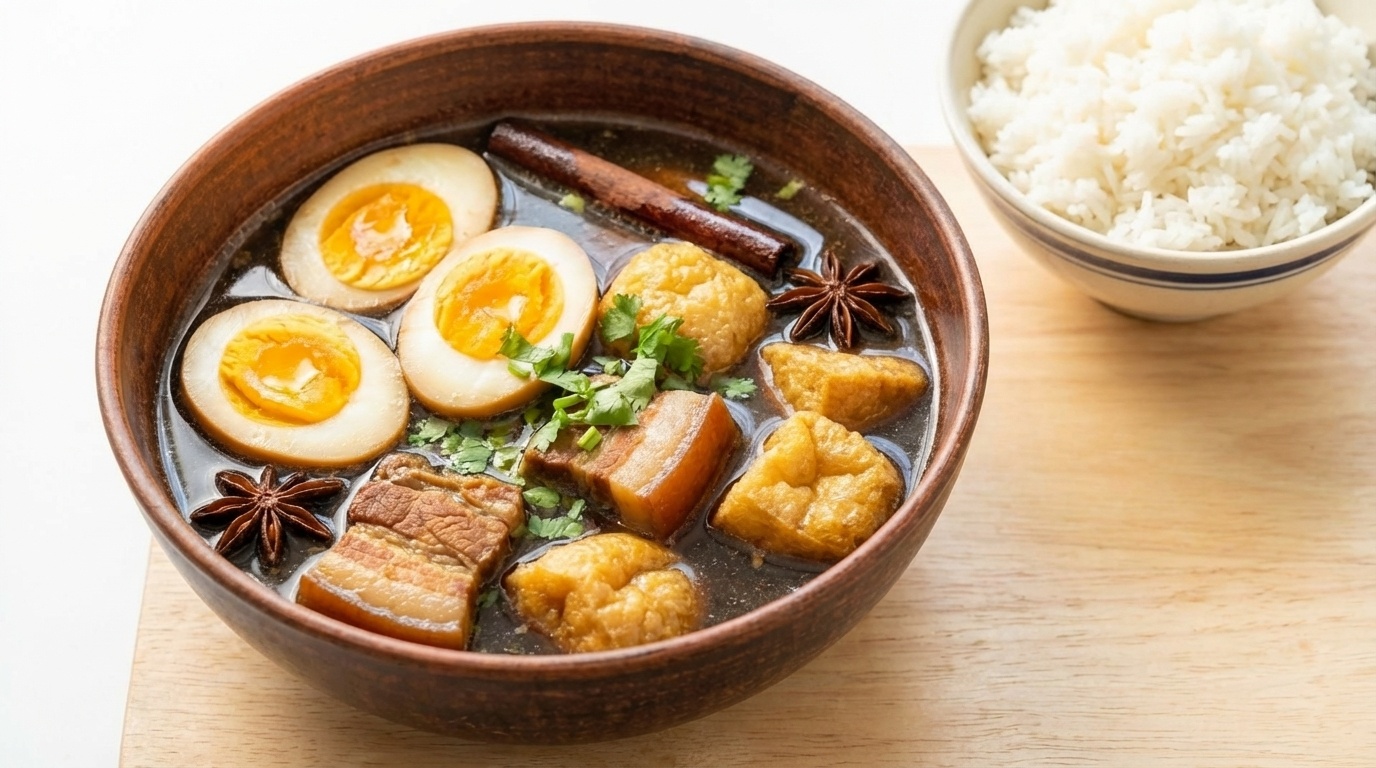
Five-Spice Soup with Eggs and Pork Belly (Kai Palo)
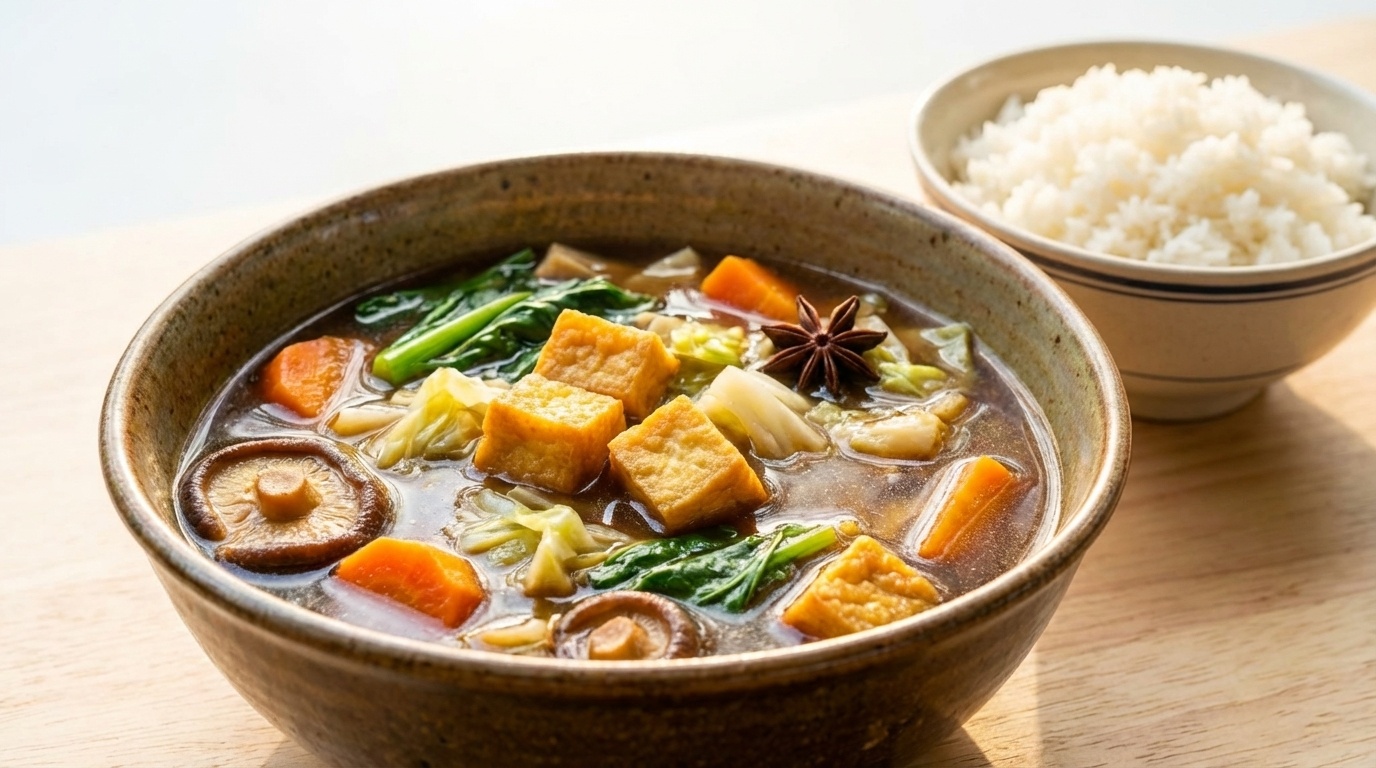
Five-Spice Vegetable Stew (Palo Jap Chai)
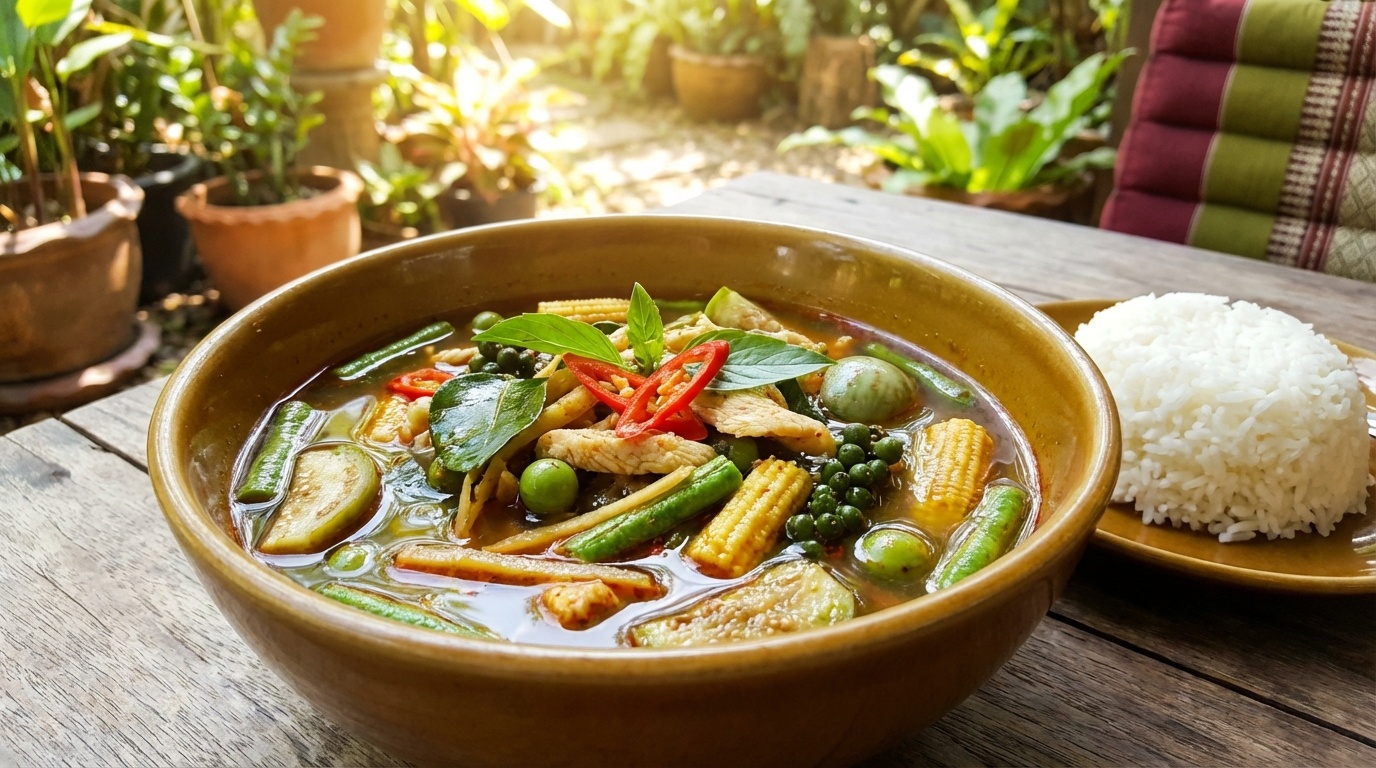
Jungle Curry (Gaeng Bpa)