Olive Oil - Definitive Guide
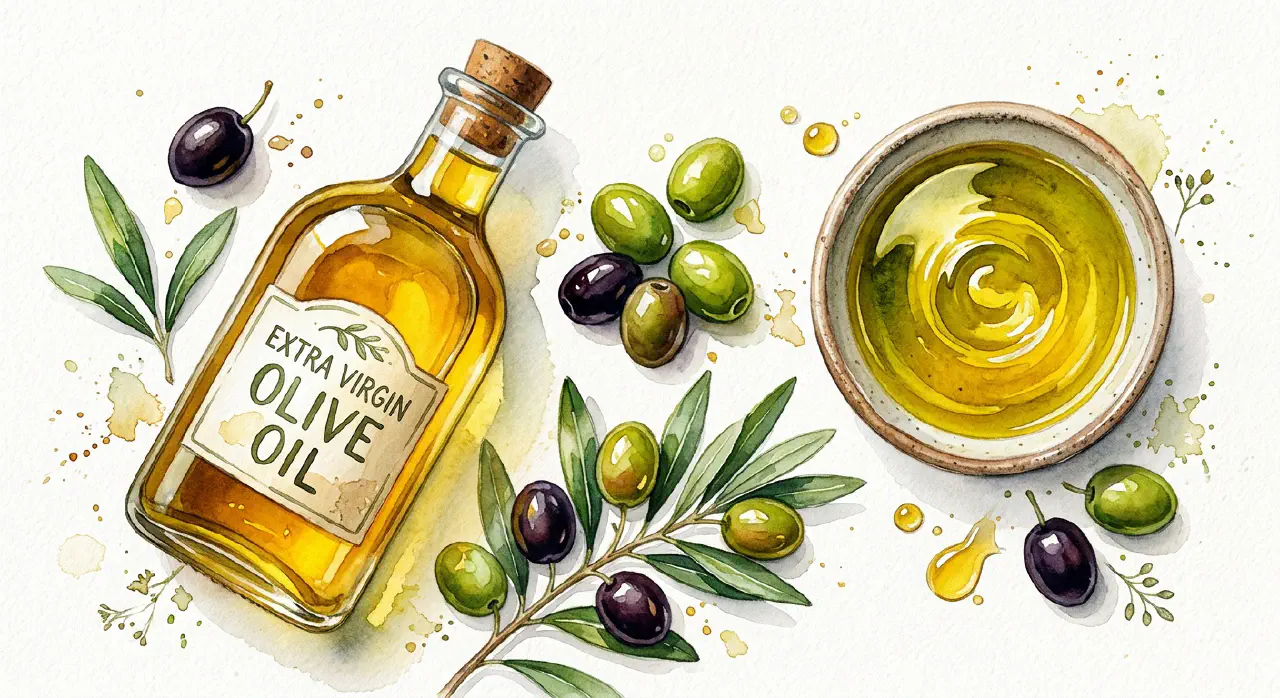
Olive Oil © kvalifood.com
Olive oil is the oldest continuously produced fat in Western culinary history and still, by several nutritional and culinary measures, among the best. Pressed from the fruit of Olea europaea - a tree that can live for thousands of years and has been cultivated since at least 6000 BCE - it ranges from a mild, golden finishing drizzle to a fiercely bitter, throat-scorching Sicilian estate oil that announces itself like a condiment. Its complexity is governed by cultivar, harvest timing, extraction method, and storage, and the gap between a well-made extra virgin and the fraudulent product sold under the same label is enormous. This guide covers all of it.
1. Culinary Applications
Cooking vs. Finishing
The practical division is between cooking oil (subjected to heat) and finishing oil (used raw, drizzled at the table or over a completed dish). The distinction matters because heat degrades the volatile aromatic compounds that make premium EVOO worth buying. A finishing oil showcases bitterness, pepperiness, grassiness, and fruitiness; a cooking oil’s job is fat, flavor foundation, and heat transfer.
- Finishing: drizzle over bruschetta, carpaccio, burrata, grilled fish, ribollita, hummus, pasta, soups; used as a dipping oil with bread; whisked into vinaigrettes; added to dishes at the table
- Everyday cooking: sautéing, sweating onions, roasting vegetables, pan-frying, shallow-frying, emulsifying sauces
- Baking: replaces butter in focaccia, ciabatta, Ligurian cakes, some cookies - contributes crumb texture and a subtle fruitiness
Save premium single-estate EVOO for finishing. A good mid-range certified EVOO works well for all cooking applications.
Canonical Dishes
A selection of dishes in which olive oil is not incidental but structural - it is the fat, the sauce, the medium, and in some cases the point.
Pasta aglio e olio (Italy) - spaghetti with garlic, olive oil, and parsley. Four to five tablespoons of EVOO per two-person portion, gently infused with sliced garlic, emulsified with starchy pasta water into a sauce that coats every strand. No cream, no cheese in the canonical version. The oil is the sauce; the Maillard-browned garlic provides depth. Requires a mid-range cooking EVOO with enough character to carry the dish.
Focaccia (Liguria, Italy) - flatbread in which olive oil is present at every stage: incorporated into the dough, pooled in the baking tin (the underside fries in it), and poured into the dimples immediately before baking. A standard Ligurian-style focaccia uses approximately 100–120 mL of EVOO for a 30×40 cm pan - more than any other single ingredient by volume. The finished bread is crisp on the underside, airy within, and saturated with olive flavor throughout.
Horiatiki (Greek village salad) (Greece) - tomatoes, cucumber, green pepper, red onion, Kalamata olives, and a block of feta, dressed exclusively with EVOO, dried oregano, and salt. No acid, no secondary dressing. The oil is the dressing. At 2–3 tablespoons per portion, this is one of the cleanest demonstrations of what finishing-grade Koroneiki EVOO tastes like without interference.
Ladera (Greece) - a category of olive oil-braised vegetable dishes in which vegetables (green beans, courgette, artichokes, potatoes, or combinations) are slow-cooked in 100–150 mL of EVOO with tomato, onion, and herbs. The oil does not fry; it braises. As the liquid reduces, oil and vegetable juices form a unified emulsified sauce served at room temperature. Ladera represents the Mediterranean culinary principle that olive oil is a cooking medium capable of producing richness comparable to butter or cream.
Ribollita (Tuscany, Italy) - a thick Tuscan bread soup of cannellini beans, cavolo nero, stale bread, and vegetables, served with a substantial pour of raw EVOO at the table - typically 2–3 tablespoons per bowl. The oil is added after cooking: it floats on the surface, perfumes the steam, and is worked in by the eater. Premium Tuscan EVOO (Frantoio, Moraiolo blend) is traditional and perceptible in the final dish.
Pan con tomate (Catalonia, Spain) - grilled or toasted bread rubbed vigorously with a cut tomato (so the flesh penetrates the surface), then drenched with EVOO and finished with coarse salt. The oil soaks into the bread and emulsifies with the tomato water into a saturated, cohesive surface. Arbequina or Hojiblanca EVOO is traditional; the mild fruitiness of the Catalan style complements rather than competes with the tomato.
The Smoke Point Misconception
The smoke point of EVOO is approximately 190–210°C (375–410°F) depending on quality and polyphenol content - lower than many refined seed oils. This is widely cited as a reason not to cook with EVOO. The claim is misleading.
Smoke point is not a reliable indicator of cooking safety. A 2018 study published in Acta Scientific Nutritional Health tested ten cooking oils at temperatures up to 240°C and found that EVOO produced the lowest quantity of polar compounds (harmful oxidation by-products) of all oils tested - including at temperatures above its smoke point. Refined seed oils with high smoke points (canola, sunflower, grapeseed, rice bran) produced significantly more harmful compounds because they are high in polyunsaturated fatty acids (PUFAs), which are chemically unstable at heat.
The better predictors of cooking safety are:
- Oxidative stability - resistance to oxidation under heat (EVOO scores very high due to high monounsaturated fat and polyphenol antioxidant content)
- PUFA content - high PUFA oils degrade faster and produce more harmful compounds under heat
EVOO is safe and practical for all normal cooking including frying. The caveat is that sustained very high heat (above 200°C for extended periods) will degrade its expensive aromatic compounds - for deep frying at 180°C, a mid-range certified EVOO or regular (refined) olive oil is appropriate and more economical than using premium estate oil.
Regional Uses
| Region | Typical application |
|---|---|
| Tuscany / Central Italy | Finishing over ribollita, fagioli, grilled bread, raw over steak (fiorentina) |
| Liguria | Focaccia, pesto base, fish in acqua pazza |
| Southern Italy / Sicily | Frying, braising, raw dressing, preserving vegetables in oil |
| Greece | Generous cooking oil, finishing on everything; salads, grilled fish, ladera (olive oil-braised vegetable dishes) |
| Spain | Sofrito base, frying (notably deep frying in Andalusia), pan con tomate, finishing on charcuterie |
| Levant / Middle East | Drizzled over hummus, labneh, fattoush; used in cooking throughout |
| California | Finishing over salads, grilled vegetables, charcuterie boards; high-end restaurant use |
Substitutions
| Substitute | Ratio | Notes |
|---|---|---|
| Avocado oil (refined) | 1:1 | Neutral flavor, very high smoke point; suitable for high-heat applications where olive flavor is not desired |
| Grapeseed oil | 1:1 | Neutral, high smoke point; lacks flavor; use for cooking only |
| Butter | 3/4:1 (3 tbsp oil = 4 tbsp butter) | Richer, dairy character; not suitable for vegan or lactose-free; good for baking substitution |
| Sunflower oil (refined) | 1:1 | Neutral, stable at heat; lacks the flavor and nutritional profile of EVOO |
2. Grades and Classification
Grade Definitions (IOC / EU Standards)
Extra Virgin Olive Oil (EVOO)
- Free acidity: ≤ 0.8% oleic acid
- Peroxide value: ≤ 20 mEq O₂/kg (measure of oxidation)
- Sensory assessment: must pass organoleptic panel evaluation - zero defects, positive fruitiness required
- Extraction: mechanical only; no heat above 27°C permitted for “cold extraction” label claim
- The highest grade; retains full polyphenol, antioxidant, and aromatic content
Virgin Olive Oil
- Free acidity: ≤ 2.0%
- Peroxide value: ≤ 20 mEq O₂/kg
- Sensory: may have minor defects; still mechanically extracted
- Rarely sold as such; most is blended or refined
Refined Olive Oil
- Produced by chemically and/or thermally treating lower-quality olive oil (high acidity, defective)
- Refining strips out free fatty acids, off-flavors, color, and virtually all polyphenols
- Low acidity (≤ 0.3%), neutral flavor, pale yellow color, higher smoke point than EVOO
- Never sold on its own in retail; blended to create “Pure” or “Light” olive oil
Pure Olive Oil / “Light” Olive Oil / “Classic” Olive Oil
- A blend of refined olive oil + a small percentage of virgin or extra virgin (typically 10–30% virgin) to restore some flavor and color
- The terms “light” and “pure” are entirely marketing terms with no legal definition in most jurisdictions
- Lower in polyphenols and flavor than EVOO; higher smoke point than EVOO
- A practical choice for high-heat cooking where olive flavor is not needed
Olive Pomace Oil
- Extracted from the olive paste remaining after mechanical pressing, using hexane solvent extraction
- Refined to remove the solvent; a small percentage of virgin oil may be added
- The lowest-quality olive-derived oil; minimal polyphenols; suitable only for industrial cooking
Grade Comparison
| Grade | Free acidity | Polyphenols | Flavor | Best use |
|---|---|---|---|---|
| Extra Virgin | ≤ 0.8% | High (50–800+ mg/kg) | Complex, fruity to robust | Finishing, everyday cooking |
| Virgin | ≤ 2.0% | Moderate | Milder, some defects possible | Cooking |
| Pure / Light | ≤ 1.0% (blend) | Very low | Neutral | High-heat cooking |
| Refined | ≤ 0.3% | Negligible | Nearly flavorless | Industrial, high-heat |
| Pomace | ≤ 1.0% | Negligible | Neutral/slightly off | Industrial only |
Cold Extraction / Cold Pressed
“Cold pressed” is a largely obsolete marketing term from the era of traditional stone mills, where a “first pressing” was genuinely distinct from subsequent pressings. Modern centrifugal extraction does not involve pressing in the traditional sense.
“First cold pressed” on a modern EVOO label: meaningless in most contexts - virtually all EVOO is produced in a single extraction cycle.
“Cold extraction” has a legal definition in EU regulations: extraction temperature must not exceed 27°C (80.6°F). This is the meaningful label claim to look for. Higher temperatures increase yield but degrade aromatic compounds and polyphenols.
The Fraud Problem
EVOO adulteration is one of the most documented food fraud issues globally. Common forms:
- Selling refined olive oil or blends with other vegetable oils (sunflower, soybean, hazelnut) labeled as EVOO
- Mislabeling lower-grade olive oil as extra virgin
- Falsifying geographic origin (Italian label on Spanish or Tunisian oil)
- Using old oil past peak quality sold as fresh
A 2010 UC Davis study tested 186 imported EVOO samples from California retail and found that 69% of major imported brands failed IOC and USDA EVOO standards - most were stale or adulterated. Subsequent studies by the same group showed improvement but persistent problems.
The most reliable protection against fraud: look for a harvest date (not just a best-by date), a PDO/DOP seal, COOC certification (California), or the IOC quality seal. Buy from a reputable specialist retailer.
3. Flavor Chemistry
Key Aromatic Compounds
Fresh EVOO is a chemically complex liquid. Its flavor is driven by several compound classes:
Volatile aromatics (responsible for green, fruity, grassy, herbal notes):
- trans-2-Hexenal: the dominant green, cut-grass note in freshly pressed oil; produced enzymatically when olive cells are ruptured during crushing
- Hexanal: fruity, apple-like note
- 1-Hexanol: fresh, sweet
- Cis-3-Hexen-1-ol: intensely grassy, fresh-cut green
- These compounds are highly volatile and fade significantly within 12–18 months, or faster with heat and light exposure
Polyphenols (responsible for bitterness, pungency, and health benefits):
- Oleocanthal: produces the characteristic throat burn and cough in high-quality EVOO (the peppery sensation felt at the back of the throat, not the front). Named for its ibuprofen-like structure - it inhibits COX-1 and COX-2 enzymes by the same mechanism as ibuprofen. A 50 mL serving of high-polyphenol EVOO contains roughly the equivalent inhibitory activity of ~10% of a standard ibuprofen dose.
- Oleacein: responsible for much of the bitterness on the palate
- Hydroxytyrosol: the most potent antioxidant polyphenol in olive oil; contributes to oxidative stability of the oil itself and bioactive antioxidant effects when consumed
- Tyrosol: milder antioxidant; present in all grades but at higher concentrations in EVOO
Other characteristic compounds:
- Squalene: a triterpene at ~0.2–0.7% of total EVOO weight; has antioxidant properties; largely destroyed in refined oils
- Chlorophyll: green pigment, photo-reactive - accelerates oxidation under light; responsible for green color in early-harvest oils
- Carotenoids: yellow-gold pigment; more stable than chlorophyll
What Determines Flavor Intensity
Early-harvest vs. late-harvest:
- Olives harvested early (when still green or turning) are lower in oil content but have dramatically higher polyphenol concentrations - more bitter, peppery, intensely grassy. Early-harvest oils are associated with maximum health benefit and flavor complexity.
- Olives harvested late (fully ripe, purple-black) yield more oil but with lower polyphenols, milder flavor, sometimes buttery or sweet notes.
Cultivar: polyphenol content varies dramatically by variety. Koroneiki, Picual, and Coratina are inherently high-polyphenol varieties regardless of harvest timing. Arbequina and Taggiasca are inherently mild.
Freshness: all EVOO is best within 12–18 months of harvest, not of bottling. After 18–24 months, aromatic volatiles largely dissipate even in well-stored oil. Old oil goes rancid - recognizable by a waxy, crayony smell (hexanal rancidity) or a musty, wine-vinegar quality.
Why Heating Changes Flavor
Heat drives off volatile aromatics quickly. Sautéing with premium EVOO sacrifices its most expensive aromatic fraction within seconds. Polyphenols are more heat-stable than the volatile compounds - they remain largely intact at normal cooking temperatures, which is why cooked EVOO still retains its oxidative stability advantage over seed oils despite losing its fresh aroma.
4. Production Methods
Harvest
The timing of harvest is the single most consequential decision in olive oil quality.
- Hand harvesting (by hand or hand-held rakes): slowest and most expensive; minimal fruit damage; no bruising; used for premium estate production
- Mechanical harvesting (trunk shakers, over-row harvesters): faster and lower cost; acceptable for quality production if fruit is processed quickly; standard for large-scale production
- Key rule: olives must reach the mill and be processed within 24 hours of harvest, ideally within hours. Bruised or damaged olives accumulate free fatty acids rapidly, raising acidity and producing off-flavors. Any delay, crushing under the weight of a pile, or heating increases defects.
Milling and Malaxation
- Washing and cleaning: removes leaves, twigs, and dust
- Crushing / milling: ruptures olive cells to release oil. Traditional stone mills (granite millstones) crush slowly and cool; modern hammer mills or disc mills are faster and more efficient but generate more heat
- Malaxation: the crushed olive paste is slowly churned in a malaxer for 20–40 minutes at a controlled temperature. This step is critical: malaxation allows oil droplets to coalesce into larger drops that can be separated. Temperature is the key trade-off - higher temperature (above 27°C) increases yield but degrades polyphenols and aromatic volatiles. Cold extraction means malaxing below 27°C.
Extraction
Two-phase centrifugation (modern standard for premium oil):
- Paste enters a horizontal centrifuge (decanter); separates into oil, vegetation water + olive pulp (combined)
- Uses little or no added water; retains more polyphenols than three-phase
- Produces a wet pomace with higher residual oil content (less economical for pomace extraction)
Three-phase centrifugation (older industrial standard):
- Large volumes of warm water added; separates into oil, vegetation water, and dry pomace
- Higher yield than two-phase; but added water dilutes polyphenols significantly
- Lower polyphenol concentration in the finished oil
Traditional stone mill + pressing:
- Still used by some artisan producers for marketing and flavor differentiation
- Stone grinding generates less heat than hammer mills; some argue it preserves certain compounds better
- Lower yield; longer process; more oxidation risk if not carefully managed
Filtering vs. Unfiltered
Unfiltered EVOO (also called olio nuovo, cloudy) contains residual olive particles and water. It has an intense, fresh flavor immediately after pressing but degrades faster - the olive particles continue enzymatic activity and accelerate fermentation and rancidity.
Filtered EVOO has a longer, more stable shelf life and clearer appearance. Most quality producers filter their oil. The “unfiltered = better” perception is a romanticization; unfiltered oil is better only if consumed within a few weeks of pressing.
Industrial Refining (for lower grades)
Lower-quality olive oil (high acidity, defective flavor from disease, frost, or improper handling) is refined through:
- Degumming: removes phospholipids
- Neutralization: alkali treatment removes free fatty acids, reducing acidity
- Bleaching: removes color pigments (chlorophyll, carotenoids) with activated clay
- Deodorization: steam distillation at high temperature removes volatile flavor compounds
The result is a neutral, pale, odorless oil with very low acidity and negligible polyphenol content - refined olive oil.
5. Regional Varieties and Cultivars
Global Production
Spain is the dominant producer, accounting for approximately 45% of world olive oil production. Italy follows at ~15%, Greece at ~12–15%, Tunisia ~10%, Turkey ~5–8%, Morocco ~5%. California produces a small fraction of global supply but is significant for premium domestic production in North America.
Major Cultivars
| Cultivar | Origin | Flavor profile | Polyphenol level | Notes |
|---|---|---|---|---|
| Picual | Andalusia, Spain | Robust, bitter, peppery, tomato leaf | Very high | ~50% of Spanish production; excellent oxidative stability; dominant in Jaén |
| Arbequina | Catalonia, Spain | Mild, fruity, buttery, almond, banana | Low–medium | Easy to process; widely planted globally; suits mild finishing use |
| Hojiblanca | Andalusia, Spain | Medium intensity, sweet with slight bitterness, apple notes | Medium | Good balance of flavor and stability |
| Koroneiki | Greece (Peloponnese) | Intense, herbal, peppery, artichoke | Very high | Small olive, very high oil quality; dominant Greek variety; exceptional antioxidant content |
| Frantoio | Tuscany, Italy | Medium-robust, herbal, artichoke, dried fruit | High | Classic Tuscan cultivar; good balance of bitterness and fruitiness |
| Leccino | Tuscany, Italy | Mild, delicate, slightly bitter, floral | Medium | Often blended with Frantoio and Moraiolo; earlier ripening |
| Moraiolo | Umbria, Italy | Intense, bitter, peppery | Very high | Traditional Umbrian cultivar; high polyphenols; softer market appeal |
| Coratina | Puglia, Italy | Very intense, very bitter, very peppery | Extremely high | Among the highest polyphenol concentrations of any cultivar; challenging raw but exceptional for health and shelf life |
| Nocellara del Belice | Sicily, Italy | Medium, sweet, fresh tomato, green apple | Medium | PDO protected (Valli Trapanesi); used both as table olive and oil cultivar |
| Taggiasca | Liguria, Italy | Very mild, buttery, sweet, almond | Low | The mildest Italian oil; ideal for finishing on delicate fish and vegetables |
| Manzanilla | Spain | Mild, nutty, light fruitiness | Low–medium | Widely used as table olive; also pressed for mild oil |
Key Production Regions
Tuscany, Italy: the prestige origin for premium Italian EVOO. Blend of Frantoio, Leccino, Moraiolo. High polyphenols, green, grassy, peppery. Protected under several DOP designations (Chianti Classico, Lucca, Seggiano). Early harvest is almost universal among premium producers.
Puglia, Italy: the volume engine of Italian production - Puglia produces ~40% of Italy’s olive oil. High-polyphenol Coratina-dominant oils from Bitonto and Andria. Large cooperative production alongside artisan estates.
Sicily, Italy: Nocellara del Belice (Belice Valley, DOP) and Biancolilla are signature cultivars; fruitier, softer style than Tuscany.
Liguria, Italy: Taggiasca dominates; the mildest, most delicate Italian regional style; traditionally used with fish.
Kalamata region, Greece: Koroneiki dominant; Kalamata DOP protected; intensely aromatic and robust.
Crete, Greece: one of the highest per-capita olive oil consumption regions in the world; Koroneiki dominant; significant premium estate production.
Andalusia, Spain (especially Jaén province): the world’s single largest olive oil producing region; Picual dominant; industrial scale but with significant premium production.
Catalonia, Spain: Arbequina dominant; milder, fruitier style; Les Garrigues and Siurana are PDO regions.
California, USA: Significant artisan production since the 1990s. Central Valley (Arbequina, Arbosana, Koroneiki) and individual estates. Certified by the California Olive Oil Council (COOC), whose standards are stricter than USDA for EVOO classification.
Tunisia: the world’s fourth-largest producer; Chemlali and Chetoui cultivars; much exported in bulk to Italy and Spain for blending; growing premium sector.
6. Key Brands
Quality Tiers
| Tier | Brands | Notes |
|---|---|---|
| Artisan / Estate | Laudemio (Frescobaldi), Castello di Ama, Columela, Fat Gold, Brightland, Olio Bello | Harvest date on label; single estate or single cultivar; COOC or PDO certified; premium pricing |
| Premium accessible | California Olive Ranch, Cobram Estate, Gaea (Greece), Lucini | Certified; harvest-date transparent; good polyphenol content; reasonable price |
| Supermarket value | Kirkland Organic (Costco), Trader Joe’s California EVOO | IOC-certified products in this tier are acceptable; check harvest date |
| Avoid | Generic private-label “imported from Italy” with no harvest date, no certification | High fraud risk; frequently fails EVOO standards |
Notable Brands
Laudemio - produced by Marchesi de’ Frescobaldi, Tuscany. One of Italy’s most prestigious estate EVOOs. Tuscan blend (Frantoio, Moraiolo, Leccino), early harvest, intensely green and peppery. Bottled in a distinctive flat-sided bottle. Available in premium retailers and specialty food shops globally.
Columela - Spanish estate, Picual dominant from Jaén. One of the most consistent high-polyphenol EVOOs on the international market. Harvest date on label; IOC certified. Widely available in Europe and North America.
California Olive Ranch - the largest California producer; COOC certified; harvest date on label; blend of Arbequina, Arbosana, and Koroneiki. Excellent quality-to-price ratio for everyday EVOO. Widely available in US supermarkets.
Cobram Estate - Australian (also California) producer; COOC certified for US product; very high quality standards; among the best supermarket-accessible EVOOs. Transparent about polyphenol content.
Diaspora Co. - artisan sourcing; single-origin EVOOs from small South Asian and Mediterranean producers; transparent supply chain.
Brightland - California artisan brand; harvest date prominent; COOC certified; attractive packaging; premium pricing.
Fat Gold - Oakland, California; very small-batch; COOC certified; single-estate sourcing; among the best California producers.
Gaea - Greek brand, Koroneiki dominant; good polyphenol transparency; widely available; reasonable price point for genuine Greek EVOO.
Kirkland Organic EVOO (Costco) - sourced from multiple Mediterranean countries; IOC certified; represents good value when harvest date is current.
Always check the harvest date. Buy oil from the most recent harvest, and use within 18 months of that date regardless of the best-by date.
Label Red Flags
- “Packed in Italy” with no further origin information
- Best-by date without a harvest date
- Price below ~$10/500 mL for claimed EVOO (possible but suspicious)
- No certification seal of any kind
7. History & Origins
Ancient Origins
The olive tree (Olea europaea) was domesticated from its wild ancestor (O. europaea var. sylvestris) in the Eastern Mediterranean - most likely the Levant (modern-day Israel, Palestine, Lebanon, Syria) or the Fertile Crescent - approximately 6,000–8,000 years ago. Archaeological evidence for olive oil production (pressing installations, olive pits in large quantities, storage amphorae) dates to at least 3500–3000 BCE in Canaan and the Aegean.
Linear B tablets from Mycenaean Greece (~1500–1200 BCE) record olive oil as a major traded commodity and ritual substance. Egyptian records from the New Kingdom mention olive oil imported from the Levant as a luxury item.
Phoenician and Greek Expansion
The Phoenicians spread olive cultivation westward along the North African coast and into the Iberian Peninsula and Sicily from approximately 1100–800 BCE. The Greeks independently and in parallel spread olives through their colonial network - to Magna Graecia (southern Italy), Sicily, Sardinia, and southern France (Massalia, modern Marseille).
Olive oil was central to Greek civilization: used for food, lighting (lamps), medicine, personal hygiene (rubbed on the body and scraped off with a strigil after athletic exercise), and religious anointing. The olive wreath (kotinos) was the prize at the ancient Olympic Games held at Olympia; sacred olive trees grew there.
Roman Industrial Production
The Roman Empire transformed olive oil from a regional Mediterranean commodity into an industrialized global product. Rome developed large-scale olive monocultures throughout Hispania (Spain), North Africa, and Italy. The engineering of olive oil production reached industrial sophistication: standardized stone press installations, ceramic amphora production and shipping networks, and state regulation of quality and trade.
Monte Testaccio in Rome - a hill approximately 50 meters tall composed almost entirely of broken olive oil amphorae from the 1st–3rd centuries CE - represents roughly 53 million amphorae, documenting the scale of the Roman olive oil trade. Most of the oil came from Hispania Baetica (modern Andalusia), the same region that remains the world’s largest olive oil producer today.
Medieval and Early Modern Period
After the Roman collapse, olive cultivation contracted in northern regions but remained continuous in the Mediterranean. The Arab agricultural revolution (8th–10th centuries) expanded cultivation in North Africa and the Iberian Peninsula under Moorish rule; Andalusia’s sophisticated hydraulic agriculture and olive cultivation was largely an Arab legacy taken over by Christian kingdoms after the Reconquista.
The Catholic Church’s use of olive oil in ritual anointing (sacraments, coronation, extreme unction) maintained demand and cultural significance throughout the medieval period.
Global Spread
European colonization from the 15th century onward carried olive cultivation to the Americas (California missions from 1769, Argentina, Chile), South Africa, and Australia. California’s modern artisan olive oil industry is a direct descendant of the mission olive cultivars planted by Spanish Franciscans.
8. Nutrition
Fatty Acid Profile
Olive oil is approximately 70–80% oleic acid, a monounsaturated fatty acid (MUFA) of the omega-9 family. The full profile:
| Fatty acid | Type | % of total |
|---|---|---|
| Oleic acid (C18:1) | MUFA (omega-9) | 70–80% |
| Palmitic acid (C16:0) | Saturated | 10–14% |
| Linoleic acid (C18:2) | PUFA (omega-6) | 4–10% |
| Stearic acid (C18:0) | Saturated | 2–4% |
| Alpha-linolenic acid (C18:3) | PUFA (omega-3) | 0.5–1% |
The high MUFA content and low PUFA content explain olive oil’s oxidative stability under heat relative to seed oils. MUFAs have one double bond (one site for oxidation); PUFAs have multiple double bonds (multiple sites for faster chain-reaction oxidation).
Polyphenol Content
Polyphenol content in EVOO ranges from approximately 50 to 800+ mg/kg, with early-harvest, high-polyphenol cultivars (Koroneiki, Picual, Coratina) at the higher end. Refined olive oil contains negligible polyphenols. The EU permits a health claim on olive oil with polyphenol content ≥ 250 mg/kg: “Olive oil polyphenols contribute to the protection of blood lipids from oxidative stress.”
Cardiovascular Evidence
The PREDIMED study (Prevención con Dieta Mediterránea) was a large Spanish randomized controlled trial published in 2013 in the New England Journal of Medicine. It assigned ~7,400 high-cardiovascular-risk participants to a Mediterranean diet supplemented with EVOO (≥4 tbsp/day), a Mediterranean diet supplemented with nuts, or a low-fat control diet. The EVOO group showed a 30% relative reduction in major cardiovascular events.
The study was retracted in June 2018 after investigators discovered randomization protocol violations at several sites. A corrected analysis using updated statistical methods was republished in the same journal in June 2018 with the same primary conclusions intact - the Mediterranean diet with EVOO supplementation still showed significant cardiovascular benefit.
The PREDIMED retraction is frequently mischaracterized as invalidating the findings. The corrected republished analysis supports the original conclusion; the issue was procedural, not fraudulent, and the results were robust to the correction.
Caloric Density
| Measure | Calories | Fat |
|---|---|---|
| 1 tablespoon (15 mL) | ~120 kcal | 13.5 g |
| 1/4 cup (60 mL) | ~480 kcal | 54 g |
Olive oil is calorie-dense. Its health benefits are associated with replacement of saturated fats and seed oils, not addition of extra calories to an existing diet.
Honest Assessment
- The evidence for cardiovascular benefit from EVOO as part of a Mediterranean dietary pattern is among the strongest dietary-health evidence available
- The mechanism is likely multi-factorial: oleic acid’s effect on LDL cholesterol, polyphenol antioxidant activity, oleocanthal’s anti-inflammatory activity, and gut microbiome effects
- Benefits are associated with genuine EVOO with substantial polyphenol content - refined olive oil and adulterated products do not carry the same evidence base
- Realistic serving sizes in a Mediterranean diet context (2–4 tbsp/day) are meaningful; a half-teaspoon drizzle on a salad is not
Quick Reference
| Question | Answer |
|---|---|
| Is EVOO safe for high-heat cooking? | Yes - its high MUFA content and polyphenols give it better oxidative stability than most high-smoke-point seed oils |
| What is the best grade to buy? | Extra Virgin (EVOO) for all purposes; Pure/Light olive oil acceptable for sustained high-heat frying if economizing |
| How do I spot fraud? | Look for harvest date, PDO/DOP seal, COOC certification, or IOC quality seal; avoid oils with no harvest date |
| When should I use EVOO vs. finishing oil? | Premium estate EVOO as a finishing oil; mid-range certified EVOO for everyday cooking |
| How long does EVOO last? | Best within 12–18 months of harvest; use within 3–6 months of opening |
| How should I store it? | Dark glass or tin, sealed, away from light and heat; never near the stove |
| What does throat burn mean? | Oleocanthal - a marker of high polyphenol content and freshness; not a defect |
| Best cultivar for maximum health benefit? | Koroneiki, Picual, or Coratina - very high polyphenol content |
| Best cultivar for mild finishing? | Taggiasca, Arbequina - mild, buttery, low bitterness |
| Which country produces the most? | Spain (~45% of world production), mostly Picual from Andalusia |
| Is “cold pressed” meaningful? | “Cold extraction” (≤27°C) is the meaningful EU-defined term; “cold pressed” and “first cold pressed” are largely marketing |
| Does EVOO contain turmeric? | No - EVOO is pure olive fruit juice; it is naturally yellow-green, not yellow from turmeric |
See Also
- Garam Masala - fat as a flavor carrier for spice blooming
- Fish Sauce Definitive Guide - another ancient fermented/extracted condiment with complex chemistry
- French Fries Definitive Guide - fat chemistry, smoke points, and oxidative stability under heat
Sources
- Extra virgin olive oil - Wikipedia
- Olive oil chemistry and technology - IOC (International Olive Council)
- IOC Trade Standard for Olive Oils
- UC Davis Olive Center - Report on California Olive Oil Quality (2010)
- Evaluation of Chemical and Physical Changes in Different Commercial Oils during Heating - Acta Scientific Nutritional Health (2018)
- PREDIMED Study Retraction and Republication - NEJM (2018)
- Oleocanthal: a naturally occurring anti-inflammatory agent in virgin olive oil - Beauchamp et al., Nature (2005)
- Polyphenols in Olive Oil - EU Health Claim Regulation No 432/2012
- California Olive Oil Council Certification Program
- Cobram Estate Olive Oil - Quality and Polyphenol Transparency
- California Olive Ranch - About Our Olives
- Olive Oil Times - Fraud and Adulteration
- Laudemio - Frescobaldi Estate EVOO
- Columela Extra Virgin Olive Oil
- Gaea - Greek Olive Oil
- Fat Gold Olive Oil
- Brightland Olive Oil
- Flavor Chemistry of Virgin Olive Oil - Aparicio & Morales, Journal of Agricultural and Food Chemistry
- Monte Testaccio - Roman oil amphora mound - Wikipedia
- Olive - History and Botany - Encyclopaedia Britannica
- Nutritional composition of olive oil - USDA FoodData Central
- Smoke point of cooking oils - American Oil Chemists Society
- Hydroxytyrosol and Tyrosol in olive oil - Tuck & Hayball, Journal of Nutritional Biochemistry
- Squalene content in olive oil - Kiritsakis, JAOCS
- World olive oil production statistics - IOC