Whole Roast Chicken in the Oven - The Definitive Recipe
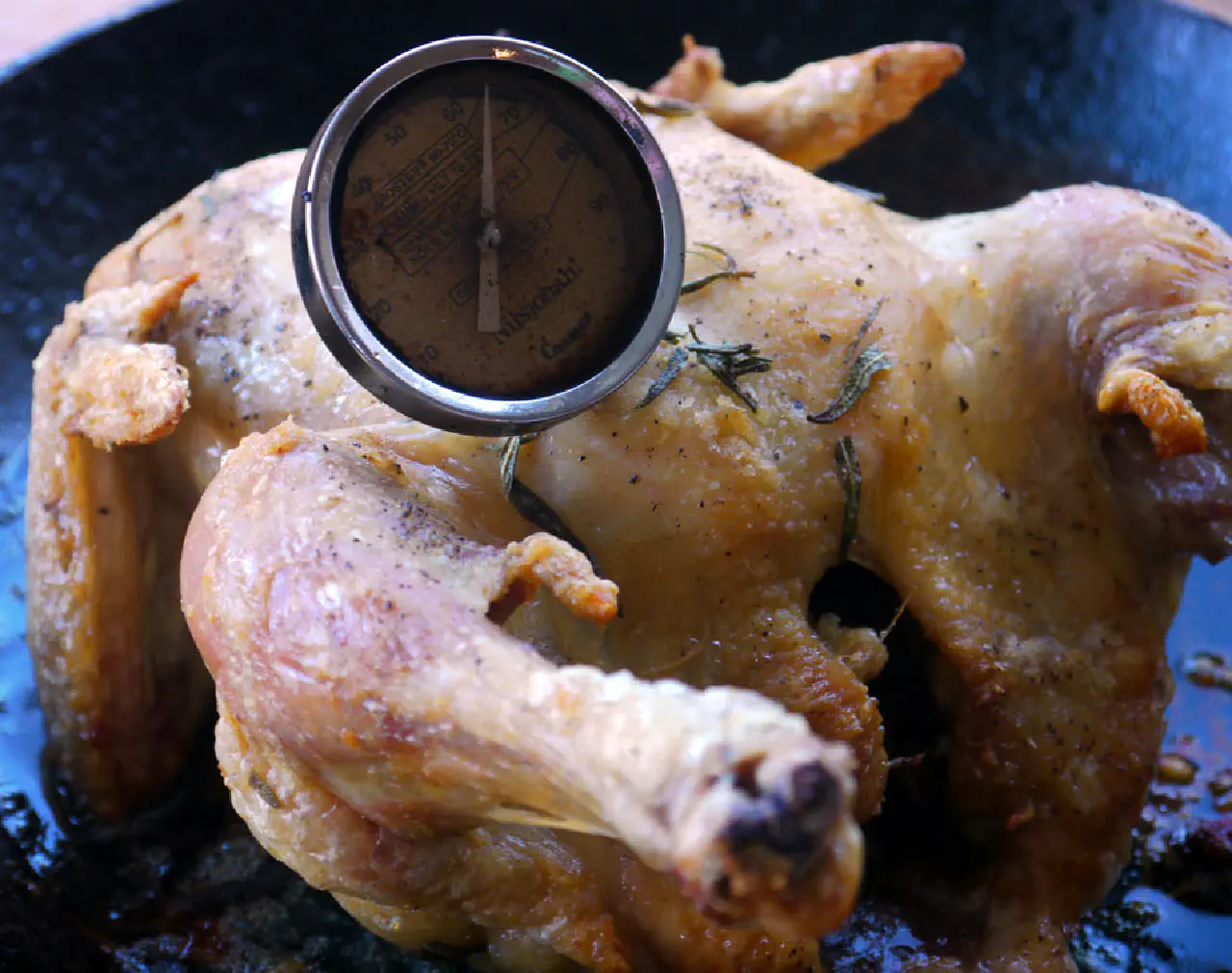
Perfect whole roast chicken — the holy grail of home cooking © kvalifood.com
Roast chicken is simple to make and tastes great. But you often end up with either undercooked thighs or dry, tough breast meat. You can avoid that by using a bit of simple technique. Both types of meat can come out perfectly: juicy breast, tender thighs, and crispy skin. This is the definitive recipe — it doesn’t get better than this.
Ingredients
- 1 chicken, fresh
- oil
- salt
- pepper
- herbs, optional
Directions
Rub the chicken all over with oil.
Sprinkle generously with herbs, salt, and pepper.
Optionally stuff the cavity with herbs, salt, and pepper.
Place a heavy dish, pan, or pot in the oven — preferably cast iron or steel. Ceramic works too, but is not as effective.
Add a little oil so the chicken doesn’t stick, just as you would when frying in a pan normally.
Heat the oven to 375°F (190°C).
Once the oven and pan are hot, place the chicken in the dish.
Roast it lying on one thigh for 15 minutes.
Turn it and roast it lying on the other thigh for 15 minutes.
Turn the oven up to 450°F (230°C).
Finally, lay the chicken on its back with the breast facing up.
Insert a meat thermometer into the thickest part of the breast.
Roast it this way for 10–15 minutes until the breast reaches 145–150°F (62–65°C).
Notes
Chicken breast and chicken thighs are done at different temperatures, which means the thighs need more heat than the breast. The trick here is that the pan heats the thighs more than the breast. That’s why it should ideally be metal — ceramic doesn’t conduct heat as well.
You can use a large cast iron pot if you have one, as long as you can turn the chicken without mangling it.
There’s a chance some of the skin will stick to the pan. Use a wide palette knife when turning the chicken to avoid tearing the skin.
The chicken doesn’t need to be trussed, and nothing needs to go inside it. Just oil and seasonings.
If the thighs are still a little underdone, or a bit too pink for your taste, cut them off the carcass, put them back in the pan, and return to the oven for a few more minutes. Turn the uncooked side down into the pan.
It’s a good idea to remove the wishbone from the neck before roasting. It makes it much easier to carve the breast from the carcass once the chicken is done.
The wishbone sits right at the front of the neck cavity with the tip pointing up towards the breast. Use a thin, sharp knife and try to take as little meat as possible with it.
For even better chicken, brine it first in a salt solution as described here.
One more important thing: Make sure the chicken skin is dry before you apply the oil and put it in the oven. Otherwise it won’t go beautifully brown and crispy — it will come out pale and flabby instead.
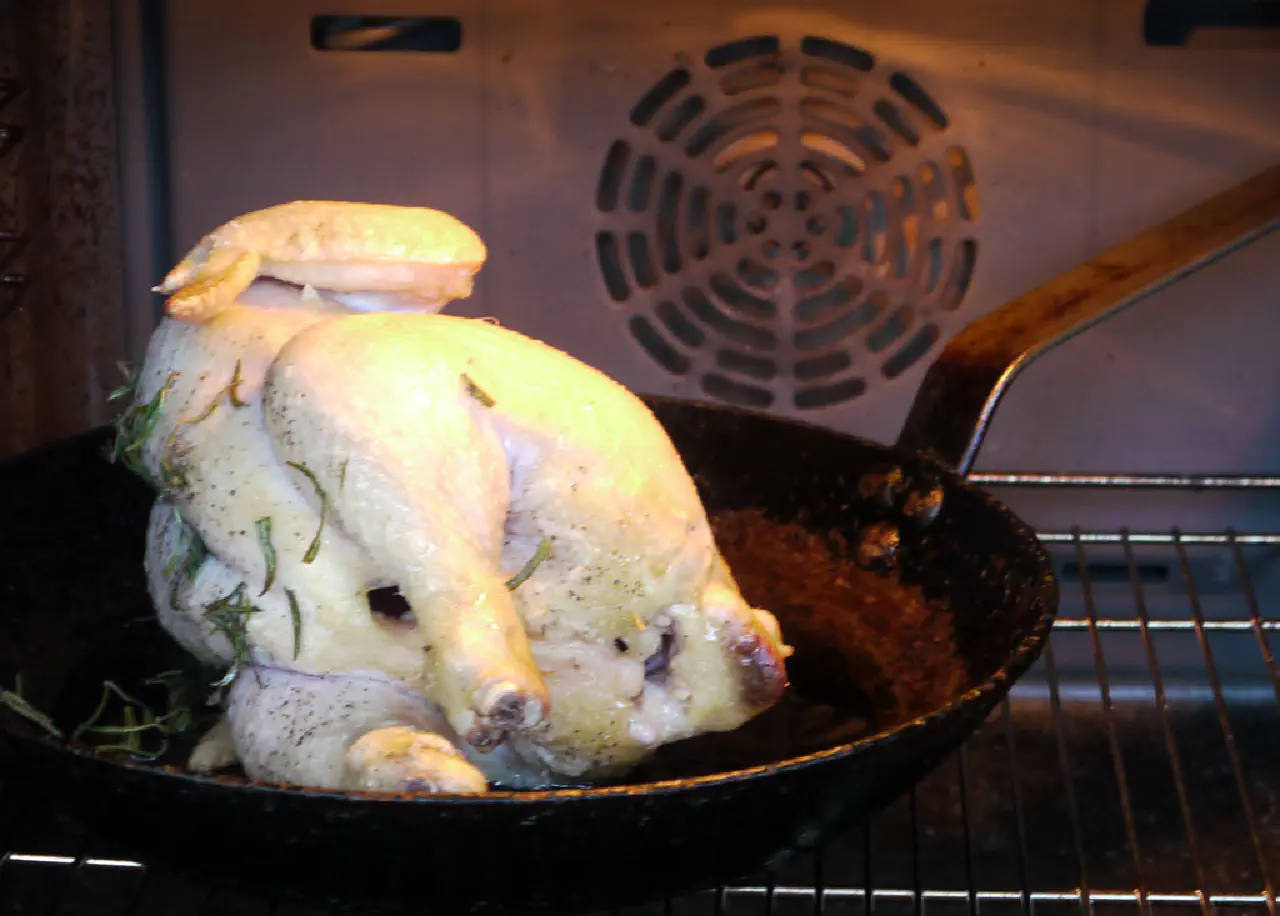
First, half an hour on one side © kvalifood.com
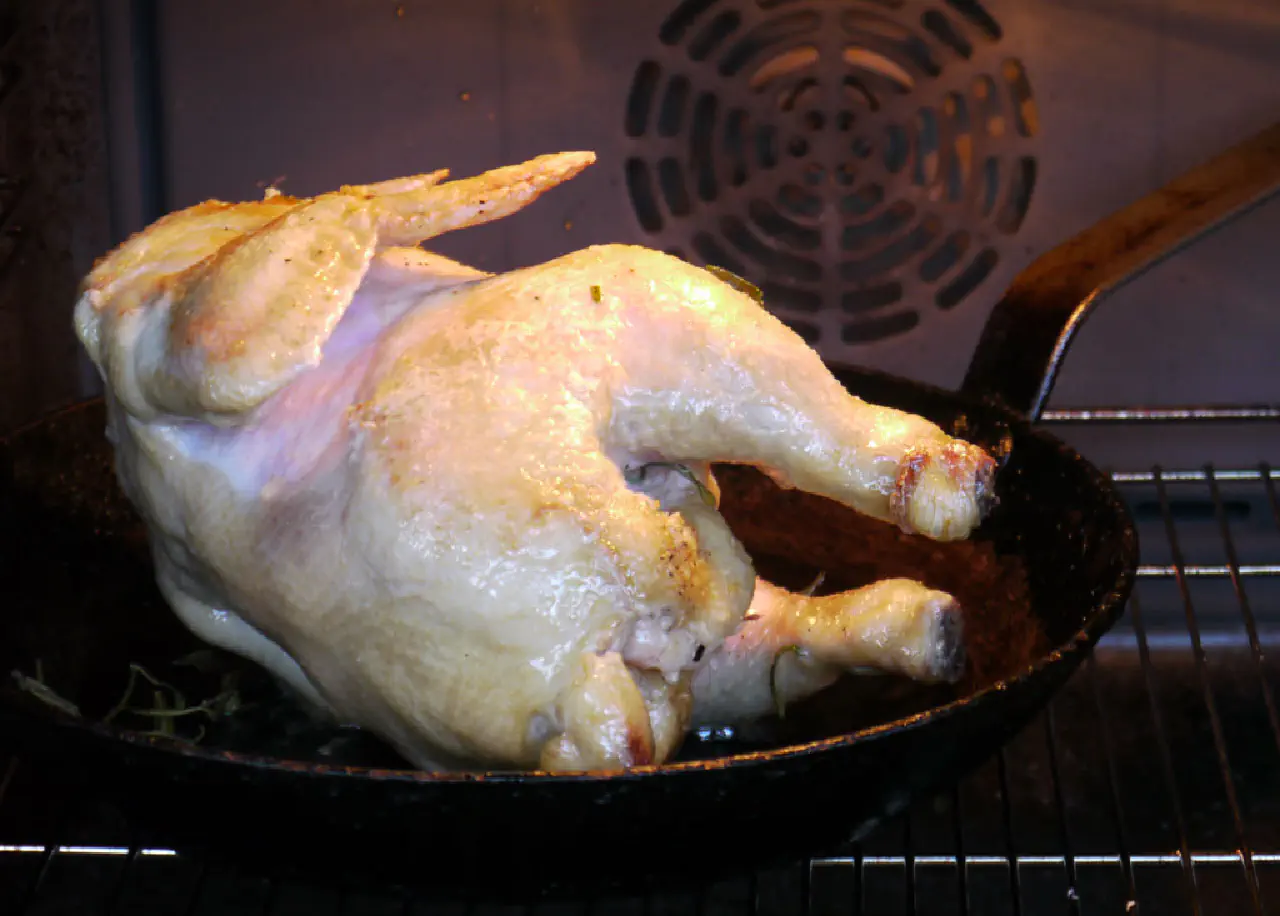
Then half an hour on the other side © kvalifood.com
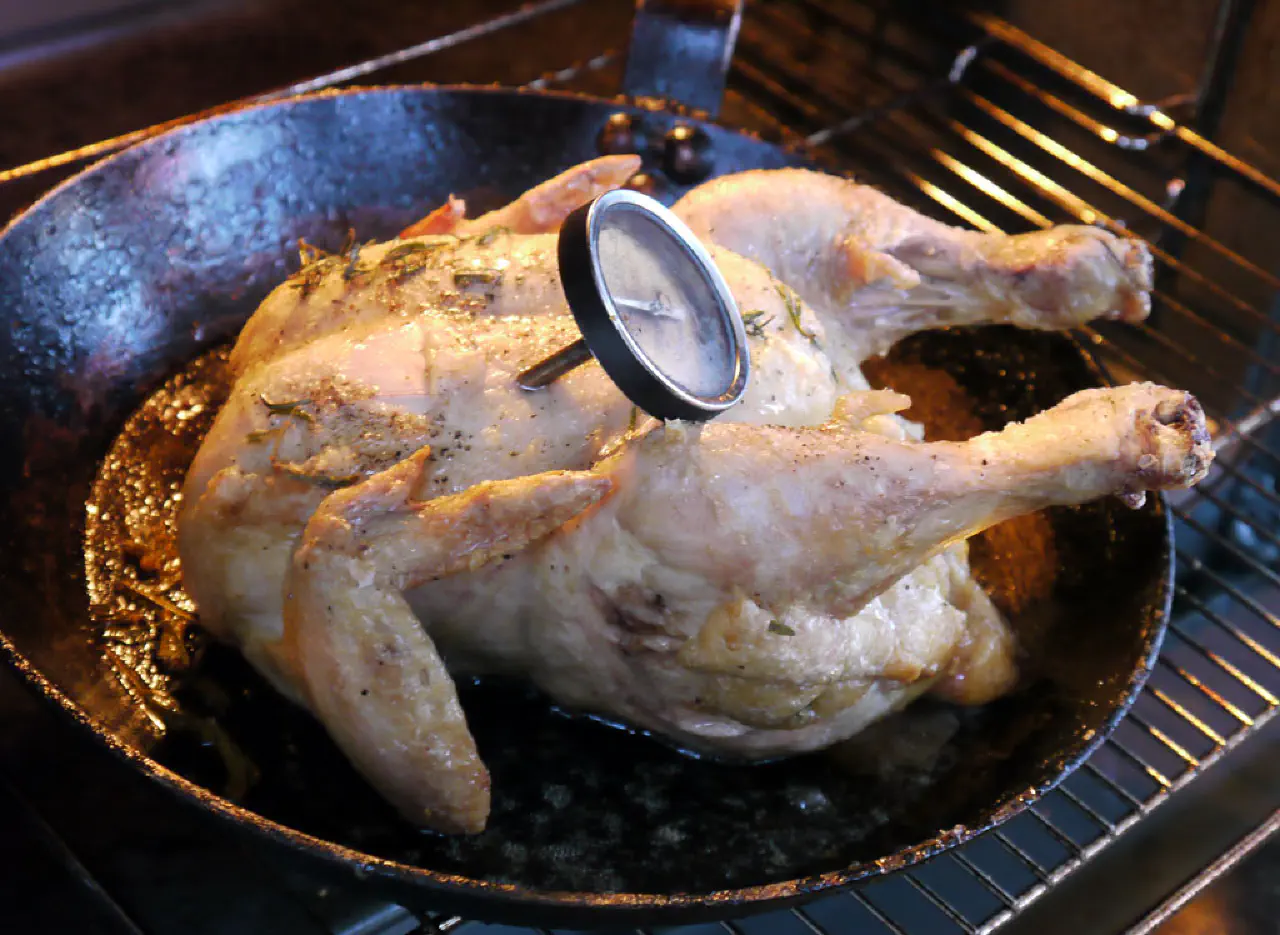
Then on its back for a while © kvalifood.com