Fish Flavor and Freshness
The flavor chemistry of fish is driven by an elegant adaptation: ocean fish must counterbalance the saltiness of seawater (about 3% salt) while their cells function optimally at ~0.8%. The molecules they accumulate for this osmotic balancing act are the same molecules that create their distinctive taste — and, eventually, their distinctive smell when they go off.
The Osmotic Strategy: Why Ocean Fish Taste Better
Ocean fish accumulate two main classes of osmolyte: amino acids (sweet glycine, savory glutamic acid) and TMAO (trimethylamine oxide, largely tasteless). Saltwater fish contain three to ten times more free amino acids than beef or freshwater fish, with shellfish especially rich. This explains the inherently savory, complex flavor of ocean seafood.
Mushrooms and Fungi
Mushrooms and Fungi
Mushrooms are not plants. They belong to a separate biological kingdom — Fungi — alongside molds and yeasts. They lack chlorophyll and cannot photosynthesize; instead, they live off other organisms’ substance. This fundamental difference gives them unique kitchen properties: chitin cell walls that never dissolve, extraordinary umami concentration, and flavor that intensifies with drying rather than fading.
Biology
What we eat is only the fruiting body — a small, ephemeral reproductive structure. The bulk of the organism lives underground as a fine network of fibers (hyphae) ramifying through soil: a single cubic centimeter can contain 2,000 meters of hyphae. When the underground mass accumulates enough energy, it organizes a dense growth of interwoven hyphae, pumps it up with water, and pushes through the soil surface to release spores into the air.
Protein Structure and Enzymes
Proteins are the most challenging and sensitive of the four food molecules. Unlike water, fats, and carbohydrates (all relatively stable), proteins drastically change behavior when exposed to heat, acid, salt, or air. This sensitivity is fundamental — proteins are the active machinery of life, assembling and tearing down molecules, transporting materials within cells, forming muscle fibers that move whole animals. Their inherent dynamism is what makes them so responsive to cooking conditions.
Soy Products
Soy Products
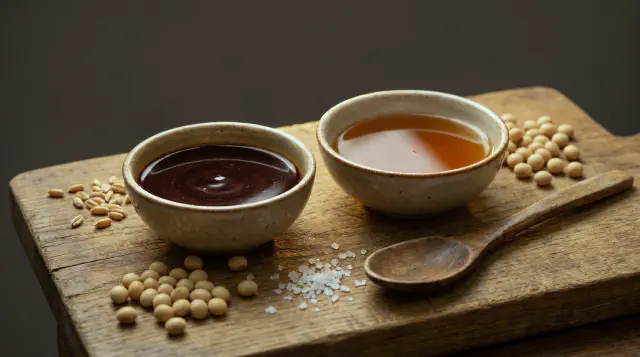
Soybeans present a palatability paradox: double the protein of other legumes, near-ideal amino acid balance, rich oil — yet raw or plainly boiled, they’re strongly “beany,” full of gas-producing oligosaccharides, antinutritional compounds, and a texture that’s firm rather than creamy (they contain negligible starch). Chinese cooks solved this with two fundamentally different approaches: extraction (separating desirable proteins and oil from everything else to make soymilk and tofu) and fermentation (using microbes to consume the undesirable compounds while generating savory complexity). The results — bean curd, soymilk, yuba, miso, soy sauce, tempeh, natto — are among the most versatile fermented foods in any tradition.
Tomatoes, Peppers, and Eggplant
The nightshade family includes both deadly poisons (nightshade, tobacco) and some of the kitchen’s most important ingredients. Tomatoes, sweet peppers, and eggplants are all nightshade fruits — botanically berries — that took many generations of breeding to reduce their defensive alkaloids to safe levels. Each has unique chemistry that defines how it should be cooked.
Tomatoes
Small, bitter berries on west coast South American desert bushes, domesticated in Mexico (from the Aztec tomatl, “plump fruit”). European suspicion of the nightshade resemblance lasted into the 19th century. Now the second most popular vegetable in America after the potato.
Fish Sauce - Definitive Guide