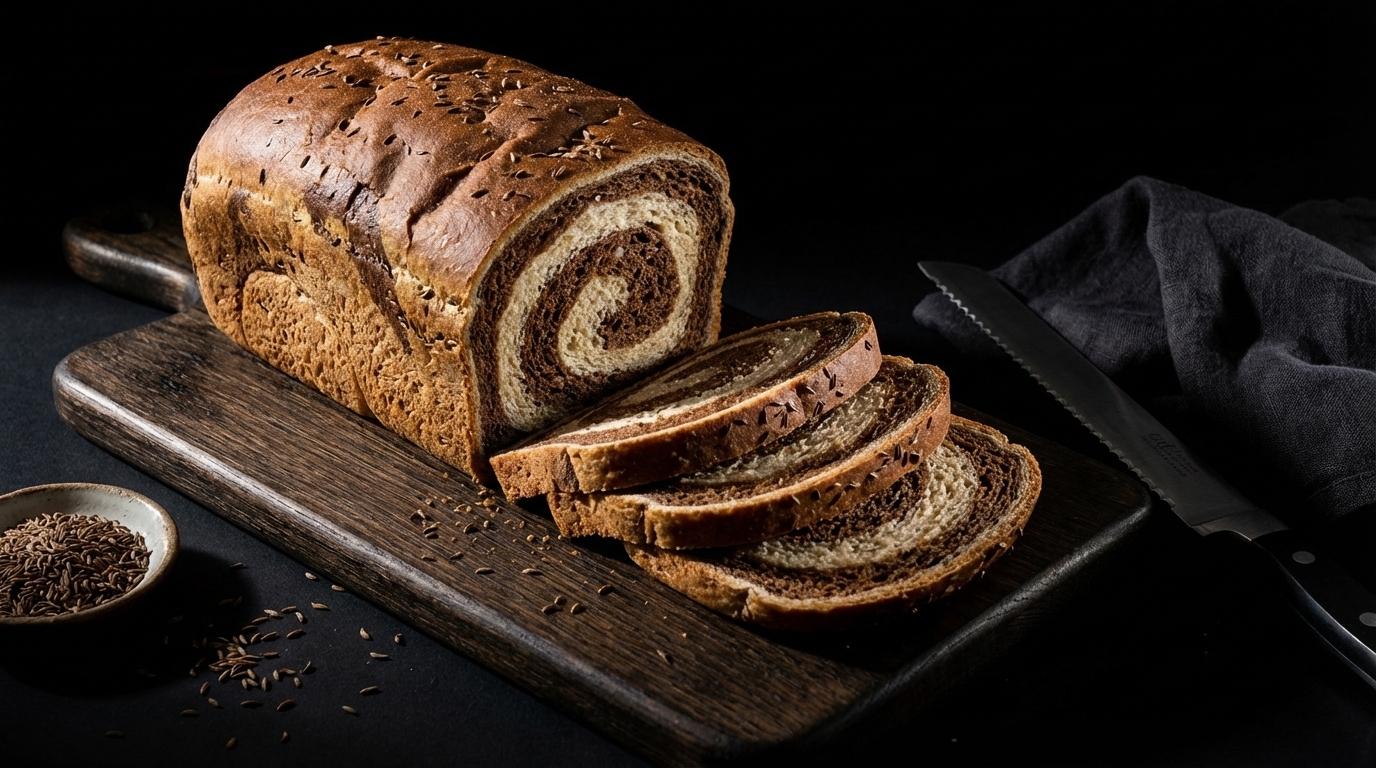
100 Percent Sourdough Rye Bread
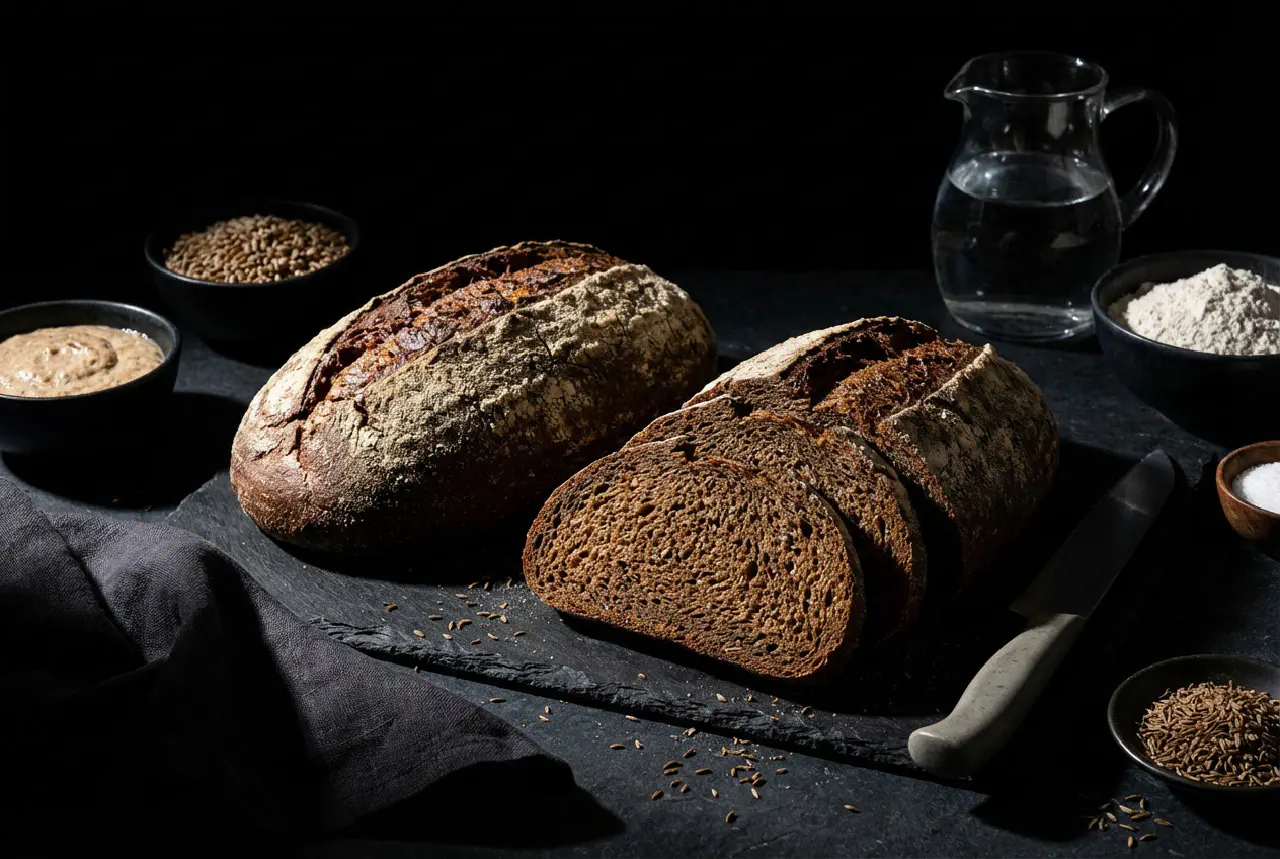
100 Percent Sourdough Rye Bread © kvalifood.com
A pure rye bread using wild yeast fermentation and a soaker to develop flavor and complexity. Rye has minimal gluten, creating a naturally dense, moist loaf with a long shelf life—ideal for those seeking alternatives to wheat breads.
Ingredients
Makes 2 1-pound loaves
Firm Rye Starter
- 100 g barm or rye barm
- 130 g white rye flour
- About 55 g water, room temperature
Soaker
- 55 g coarse whole-rye (pumpernickel-grind) flour or rye chops
- 110 g water, room temperature
Final Dough
- 380 g white rye flour
- 1½ tsp (.38 oz) salt
- 2 tbsp (.5 oz) caraway seeds (optional)
- 170–230 g water, lukewarm (90–100°F (32–38°C))
Directions
Day 1: Starter and Soaker
Make the rye starter by mixing the barm and rye flour, adding only enough water to form a firm, slightly tacky ball. Do not develop gluten, just hydrate the flour. Lightly oil a bowl, transfer the starter to it, and cover with plastic wrap. Ferment at room temperature for 4 hours or longer, until doubled, then refrigerate overnight.
Also on day 1, combine the coarse rye flour and water for the soaker in a separate bowl. Cover with plastic wrap and let sit at room temperature overnight.
Day 2: Final Dough
Remove the rye starter from the refrigerator 1 hour before mixing. Cut it into about 10 small pieces with a pastry scraper or serrated knife. Mist with spray oil, cover with a towel, and let sit for 1 hour.
Stir together the rye flour, salt, and seeds in a large mixing bowl. Add the soaker and starter pieces. With a large metal spoon, stir in enough lukewarm water to bring everything together into a ball.
Sprinkle rye flour on the counter and transfer the dough to it. Knead gently until all starter pieces are integrated and the dough forms a very tacky ball, about 5 to 6 minutes by hand. Add flour as needed. Rest the dough for 5 minutes, then give it a few more turns to complete kneading. It should register 77–81°F (25–27°C). Lightly oil a large bowl and transfer the dough, rolling it to coat with oil. Cover with plastic wrap.
Ferment for approximately 4 hours, or until nearly doubled.
Transfer the dough to a floured counter with minimal degassing. Divide into 2 equal pieces, sprinkle with rye flour, and gently shape into bâtards. Line a sheet pan with baking parchment sprinkled with coarse rye flour or cornmeal. Place the loaves at least 4 inches apart. Mist with spray oil and cover loosely with plastic wrap.
Either proof the dough for 2 hours at room temperature or refrigerate overnight. If chilling overnight, remove the pan from the refrigerator 4 hours before baking and proof at room temperature until about 1½ times its original size.
Day 2 or 3: Baking
Prepare the oven for hearth baking with a steam pan in place. Preheat to 500°F (260°C). Remove the dough from the bag, let it sit exposed for 5 minutes, then score it.
Slide the parchment and dough onto a peel or baking stone (or bake directly on the sheet pan). Pour 1 cup hot water into the steam pan and close the door. After 30 seconds, mist the oven walls with water and close the door. Repeat twice more at 30-second intervals. After the final spray, lower the oven to 425°F (220°C) and bake for 10 minutes.
Rotate the loaves 180 degrees if necessary and continue baking for another 10 to 15 minutes, or until done. Internal temperature should reach approximately 200°F (93°C) and the crust should be hard and somewhat coarse.
Transfer the breads to a cooling rack and cool for at least 1 hour before slicing.
Notes
- Rye flour varieties: Use a blend of white rye and coarse rye (pumpernickel or rye chops) for complex texture. White rye alone is lighter in flavor.
- Gluten development: Rye dough won’t make a good windowpane due to low gluten content; this is normal.
- Density and shelf life: The tight crumb and added hydration from the soaker provide steam-based leavening alongside wild yeast, resulting in a relatively dense loaf that stores well.
- Caraway seeds: Optional but traditional; skip if you prefer a milder flavor.
- Spelt substitute: This same formula works with spelt flour, another gluten-light grain.
See Also
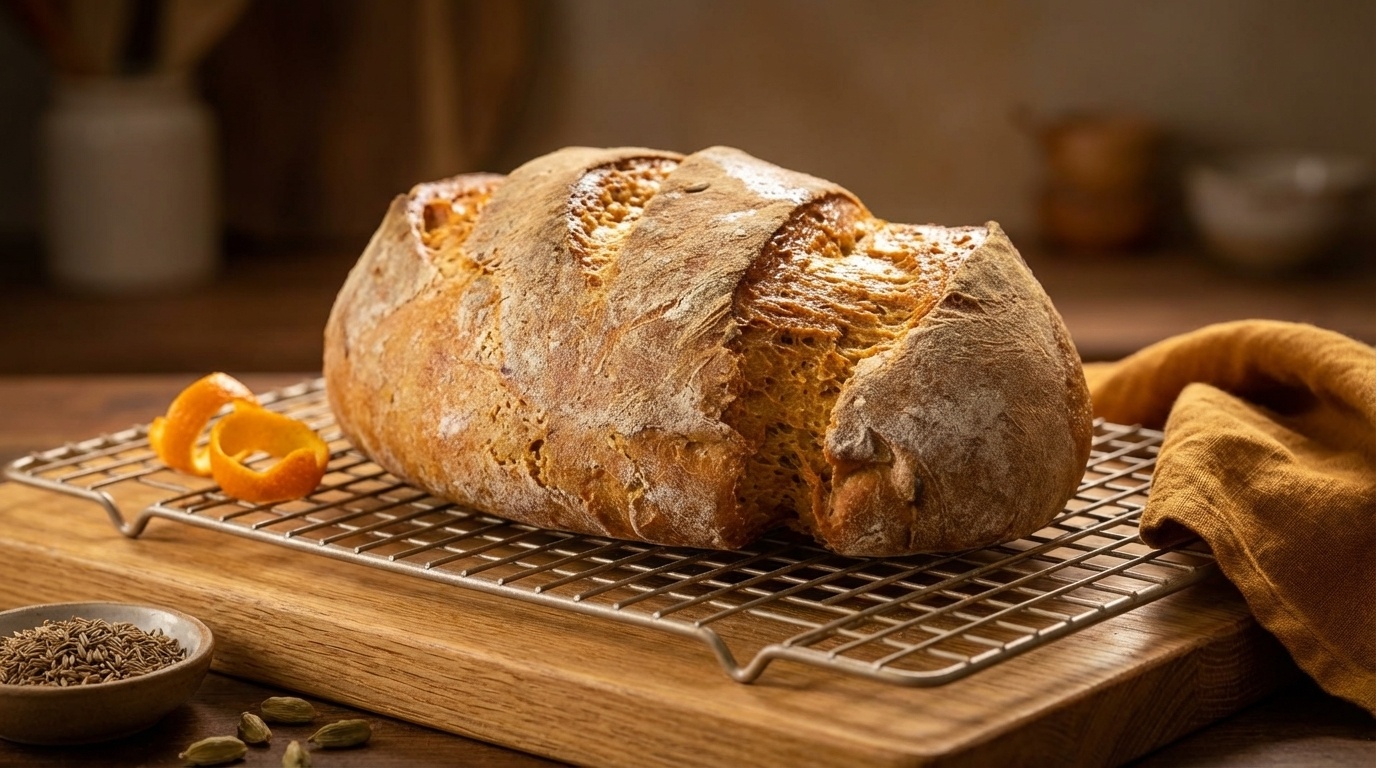
Swedish Rye (Limpa)
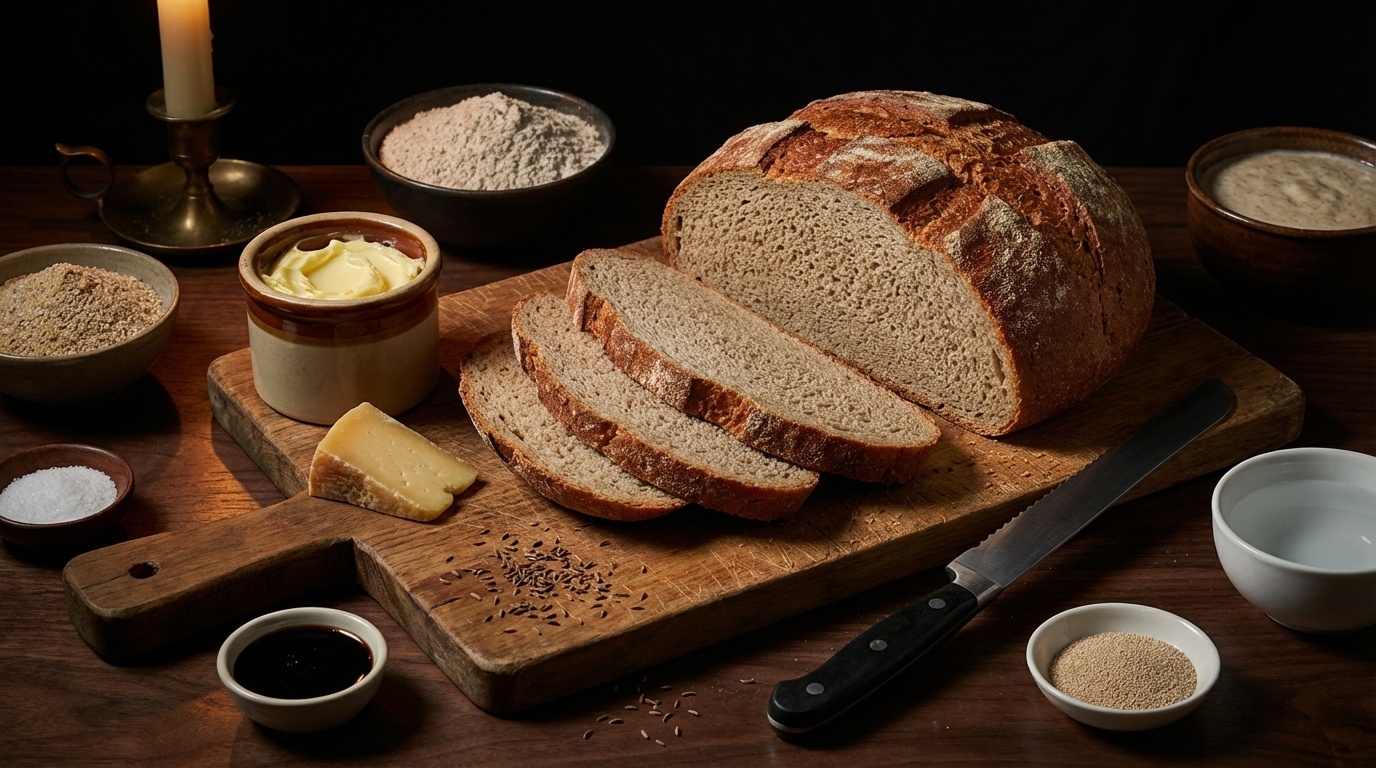
Pumpernickel Bread
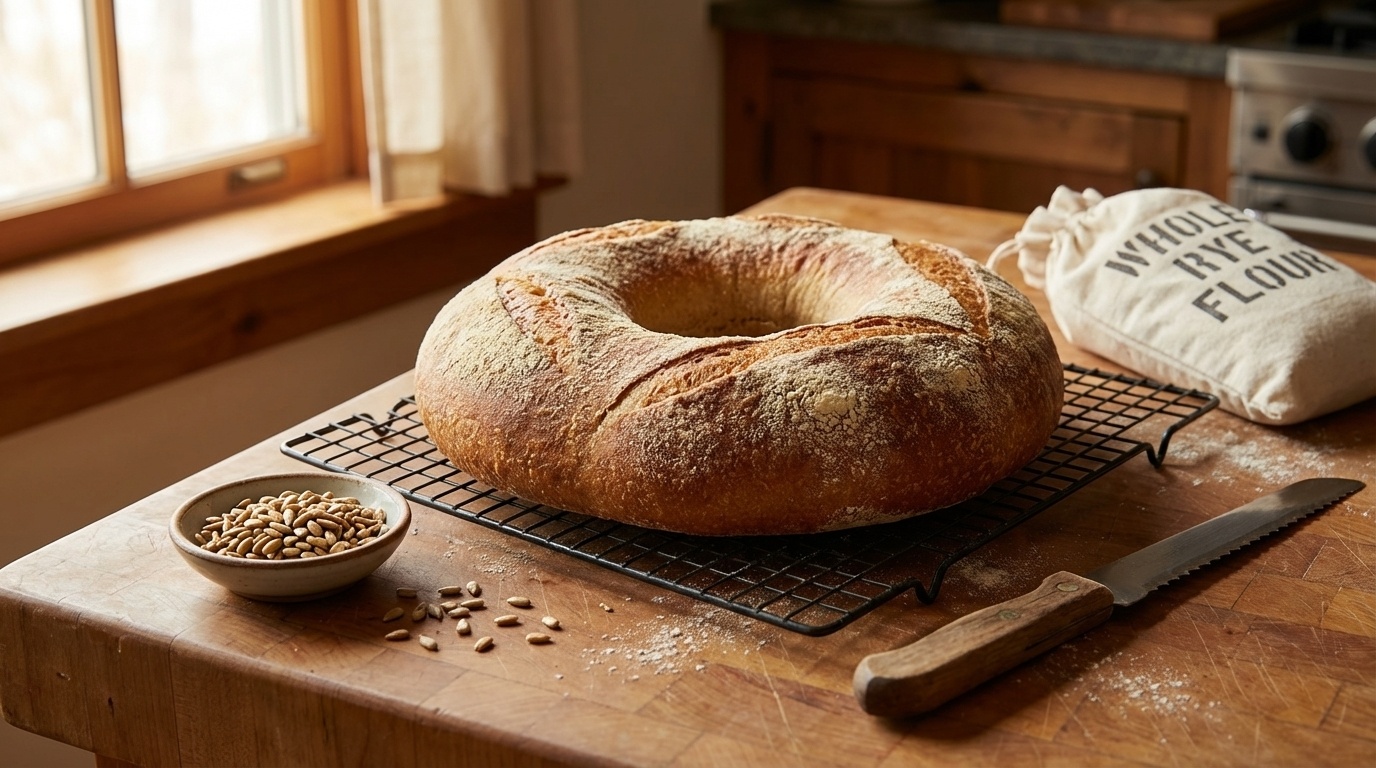
Sunflower Seed Rye
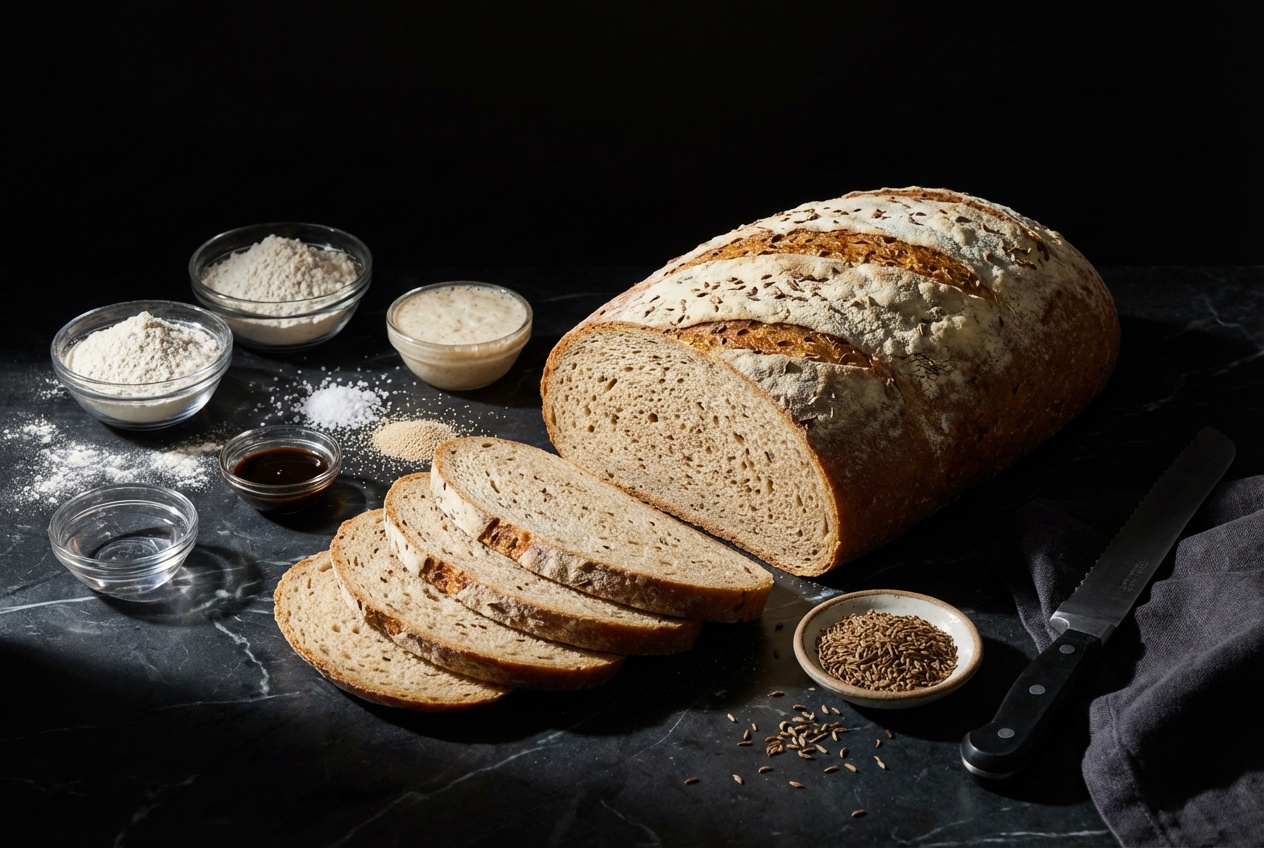
New York Deli Rye
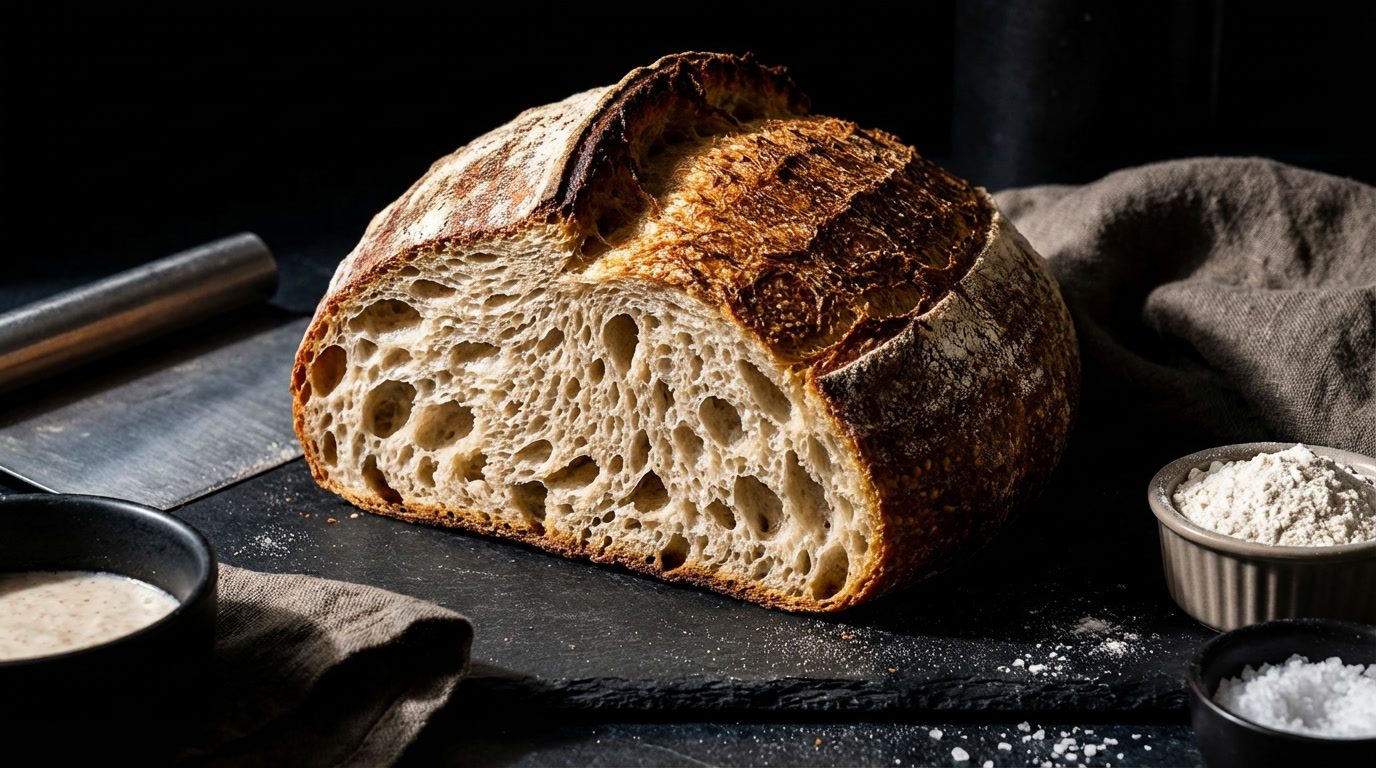
Basic Sourdough Bread