Amerikaner
Prep 15 min Total 50 min
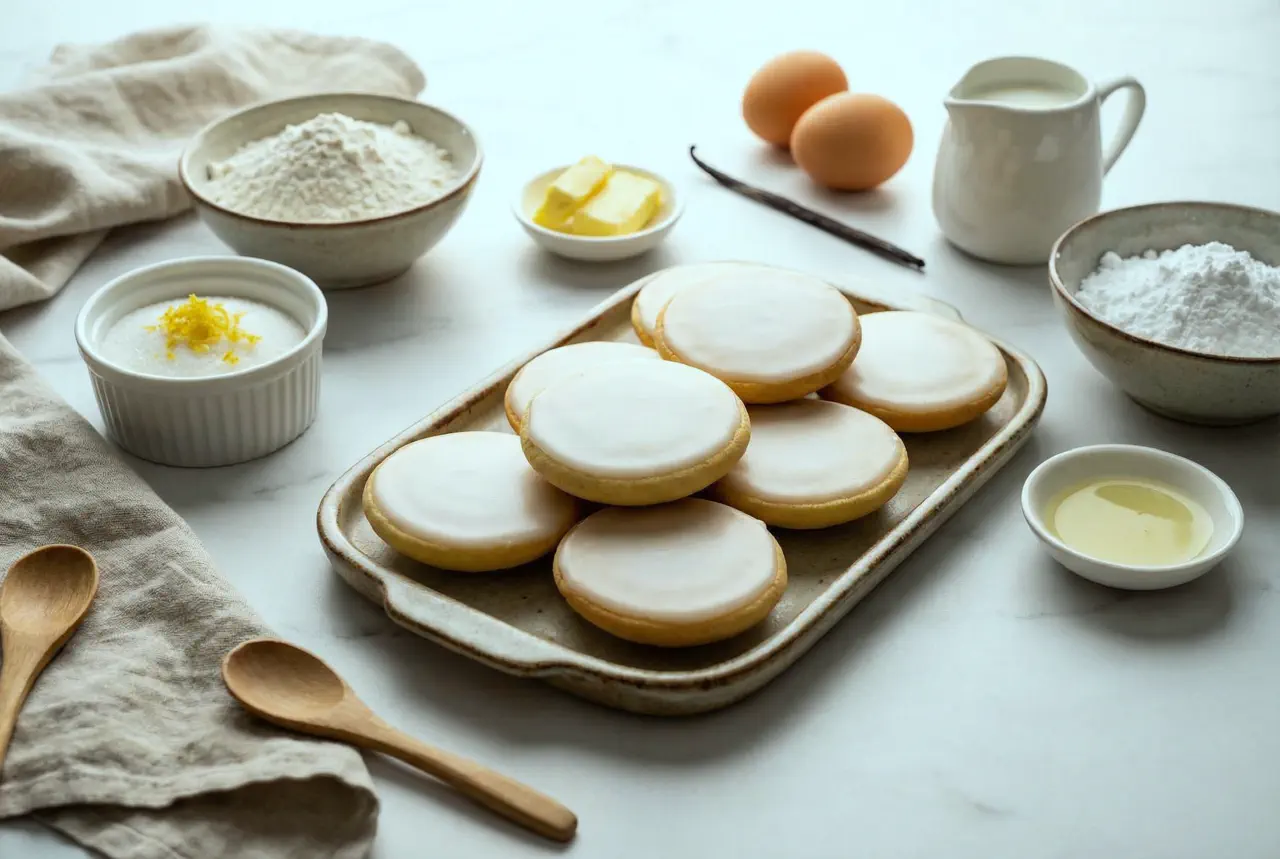
Amerikaner © kvalifood.com
Amerikaner are a classic German baked treat - soft, domed rounds with a spongy crumb, somewhere between a muffin and a thick cookie. The flat underside is turned upward and coated with a thick lemon glaze; in the classic black-and-white version, half is covered with dark chocolate. The name most likely derives from “Ammoniakaner” - pastry leavened with ammonium bicarbonate (hartshorn salt), the traditional raising agent - shortened over time to “Amerikaner.” “Amerikaner” is German. Which makes it about as American as a Wiener Schnitzel, a Volkswagen, or your neighbor’s suspiciously named IKEA shelf.
Ingredients
Makes 12 (approximately)
dough
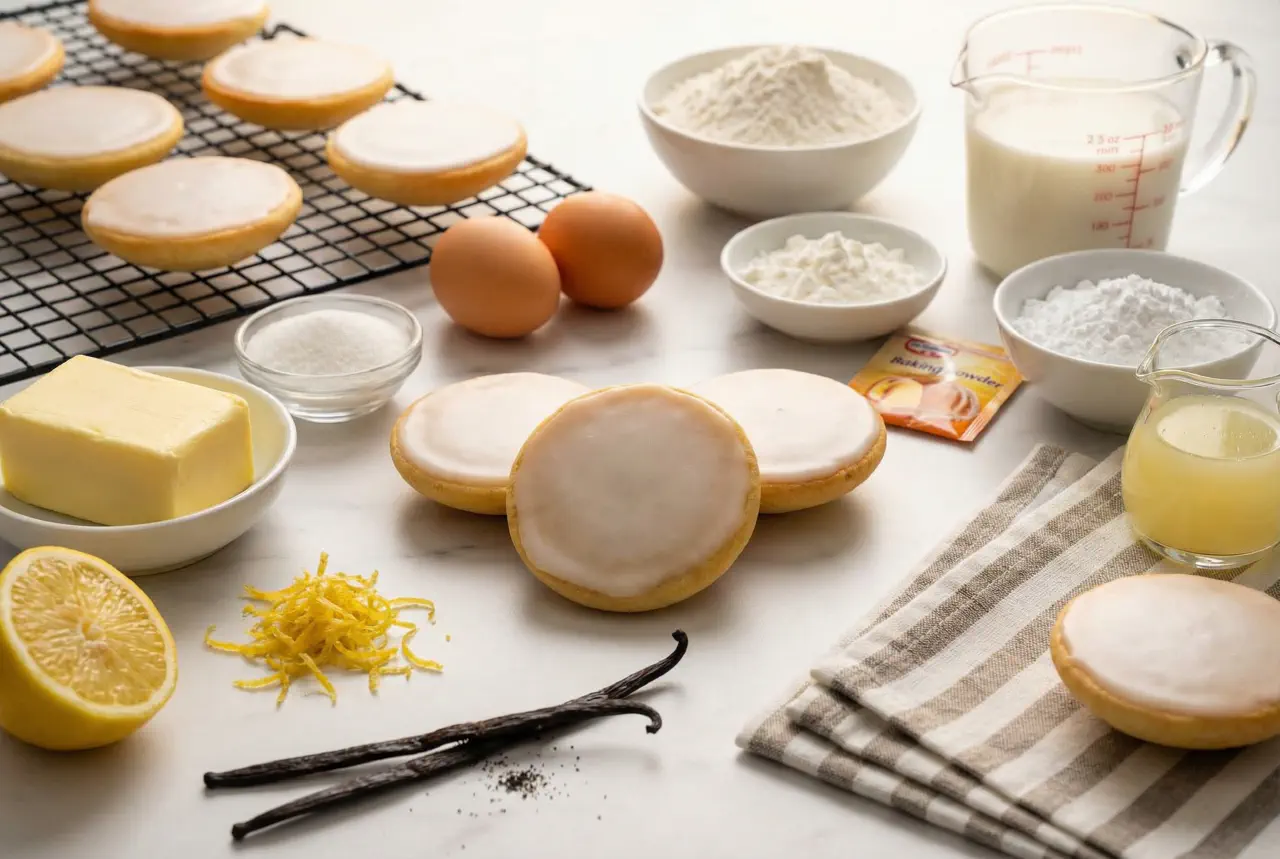
- 250 g all-purpose flour
- 50 g cornstarch
- 1 packet baking powder (16 g / 1 tbsp)
- 1 pinch salt
- 100 g butter, softened
- 110 g sugar
- 1 packet vanilla sugar (8 g), or 1 tsp vanilla extract
- 2 eggs (size M/L)
- 80 ml milk
lemon glaze
- 150 g powdered sugar
- 2-3 tbsp lemon juice (30-45 ml)
Chocolate glaze (optional - for black-and-white version)
- 100 g dark chocolate (min. 50%)
Directions
Dough and baking
Preheat the oven to 375°F (190°C), or 340°F (170°C) fan/convection. Line two baking sheets with parchment paper. Optionally draw circles (3 in / 8 cm diameter) on the underside of the parchment as a guide.
Beat butter, sugar, and vanilla sugar with an electric mixer until pale and fluffy, about 3 minutes. Add the eggs one at a time, beating well after each addition.
In a separate bowl, whisk together the flour, cornstarch, baking powder, and salt. Fold the dry ingredients into the egg mixture in alternating additions with the milk - start and end with the dry ingredients. Mix only until just combined; over-mixed Amerikaner turn tough.
Transfer the batter to a piping bag fitted with a large round tip (0.6-0.8 in / 1.5-2 cm), or use two spoons. Pipe or drop rounds (3 in / 7-8 cm diameter) onto the prepared sheets with plenty of space between them - they spread a little during baking.
Bake for 12-15 minutes until lightly golden at the edges but still pale on top. The base (facing up in the oven) should feel firm to the touch. Transfer to a wire rack to cool - do not flip them yet.
Glazing
Make the lemon glaze: sift the powdered sugar and stir in the lemon juice a little at a time until you have a thick, creamy paste that is almost too thick to pour. The glaze should hold its shape and not run off.
Flip the cooled Amerikaner over (flat base now facing up). It’s the only baked good that improves by being served upside down - and self-aware enough to admit it. Spread a generous layer of lemon glaze over each one with a palette knife. Let set.
Black-and-white version: Melt the chocolate over a bain-marie or carefully in a microwave. Glaze half of each Amerikaner with chocolate - either half-and-half on each, or alternate cookies. Let set completely before serving.
Notes
- Cornstarch is essential for the characteristic light, airy crumb - do not substitute with plain flour.
- The lemon glaze must be thick: glaze that is too thin will run off and give uneven coverage. Start with 2 tbsp lemon juice and add more drop by drop. This is the only precision measurement in baking that gets more accurate the more anxious you feel about it.
- The flip: the domed side is technically the “bottom” and is served facing down. The flat side is glazed and turned upward - this is the traditional presentation.
- Hartshorn salt (ammonium bicarbonate): the original leavener. It gives a crispier base and better shelf life. Use 5-7 g hartshorn salt instead of baking powder, but be prepared for a strong ammonia smell during baking (harmless; it disappears completely in the finished product). It gives a crisper base, better shelf life, and a brief window where everyone in your house stops what they’re doing and silently evaluates the situation.
- Storage: keep in an airtight tin for 3-5 days. The flavor often improves the day after baking.