Bagels
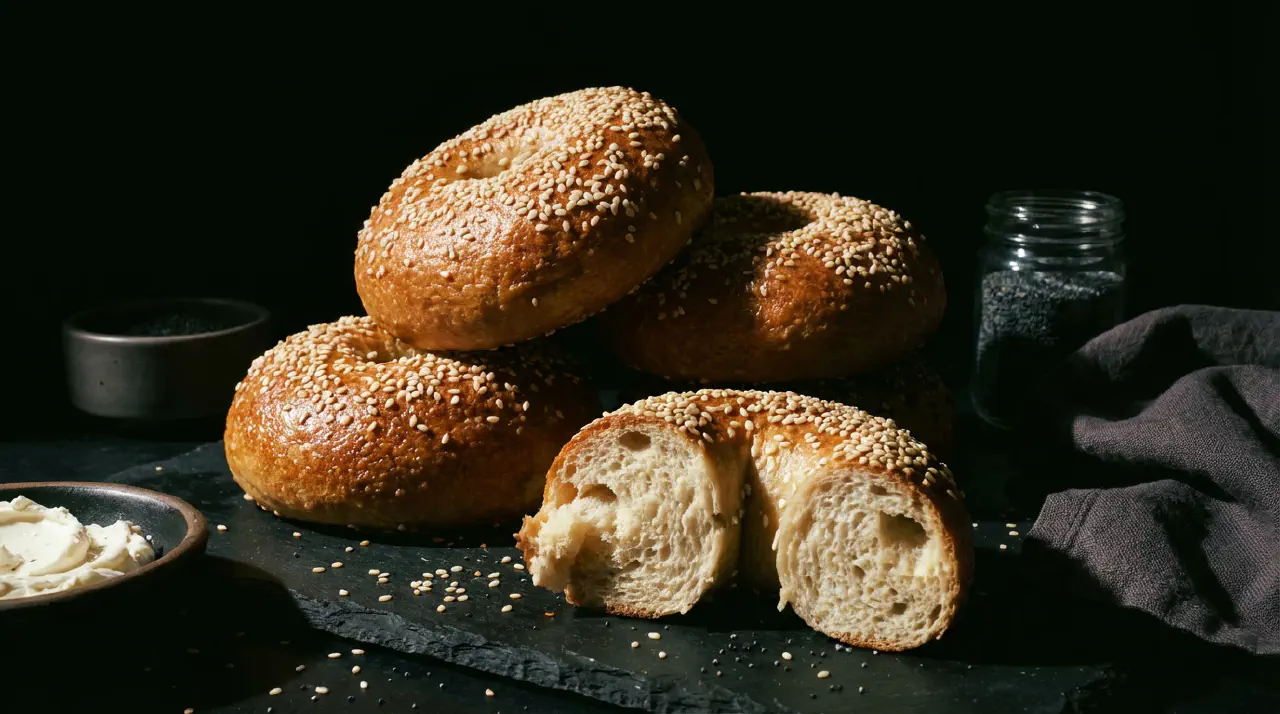
Bagels © kvalifood.com
A classic boiled bagel with dense, chewy crumb and shiny crust. The sponge pre-ferment and overnight cold retard develop deep flavor and improve freezing quality.
Ingredients
Makes 12 large or 24 mini bagels
Sponge
- 1 tsp instant yeast
- 510 g unbleached high-gluten or bread flour
- 570 g water, room temperature
Dough
- ½ tsp instant yeast
- 480 g unbleached high-gluten or bread flour
- 2¾ tsp salt
- 2 tsp malt powder, or 1 tbsp dark/light malt syrup, honey, or brown sugar
To Finish
- 1 tbsp baking soda
- Cornmeal or semolina flour, for dusting
- Sesame seeds, poppy seeds, kosher salt, garlic, or onions, for topping (optional)
Directions
Day 1
Stir the yeast into the flour in a 4-quart bowl. Add water, stirring only until a smooth, sticky batter forms. Cover with plastic wrap and let sit at room temperature for about 2 hours until very foamy and nearly doubled. It should collapse when the bowl is tapped.
Add the additional yeast to the sponge and stir. Add 3 cups flour with all the salt and malt. Mix until a ball forms, then slowly work in the remaining ¾ cup flour to stiffen the dough.
Transfer to the counter and knead for at least 10 minutes (6 minutes by machine). The dough should be firm and stiff, but still pliable and smooth, with no raw flour visible. Test the windowpane and aim for 77–81°F (25–27°C). Add drops of water if too dry, or flour if too sticky.
Divide the dough into 4½-oz pieces for standard bagels. Form each into a roll. Cover with a damp towel and rest for about 20 minutes.
Line 2 sheet pans with parchment and mist lightly with oil. Shape each piece: Either poke a hole and stretch it to 2½ inches diameter with even thickness, or roll into an 8-inch rope, wrap around your palm and back of hand, overlap the ends, and seal by pressing on the counter.
Place shaped pieces 2 inches apart on the pans. Mist lightly with oil, place in a plastic bag or cover loosely with plastic wrap, and let sit at room temperature for about 20 minutes.
Test bagels with the float test: drop one into a bowl of cool water. If it floats within 10 seconds, they’re ready to retard. Return the tester bagel to the pan, pat dry, cover, and refrigerate overnight (up to 2 days). If it doesn’t float, continue proofing at room temperature, checking every 10-20 minutes.
Day 2
Preheat the oven to 500°F (260°C) with two racks in the middle. Bring a large pot of water to a boil and add the baking soda. Have a slotted spoon nearby.
Remove bagels from the refrigerator and gently drop into the boiling water, as many as fit comfortably (they should float within 10 seconds). After 1 minute, flip them over and boil for another minute. For very chewy bagels, extend to 2 minutes per side.
While bagels boil, sprinkle the parchment-lined sheet pans with cornmeal or semolina. Top the bagels as they come out of the water with seeds, salt, garlic, or onions if desired.
Place pans on the middle shelves. Bake for about 5 minutes, then rotate the pans, switching shelves and turning 180 degrees. Lower the oven to 450°F (230°C) and bake about 5 more minutes until light golden brown.
Remove from the oven and cool on a rack for at least 15 minutes before serving.
Notes
- High-gluten flour: Provides the elasticity and tough chew classic bagels need. Available by mail order or at specialty markets, or ask your local bagel shop. Regular bread flour works but yields less chew.
- Malt syrup: Liquid nondiastatic malt gives authentic bagel flavor. Diastatic malt (powder or crystal) is an active form available from beer-making suppliers. Honey or brown sugar are acceptable substitutes.
- Sponge fermentation: The extended, cool fermentation from the sponge and overnight retard releases trapped flavors and improves shelf life far better than same-day methods.
- Hydration: Bagel dough is stiff (50-57% water-to-flour ratio) to withstand boiling without deflating. Let the dough guide you—add flour or water gradually as needed.
- Boiling liquid: Baking soda alkalizes the water and causes subtle starch gelatinization, yielding slight shine and richer caramelization. Lye is traditional but harder to source.
- Cinnamon Raisin Bagels: Increase yeast in final dough to 1 tsp, add 1 tbsp ground cinnamon and 5 tbsp sugar to the dough. Rinse 2 cups raisins with warm water and add during the final 2 minutes of mixing. Skip garnishes. Brush hot bagels with melted butter and dip in cinnamon sugar if desired.
See Also
100 Percent Sourdough Rye Bread
Brioche and Brioche Relatives
Anadama Bread