Basic Sourdough Bread
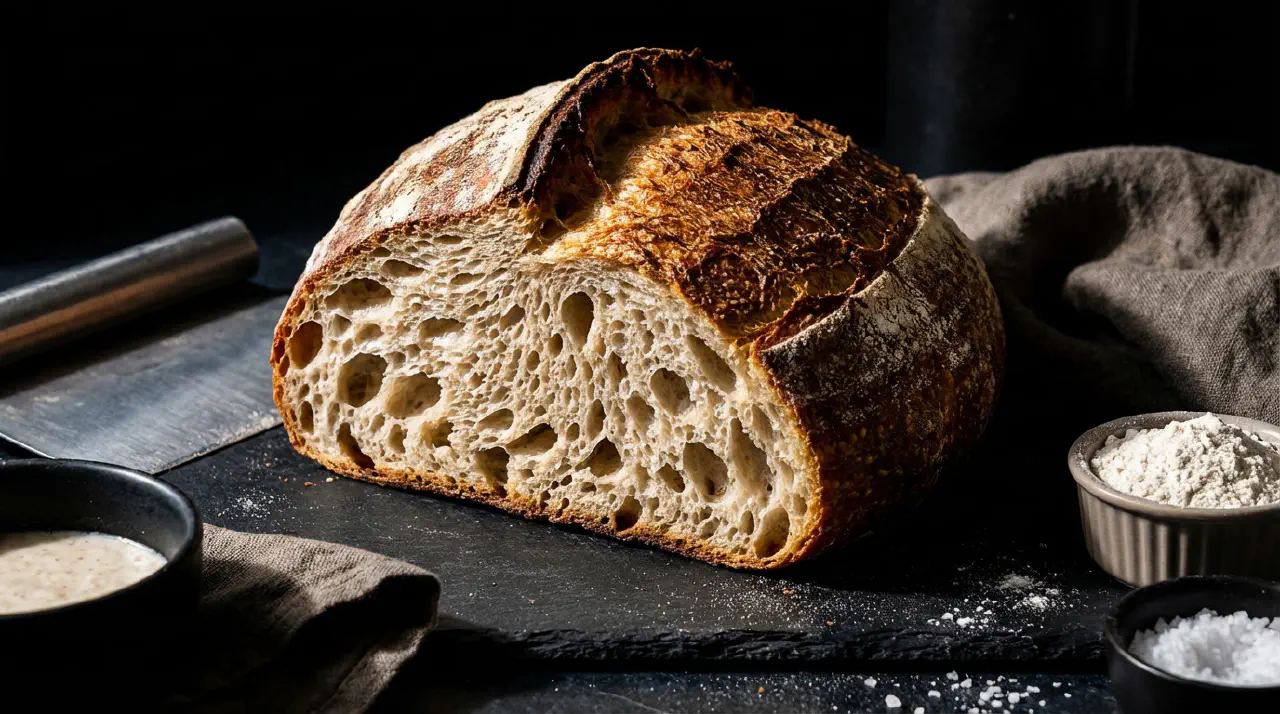
Basic Sourdough Bread © kvalifood.com
A lean, wild-yeast bread using the three-build method (barm to firm starter to final dough) combined with cold fermentation to develop maximum flavor without multiple intermediate builds. Flexible and adaptable to variations.
Ingredients
Makes 2 1½-pound loaves
Firm Starter
- 110 g barm
- 130 g unbleached high-gluten or bread flour
- 30–55 g water, room temperature
Final Dough
- 570 g unbleached high-gluten or bread flour, or flour combination
- 2 tsp (.5 oz) salt
- 340–400 g water, lukewarm (90–100°F (32–38°C))
- Semolina flour or cornmeal, for dusting
Directions
Day 1: Firm Starter
Remove the barm from the refrigerator 1 hour before making the firm starter. Dip a ⅔-cup measuring cup into water, then scoop it into the barm (the wet cup allows it to slide out easily). Transfer to a small bowl, cover with a towel, and allow to warm for 1 hour.
Add the flour to the bowl and mix together the barm and flour, adding only enough additional water so you can knead this into a small ball with the texture of French bread dough. Do not work it long, just until all flour is hydrated and barm is evenly distributed. Lightly oil a small bowl and place the starter in it, turning to coat with oil. Cover the bowl.
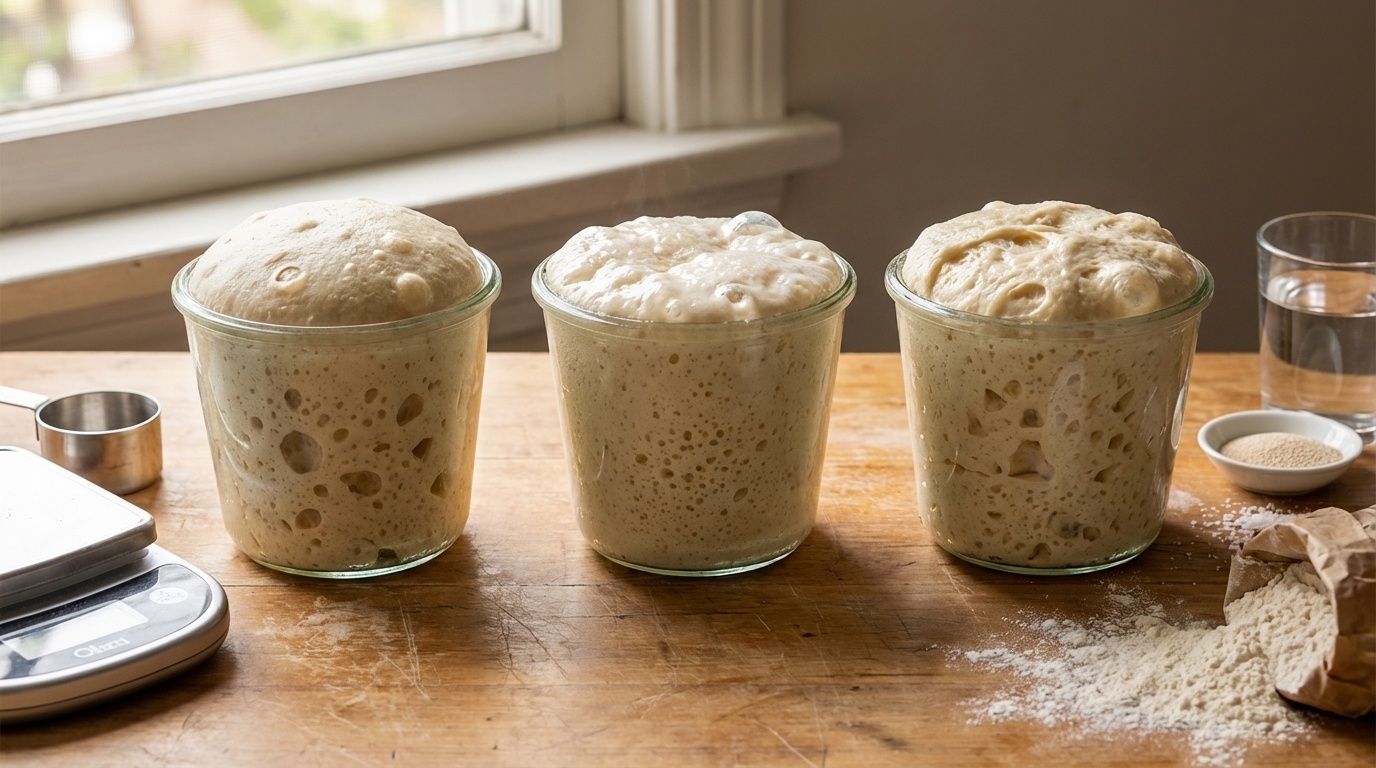
Ferment at room temperature for approximately 4 hours, or until at least doubled in size. Then refrigerate overnight.
Day 2: Final Dough
Remove the starter from the refrigerator 1 hour before making the dough. Cut it into about 10 small pieces with a pastry scraper or serrated knife. Mist with spray oil, cover with a towel, and let sit for 1 hour.
Stir together the flour and salt in a large mixing bowl. Add the starter pieces and enough water to bring everything together into a ball as you stir with a large metal spoon.
Sprinkle the counter with flour, transfer the dough to it, and knead by hand for 12 to 15 minutes (or mix with the dough hook for 4 minutes on medium-low speed, rest 5 to 10 minutes, and mix for 4 minutes more). Adjust water or flour as needed. The dough should be firm but tacky, like firm French bread dough. It should pass the windowpane test and register 77–81°F (25–27°C).
Lightly oil a large bowl and transfer the dough, rolling it to coat with oil. Cover with plastic wrap.
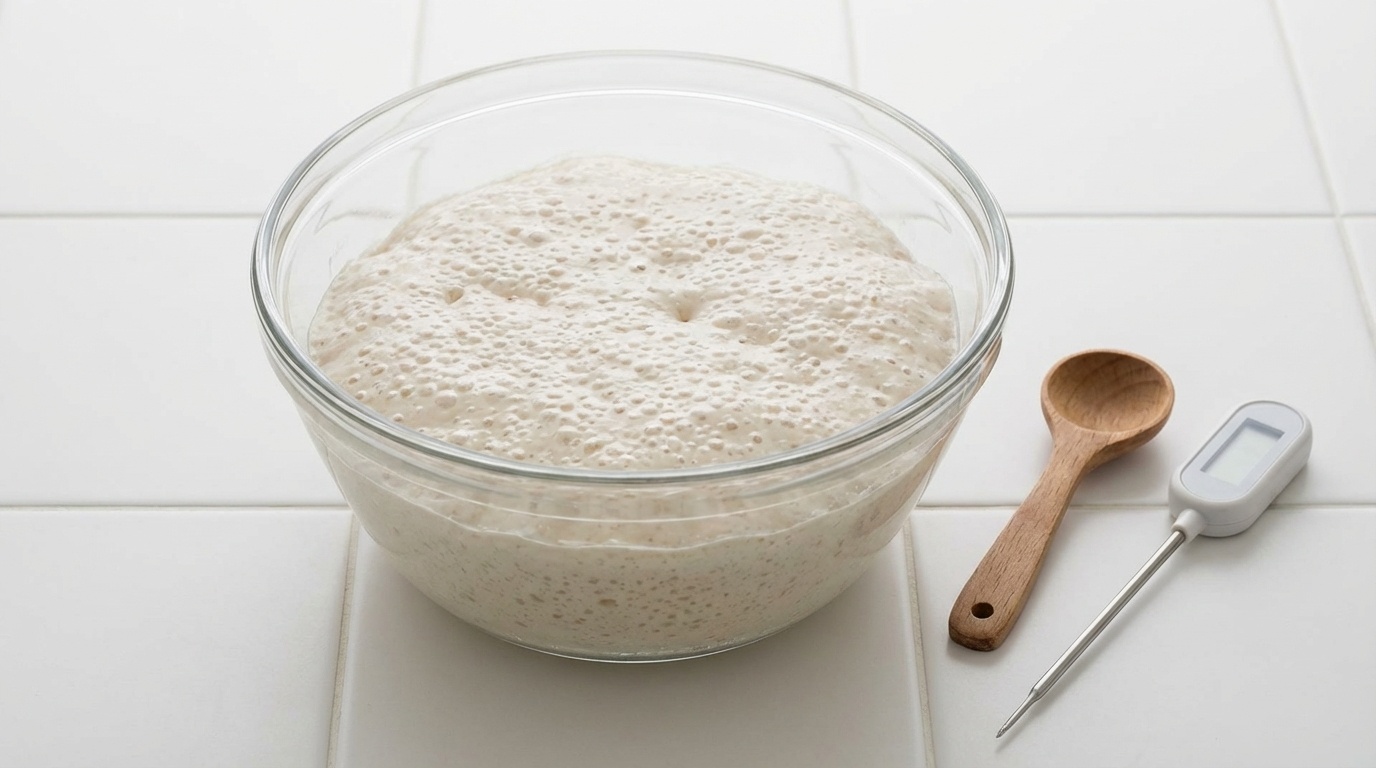
Ferment at room temperature for 3 to 4 hours, or until nearly doubled.
Gently remove the dough from the bowl and divide into 2 equal pieces (about 22 oz each), or into smaller pieces for rolls, being careful to degas minimally. Gently shape into boules, bâtards, or baguettes.
Proof the dough in bannetons, proofing bowls, on couches, or on parchment-lined sheet pans dusted with semolina or cornmeal. Mist the exposed dough with spray oil and loosely cover with a towel or plastic wrap, or slip into a food-grade plastic bag. At this point, proof for 2 to 3 hours at room temperature, or retard overnight in the refrigerator. If retarding, remove about 4 hours before baking.
Prepare the oven for hearth baking with a steam pan in place. Preheat to 500°F (260°C). Carefully remove the towel or plastic wrap from the dough (or slip the pan from the bag) 10 minutes before baking.
Generously dust a peel or the back of a sheet pan with semolina or cornmeal and gently transfer the dough to the peel, carefully removing the cloth liner from the top if proofed in a bowl. (Dough proofed on a sheet pan can bake directly on that pan.) Score the dough and slide onto a baking stone (or bake directly on the sheet pan).
Pour 1 cup hot water into the steam pan and close the door. After 30 seconds, spray the oven walls with water and close the door. Repeat twice more at 30-second intervals. After the final spray, lower the oven to 450°F (230°C) and bake for 10 minutes. Rotate the loaves 180 degrees if necessary and continue for another 10 to 20 minutes, or until done. They should register 205°F (96°C) in the center, be golden brown, and sound hollow when thumped.
Transfer to a cooling rack and cool for at least 45 minutes before slicing.
Notes
- Three-build method: This multi-stage approach builds flavor through successive fermentations. Cold fermentation (retarding) replaces additional intermediate builds.
- Flour variations: Substitute whole-wheat or rye flour for some or all of the bread flour; classic French pain au levain uses about 10 percent whole-wheat or rye.
- Mix-ins: Add roasted garlic, nuts, seeds, raisins, dried fruit, or cheese at about 40 percent of flour weight; fold in during the final 2 minutes of mixing to avoid breaking them up.
- Cheese combinations: Blue cheese and walnuts work well; reduce salt by 25 percent (to 1½ tsp) when using salty cheeses like blue or feta.
- Wet-dough variations: Use equal amounts of barm instead of the firm starter for rustic, wet-dough breads; adjust fermentation to 3 to 4 hours bulk and 90 minutes proofing.
See Also
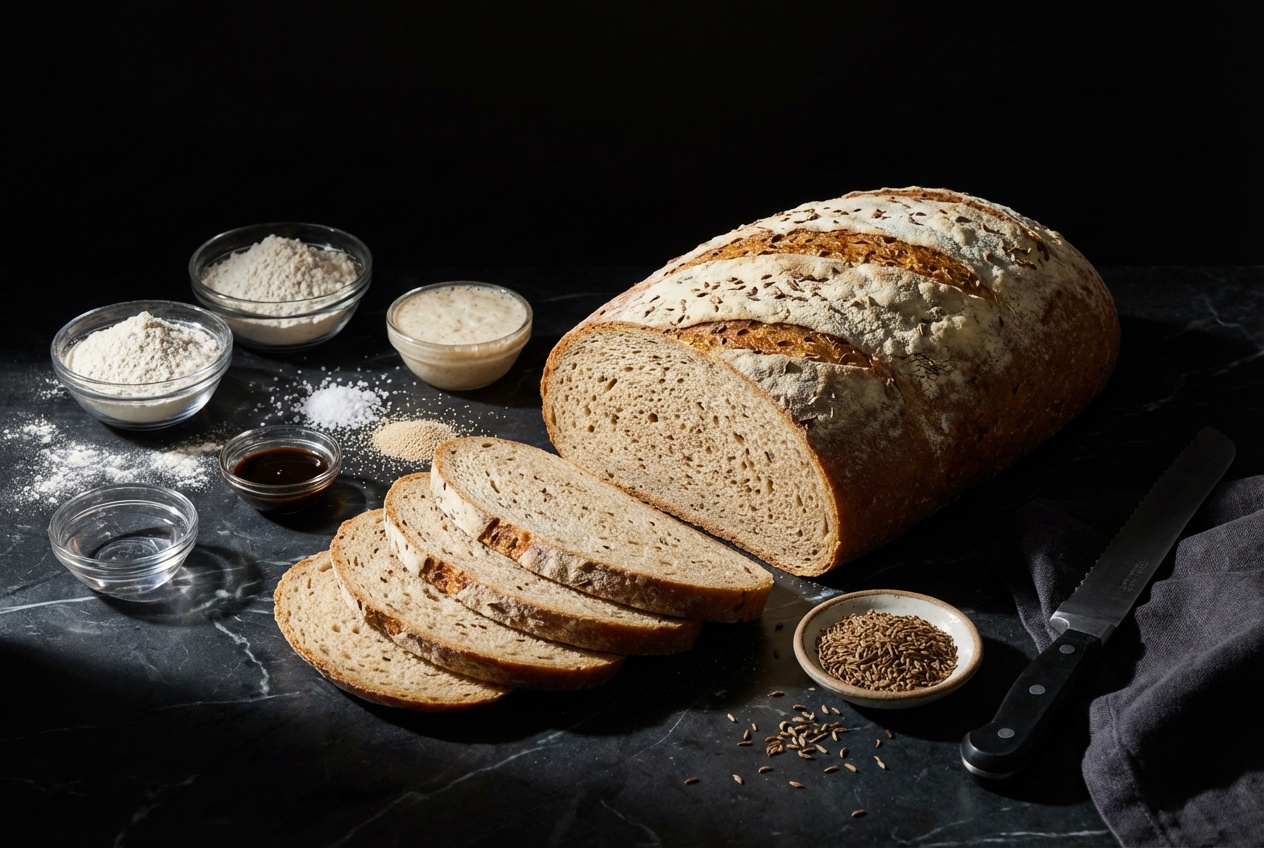
New York Deli Rye
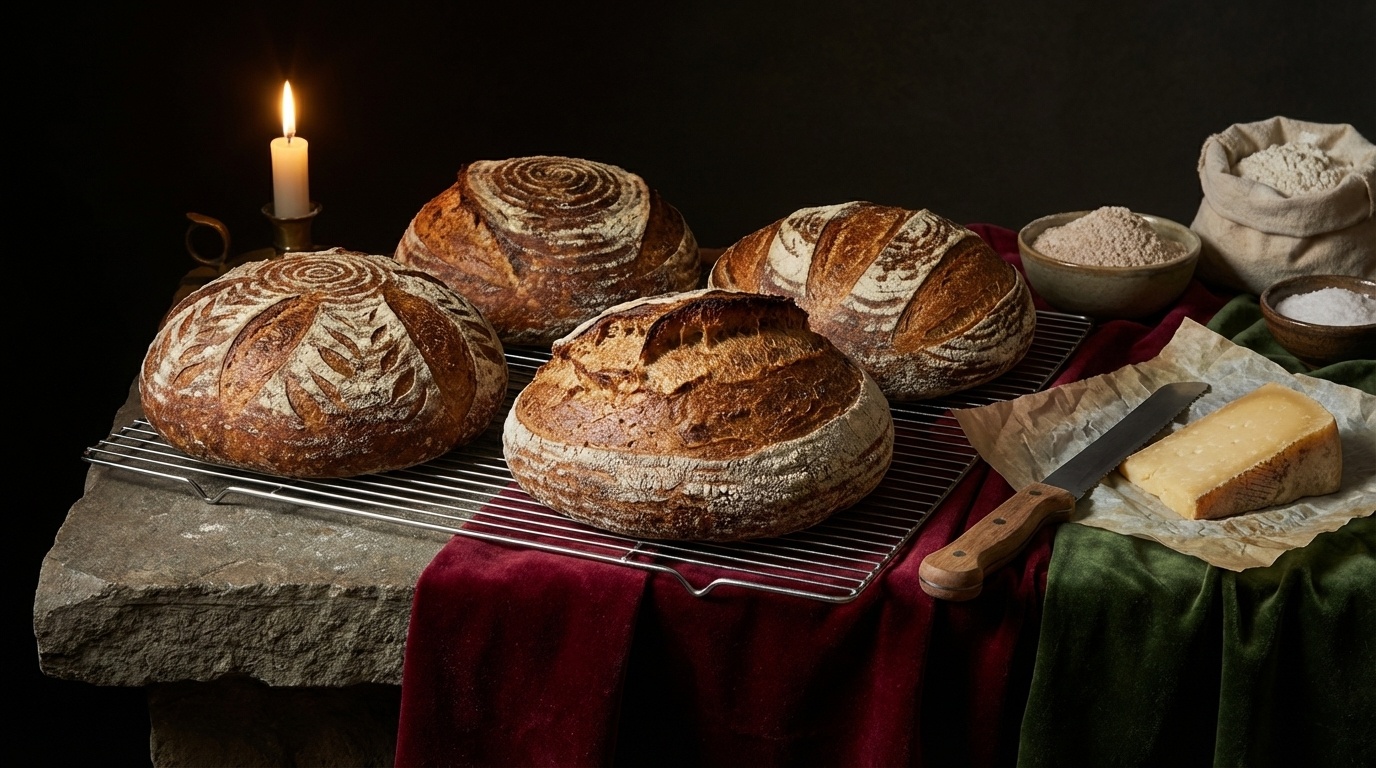
Poilâne-Style Miche
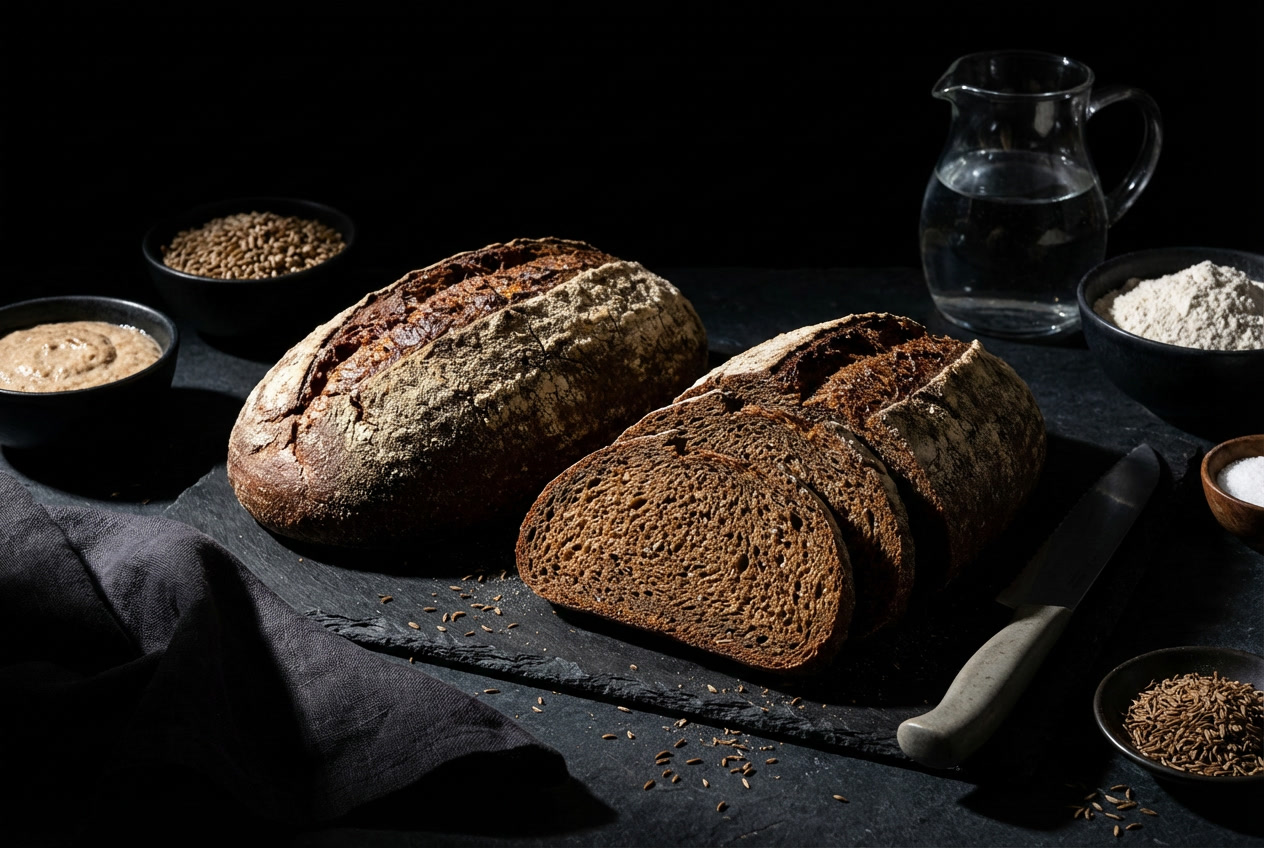
100 Percent Sourdough Rye Bread