Beef Patties with Brown Gravy and Soft Fried Onions
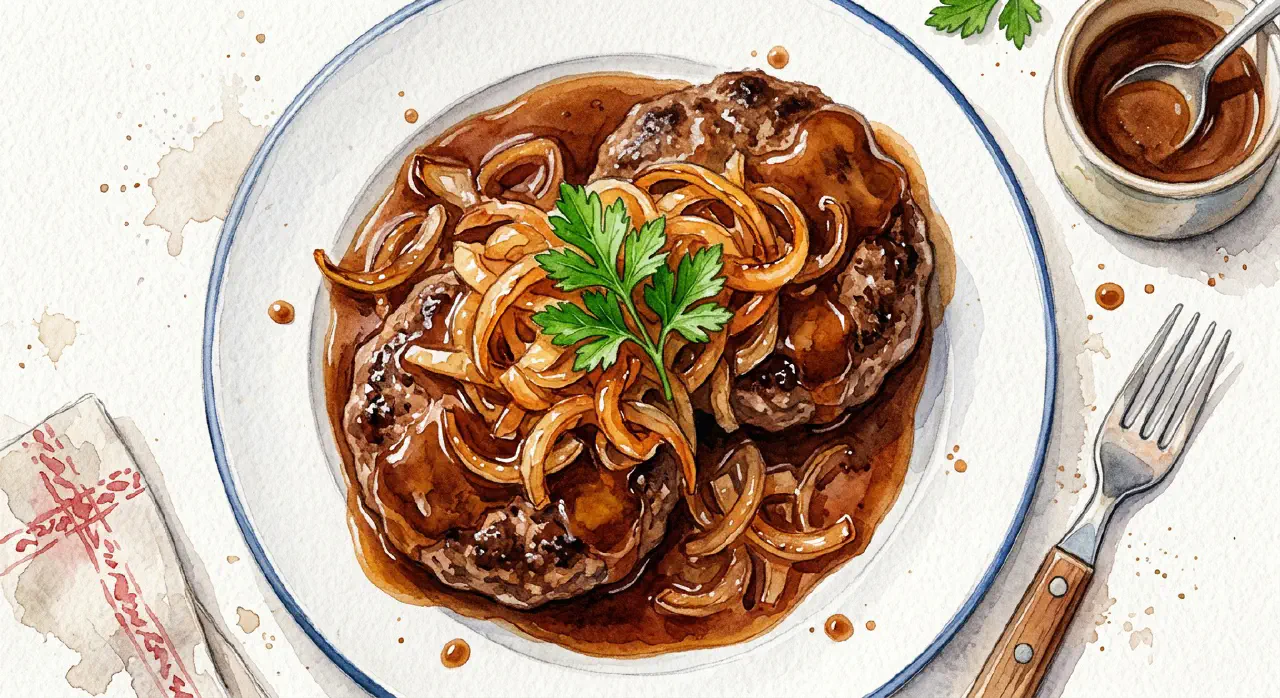
Beef Patties with Brown Gravy and Soft Fried Onions © kvalifood.com
Beef patties with brown gravy from pan drippings is just about everyone’s favorite. Well, almost. But you’ll have a hard time finding anyone who doesn’t like it.
The most important thing with beef patties is choosing good meat. Ground hereford or other beef breeds gives by far the best patties. Unlike meatballs (frikadeller), you want as little “filler” in the mixture as possible. If you add even the slightest amount of chopped onion or egg to the meat, it starts to taste like meatballs.
I was a purist for a long time, refusing to mix anything into the meat at all — just seasoning it with salt and pepper on the outside.
I’ve since changed my mind and started mixing the seasoning into the meat. If you only put it on the outside, most of the flavor ends up in the pan and the meat tastes bland. Then you end up seasoning at the table, which is unnecessary and honestly doesn’t taste as good as having it mixed in.
The one thing to be careful about is over-working the meat. Patties made from over-mixed meat become very dense and puff up in the middle when frying. So don’t do that. Mix in the seasoning as quickly and gently as possible.
About 5 servings
Ingredients
the patties
- 1 kg ground beef
- 1 tbsp salt
- 1 tsp crushed black pepper
- 1 tsp paprika (Purists can skip it.)
fried onions
- 1/2 kg onions
the gravy
- 1/2 l stock / broth (Yes, you can cheat and use a cube. But use two for half a liter of water. Not one, like it says on the package.)
- 1 dl cream (optional)
- 3 tbsp flour
- salt
- pepper
with
- potatoes
- 1 - 1 1/2 kg potatoes
Instructions
The potatoes
Peel the potatoes and put them in a pot. Cover just barely with water. They don’t cook any faster with more water, and it takes longer to bring to a boil.
Once boiling, cook for 20 minutes, until a paring knife or fork slides in without too much resistance. Think about how cooked potatoes feel when you cut them at the table. That’s what you’re going for.
The gravy — part 1
Whisk the flour into the stock in a small saucepan (or the flour into the water with the cube) and bring to a boil. Stir occasionally so it doesn’t clump. You can easily do this while frying the patties. Let it simmer while you fry the patties. If it gets too thick, just add more water.
I do it this way because flour-thickened gravy that hasn’t cooked long enough tastes like wallpaper paste. It needs to cook for quite a while, so if you wait until after the patties are done to thicken it in the pan, you’ll either have cold patties with good gravy, or wallpaper paste with hot patties. By letting the gravy pre-cook while you’re frying the patties, you avoid that problem.
Don’t be fooled by how it tastes at this point though. The mixture in the pot tastes terrible. Go ahead and try it. It only tastes good once you pour it over the pan drippings.
The patties — shaping
Quickly but gently mix the seasoning into the meat.
Shape the patties by hand. I like them to weigh about 150 g (5 oz) each. With my hands, that’s roughly a handful of meat — the size of a snowball. If you’re unsure, just weigh the first one. Press them between your hands into a ball so they hold together, just like making a snowball.
If they’re over 200 g (7 oz), they’re hard to cook through without burning the outside.
You can flatten and round them with a knife, and that does look nicer, but I just press them flat with my hand, push in the uneven edges, press flat again, and so on. Until they’re nice, round, and even in thickness. It’s more important that they’re the same thickness than the same width. That’s what determines how long they take to cook.
But avoid over-handling them. That brings back the problem of dense, puffed-up patties.
The fried onions
Peel the onions and cut them in half.
Cut into half rings.
Add a generous amount of oil and butter to a hot pan.
Add the onions and fry until soft and golden.
Set aside.
The patties — frying
Fry in equal parts oil and butter. That gives the best result. The entire bottom of the pan should be covered.
Fry over fairly high heat.
If they’re boiling in the liquid coming out of them, the pan is too cold.
If they burn before they’re done inside, it’s too hot.
They should be golden brown and feel firm when you press them. That’s when they’re done.
The gravy — part 2
Once the patties are done, there’s fat and “brown and black bits” left in the pan. You don’t need the fat, so pour off as much as you can without taking the bits with it.
The bits are what you want. Caramelized residue from the meat. Pour the gravy from the pot into the pan. Let the pan cool slightly first if you like. Otherwise it can be quite intense — a lot of steam can come up.
Stir and scrape up as much of the bits as possible.
If the gravy gets too thick while cooking (it almost always does), just add more water.
You can strain the gravy through a sieve if there are lumps or too many leftover bits.
Serving
Depending on how you like your patties, you can either serve everything as is, or you can add the patties to the gravy and let them simmer together for a bit. That gives a much better gravy, but slightly less good patties. I usually go for the gravy.
Top each patty with a bit of soft onions and serve.