Brioche and Brioche Relatives
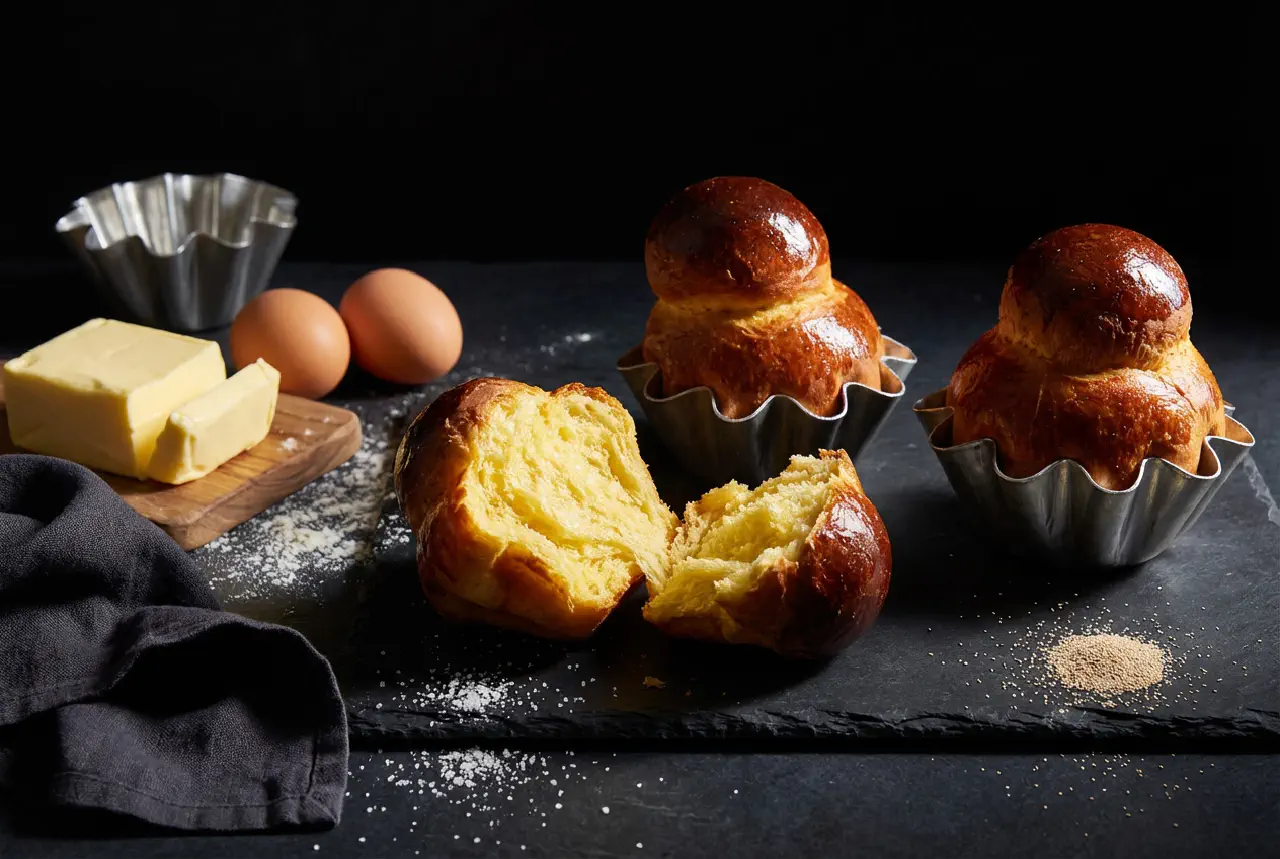
Brioche and Brioche Relatives © kvalifood.com
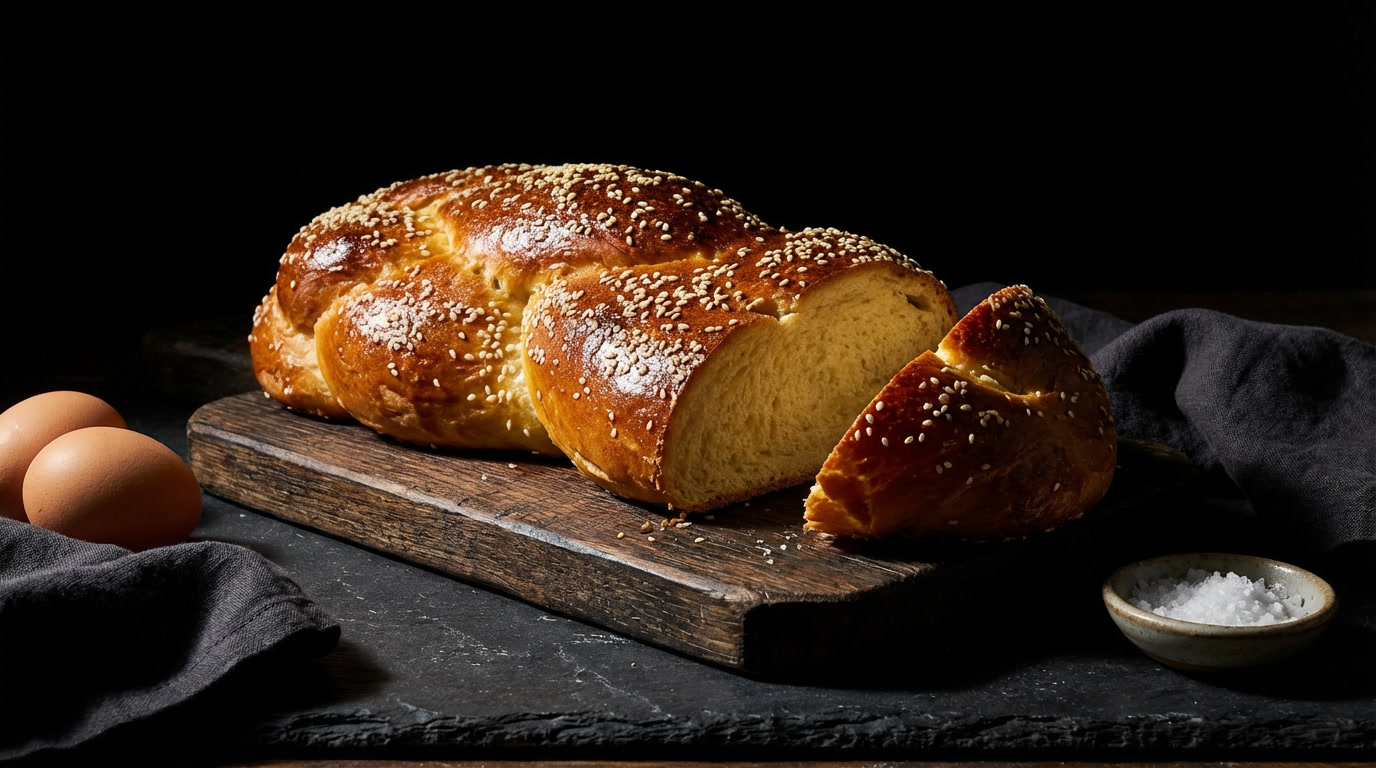
A classic rich bread enriched with eggs, butter, and sugar in proportions that mirror pie dough. Three versions offer flexibility: Rich Man’s (88% butter ratio, luxurious), Middle-Class (50% butter ratio, versatile), and Poor Man’s (20% butter ratio, easiest to handle).
Rich Man’s Brioche
Ingredients
Makes 16 to 24 petites brioches à tête, 2 to 4 large brioches à tête, or three 1-pound loaves
Sponge
- 65 g unbleached bread flour
- 1 tbsp instant yeast
- 110 g whole milk, lukewarm (90–100°F (32–38°C))
Dough
- 230 g large eggs, slightly beaten
- 450 g unbleached bread flour
- 2½ tbsp granulated sugar
- 1½ tsp salt
- 450 g unsalted butter, room temperature
- 1 egg, whisked until frothy, for egg wash
Directions
To make the sponge, stir together the flour and yeast in a large mixing bowl. Stir in the milk until all the flour is hydrated. Cover with plastic wrap and ferment for 20 minutes, or until the sponge rises and falls when you tap the bowl.
To make the dough, add the eggs to the sponge and whisk until smooth. In a separate bowl, stir together the flour, sugar, and salt. Add this mixture to the sponge and eggs and stir until all ingredients are hydrated and evenly distributed. Let this mixture rest for 5 minutes so gluten can begin to develop.
While mixing, gradually work in the butter about one-quarter at a time, waiting until each addition assimilates before adding more. This will take a few minutes. Continue mixing for about 6 more minutes, or until the dough is very well mixed. You may need to scrape down the bowl from time to time as the dough will cling to it. The dough will be very smooth and soft.
Line a sheet pan with baking parchment and mist lightly with spray oil. Transfer the dough to the sheet pan, spreading it to form a large, thick rectangle measuring about 6 by 8 inches. Mist the top with spray oil and cover with plastic wrap or place in a large food-grade plastic bag.
Immediately place the pan in the refrigerator and chill overnight, or for at least 4 hours.
Remove the dough from the refrigerator and shape it while very cold. If it warms or softens, return it to the refrigerator. Lightly oil or spray fluted brioche molds. Divide the dough into 12 to 16 portions for petites brioches à tête and 2 to 4 portions for larger shapes. (Petites brioches à tête are typically 1½ to 2 oz each; larger versions can range from 1 to 2 pounds. The molds should only be half full with dough to allow for expansion.) Shape the petites into small balls and the larger ones into boules using the shaping instructions below. Place the molds on a sheet pan after shaping. If making loaves, grease two 8½ by 4½-inch pans, divide the dough into 3 pieces, and shape into loaves.
Shaping Brioches à Tête - Method 1: Dust your hands with flour and, using the edge of your hand, divide a ball of dough into a large and small ball by rolling down (but not quite all the way through) the dough. Place the large ball into the oiled mold and use the tips of your fingers to indent the top and round and center the smaller ball.
Shaping Brioches à Tête - Method 2: Roll the dough into a strand that tapers at one end. Poke a hole in the thick end and loop the tapered end through it so it pops out and forms a cap. Round the cap into a ball and center it on the larger portion. Place it in the oiled mold.
Mist the top of the dough with spray oil and loosely cover with plastic wrap, or slip the pan into a food-grade plastic bag. Proof until it nearly fills the molds or loaf pans: 1½ to 2 hours for petites brioches à tête and longer for larger shapes. Gently brush the tops with egg wash. Cover the dough with plastic wrap that has been lightly misted with spray oil. Continue proofing for another 15 to 30 minutes, or until the dough fills the molds or pans.
Preheat the oven to 400°F (205°C) with the rack on the middle shelf for petites brioches à tête, or 350°F (175°C) for larger shapes.
Bake for about 15 to 20 minutes for petites brioches à tête and 35 to 50 minutes for larger shapes. The internal temperature should register above 180°F (82°C) for small ones and about 190°F (88°C) for larger shapes. The bread should sound hollow when thumped on the bottom and be golden brown.
Remove the brioches or loaves from the pans as soon as they come out of the oven and cool on a rack for at least 20 minutes for small brioches and 1 hour for larger shapes before serving.
Middle-Class Brioche
Ingredients
Makes 12 to 16 petites brioches à tête, 2 to 4 large brioches à tête, or two 1-pound loaves
Sponge
- 65 g unbleached bread flour
- 2 tsp instant yeast
- 110 g whole milk, lukewarm (90–100°F (32–38°C))
Dough
- 230 g large eggs, slightly beaten
- 390 g unbleached bread flour
- 2 tbsp granulated sugar
- 1¼ tsp salt
- 230 g unsalted butter, room temperature
- 1 egg, whisked until frothy, for egg wash
Directions
Proceed as described for Rich Man’s Brioche, extending the fermentation for the sponge to 30 to 45 minutes. Follow all shaping and baking instructions from Rich Man’s Brioche.
Poor Man’s Brioche
Ingredients
Makes 12 to 16 petites brioches à tête, 2 to 4 large brioches à tête, or two 1-pound loaves
Sponge
- 65 g unbleached bread flour
- 2 tsp instant yeast
- 110 g whole milk, lukewarm (90–100°F (32–38°C))
Dough
- 190 g large eggs, slightly beaten
- 420 g unbleached bread flour
- 2 tbsp granulated sugar
- 1¼ tsp salt
- 110 g unsalted butter, room temperature
- 1 egg, whisked until frothy, for egg wash
Directions
To make the sponge, stir together the flour and yeast in a large mixing bowl. Stir in the milk until all the flour is hydrated. Cover with plastic wrap and ferment for 30 to 45 minutes, or until the sponge rises and falls when you tap the bowl.
To make the dough, add the eggs to the sponge and whisk until smooth. In a separate bowl, stir together the flour, sugar, and salt. Add this mixture to the sponge and eggs and stir until all ingredients are hydrated and evenly distributed. Let this mixture rest for 5 minutes so gluten can begin to develop.
While mixing with a large spoon (or on medium speed with the dough hook), gradually work in the butter about one-quarter at a time, waiting until each addition assimilates before adding more.
Transfer the dough to the counter and knead for about 10 minutes, adding small amounts of flour as needed, until very smooth and soft, but not too sticky to handle (like French bread dough). (Or continue mixing with the dough hook on low speed for 6 to 8 minutes, or until well mixed and the dough clears the sides and bottom of the bowl.)
Lightly oil a bowl and transfer the dough. Mist the top with spray oil and cover with plastic wrap. Ferment for about 90 minutes, or until doubled.
Proceed with the shaping instructions described in Rich Man’s Brioche, reducing the proofing time to about 1 hour. Bake and cool as directed.
Notes
- Butter incorporation timing: When a formula calls for lots of fat, wait 5 minutes after initial mixing to allow gluten to develop before adding butter. This prevents the fat from coating protein fragments and inhibiting gluten development. For cake-like brioche, you can add butter early intentionally.
- Rich Man’s (88% butter to flour ratio): The most luxurious version with a melt-in-your-mouth buttery texture. Requires high yeast percentage and fast sponge (20 minutes). Best mixed in an electric mixer.
- Middle-Class (50% butter to flour ratio): The most versatile and common form, perfect for cinnamon buns, sticky buns, soft loaves, and brioches à tête. Costs less than Rich Man’s and is easier to handle.
- Poor Man’s (20% butter to flour ratio): The easiest to handle version. Excellent for wraps, en croûte applications, and pain de mie (sandwich bread). Still rich but lacks the buttery flake of richer versions.
- Fluted molds: Small 2-ounce fluted brioche molds are most functional. Available at gourmet kitchen shops. Increase baking time to account for dough size.
- Alternative shapes: All three brioche variations can be made as standard rolls or loaves instead of brioches à tête.
See Also
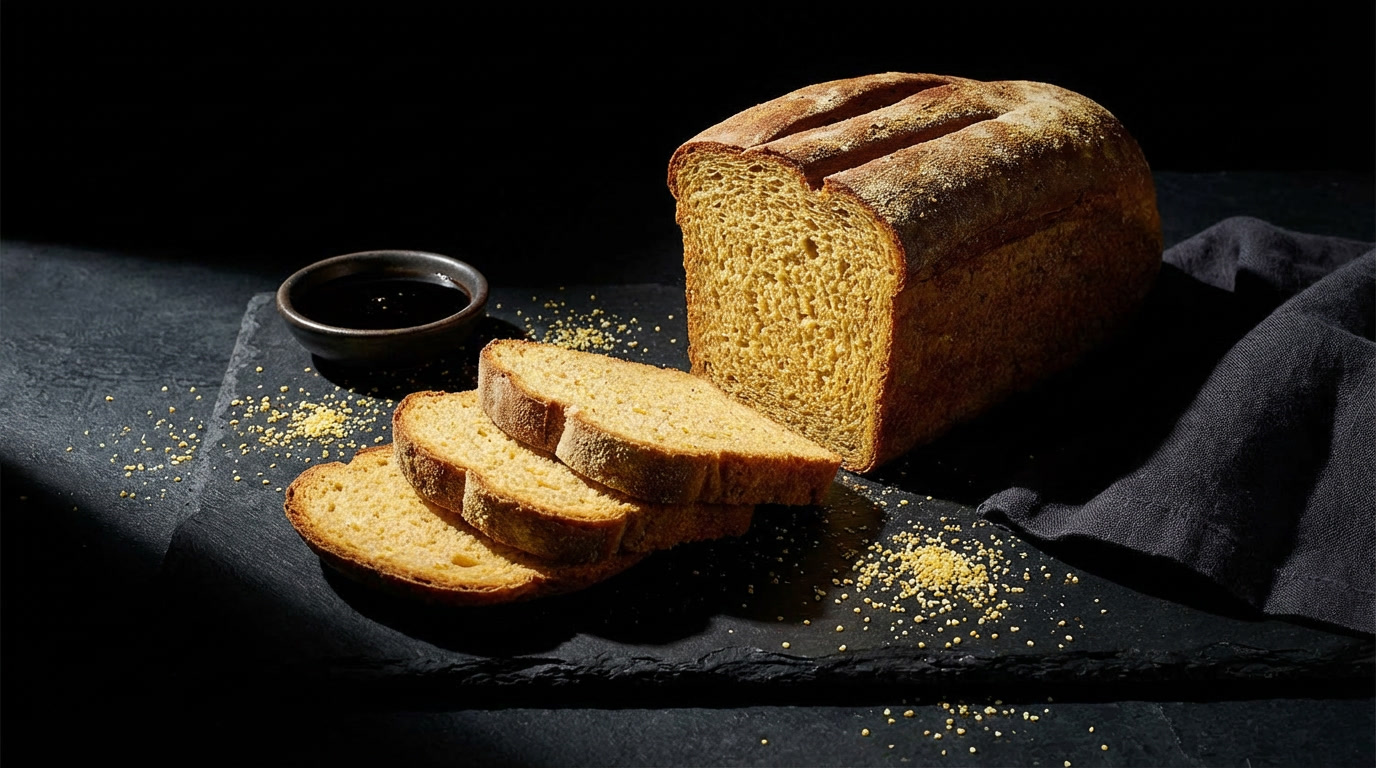
Anadama Bread
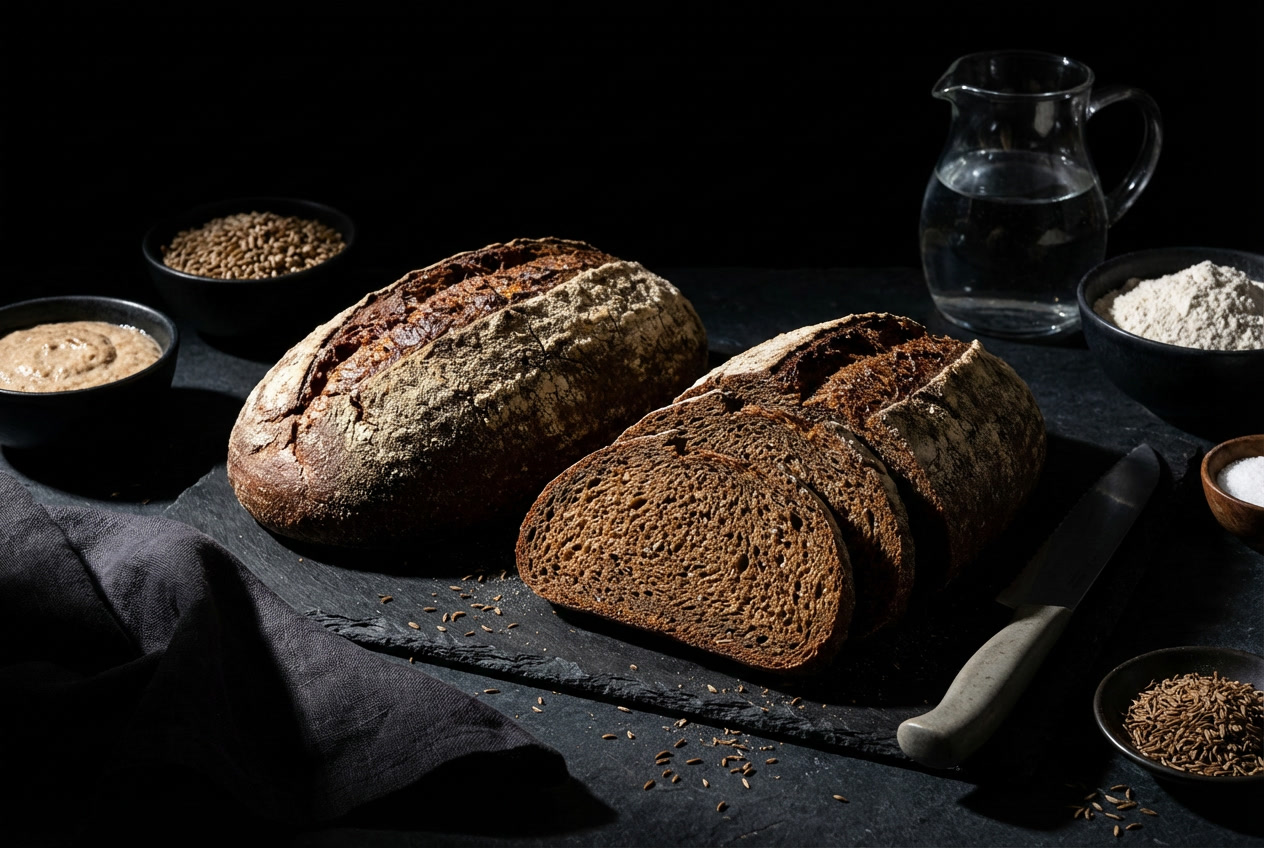
100 Percent Sourdough Rye Bread