Cauliflower Puree
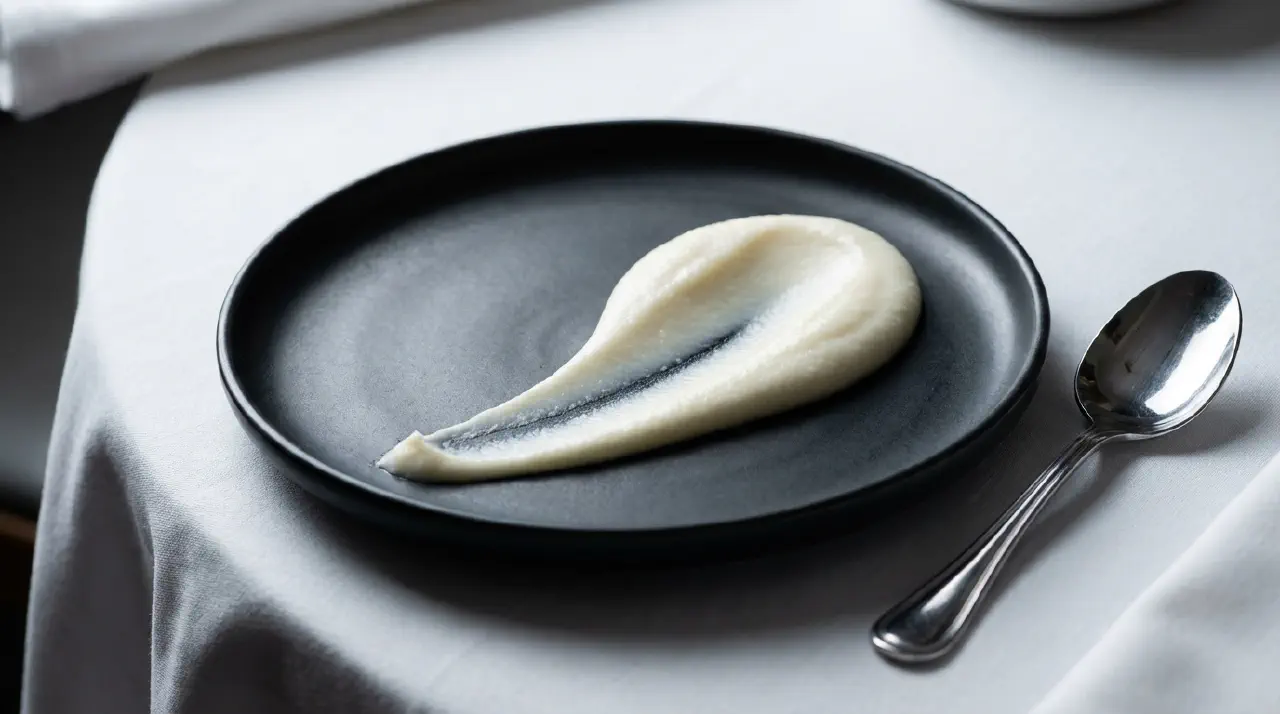
Cauliflower puree © kvalifood.com
Think of a puree not as a side dish but as a condiment - a luxury element on the plate. A silky, bright white cauliflower puree brings richness, fat, and clean vegetable flavour alongside fish or meat, the way a great Dijon mustard works with a steak. The technique is classical French: sweat without colour, reduce, blend hot, pass through a chinois. Done in 25 minutes from prep to plate.
Ingredients
Serves 4-6 as a side or plate component
- 1 Italian white onion (~200 g), finely diced
- 1 cauliflower (~800 g), leaves and root removed
- 70 g unsalted butter, divided: 25 g for the onion, 20 g for the cauliflower, 25 g cold for the blender
- 5 g Maldon sea salt
- 200 ml double cream
- olive oil, a thin drizzle, for blending
Directions
Sweat the onion
Warm a heavy-based pan over low-medium heat. Add 25 g butter and melt gently without browning. Add the diced onion and the salt. Sweat for 4-5 minutes, stirring regularly, until completely soft and translucent. No colour at any point - the salt draws out the moisture, takes away the sharp acidity of the onion, and leaves only sweetness behind as the base of the puree.
Sweat the cauliflower
Slice the cauliflower florets into uniform pieces - roughly the same size so they cook evenly. Add to the pan along with 20 g butter. Sweat gently for 20-25 minutes, stirring occasionally, until the florets are fully tender and translucent at their centre. They should still hold their shape, not collapse into mush. Translucency is the visual cue you are looking for. Do not allow any colour or caramelisation to develop at any point - it will darken and sweeten the final puree.
Reduce the cream
Add 200 ml double cream - it should lightly coat and surround the cauliflower, not flood it. Too much cream leads to a wet, sloppy puree. Cook over medium heat, stirring, until the cream reduces and just binds the cauliflower into a cohesive, lightly glazed mass. It moves from soupy to visibly thicker and coating. Keep moving it and work quickly - speed here preserves the fresh flavour.
Blend
Transfer immediately to a high-speed blender while piping hot. Start on the lowest speed and build gradually to full - hot liquid will explode out of a blender started on full speed. With the blender running at full speed, stream in a thin drizzle of olive oil and the 25 g cold butter. The oil adds gloss and silkiness; the cold fresh butter adds a richness and mouth feel that cooked-out butter cannot. Blend for 1-2 minutes until completely smooth.
Pass and finish
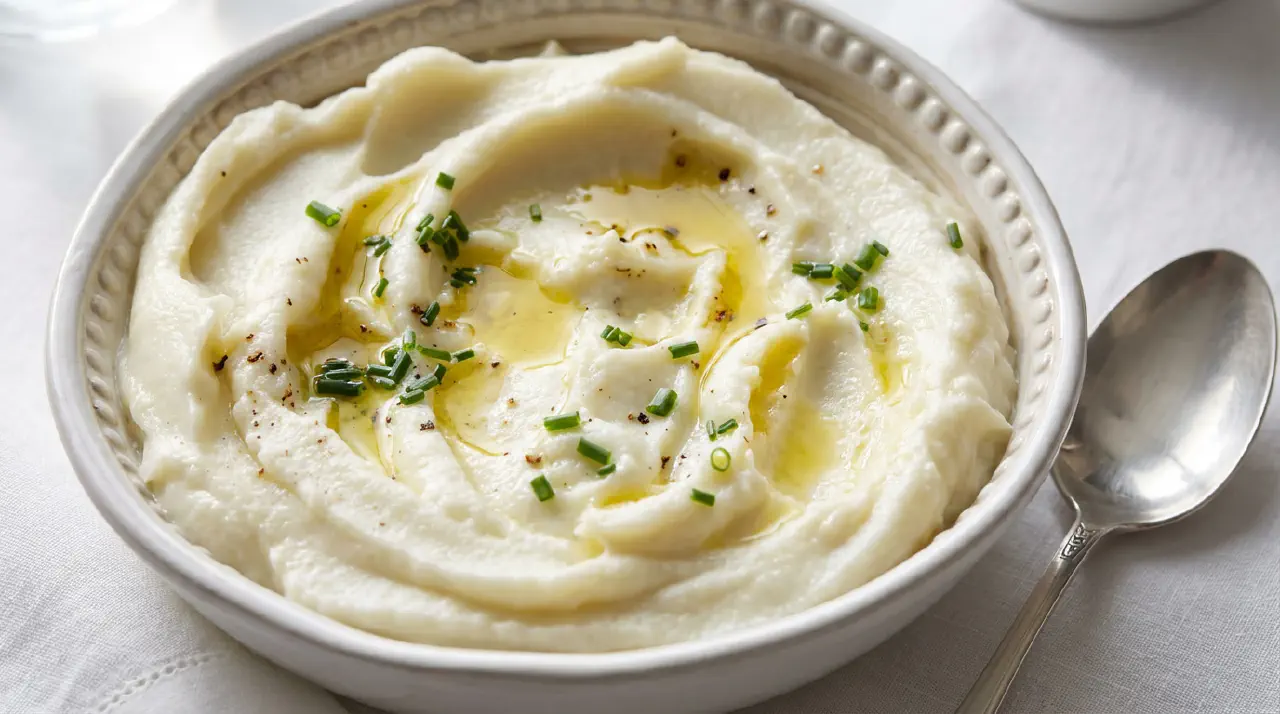
Pass the puree through a fine-mesh sieve (chinois), using a ladle or spatula to work it through. This final step gives the velvet texture - do not skip it. Adjust seasoning and serve immediately.
Notes
Storage: Press a sheet of cling film directly onto the surface of the puree (contact wrapping) to prevent a skin forming. Cool rapidly over a bowl of ice water.
Do not over-cook the cauliflower to mush before blending - over-softened cauliflower turns tannic and flat. Tender but intact pieces, then blend.
Blender: A high-powered blender (Vitamix type) makes a noticeably better puree than a standard blender.
As a soup: After blending and straining, loosen with warm milk or light stock to the desired consistency.
Variations: Bay leaf, thyme, rosemary, peppercorns, or truffle can all be added during the sweating stage. This recipe keeps it pure and clean for maximum versatility as a plate component.