Chapati
Prep 45 min Total 1 hr 30 min
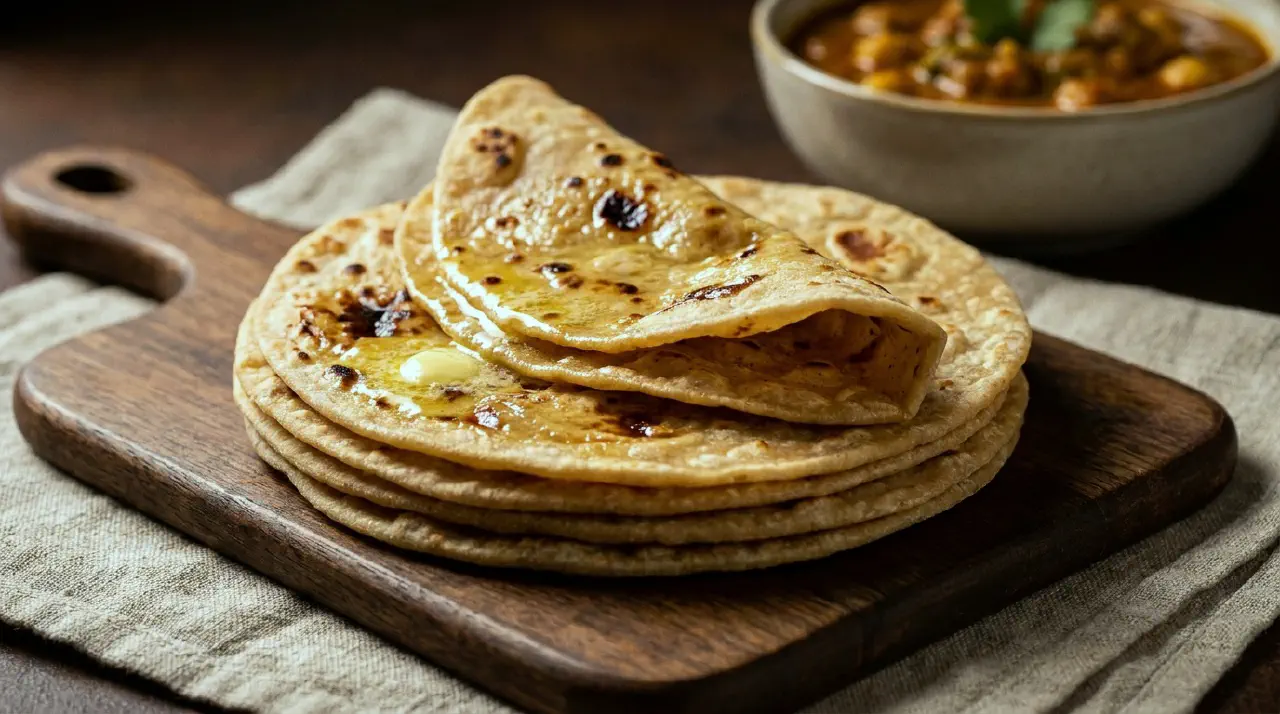
Chapati is a thin, unleavened flatbread made from wholemeal flour and water. It is the everyday bread across much of India, Pakistan, and East Africa – the bread that comes to the table at dinner, day after day. Short ingredient list, no yeast, no rising time.
The dough is nothing but atta, salt, and water, kneaded until smooth. The breads are rolled out thin and baked in a dry, hot pan without fat. They bubble up, develop dark spots, and settle flat again once lifted from the pan. Freshly baked, they are soft and slightly elastic – perfect for scooping up curry, dal, or vegetable dishes.
Chapati taste best straight off the pan. Made ahead, they quickly become tough. But they only take a minute or two each to bake, so they can go directly from pan to table while the rest of the meal waits.
Ingredients
Makes 12 flatbreads
- 250 g wholemeal flour
- 1 tsp salt
- 200 ml water
- ghee (or vegetable oil), for greasing
- butter, for serving
Directions
Mix the flour and salt in a bowl. Make a well in the centre and add the water a little at a time, stirring as you go. Bring the dough together until it is soft and smooth.
Dust the work surface with a little flour and knead the dough thoroughly for about 10 minutes. Cover with a clean tea towel and leave to rest in a cool place for 30 minutes.
Knead the dough briefly again and divide into 12 equal pieces. Roll each piece out on a lightly floured surface into a thin, round flatbread.
Heat a heavy-bottomed pan over medium heat and grease lightly with ghee or oil. Place one chapati in the pan and bake until bubbles form on the surface. Press it flat with a palette knife so it bakes evenly.
Flip the bread and finish on the other side until it has coloured with dark spots. Remove from the pan and repeat with the remaining dough.
Brush the finished breads with butter and fold each one twice to make a quarter circle. Serve immediately.
Notes
Active time about 15 minutes plus 30 minutes resting. Baking time about 1 minute per bread.
The wholemeal flour can be atta, graham flour, or ordinary wholemeal wheat flour. Atta gives the most authentic flavour and texture.
The resting time makes the dough easier to roll out thin. If you skip it, the dough springs back as soon as you let go of the rolling pin.
The breads should be baked in a dry pan – the fat is only for a light greasing so they do not stick. Too much fat gives a fried, crispy surface instead of the soft flatbread texture.
Chapati taste best freshly baked. Leftovers can be wrapped in a tea towel and briefly reheated in the pan before serving.
See Also
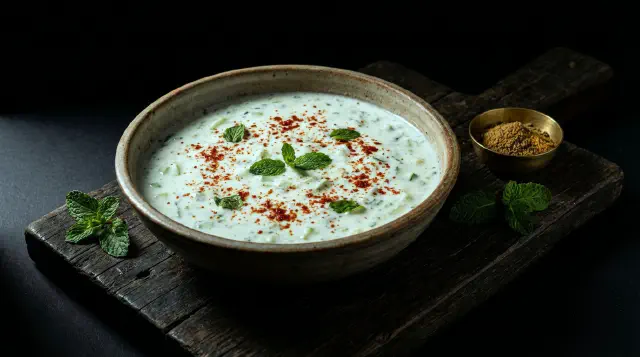
Cucumber Raita (Kheera Raita)
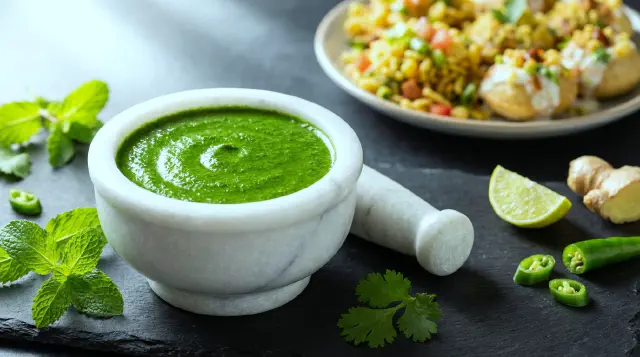
Green Chutney
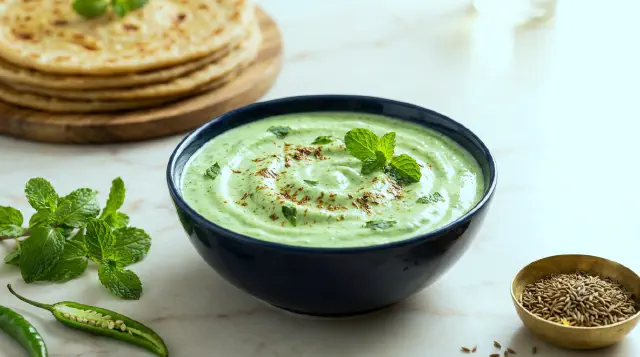
Mint Raita