Grandma's Klejner
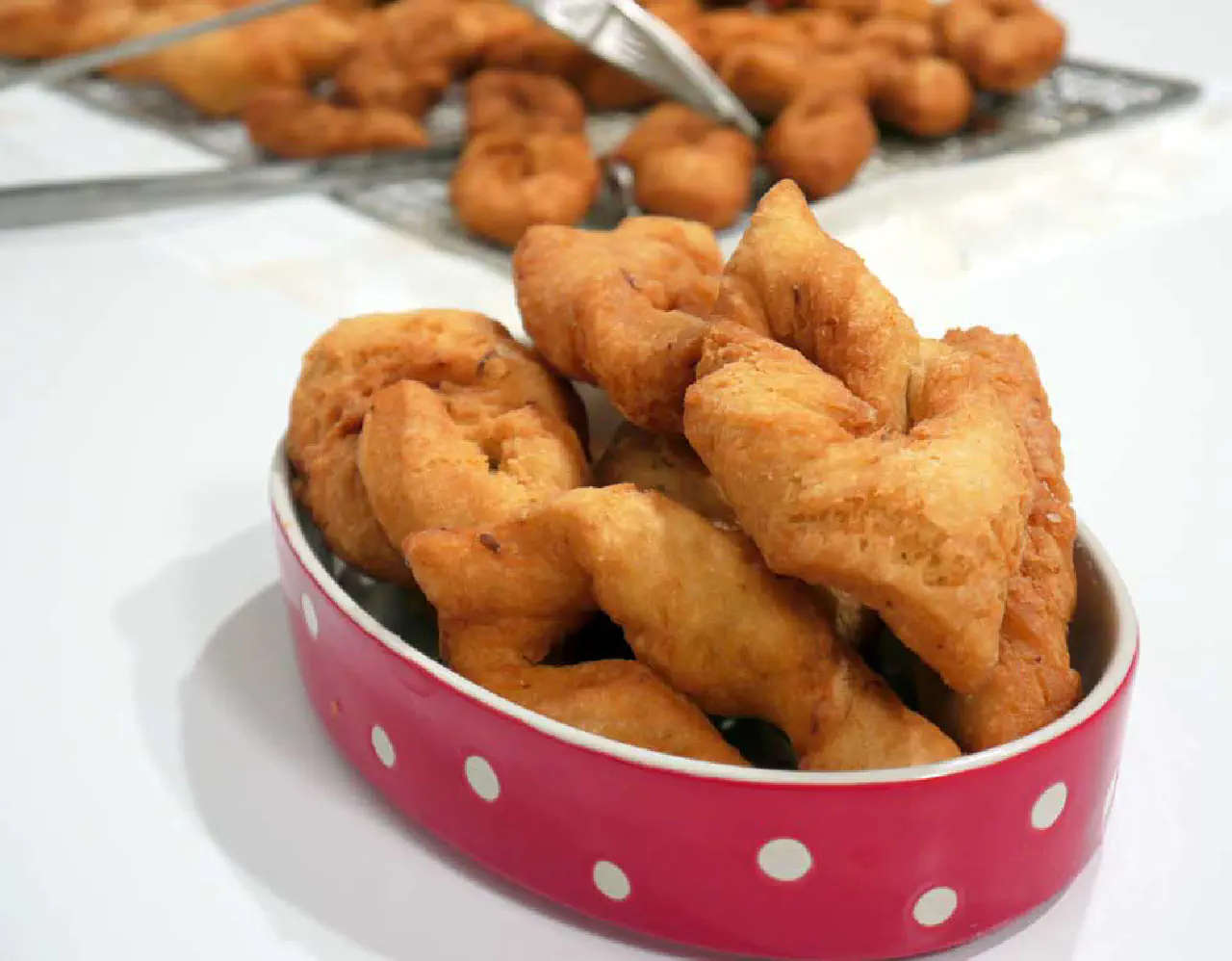
Classic klejner © kvalifood.com
Recipe with video — a classic Danish pastry eaten especially at Christmas. I haven’t come across it anywhere else abroad. And yes, this really is grandma’s recipe — not my grandma’s, but my father-in-law’s grandmother’s. That counts too.
Ingredients
Yields ca. 30 large klejner
- 2 eggs
- 125 g butter
- 125 g sugar
- 1½ dl double cream
- 1 tsp ammonium bicarbonate (hjortetaksalt)
- 450 g plain flour
- 1½ lemon, finely grated zest of
- 1 tsp cardamom (not in grandma’s original recipe, so it can be left out)
For frying
- 1000 g palmin (or lard), or a mixture of both
Directions
Day 1 — mixing the dough
Knead everything together and leave in the fridge for 24 hours. The overnight rest makes the dough elastic, which means the klejner can be twisted without breaking and will puff up better during frying. The resting time can be shortened, but the dough will be less elastic and you’ll end up with more misshapen klejner.
Day 2 — frying
Flour the dough and your work surface generously. Roll the dough out flat — very flat. About 5 mm thick. That’s almost as thin as you can get it without tearing the dough.
Cut into diamond shapes, for example with a pizza cutter or bread knife. Start by cutting long strips, then cut them diagonally.
Make a slit in the middle of each diamond and pull one point through to form the classic twisted knot.
Deep-fry in fat heated to 340–355°F (170–180°C) for about 2 minutes on each side.
Notes
Ammonium bicarbonate (hjortetaksalt) is an old leavening agent, which was genuinely extracted from deer antlers in the old days.
In the old days, pure lard was used for frying. These days palmin is more common. Palmin is vegetable fat, but it’s no healthier than lard. Lard tastes better, gives crispier klejner, and costs half the price. I usually mix one block of lard with one block of palmin.
The lard smells a bit like roast pork when you’re frying the klejner, but it doesn’t taste that way when you eat them.
If the fat isn’t hot enough, the klejner take a long time to fry and absorb a lot of fat.
See Also
Marzipan Rings - Kransekagetoppe - Petit Four
Cinnamon Cookies
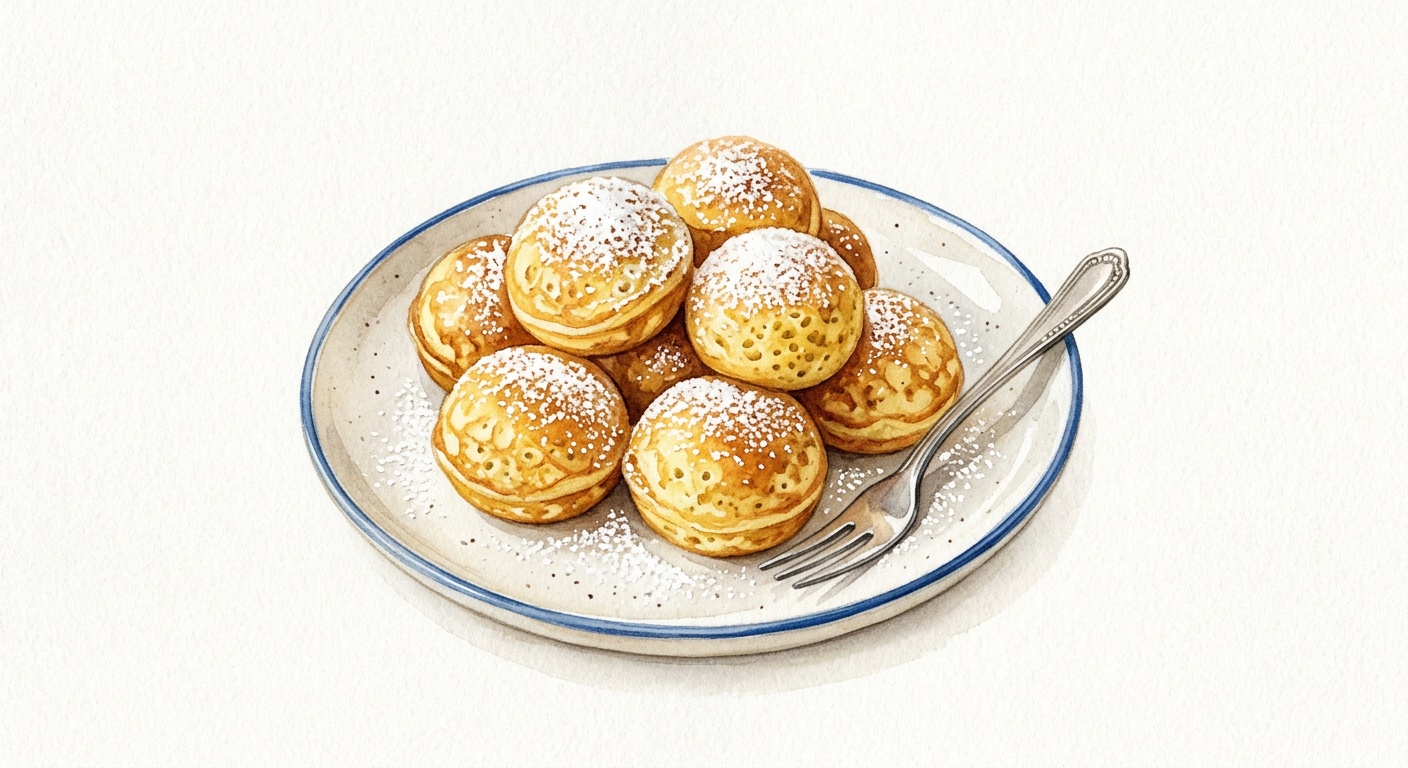
Classic Æbleskiver
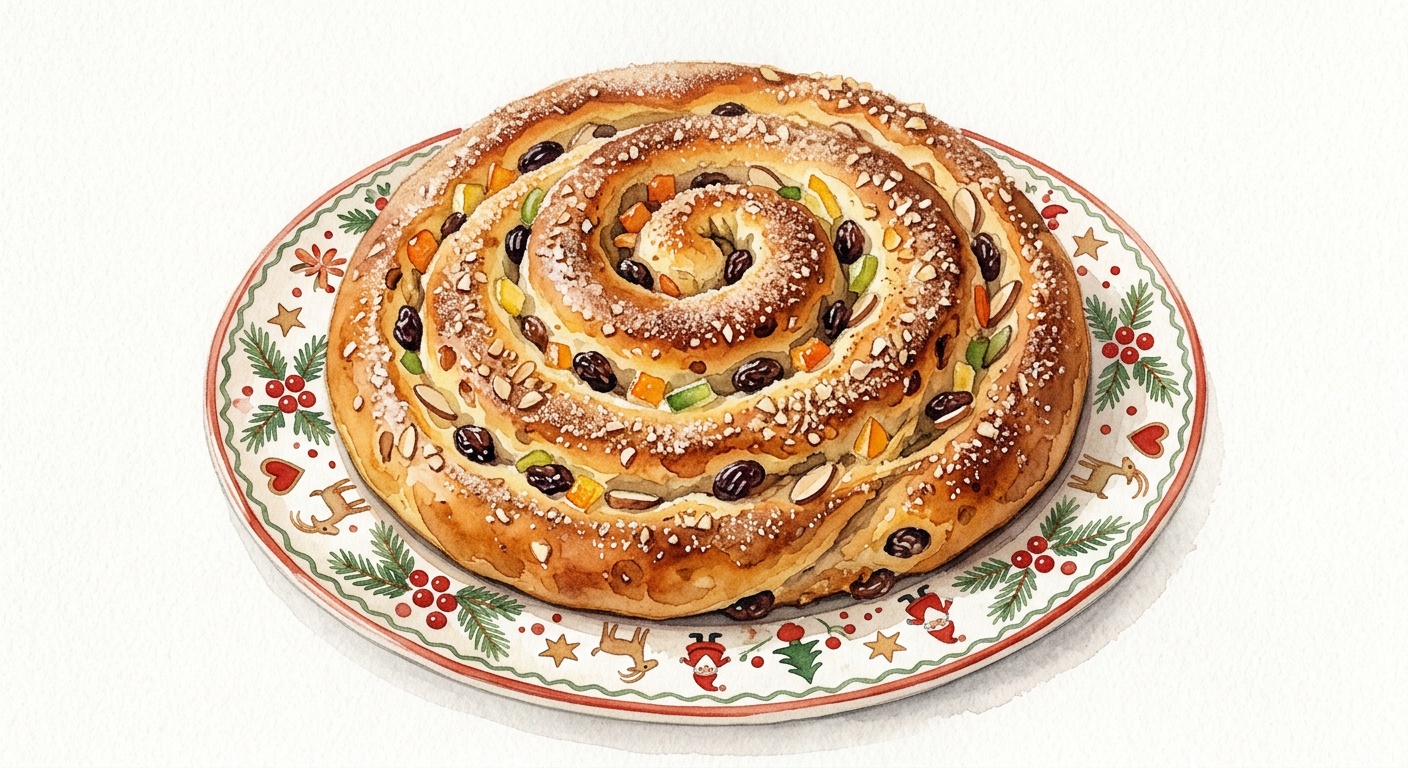
Classic Christmas Cake
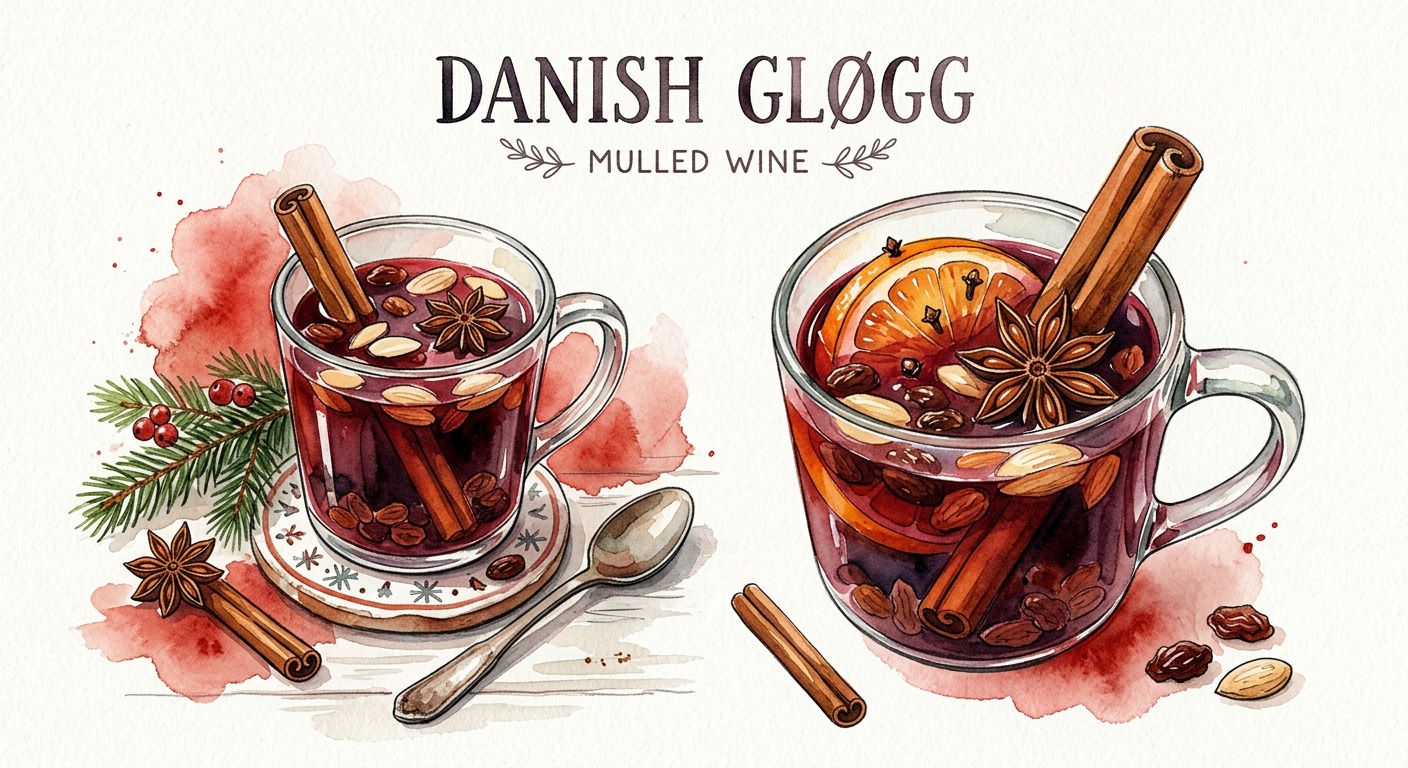
Classic Gløgg