Italian Bread
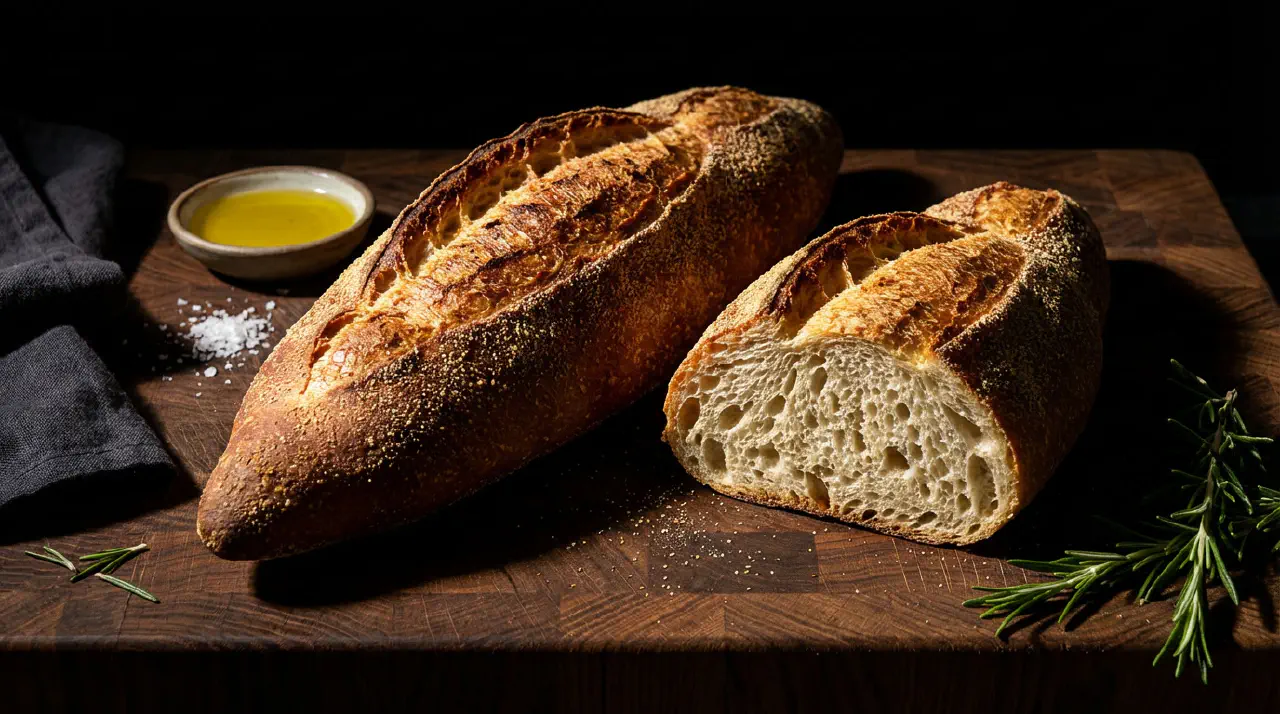
Italian Bread © kvalifood.com
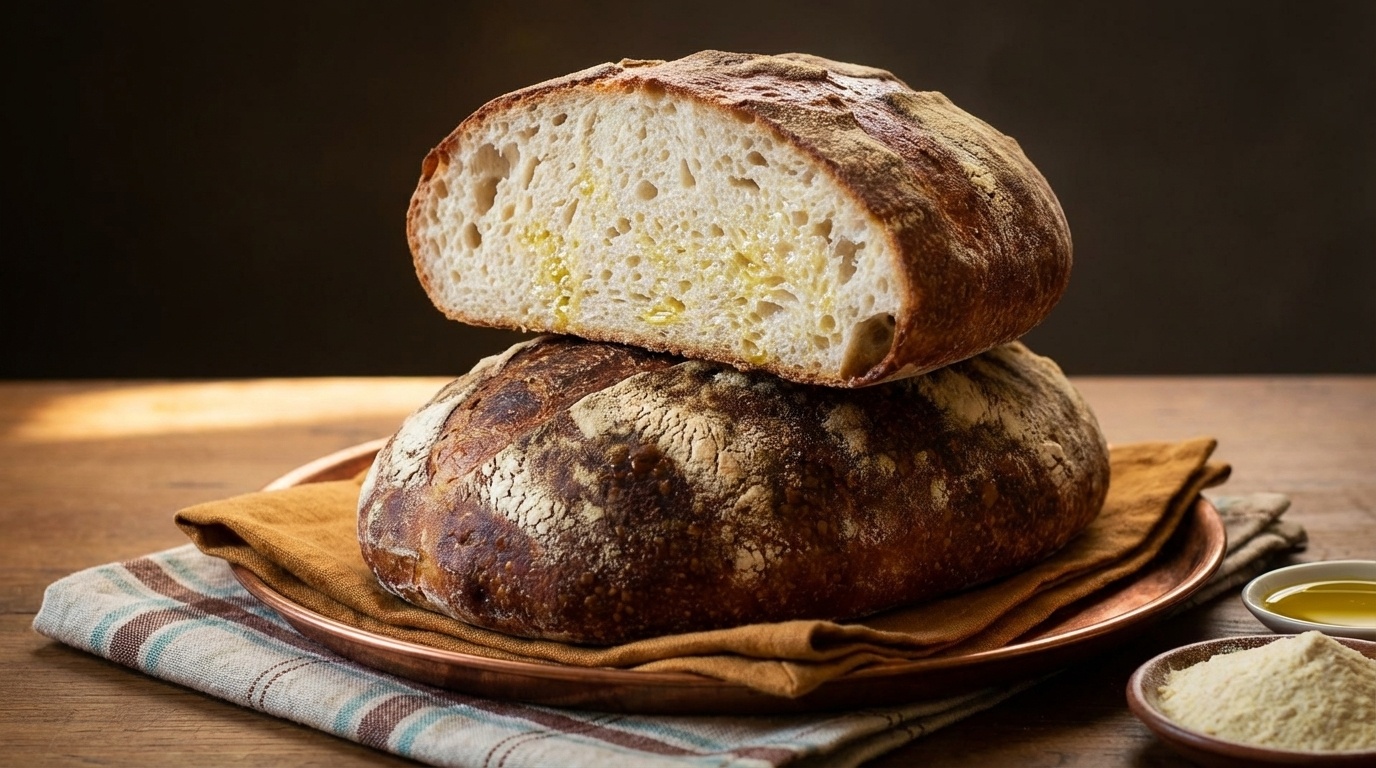
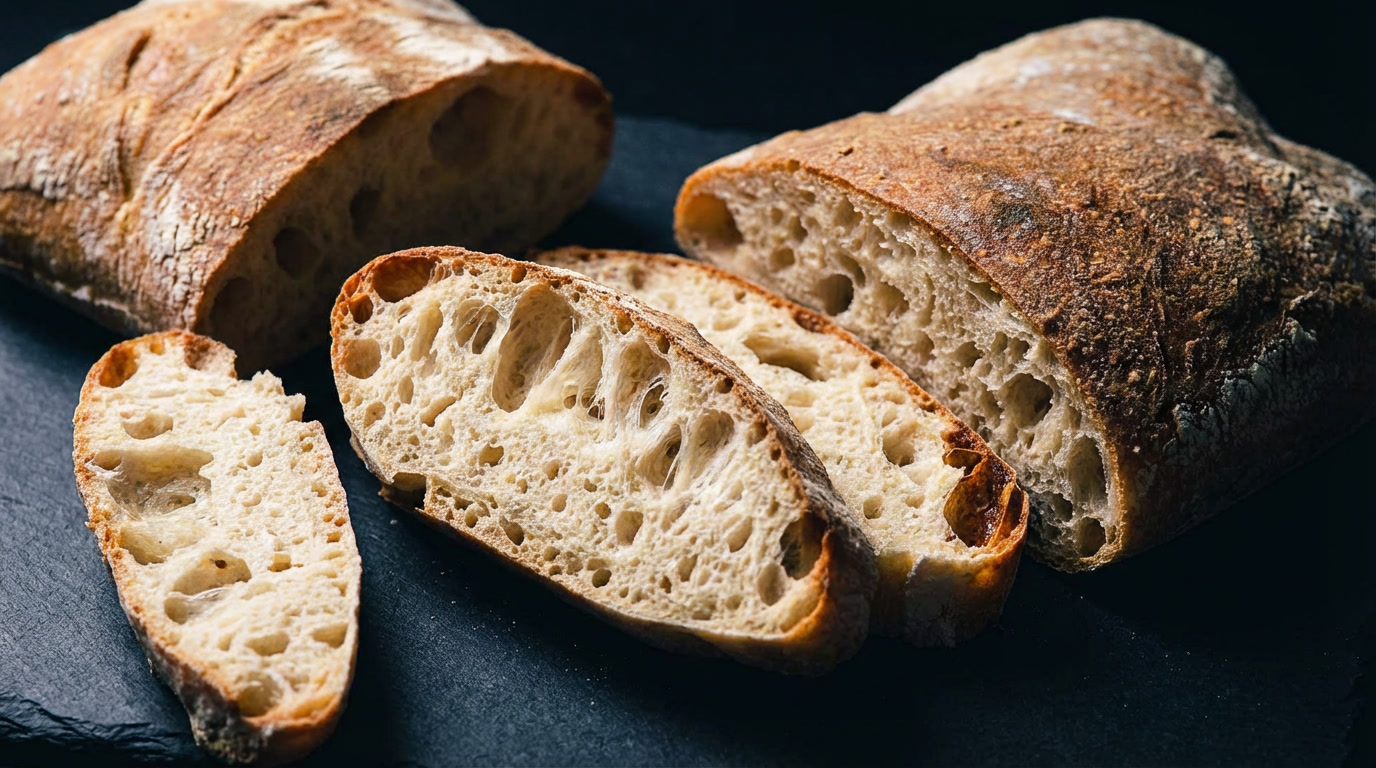
American-style Italian bread made with a biga pre-ferment that maximizes sugar development from starches, delivering a sweetness and depth far beyond what the small amount of added sugar would suggest. The result is softer and less crusty than French bread, with excellent flavor and color.
Ingredients
Makes 2 1-pound loaves or 9 torpedo rolls
- 510 g biga
- 320 g unbleached bread flour
- 1⅔ tsp (.41 oz) salt
- 1 tbsp (.5 oz) sugar
- 1 tsp (.11 oz) instant yeast
- 1 tsp (.17 oz) diastatic barley malt powder (optional)
- 1 tbsp (.5 oz) olive oil, vegetable oil, or shortening
- 200–230 g lukewarm water (90°–100°F (38°C))
- Semolina flour or cornmeal, for dusting
Directions
Remove the biga from the refrigerator 1 hour before making the dough. Cut it into about 10 small pieces with a pastry scraper or serrated knife. Cover with a towel or plastic wrap and let sit for 1 hour to take off the chill.
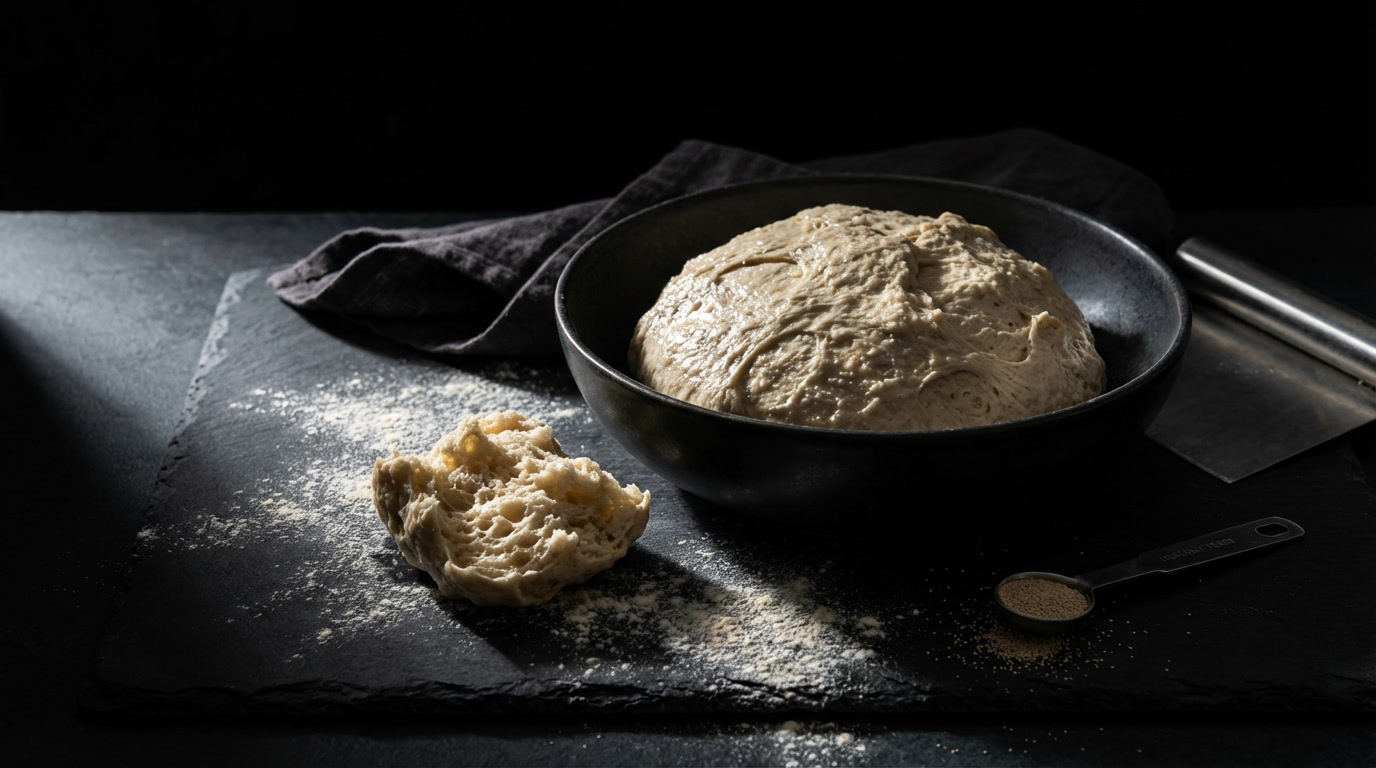
Stir together the flour, salt, sugar, yeast, and malt powder in a 4-quart bowl. Add the biga pieces, olive oil, and ¾ cup water and stir until a ball forms, adjusting the water or flour according to need. The dough should be slightly sticky and soft but not batterlike or very sticky. If the dough feels tough and stiff, add more water. Sprinkle flour on the counter, transfer the dough, and begin kneading for about 10 minutes, adding flour as needed, until the dough is tacky but not sticky and supple. The dough should pass the windowpane test and register 77°–81°F (27°C). Lightly oil a large bowl, transfer the dough, and coat with oil. Cover with plastic wrap.
Ferment at room temperature for approximately 2 hours, or until the dough doubles in size.
Gently divide the dough into 2 equal pieces of about 18 oz each, or into 9 pieces of about 4 oz each for torpedo rolls. Carefully form the pieces into bâtards or rolls, degassing the dough as little as possible. Lightly dust with flour, cover with a towel or plastic wrap, and let rest for 5 minutes. Then complete the shaping, extending the loaves to about 12 inches in length or shaping the torpedo rolls. Line a sheet pan with baking parchment and dust with semolina flour or cornmeal. Place the loaves on the pan and lightly mist with spray oil. Cover loosely with plastic wrap.
Proof at room temperature for about 1 hour, or until the loaves or rolls have grown to about 1½ times their original size.
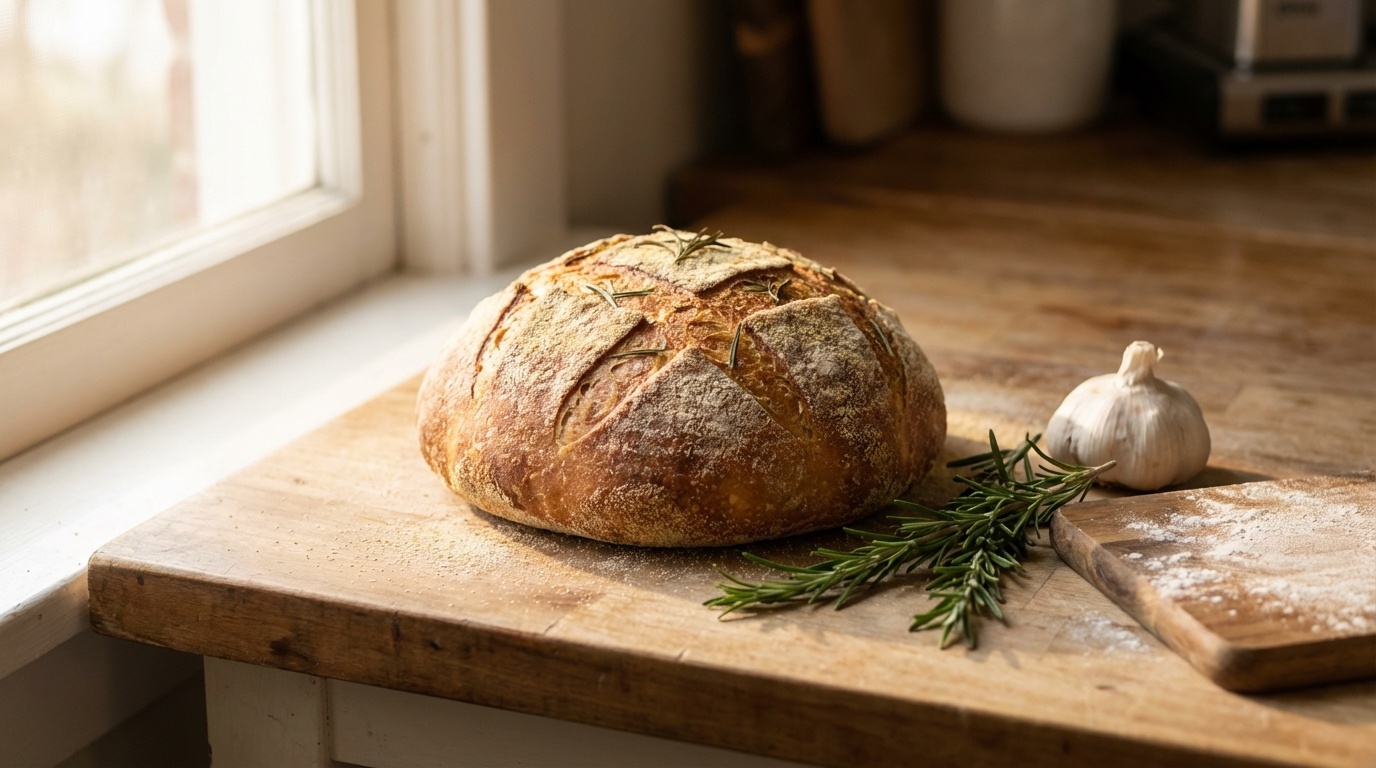
Prepare the oven for hearth baking with an empty steam pan in place. Preheat to 500°F (260°C). Score the breads with 2 parallel diagonal slashes or 1 long slash. Rolls can be baked directly on the sheet pan. For loaves, generously dust a peel or the back of a sheet pan with semolina flour or cornmeal and very gently transfer the loaves. Transfer the dough to the baking stone or bake on the sheet pan. Pour 1 cup hot water into the steam pan and close the door. After 30 seconds, spray the walls of the oven with water and close the door. Repeat once more after another 30 seconds. After the final spray, lower the oven to 450°F (or 400°F (205°C), see Notes) and bake until done, rotating 180 degrees if necessary for even baking. It should take about 20 minutes for loaves and 15 minutes for rolls. The loaves and rolls should be golden brown and register at least 200°F (93°C) at the center.
Transfer the rolls or loaves to a cooling rack and cool for at least 1 hour before slicing or serving.
Notes
- Crustier loaf: If you prefer a crustier loaf, lower the oven temperature to 400°F (205°C) after steaming and increase the baking time to thicken the crust and give it more crunch.
- Diastatic malt: This produces better color by accelerating enzyme activity and promoting sugar breakout from starch. You can also use nondiastatic barley malt syrup for flavor, or make this bread without malt since most bread flour already contains some.
- Deli corn rye variation: Mist the shaped loaves with water and roll the tops in medium-grind cornmeal for a corn-rye version with great crunch.
See Also
Tuscan Bread