Marbled Rye Bread
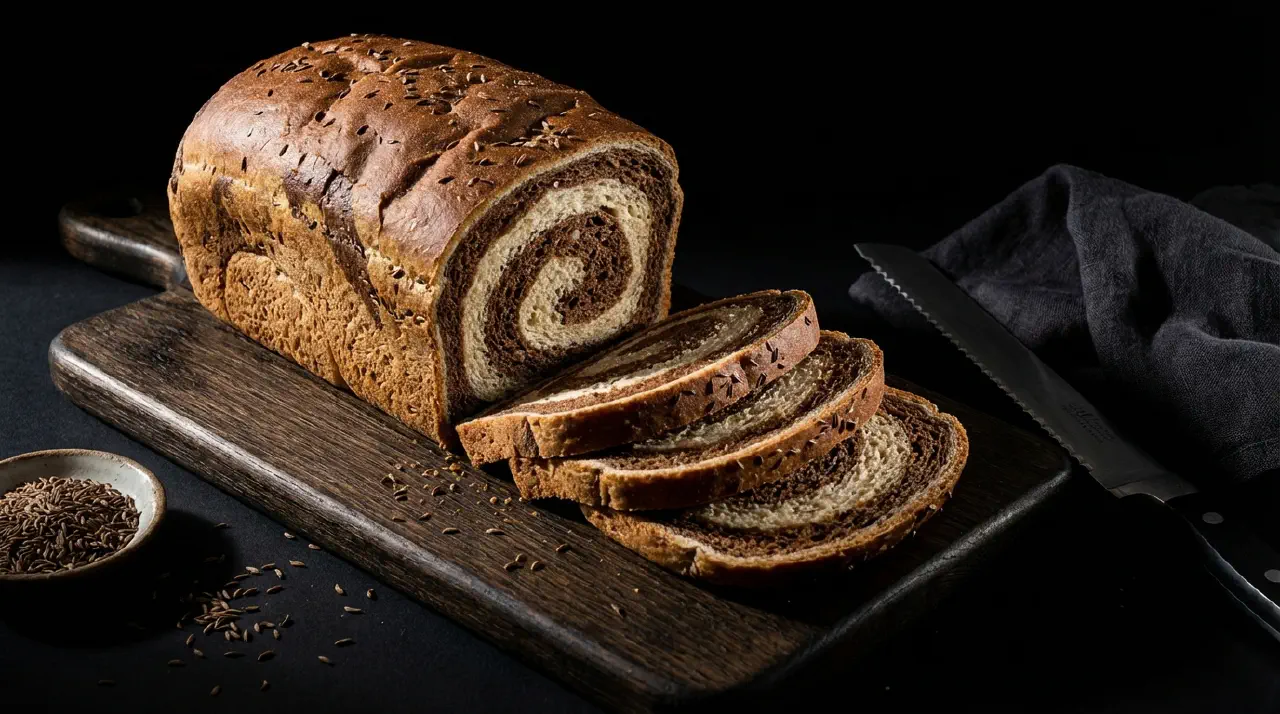
Marbled Rye Bread © kvalifood.com
Two complementary rye doughs—light and dark—woven together to create striking visual contrast and complex flavor. This direct-dough method produces soft texture and flexibility for multiple shaping techniques including braiding, layering, and spirals.
Ingredients
Makes 2 to 4 marbled rye breads
Light Rye
- 170 g white rye flour
- 380 g unbleached bread or clear flour
- 1½ tsp salt
- 1¾ tsp instant yeast
- 1½ tsp caraway seeds (optional)
- 1 tbsp molasses
- 2 tbsp shortening
- About 310 g water, at room temperature
Dark Rye
- 170 g white rye flour
- 380 g unbleached bread or clear flour
- 1½ tsp salt
- 1¾ tsp instant yeast
- 1½ tsp caraway seeds (optional)
- 1 tbsp molasses
- 2 tbsp shortening
- About 310 g water, at room temperature
- 1 tbsp liquid caramel coloring or 2 tbsp cocoa, carob, or coffee powder dissolved in 2 tbsp water
Egg Wash
- 1 egg, whisked with 1 tsp water until frothy
Directions
To make the light rye, stir together the flours, salt, yeast, and caraway seeds in a 4-quart bowl. Add the molasses, shortening, and 1¼ cups water. Mix until the dough gathers all the loose flour and forms a ball, adding the additional 2 tbsp of water only if needed. Sprinkle a little flour on the counter, transfer the dough, and begin to knead. Knead for 4 to 6 minutes, adding sprinkles of flour if necessary. The dough should feel supple and pliable, a little tacky but not sticky. Lightly oil a large bowl and transfer the dough, rolling it to coat with oil. Cover with plastic wrap.
To make the dark rye, stir together the flours, salt, yeast, and caraway seeds in a 4-quart bowl. Add the molasses, shortening, 1¼ cups water, and liquid caramel coloring. Mix until the dough gathers all the loose flour and forms a ball, adding the additional 2 tbsp of water only if needed. Sprinkle a little flour on the counter, transfer the dough, and begin to knead. Knead for 4 to 6 minutes, adding sprinkles of flour if necessary. The dough should feel supple and pliable, a little tacky but not sticky. Lightly oil a large bowl and transfer the dough, rolling it to coat with oil. Cover with plastic wrap.
Ferment both doughs at room temperature for approximately 90 minutes, or until each dough doubles in size.
Turn each of the doughs onto a lightly floured counter and divide and shape them according to one of the shaping methods (marbled, bull’s-eyes, spirals, or braided—see Notes for details).
Mist the loaves with spray oil and cover loosely with plastic wrap. Proof at room temperature for 60 to 90 minutes, or until the loaves nearly double in size. If you need to store them, put one in the refrigerator instead of immediately proofing the dough. The dough can then be proofed and baked as much as 2 days later.
Preheat the oven to 350°F (175°C) with the oven rack on the middle shelf. For the egg wash, whisk together the egg and water until frothy and brush the loaves evenly but gently with the mixture.
Bake for approximately 45 minutes (the time will vary depending on the oven and whether you are baking freestanding loaves or in a large or small loaf pan). You may need to rotate the pan(s) 180 degrees after 20 minutes for even baking. The internal temperature of the bread should be 190°F (88°C), and the loaves should make a hollow sound when thumped on the bottom.
When the loaves have finished baking, remove them immediately from the pans if using, and cool on a rack for at least 1 hour, preferably 2 hours, before slicing or serving.
Notes
- Matching doughs: The most important principle when combining two or more bread doughs into one loaf is that they must have a similar texture and rising time to ensure that each color has the same texture and that each dough bakes in the same time frame.
- Clear flour: Bakers generally use clear flour when making rye bread. This formula works fine with regular bread flour or high-gluten flour, but use clear flour if you have access to it.
- Rye flour types: White rye flour is sifted twice to remove the bran and germ. Dark rye is milled from the outer endosperm and is coarser and full of pigments; it makes a much heavier loaf and is not appropriate for this marbled formula. Pumpernickel rye (coarsely milled whole berries) and rye meal are even coarser.
- Shortening for tenderness: Shortening yields the most tender texture. You can substitute margarine, vegetable oil, or butter if you prefer.
- Caramel coloring: Liquid caramel coloring is basically burnt sugar and is available in some markets and from bakery suppliers. You may need to hold back an equal amount of water to ensure the final textures match. Cocoa, instant coffee, or carob powder may be substituted but lend a bitter flavor that some people dislike.
- Short mixing time: Rye breads must be mixed for less time than wheat breads because the pentosan gums in rye interfere with gluten development. Once the dough gums up, no amount of additional flour will help. If gums begin to kick in, finish mixing anyway and handle the dough with flour on your hands.
- Shaping methods: Divide each dough into pieces and combine them in different arrangements: marbled (12 pieces each, separated into 2 piles with equal light and dark pieces, formed into bâtards); bull’s-eyes (4 pieces each, rolled flat, layered, and wrapped); spirals (rolled flat pieces stacked and rolled up); or braided (4 pieces each rolled into strands, braided together using the 4-braid method).
See Also
Pumpernickel Bread
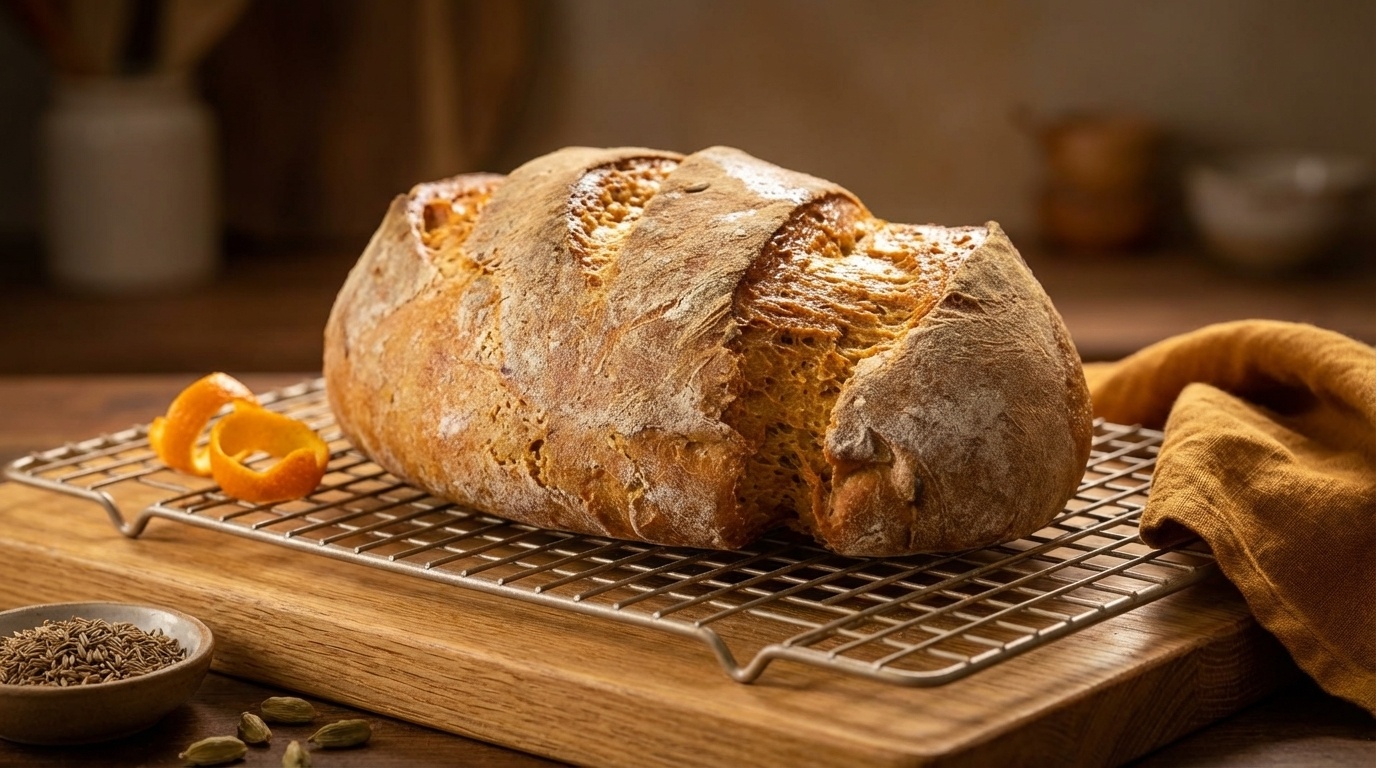
Swedish Rye (Limpa)
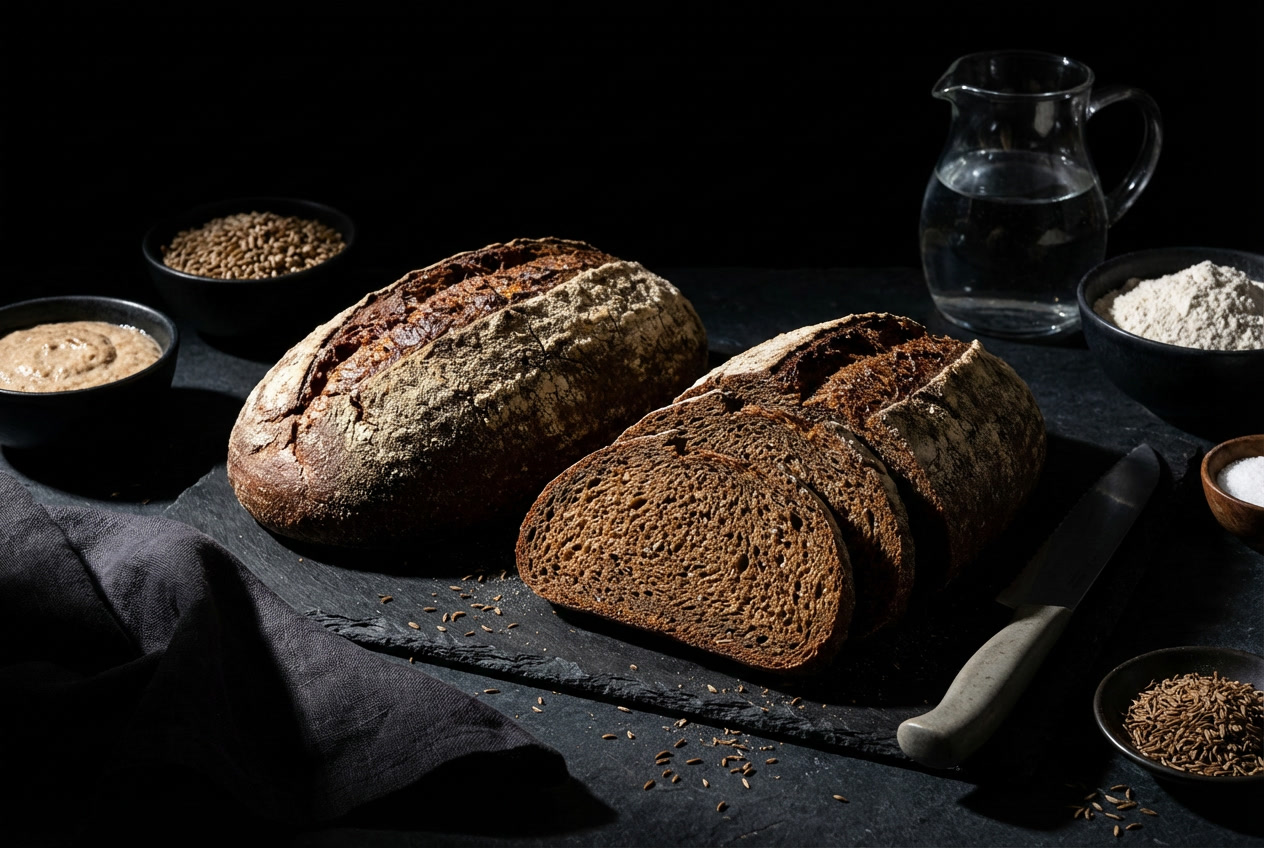
100 Percent Sourdough Rye Bread
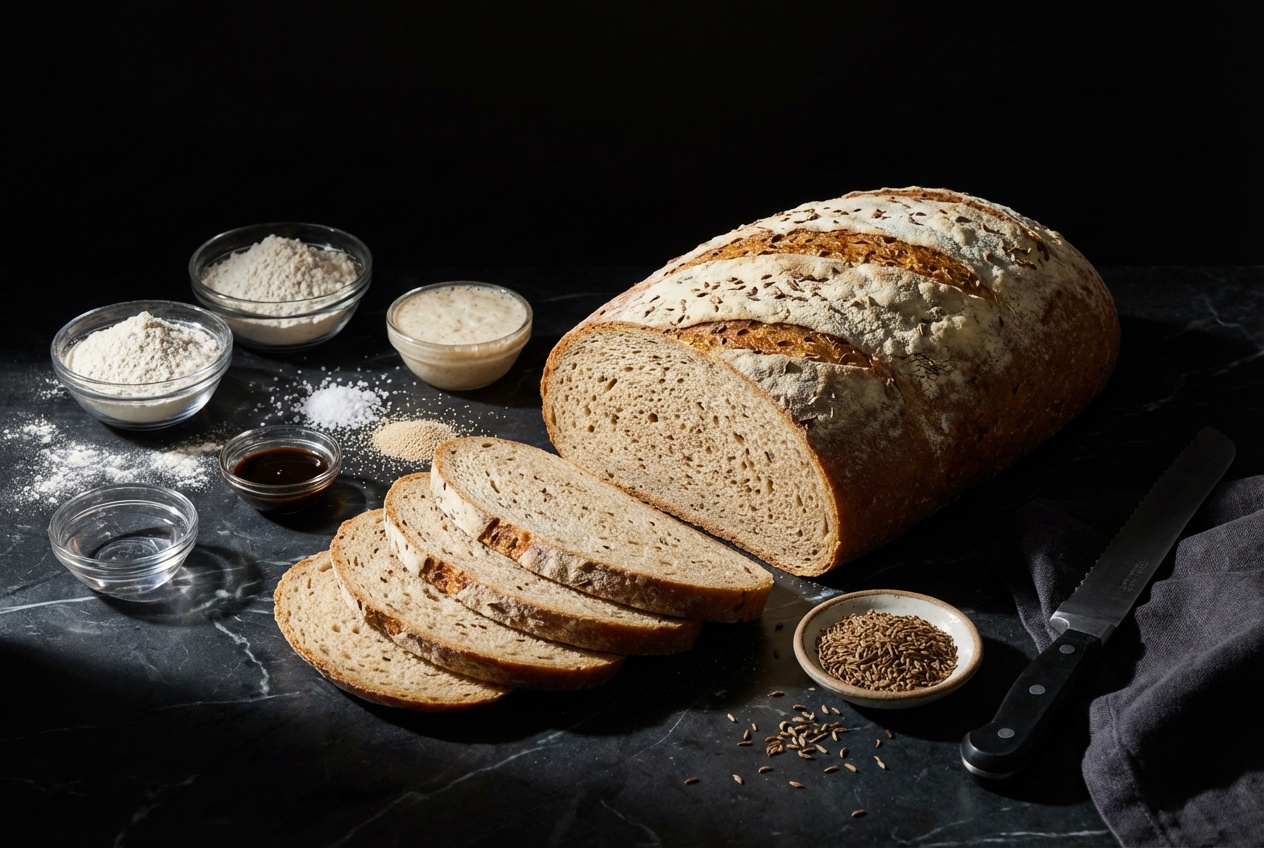
New York Deli Rye