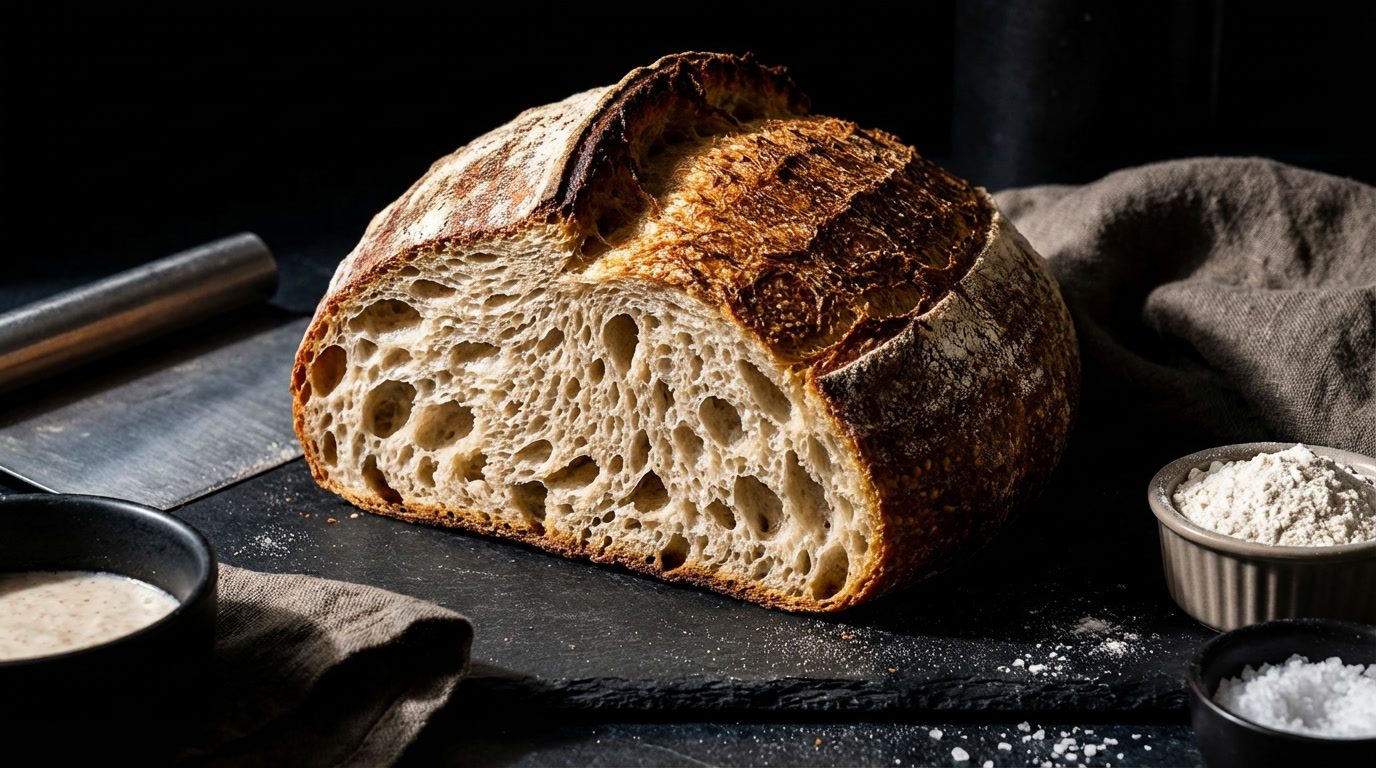
New York Deli Rye
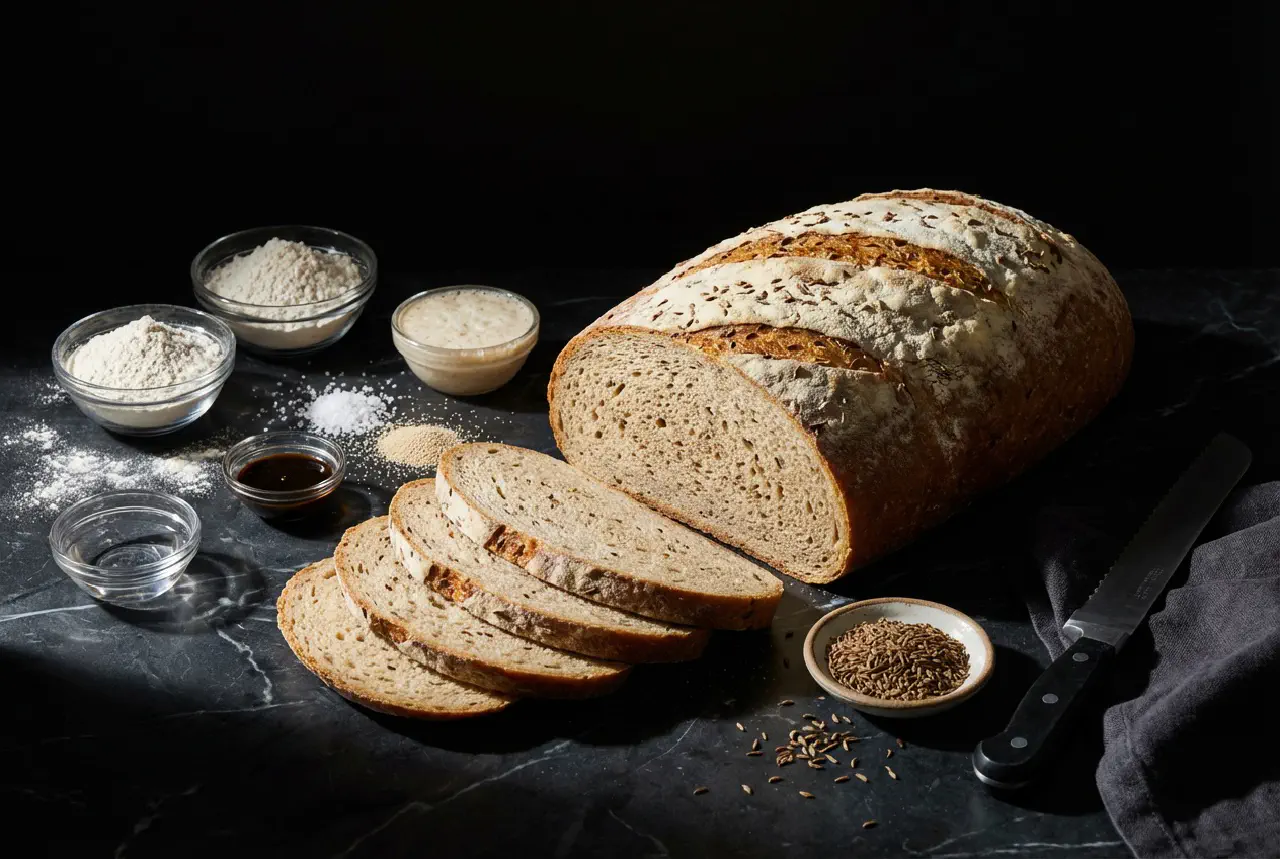
New York Deli Rye © kvalifood.com
Authentic deli rye made with a fermented rye sponge and sautéed onions for complex flavor. The combination of wild yeast from the sponge and commercial yeast creates the distinctive taste associated with classic deli sandwiches.
Ingredients
Makes 2 2-pound or three 1½-pound sandwich loaves
Rye Sponge Starter (prepared 1 day ahead)
- 200 g barm
- 130 g white rye flour
- 110 g lukewarm water (90°–100°F (38°C))
- 340 g medium onions, diced
- 2 tbsp vegetable oil
Final Dough
- 450 g unbleached high-gluten, bread, or clear flour
- 130 g white rye flour
- 2 tbsp brown sugar
- 2¼ tsp salt
- 2 tsp instant yeast
- 2 tsp caraway seeds (optional)
- 2 tbsp shortening or vegetable oil
- 230 g buttermilk or milk, lukewarm (90°–100°F (38°C))
- 55–110 g water, or as needed, at room temperature
- Semolina flour or cornmeal, for dusting
- 1 egg white, whisked until frothy, for egg wash (optional)
Directions
Make the starter a day ahead. Mix together the barm, rye flour, and water in a small bowl and cover with plastic wrap. Very lightly sauté the onions in the oil over medium heat just until they sweat. Transfer them out of the pan into a bowl and let them cool until they are warm, not hot. Stir them into the starter, re-cover with plastic wrap, and ferment at room temperature until it bubbles and foams, 3 to 4 hours. Refrigerate overnight.
The next day, remove the starter from the refrigerator 1 hour before making the dough to take off the chill.
To make the dough, stir together the flours, brown sugar, salt, yeast, and caraway seeds in a 4-quart bowl. Add the starter, shortening, and buttermilk. Stir with a large metal spoon until the mixture forms a ball, adding in only as much water as it takes to bring everything together into a soft, not sticky mass. Let this sit for 5 minutes so the gluten can begin to develop.
Sprinkle high-gluten or bread flour on the counter, transfer the dough, and begin kneading. Add in flour as needed to make a firm, slightly tacky dough. Try to complete the kneading in 6 minutes to prevent the dough from getting gummy. The dough should pass the windowpane test and register 77°–81°F (27°C). Lightly oil a large bowl and transfer the dough, rolling it around to coat with oil. Cover with plastic wrap.
Ferment at room temperature for 1½ to 2 hours, or until the dough doubles in size.
Remove the dough from the bowl and divide it into 2 or 3 equal pieces (they will weigh about 30 oz for larger loaves and 20 oz for smaller loaves). Shape them into sandwich loaves or bâtards for free-standing loaves. If you are baking them in loaf pans, lightly oil the pans (8½ by 4½-inch pans for small loaves; 9 by 5-inch pans for larger loaves). If you are baking them freestanding, line 1 or 2 sheet pans with baking parchment and dust with semolina flour or cornmeal. Transfer the shaped dough to the pans and mist the tops with spray oil.
Proof at room temperature for approximately 90 minutes, or until they have grown 1½ times in size. The dough in the loaf pan should dome about 1 inch above the lip of the pans.
Preheat the oven to 350°F (175°C) for loaf-pan breads, 400°F (205°C) for freestanding loaves, with the oven rack on the middle shelf. Brush freestanding loaves with the egg wash. You can score them, but this is optional. The egg wash is optional for loaf-pan breads. Place the loaf pans on a sheet pan before putting them into the oven (this protects the bottoms).
Bake the loaves for 20 minutes, rotate the pans 180 degrees for even baking, and continue to bake for 15 to 40 minutes, depending on the size and shape. The internal temperature should register 185–195°F (85–91°C) at the center. The loaves should be golden brown all over and make a hollow sound when thumped on the bottom.
Remove the loaves from the pans and transfer to a rack to cool for at least 1 hour before slicing or serving.
Notes
- Mixed leavening: The best rye breads are made with a mix of wild-yeast starter and commercial yeast. This combination makes them significantly more flavorful than those made with yeast alone.
- Onions optional: The addition of onions is optional; the bread is excellent with or without them. However, the onions are integral to that authentic deli taste.
- Caraway seeds: Some people have never had rye bread without caraway seeds and think that rye naturally tastes like caraway. The caraway seeds are optional here. Try making this bread with and without them to determine which you prefer.
- Milk options: Buttermilk tastes better than milk in this bread, but if you do not have any on hand, feel free to substitute whole or low-fat milk.
- Deli corn rye variation: Proceed as written and then mist the shaped loaves with water and roll the tops (or the entire loaf) in medium-grind cornmeal. This gives the loaves a great corn crunch!
- Short mixing time: Rye requires careful handling to prevent the dough from getting gummy, so keep kneading to 6 minutes or less.
See Also
Swedish Rye (Limpa)
Pumpernickel Bread
100 Percent Sourdough Rye Bread
Sunflower Seed Rye
Poilâne-Style Miche