Pain à l'Ancienne
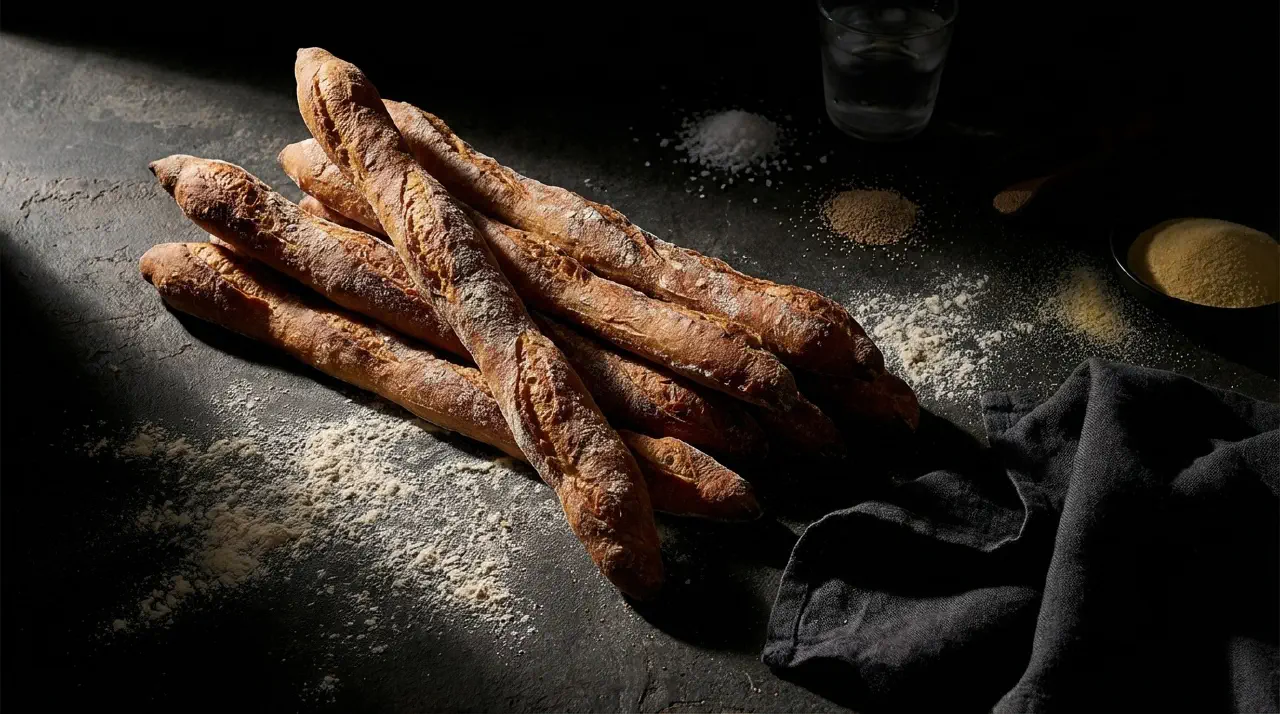
Pain à l’Ancienne © kvalifood.com
A rustic baguette made using ice-cold water and delayed fermentation, which releases subtle flavors from the flour that cannot be achieved through standard methods. The result is naturally sweet with a nutlike character and a thin, golden crust.
Ingredients
Makes 6 baguettes, 6–8 pizzas, or one 17 x 12-inch focaccia
- 770 g unbleached bread flour
- 2¼ tsp (.56 oz) salt
- 1¾ tsp (.19 oz) instant yeast
- 540–680 g ice-cold water (40°F (4°C))
- Semolina flour or cornmeal, for dusting
Directions
Day 1: Mix and Chill
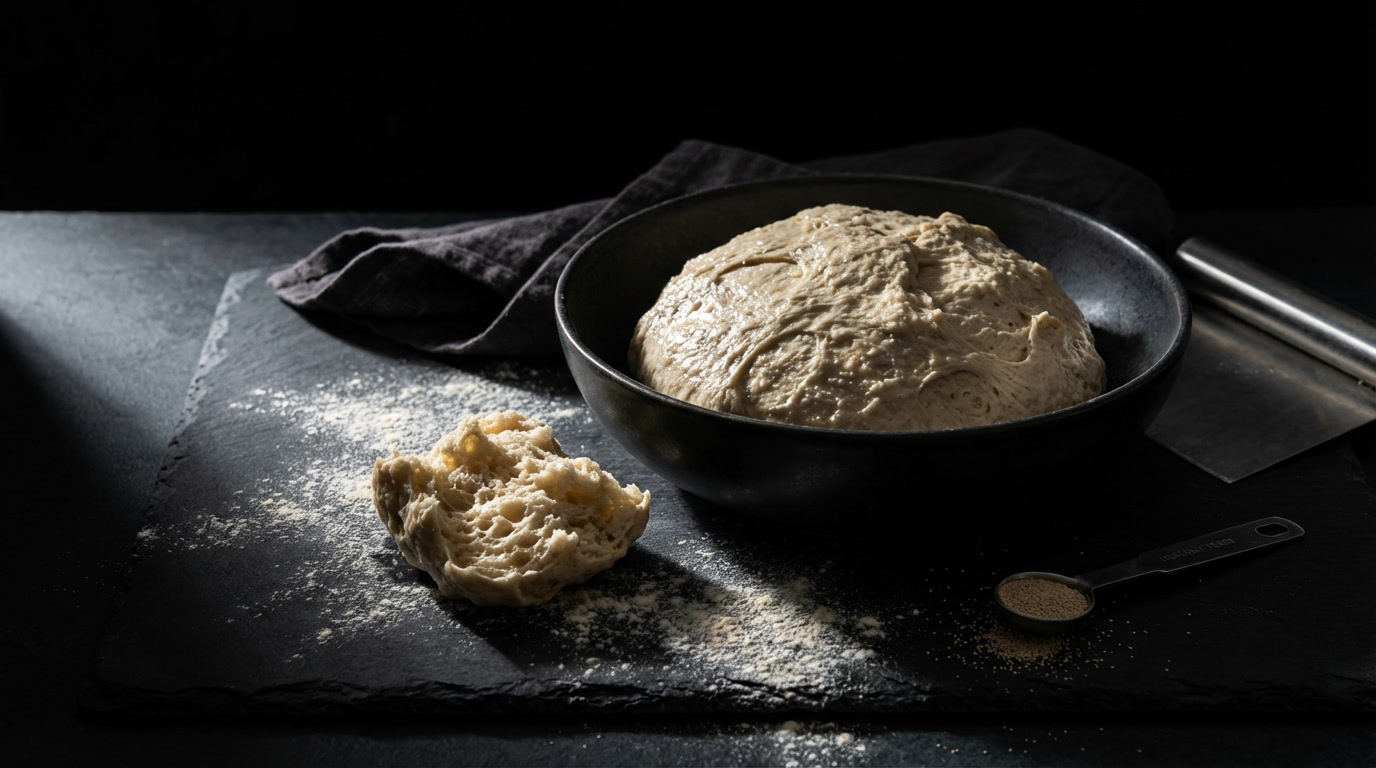
Combine the flour, salt, yeast, and 19 oz of ice-cold water in an electric mixer with the paddle attachment. Mix on low speed for 2 minutes. Switch to the dough hook and mix on medium speed for 5–6 minutes. The dough should be sticky on the bottom but release from the sides. If it clings to the sides, add a small amount of flour; if it clears the bottom as well, dribble in water. Oil a large bowl and immediately transfer the dough with a wet spatula. Mist the top with oil and cover with plastic wrap. Place in the refrigerator and retard overnight.
Day 2: Awaken and Shape
The next day, check the dough—it will probably be partially risen but not doubled. Leave it at room temperature for 2–3 hours (or longer) to lose the chill and continue fermenting until it doubles from its original prerefrigerated size.
When ready, liberally flour the counter with about ½ cup bread flour. Gently transfer the dough to the counter using a wet dough scraper, dipping your hands as well, and degas as little as possible. If the dough is very wet, sprinkle more flour over it. Dry your hands thoroughly and dip them in flour. Roll the dough gently in the flour, stretching it into an oblong about 8 inches long and 6 inches wide, sprinkling more flour if it sticks. Dip a wet metal pastry scraper and cut the dough in half widthwise by pressing firmly down through it, then dipping and repeating until fully cut. (Use the scraper as a pincer, not a saw.) Let the dough relax for 5 minutes.
Preheat the oven to 500°F (or 550°F (288°C) if available), with an empty steam pan in place. Cover the back of two 17 by 12-inch sheet pans with parchment and dust with semolina.
For baguettes: Take one dough piece and repeat the cutting action to create 3 equal-sized lengths. Repeat with the remaining half to get 6 lengths. Flour your hands and carefully lift each strip, transferring it to a parchment-lined pan and gently pulling to the length of the pan or baking stone. If it springs back, rest for 5 minutes and stretch again. Place 3 strips on each pan.
Score each dough strip with 3 diagonal cuts across the top. You may need to dip your razor blade in water between cuts. Omit scoring if the dough isn’t cooperating.
Take one pan to the preheated oven and carefully slide the dough with parchment onto the baking stone (or bake directly on the pan). Make sure pieces aren’t touching. Pour 1 cup hot water into the steam pan and close the door. After 30 seconds, spray the oven walls with water. Repeat twice more at 30-second intervals. Lower the oven to 475°F (246°C) and continue baking. Meanwhile, dust the other pan with flour, mist with oil, and slip into a plastic bag or cover with a towel. Refrigerate if not baking within 1 hour.
The bread should begin turning golden brown within 8–9 minutes. If baking unevenly, rotate 180 degrees. Bake 10–15 minutes more until a rich golden brown and the internal temperature reaches at least 205°F (96°C). Transfer to a cooling rack. They should cool in about 20 minutes. While cooling, bake the remaining loaves, removing the parchment from the oven and resetting the temperature to 500°F (260°C) or higher.
Notes
- Delayed-Fermentation Method: Cold mixing and overnight refrigeration delay yeast activation, allowing enzymes to release trapped sugars. This produces natural sweetness and nutlike character distinct from traditional fermentation.
- Wet Dough: This dough is sticky like ciabatta. It’s best made in an electric mixer or food processor; hand mixing is possible but challenging.
- Scoring Variation: Sharp scissors work well for scoring this wet dough better than knives. Make long, angled cuts rather than short snips.
- Ice-Cold Water: Chill 3 cups of refrigerator water with 8 ice cubes, wait 2 minutes, then measure out 3 cups.
- Ciabatta Variation: Shape into 3-inch balls on a floured parchment-lined pan. Let proof for 1–2 hours at room temperature for rustic ciabatta-style results.
- Pizza or Focaccia: Divide the fermented dough into 6–8 pieces, round into balls, and refrigerate. See the Pizza Napoletana recipe for shaping and baking.
See Also
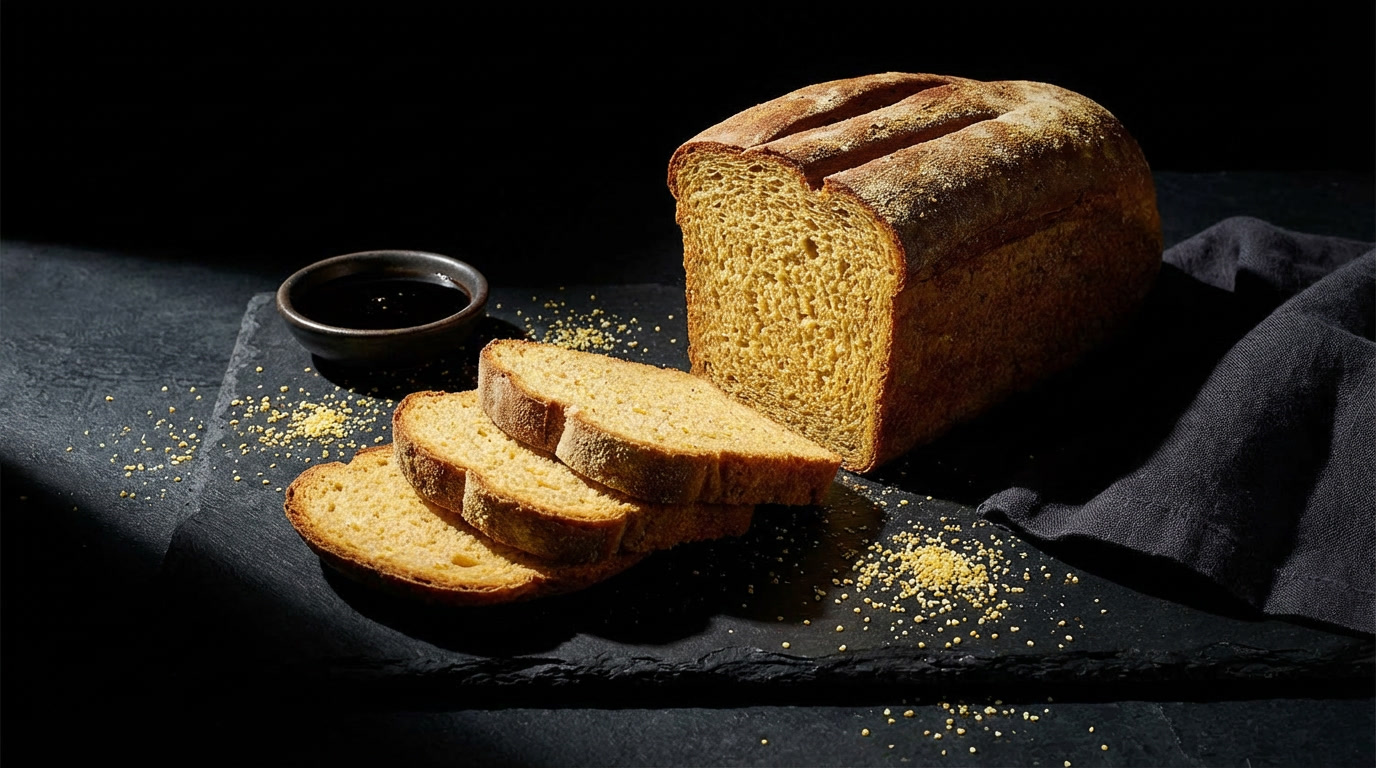
Anadama Bread
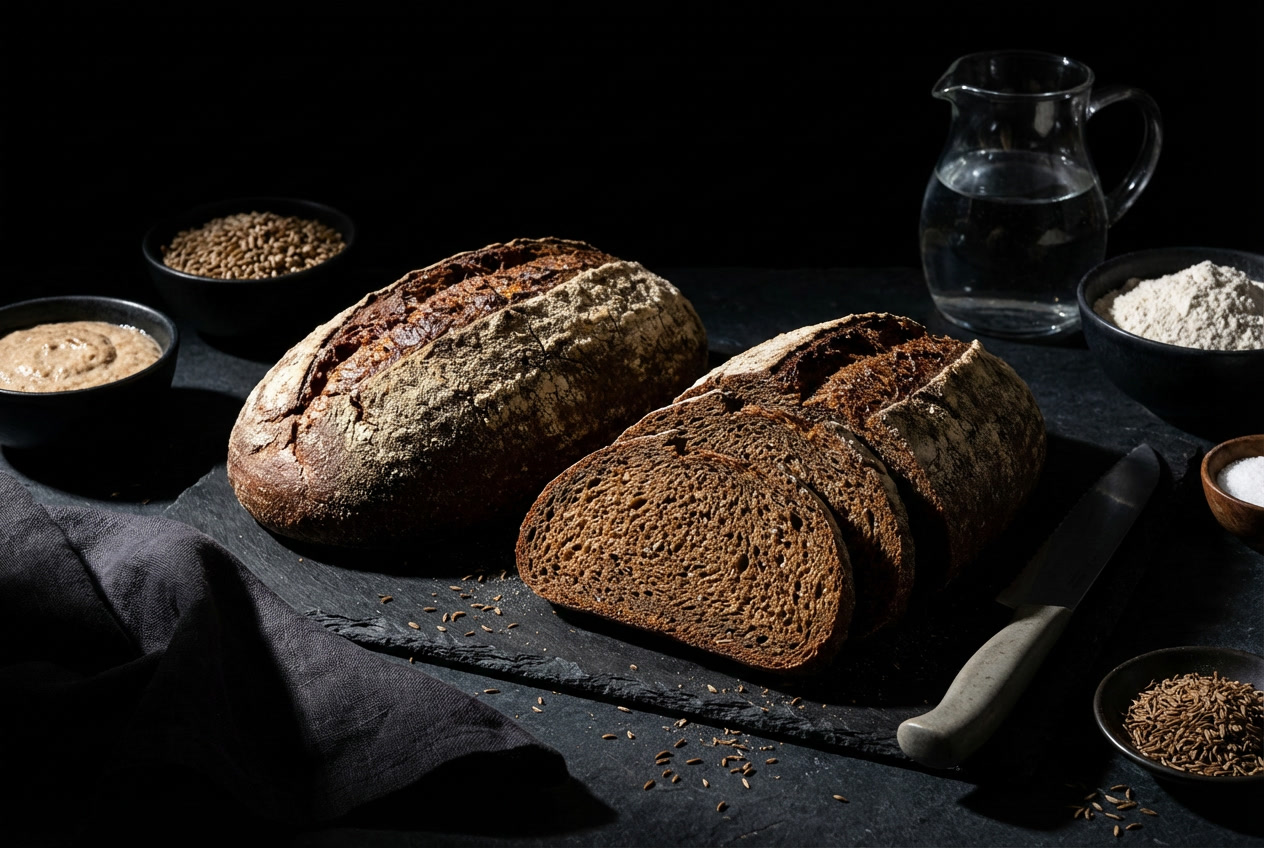
100 Percent Sourdough Rye Bread
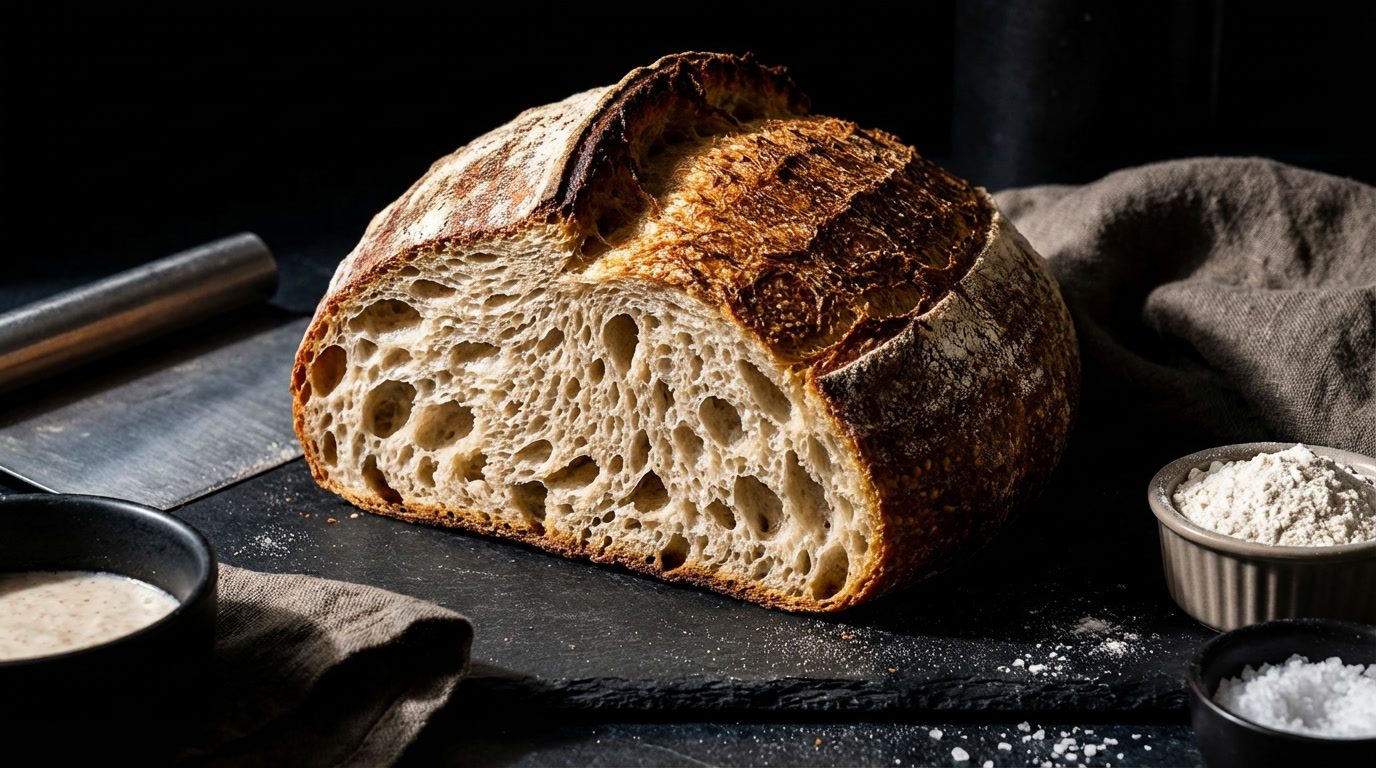
Basic Sourdough Bread