Pain de Campagne
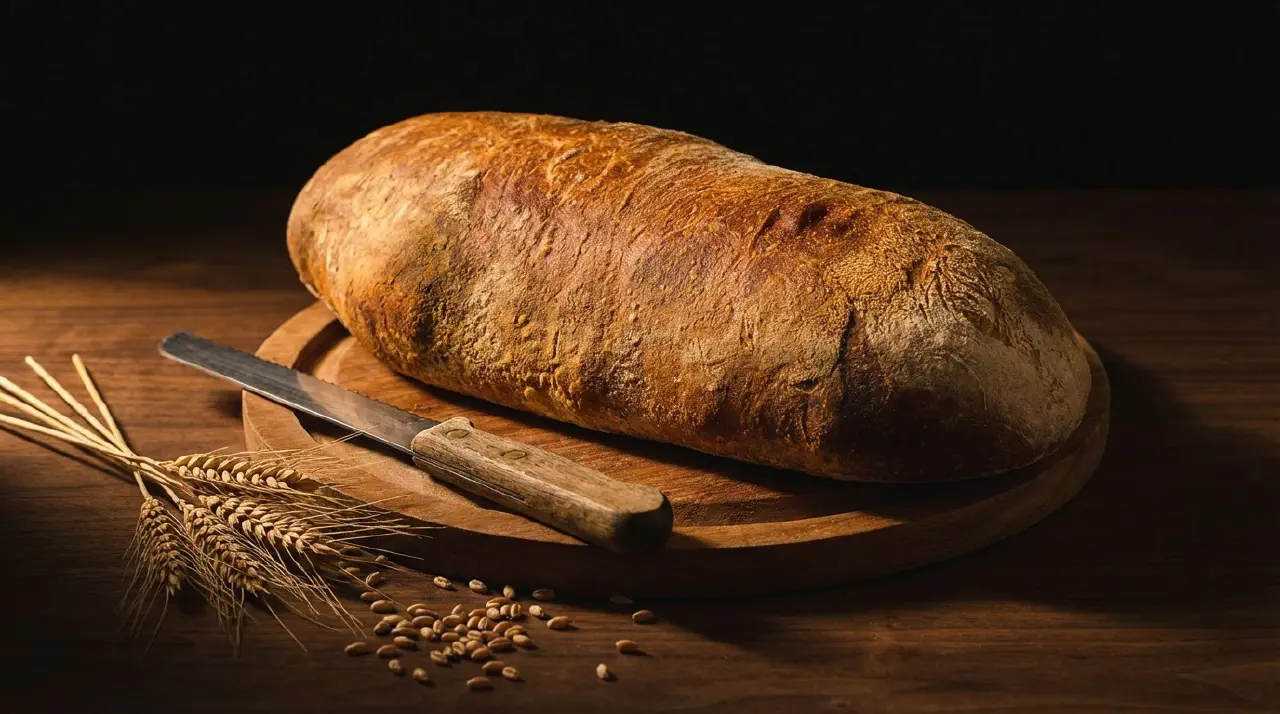
Pain de Campagne © kvalifood.com
A rustic French country bread enriched with a small percentage of whole grain flour, giving it more character and a distinctive brownish-gold crust. This formula uses a full batch of pâte fermentée as the pre-ferment, making it foolproof for home bakers.
Ingredients
Makes 3 loaves of various shapes or numerous rolls
- 450 g pâte fermentée
- 230 g unbleached bread flour
- 45 g whole-wheat or rye flour (or a combination)
- ¾ tsp (.19 oz) salt
- 1 tsp (.11 oz) instant yeast
- 170 g water, lukewarm (90–100°F (32–38°C))
- Semolina flour or cornmeal, for dusting
Directions
Remove the pâte fermentée from the refrigerator 1 hour before making the dough. Cut it into about 10 small pieces with a pastry scraper or serrated knife, cover with a towel, and let sit for 1 hour to take off the chill.
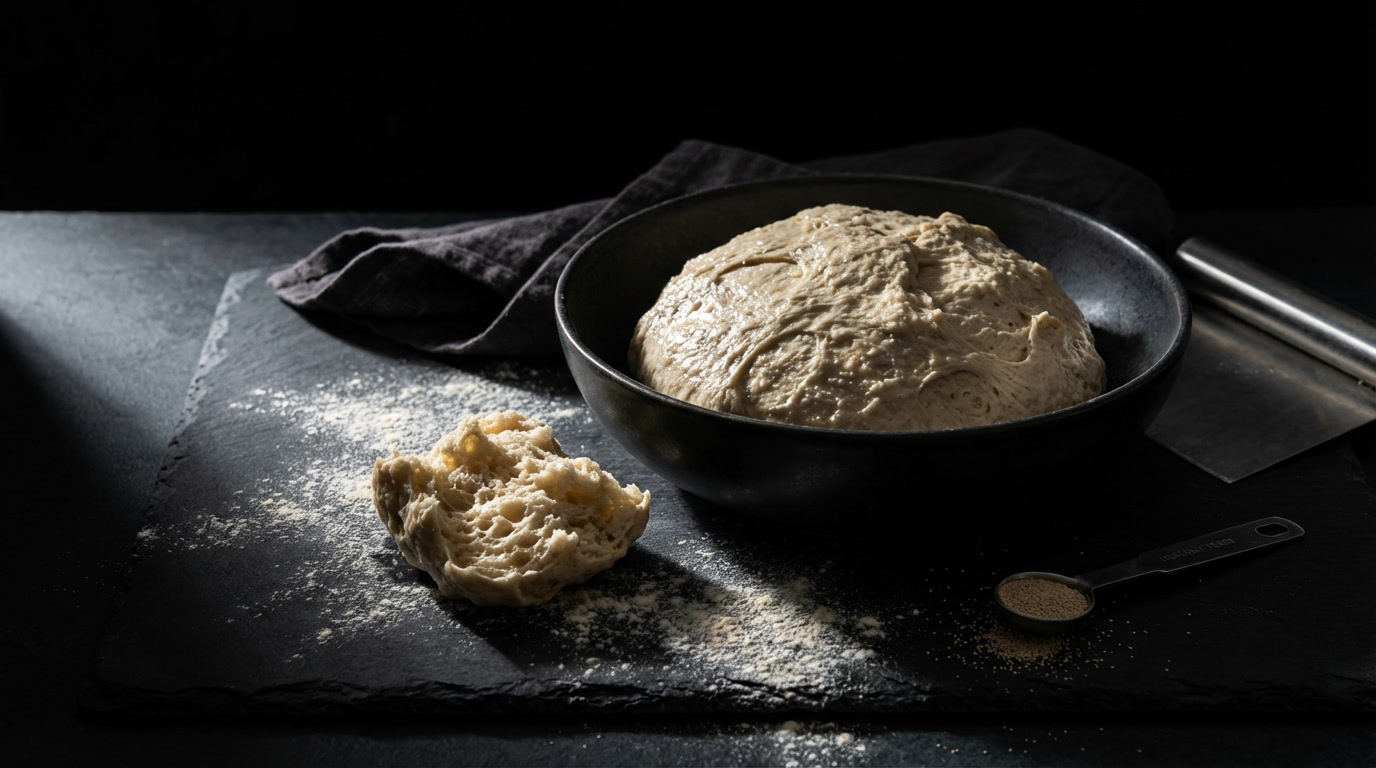
Stir together both flours, salt, yeast, and pâte fermentée pieces in a large bowl. Add the water, stirring until everything comes together into a coarse ball. Add a few drops more water if needed to gather any loose flour. The dough should be soft and pliable.
Sprinkle flour on the counter and transfer the dough. Knead for 8–10 minutes (6 by machine), sprinkling bread flour as needed to make a soft, pliable dough that is tacky but not sticky. It should pass the windowpane test and register 77–81°F (25–27°C). Oil a large bowl, transfer the dough, and coat with oil. Cover with plastic wrap.
Ferment at room temperature for approximately 2 hours until the dough doubles in size. If it doubles more quickly, lightly knead to degas it, cover, and let it rise again until it doubles from original size.
Gently remove the dough from the bowl, degassing as little as possible. Divide into 3 or more pieces with a pastry scraper or serrated knife, trying to avoid excessive degassing. Shape as desired (baguette, bâtard, couronne, épi, fendu, or auvergnat). Line 2 sheet pans with parchment, sprinkle with semolina, and transfer the dough. Mist with oil and loosely cover with plastic wrap.
Proof for about 1 hour until the pieces are approximately 1½ times their original size.
Preheat the oven to 500°F (260°C) with an empty steam pan in place. For épis, make the scissors cuts now. Épis can bake directly on sheet pans. For other shapes, generously dust a peel or the back of a sheet pan with semolina and gently transfer the dough. Slide onto the baking stone or bake directly on the pan. Pour 1 cup hot water into the steam pan and close the door. After 30 seconds, spray the oven walls with water and close the door. Repeat twice more at 30-second intervals. Lower the oven to 450°F (230°C) and continue baking for 10 minutes. Check the loaves; rotate 180 degrees if needed. Bake 10–15 more minutes for baguettes and fendus, less for rolls. They should be rich golden brown all around and register 200–205°F (93–96°C) in the center; they should sound hollow when thumped on the bottom.
Transfer to a cooling rack. Allow at least 40 minutes before slicing.
Notes
- Whole Grain Ratio: The amount varies by region, typically 10–20% of total flour. Adjust the ratio of white to whole grain as you experiment.
- Pre-ferment: This formula uses a full batch of pâte fermentée (168% of combined flour weight), which is unusually high and crucial for home-kitchen performance.
- Shapes: This dough excels in creative shaping. Focus on dough quality over technique—the flavor and texture matter most.
See Also
Pâte Fermentée
100 Percent Sourdough Rye Bread
Basic Sourdough Bread