Pane Siciliano
Pane Siciliano © kvalifood.com
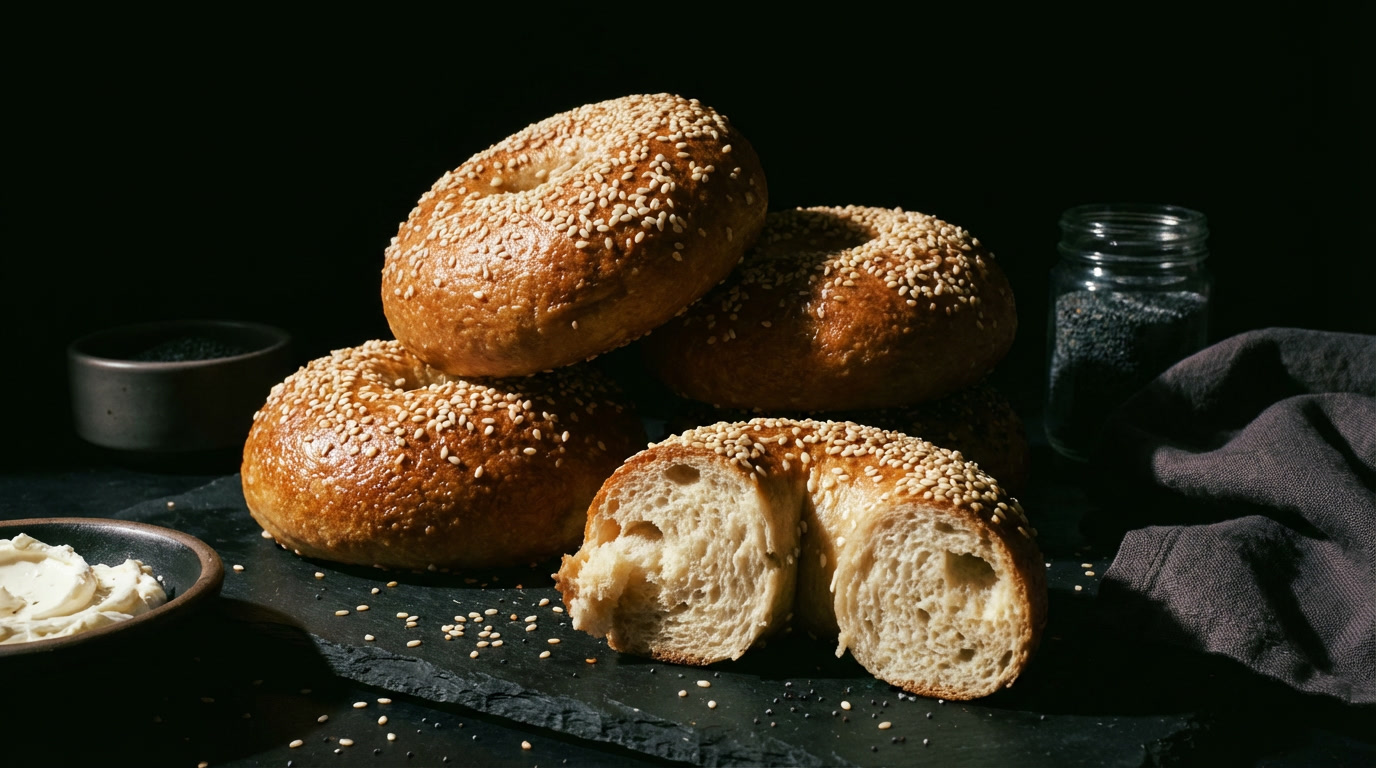
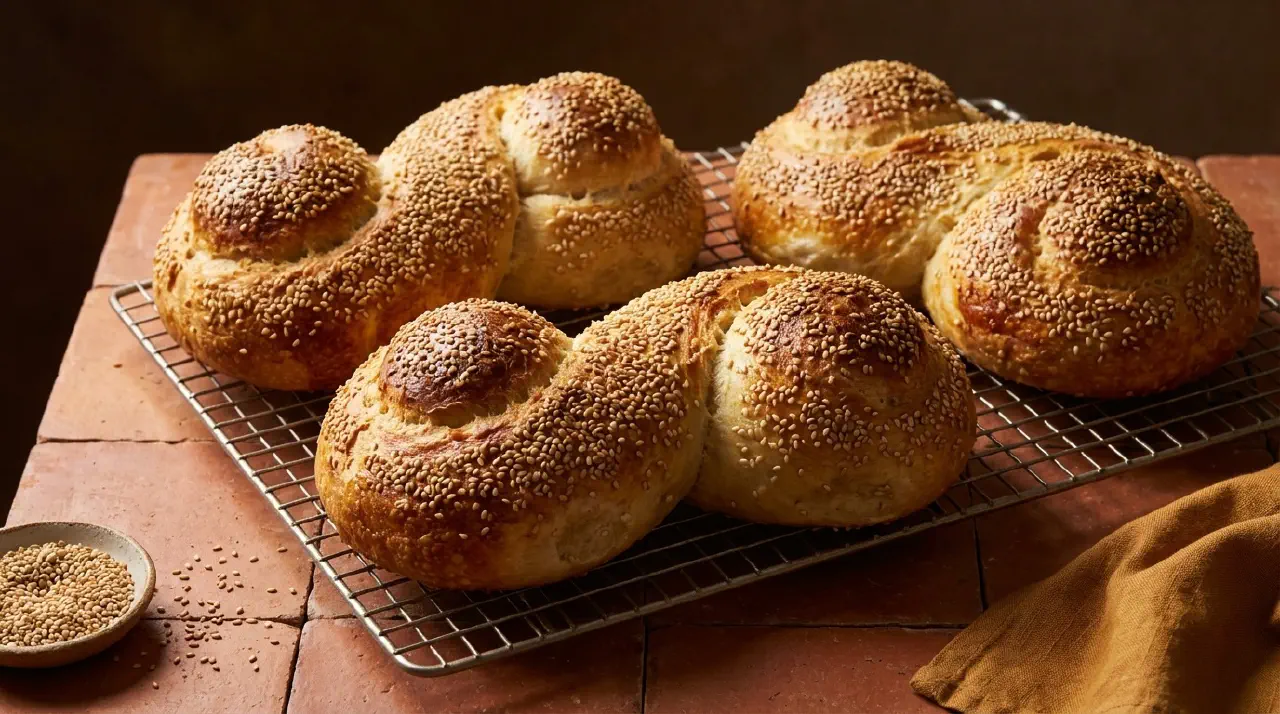
A Sicilian loaf made with 40 percent semolina flour and 60 percent high-gluten flour, resulting in a beautifully blistered crust and an open crumb with large, irregular holes. The semolina brings a sweet, nutty flavor enhanced by a sesame-seed garnish.
Ingredients
Makes 3 loaves
- 450 g pâte fermentée
- 230 g unbleached bread flour
- 230 g semolina flour
- 1¼ tsp salt
- 1¼ tsp instant yeast
- 2 tbsp olive oil
- 1 tbsp honey
- 280–340 g water, lukewarm (90–100°F (32–38°C))
- Natural, brown, and/or black sesame seeds, for topping
Directions
Day 1: Prepare the Dough
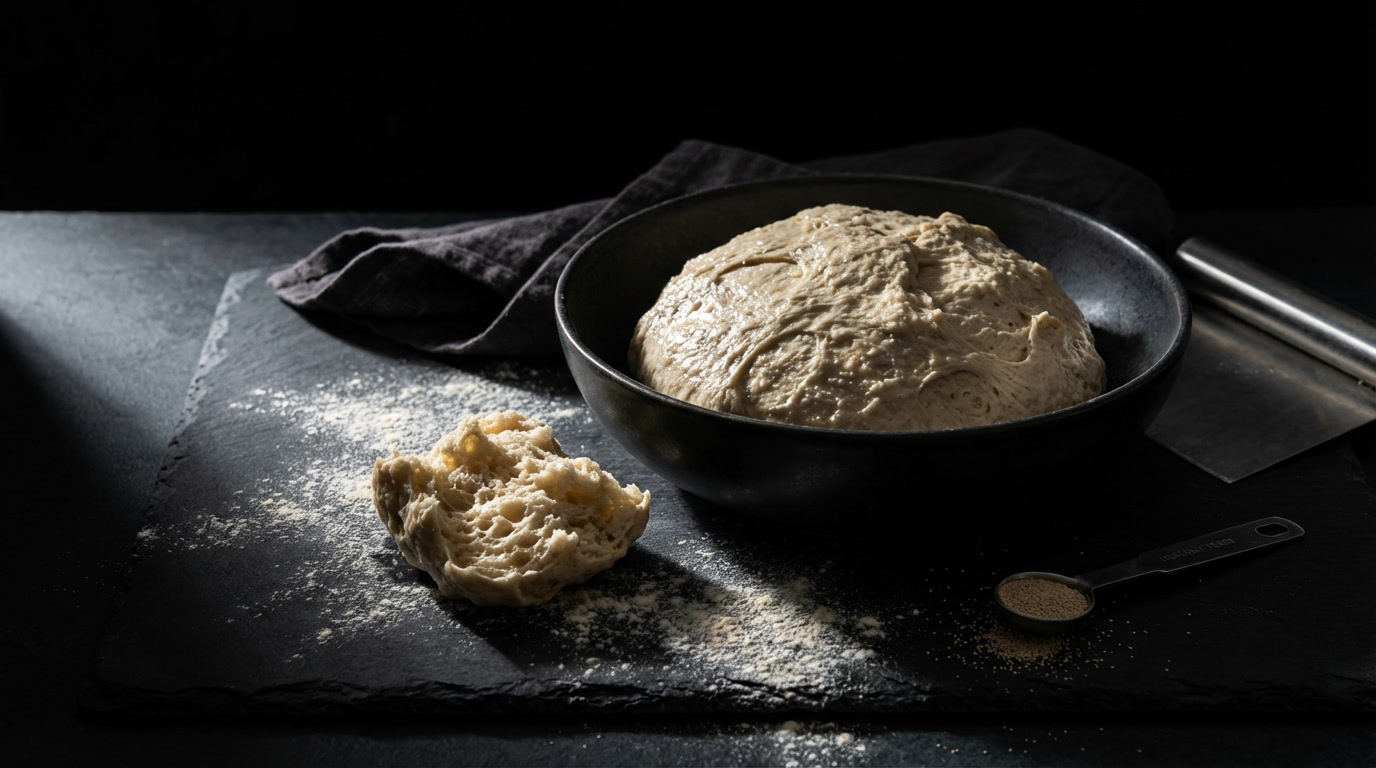
Remove the pâte fermentée from the refrigerator 1 hour before mixing to take off the chill. Cut it into about 10 small pieces with a pastry scraper or serrated knife, cover with a towel, and let sit for 1 hour.
In a large bowl, stir together the bread flour, semolina, salt, and yeast. Add the pâte fermentée pieces, oil, honey, and 1¼ cups water. Stir until the dough forms a ball. If it seems too stiff, dribble in water 1 tsp at a time until all flour is gathered and the dough feels soft and pliable. Don’t worry if it seems sticky; you can adjust while kneading.
Sprinkle bread flour on the counter and transfer the dough. Knead for about 10 minutes (6–8 by machine), adding flour in small amounts to make a smooth, tacky but not sticky dough with the same suppleness as French bread dough. It should pass the windowpane test and register 77–81°F (25–27°C). Oil a large bowl, transfer the dough, and coat with oil. Cover with plastic wrap.
Ferment at room temperature for about 2 hours until the dough doubles in size.
Day 1 (continued): Shape and Retard
Gently divide the dough into 3 equal pieces. Shape as for baguettes, extending each to about 24 inches in length and taking care to degas as little as possible. Working from each end simultaneously, coil the dough toward the center, forming an S shape.
Line a sheet pan with parchment and sprinkle semolina on it. Place each loaf on the pan (or set each on individual pans). Mist the loaves with water and sprinkle sesame seeds on top. Mist again with oil and place the pan(s) in a plastic bag or loosely cover with plastic wrap. Refrigerate overnight.
Day 2: Proof and Bake
Remove the pan(s) from the refrigerator and determine if the loaves have risen enough or need additional proofing time. Gently poke the dough. If it springs back quickly, leave it covered at room temperature for a couple of hours until it wakes up and rises more. The dough should stay dimpled when poked, and the loaves should be nearly twice as large as when first shaped.
Preheat the oven to 500°F (260°C) with an empty steam pan in place and the rack on the middle shelf. You do not need a baking stone.
Uncover the bread and place the pan(s) in the oven. Pour 1 cup hot water into the steam pan and close the door. After 30 seconds, spray the oven walls with water and close the door. Repeat twice more at 30-second intervals. Lower the oven to 450°F (230°C) and bake for about 15 minutes. If the loaves are touching, gently separate them. Rotate 180 degrees for even baking and continue baking 10–15 minutes more until a rich golden brown all over. If light or white sections remain, extend baking a few minutes more to maximize color and flavor. Internal temperature should register 200–205°F (93–96°C).
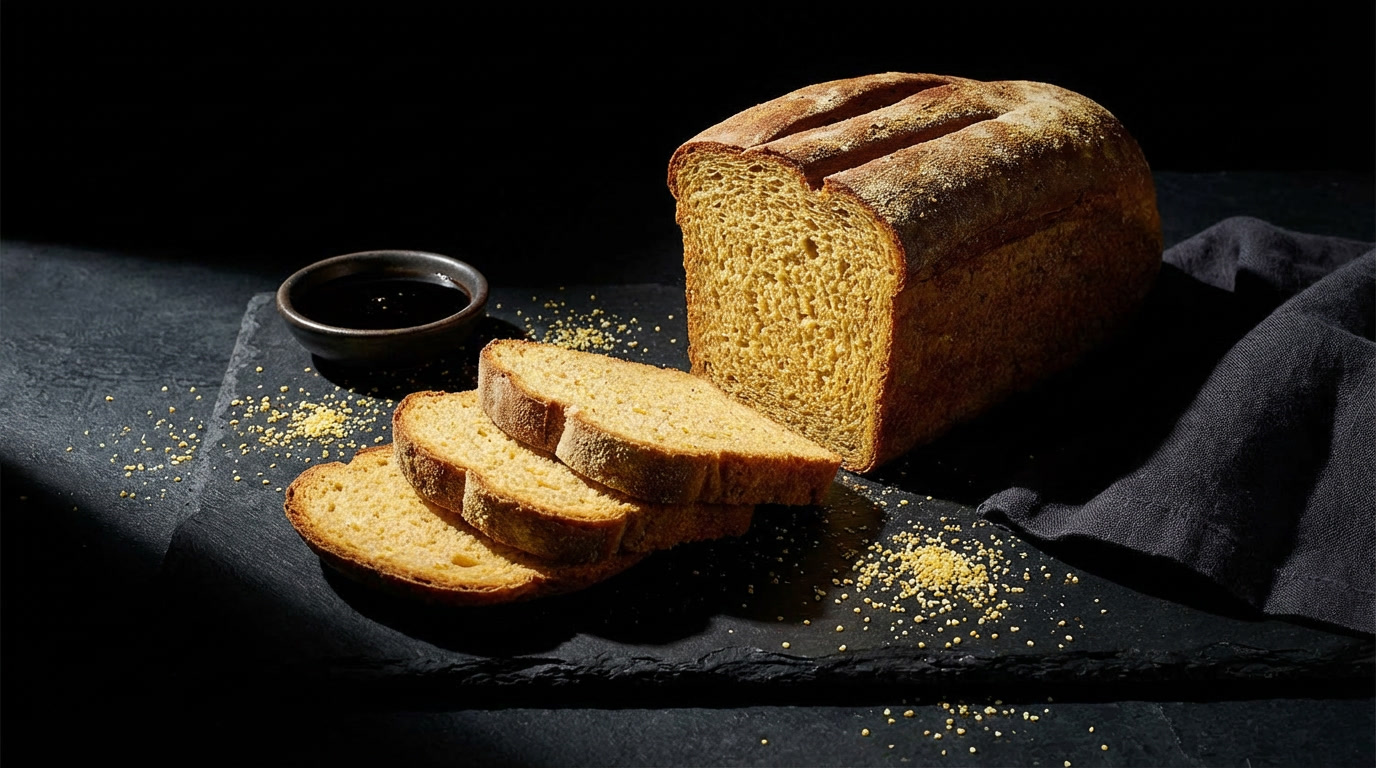
Remove from the oven and transfer to a cooling rack. Cool for at least 45 minutes. To slice, cut lengthwise down the middle, lay the cut side on the board to stabilize, then slice into ¾-inch-thick pieces across the width.
Notes
- Semolina Flour: The gritty flour milled from durum wheat provides golden color and nutty flavor. Can substitute fancier durum flour (milled to regular bread-flour consistency) or a blend of half whole-wheat and half bread flour.
- Multi-Day Process: Can theoretically be baked the same day as shaping, but overnight retarding dramatically improves flavor and texture. The overnight step makes this a 3-day process with a simple final bake day.
- Alternative Shapes: Use the dough for pizza (six 8-oz crusts), small rolls of any shape, or breadsticks.
See Also
Pâte Fermentée
100 Percent Sourdough Rye Bread
Basic Sourdough Bread