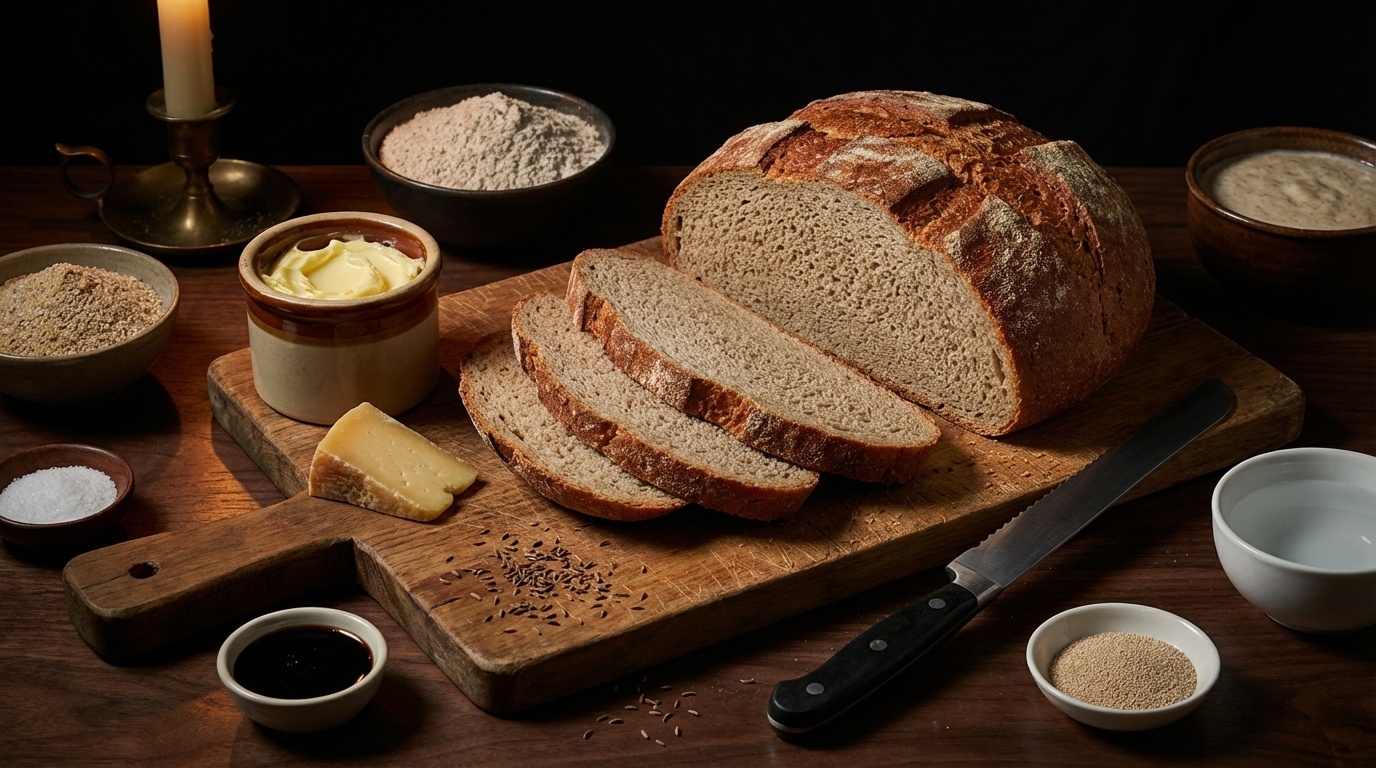
Poilâne-Style Miche
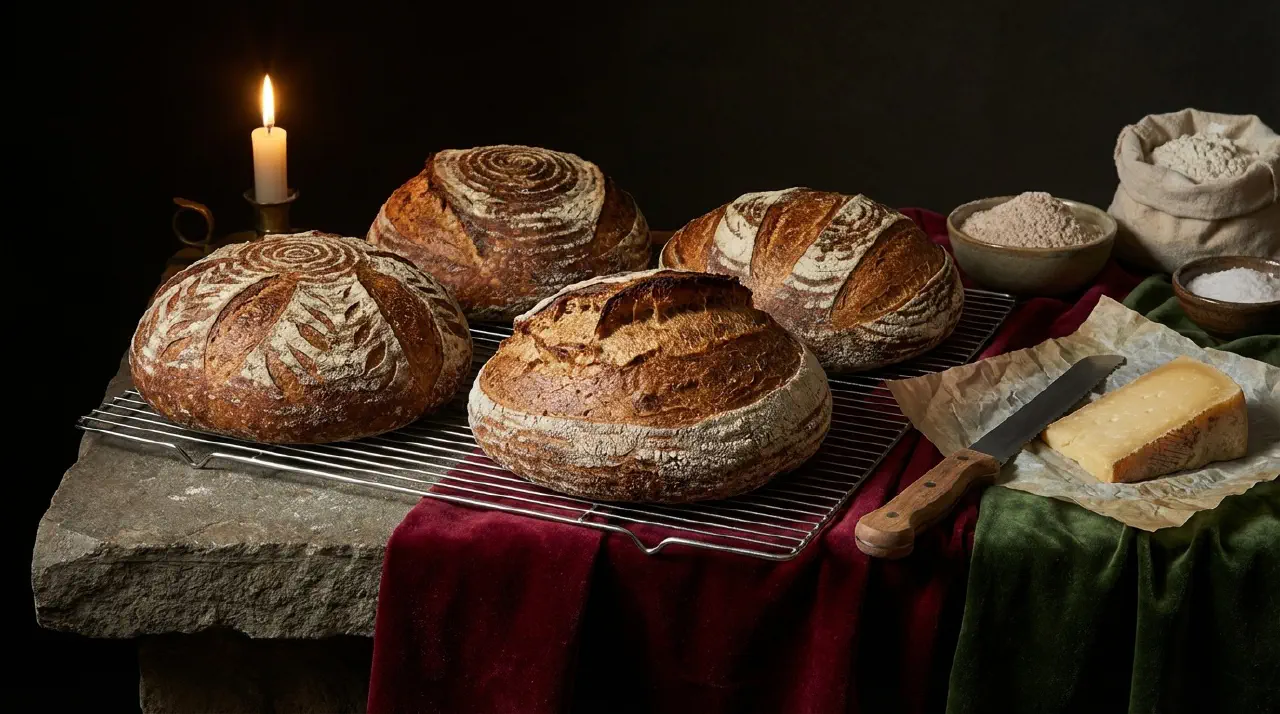
Poilâne-Style Miche © kvalifood.com
A large round country bread made with high-extraction whole-wheat flour and wild yeast, honoring the famous Parisian boulangerie Poilâne. The finished loaf is dense and chewy with complex flavors that develop during a long fermentation and keep for about a week at room temperature.
Ingredients
Makes 1 large country miche (large boule), or 2–3 smaller boules
Firm Starter (Day 1)
- 200 g barm
- 260 g sifted medium-grind whole-wheat flour
- About 110 g water, at room temperature
Final Dough (Day 2)
- 910 g sifted medium-grind whole-wheat flour
- 3¼ tsp (.81 oz) salt (or 2 tbsp coarse sea salt or kosher salt)
- 510–620 g water, lukewarm (90–100°F (32–38°C))
- Semolina flour or cornmeal, for dusting
Directions
Day 1: Make the Firm Starter
In a large mixing bowl, use a metal spoon to mix together the barm, flour, and enough water to form a firm ball. Sprinkle flour on the counter and transfer the dough. Knead for about 3 minutes until all flour is hydrated and ingredients are evenly distributed. Oil a bowl, place the dough in it, and roll to coat with oil. Cover with plastic wrap.
Ferment at room temperature for 4–6 hours until the dough doubles in size. Refrigerate overnight.
Day 2: Mix and Knead
Remove the starter from the refrigerator 1 hour before making the dough. Cut it into about 12 small pieces with a serrated knife or pastry scraper, cover with a towel, and let sit for 1 hour to take off the chill.
This dough is too large for most home mixers, so knead by hand. In a large bowl, stir together the sifted whole-wheat flour, salt, and starter pieces. Stirring with a metal spoon, add at least 2¼ cups water, or enough to bring together all ingredients into a soft ball. Adjust flour and water as you mix as needed.
Sprinkle flour on the counter and transfer the dough. Knead for 12–15 minutes, continuing to adjust flour and water to form a supple, tacky but not sticky dough with evenly distributed ingredients. It should pass the windowpane test and register 77–81°F (25–27°C). Oil a large bowl, transfer the dough, and coat with oil. Cover with plastic wrap.
Ferment at room temperature for approximately 4 hours until the dough nearly doubles in size.
Shaping and Proofing
Transfer the dough to the counter and gently form it into a large boule. Proof in a banneton or prepare a proofing bowl large enough to hold the dough when risen to nearly double. Place the dough seam side up in the banneton or bowl and mist the exposed part with oil. Cover with a cloth or plastic wrap.
Proof at room temperature for 2–3 hours until the dough grows 1½ times in size, or retard overnight in the refrigerator. If retarding, remove the dough from the refrigerator 4 hours before baking.
Baking
Prepare the oven for hearth baking with an empty steam pan in place. Preheat to 500°F (260°C). Carefully remove the top layer of cloth or plastic wrap from the dough 10 minutes before baking.
Generously dust a peel or the back of a sheet pan with semolina. Gently turn out the dough onto the peel, carefully removing the cloth liner if used. Score the dough with a large pound sign (# shape), creating a grid of 4 cuts dividing the loaf into sections.
Slide the dough onto the baking stone (or bake directly on the sheet pan). Pour 2 cups hot water into the steam pan and close the door. Immediately lower the oven to 450°F (230°C). After 25 minutes, rotate the loaf 180 degrees and lower the oven to 425°F (220°C). Continue baking for another 30–40 minutes until the internal temperature reaches 200°F (93°C). The bread should be deeply browned. If the bottom gets too dark before reaching temperature, place an inverted sheet pan under it to protect the bottom. If the top darkens too much, tent aluminum foil over the loaf to shield it.
Transfer to a cooling rack and cool for at least 2 hours before slicing. Store in a brown paper bag; it should keep for 5–7 days.
Notes
- Whole-Wheat Flour: Sift medium-grind whole-wheat flour to approximate Poilâne’s high-extraction flour. Choose a hard spring or winter wheat with 11.5–13% gluten. Smaller bran particles and germ will sift through, while larger pieces remain; use these large bran particles for multigrain breads. Alternatively, blend half whole-wheat and half bread flour.
- Salt Choice: Poilâne insists on gray Normandy sea salt, which makes a crucial difference if obtainable. Remember that coarser salt weighs less per teaspoon—1 tsp table salt equals nearly 2 tsp coarse sea or kosher salt.
- Scaling Down: Many testers found the full-size miche too heavy to handle. Feel free to divide the dough into 2 or 3 smaller loaves (petits pains Poilâne), reduce baking time but not temperature.
- Peak Flavor: This bread tastes best on the second or third day after baking, though some prefer it about 3 hours out of the oven.
See Also
Light Wheat Bread
New York Deli Rye
Basic Sourdough Bread
100 Percent Sourdough Rye Bread
Multigrain Bread Extraordinaire