Potato Rosemary Bread
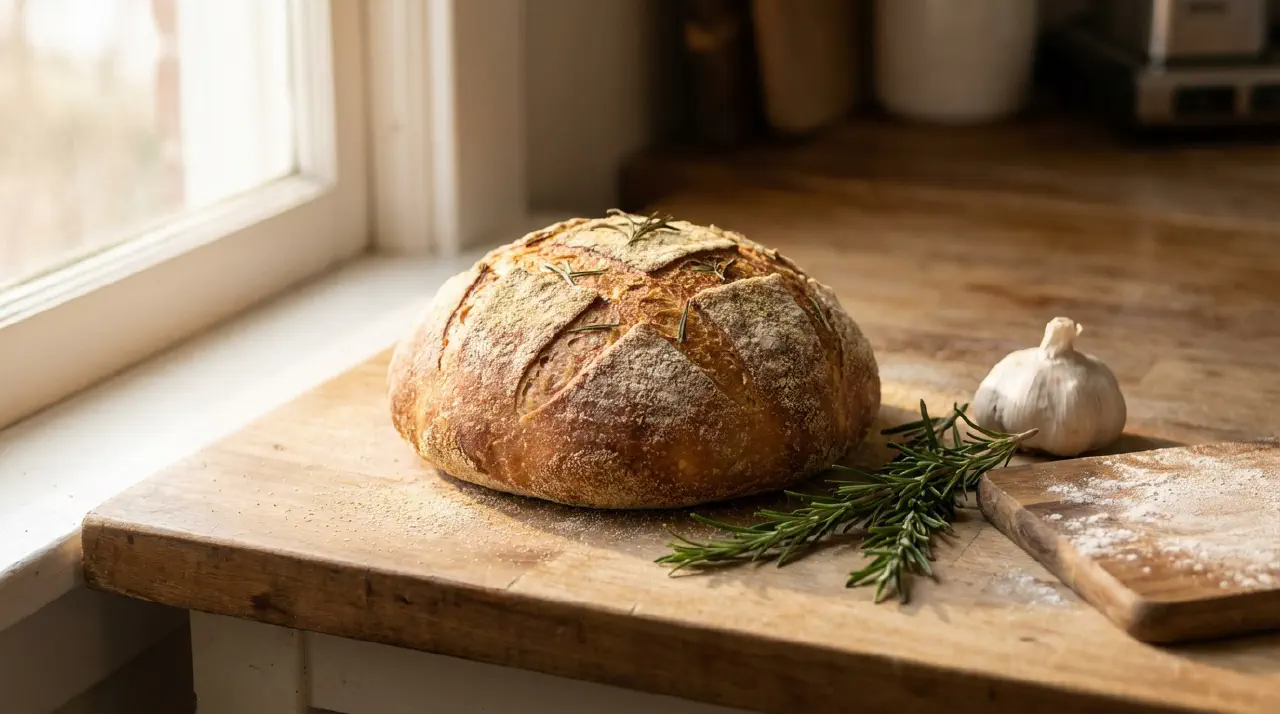
Potato Rosemary Bread © kvalifood.com
An Italian-inspired bread using mashed potatoes and fresh rosemary for a tender crumb and complex flavor. Potato starch softens the dough while the biga and herb infusion deliver bold taste. Excellent for dinner rolls or sandwich loaves.
Ingredients
Makes 2 1-pound loaves or 18 dinner rolls
- 200 g biga
- 400 g unbleached high-gluten or bread flour
- 1½ tsp salt
- ¼ tsp black pepper, coarsely ground (optional)
- 1¼ tsp instant yeast
- 170 g mashed potatoes
- 1 tbsp olive oil
- 2 tbsp coarsely chopped fresh rosemary
- 200–230 g water, room temperature (or warm if potatoes are cold)
- 4 tbsp coarsely chopped roasted garlic (optional)
- Semolina flour or cornmeal, for dusting
- Olive oil for brushing
Directions
Remove the biga from the refrigerator 1 hour before making the bread. Cut it into about 10 small pieces with a pastry scraper or serrated knife. Cover with a towel or plastic wrap and let sit for 1 hour to warm.
Stir together the flour, salt, black pepper, and yeast in a 4-quart mixing bowl. Add the biga pieces, mashed potatoes, oil, rosemary, and ¾ cup plus 2 tablespoons water. Stir with a large spoon for 1 minute, or until the ingredients form a ball. Add more water if necessary, or more flour if the dough is too sticky.
Sprinkle flour on the counter, transfer the dough to the counter, and knead for approximately 10 minutes, adding flour as needed until the dough is soft and supple, tacky but not sticky. It should pass the windowpane test and register 77–81°F (25–27°C). Flatten the dough and spread the roasted garlic over the top. Gather into a ball and knead by hand for 1 minute (dust with flour first to absorb moisture from the garlic). Lightly oil a large bowl and transfer the dough, coating it with oil. Cover with plastic wrap.
Ferment at room temperature for approximately 2 hours, or until the dough doubles in size.
Remove the dough from the bowl and divide into 2 equal pieces for loaves, or 18 equal pieces (about 2 oz each) for rolls. Shape the larger pieces into boules, or shape the smaller pieces into rolls. Line a sheet pan with baking parchment (use 2 pans for rolls) and dust lightly with semolina flour or cornmeal. Place the dough on the parchment, spacing the pieces so they won’t touch as they rise. Mist with spray oil and cover loosely with plastic wrap.
Proof at room temperature for 1 to 2 hours (depending on size), or until the dough doubles in size.
Preheat the oven to 400°F (205°C) with the rack on the middle shelf. Remove the plastic and lightly brush the breads or rolls with olive oil. You do not need to score these breads, but you can if you prefer.
Place the pan(s) in the oven. Bake the loaves for 20 minutes, then rotate the pan 180 degrees for even baking. The loaves will take 35 to 45 minutes total to bake. Bake rolls for 10 minutes, rotate the pans, and bake for 10 minutes longer. The loaves and rolls should be a rich golden brown all around, and the internal temperature should register at least 195°F (91°C). The loaves should make a hollow sound when thumped on the bottom. If fully colored but still soft, turn off the oven and let them bake for an additional 5 to 10 minutes to firm up.
Remove the finished loaves or rolls from the oven and cool on a rack for at least 1 hour for loaves and 20 minutes for rolls before serving.
Notes
- Rosemary restraint: Use restraint when adding rosemary; a small amount goes a long way.
- Fresh rosemary garnish: You can embed a sprig of fresh rosemary on top of the loaf just after final shaping. Mist the dough with water and lay the sprig flat so it adheres fully, keeping all needles pressed into the dough to prevent burning.
- Leftover potatoes: This is an excellent way to use up mashed potatoes from another meal.
- Optional roasted garlic: Adds bold flavor; omit if you prefer a milder bread.
See Also
Anadama Bread
100 Percent Sourdough Rye Bread
Basic Sourdough Bread