Pugliese
Pugliese © kvalifood.com
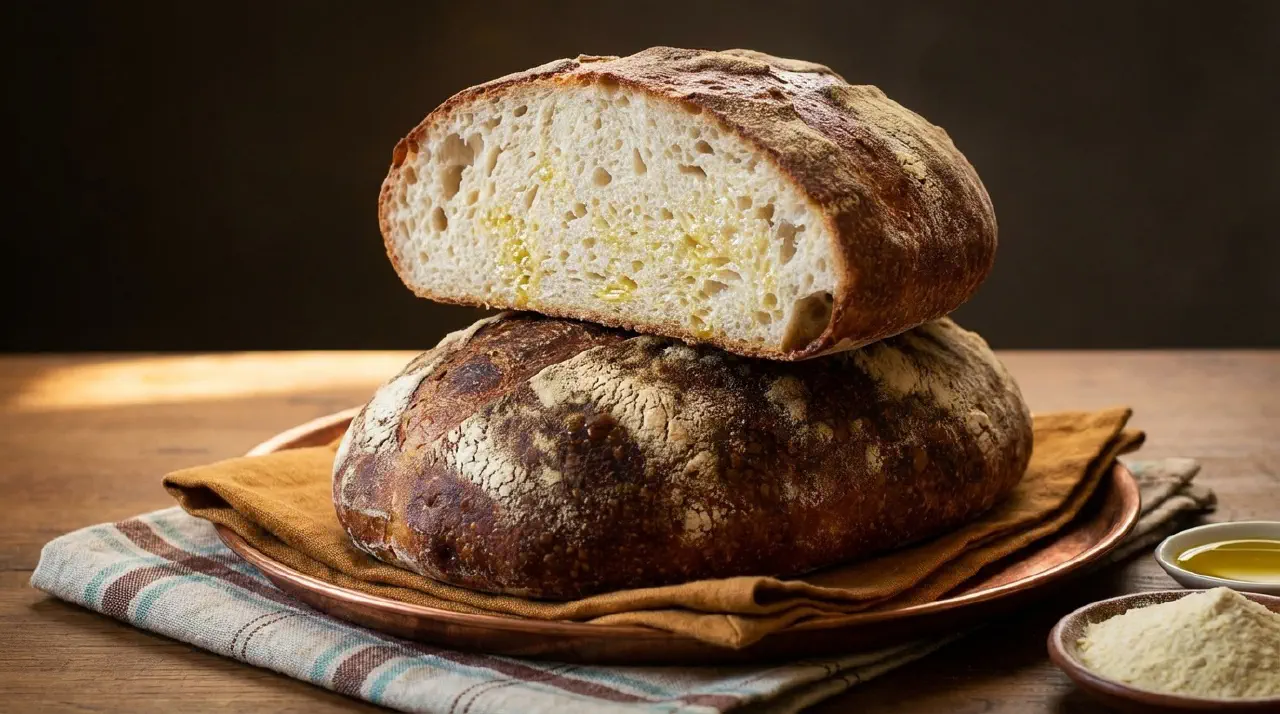
A rustic Italian bread from the Apulia region with high hydration (around 80 percent), producing an open crumb with dramatic holes and a nutty flavor. Made with durum flour and developed using a stretch-and-fold method.
Ingredients
Makes 2 1-pound loaves
- 310 g biga
- 140 g durum flour
- 140 g unbleached bread flour
- 1½ tsp (0.38 oz) salt
- 1 tsp (0.11 oz) instant yeast
- 55 g mashed potatoes (optional)
- 230–260 g water, lukewarm (90–100°F (32–38°C))
- Semolina flour or cornmeal, for dusting
Directions
Day 1: Biga preparation
Remove the biga from the refrigerator 1 hour before making the dough. Cut it into about 10 small pieces with a pastry scraper or serrated knife. Cover with a towel or plastic wrap and let sit for 1 hour to take off the chill.
Day 2: Mixing
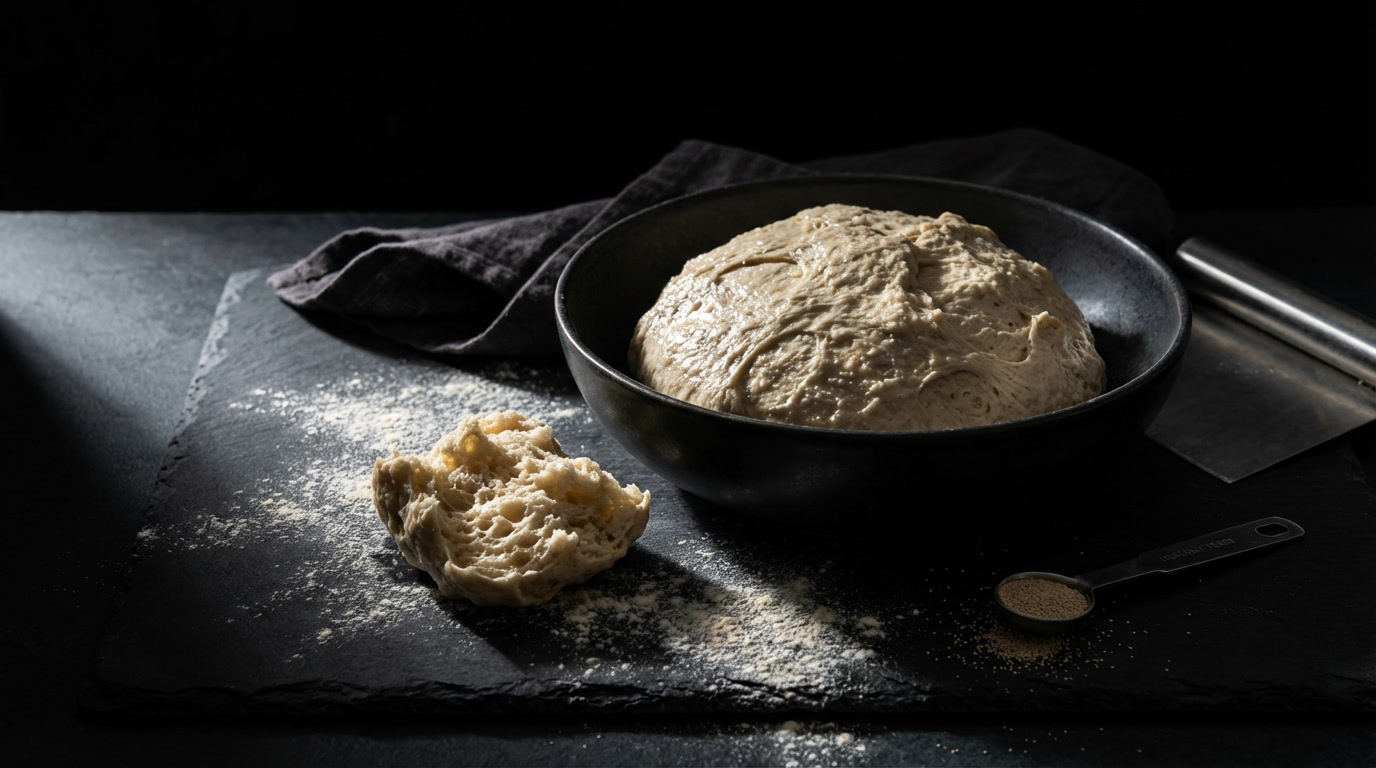
Stir together the flour, salt, and yeast in a 4-quart mixing bowl. Add the biga pieces, mashed potatoes, and 1 cup of water. (If using all bread flour instead of durum, start with ¾ cup plus 2 tablespoons water.) Using a large metal spoon, mix until the ingredients form a wet, sticky ball. If there is still loose flour, add the additional water as needed.
If mixing by hand, repeatedly dip one hand or the metal spoon into cold water and work the dough vigorously into a smooth mass while rotating the bowl in a circular motion with the other hand. Reverse the circular motion a few times to develop the gluten. Do this for 5 to 7 minutes, or until the dough is smooth and ingredients are evenly distributed. If using an electric mixer with a dough hook, mix on medium speed for 4 to 5 minutes. The dough should clear the sides of the bowl but stick to the bottom. Don’t be concerned if the dough seems very sticky; the wetter it is, the better the final bread will be.
Stretch-and-fold development
Sprinkle enough bread flour on the counter to make a bed about 8 inches square. Using a scraper or spatula dipped in water, transfer the dough to the flour bed and perform the stretch-and-fold method. Mist the top with spray oil, dust with flour, and loosely cover with plastic wrap or a food-grade plastic bag. Let rest for 30 minutes.
Repeat the stretch-and-fold method, misting with spray oil, dusting with flour, and covering. (Each repetition makes the dough stronger, more elastic, and less sticky.) Let rest for another 30 minutes.
Lightly oil a large mixing bowl. For the third time, repeat the stretch-and-fold technique. With a spatula dipped in water, transfer the dough to the bowl. Cover with plastic wrap and ferment the dough at room temperature for 2 hours, undisturbed.
Shaping and proofing
Generously dust the counter with flour. Remove the plastic wrap and carefully transfer the dough to the counter without degassing it more than necessary. Using a metal pastry scraper dipped in flour or a serrated knife dusted with flour, divide the dough into 2 pieces. Dipping your hands into flour, gently shape the dough pieces into 2 boules. Let them relax seam-side down on the counter for a few minutes.
Prepare 2 proofing bowls coated with spray oil and generously dusted with flour on the cloth surface. Gently transfer the dough, seam side up, into each bowl. If the seam opens up, pinch it closed. Mist the top with spray oil and cover the bowls with the cloth flaps.
Proof at room temperature for 60 to 90 minutes, or until the dough has expanded to about 1½ times its original size.
Baking
Prepare the oven for hearth baking with an empty steam pan in place. Preheat the oven to 500°F (260°C).
Generously dust a peel or the back of a sheet pan with semolina flour or cornmeal. Gently transfer the dough to the peel by carefully turning each bowl onto the peel, lifting off the bowl, and peeling off the cloth. The dough will spread out on the peel. With a sharp razor blade or lame, score the loaves with a pound sign (#) pattern. Transfer the dough to the baking stone (or bake on the sheet pan).
Pour 1 cup hot water into the steam pan and close the door. After 30 seconds, spray the oven walls with water and close the door. Repeat twice more at 30-second intervals. After the final spray, lower the oven temperature to 450°F (230°C) and bake for 15 minutes. Check the loaves and rotate 180 degrees if necessary. Continue baking for 5 to 15 minutes, or until the breads are a deep golden brown and register about 205°F (96°C) in the center.
Remove the loaves from the oven and transfer to a cooling rack. The crusts will soften somewhat as they cool. Allow to cool for at least 40 minutes before slicing or serving.
Notes
- Durum flour substitution: If fancy durum flour is unavailable, use only one-third semolina flour and replace the remainder with high-gluten or bread flour. You can also make this using only high-gluten or bread flour.
- Sourdough variation: Replace the biga with an equal amount of firm sourdough starter for a wild-yeast version.
- Mashed potato optional ingredient: A small amount adds nice flavor and tenderizes due to starch content. If using, increase flour to compensate for added moisture. Use seasoned potatoes.
- Water absorption varies: The amount of water is highly dependent on flour type and brand. Durum flour absorbs more water than bread flour; use the amount as a guideline and adjust as the dough demands.
- Wet dough ideal for food processor: This dough’s very wet consistency makes it well-suited to mixing in a food processor.
- Pizza and focaccia: This dough also makes exceptional pizza or focaccia. Follow standard shaping instructions for those applications.
See Also
Anadama Bread
100 Percent Sourdough Rye Bread
Basic Sourdough Bread