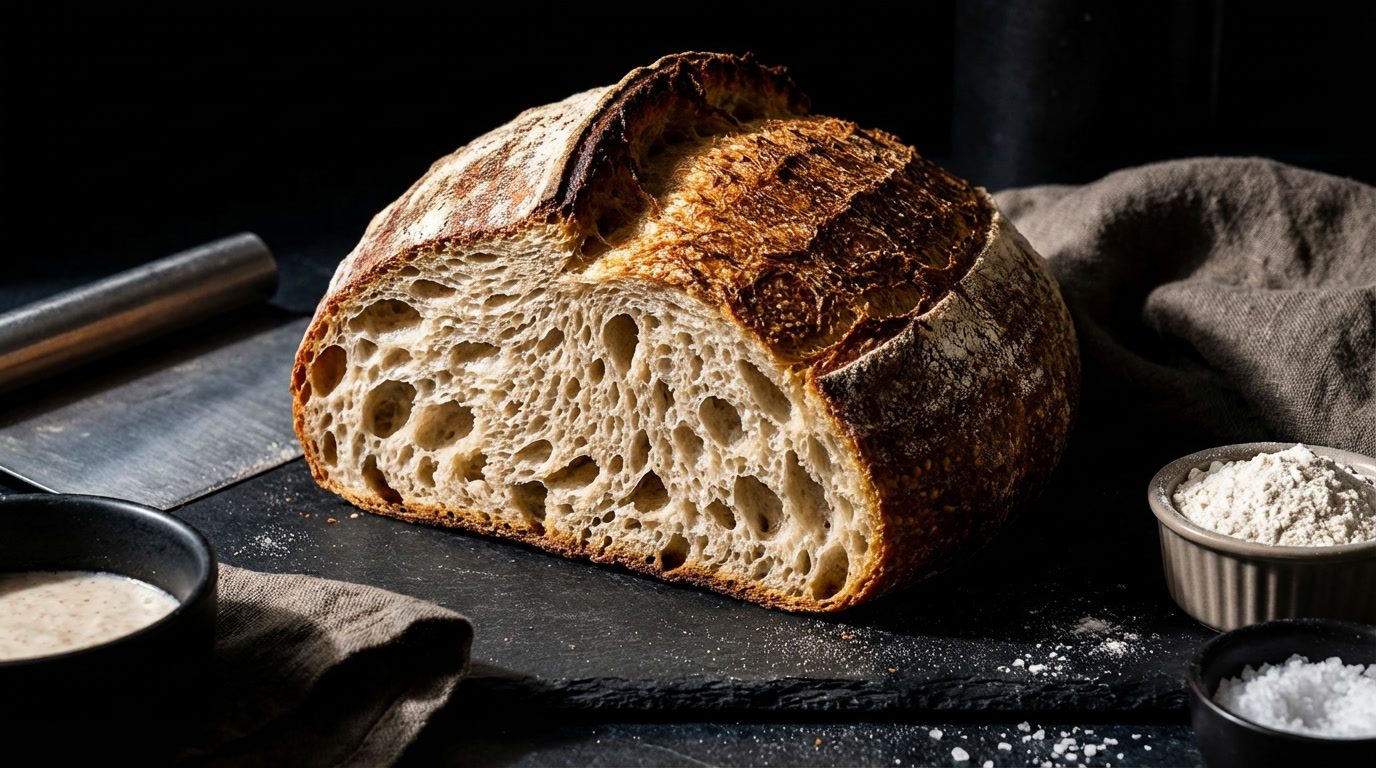
Pumpernickel Bread
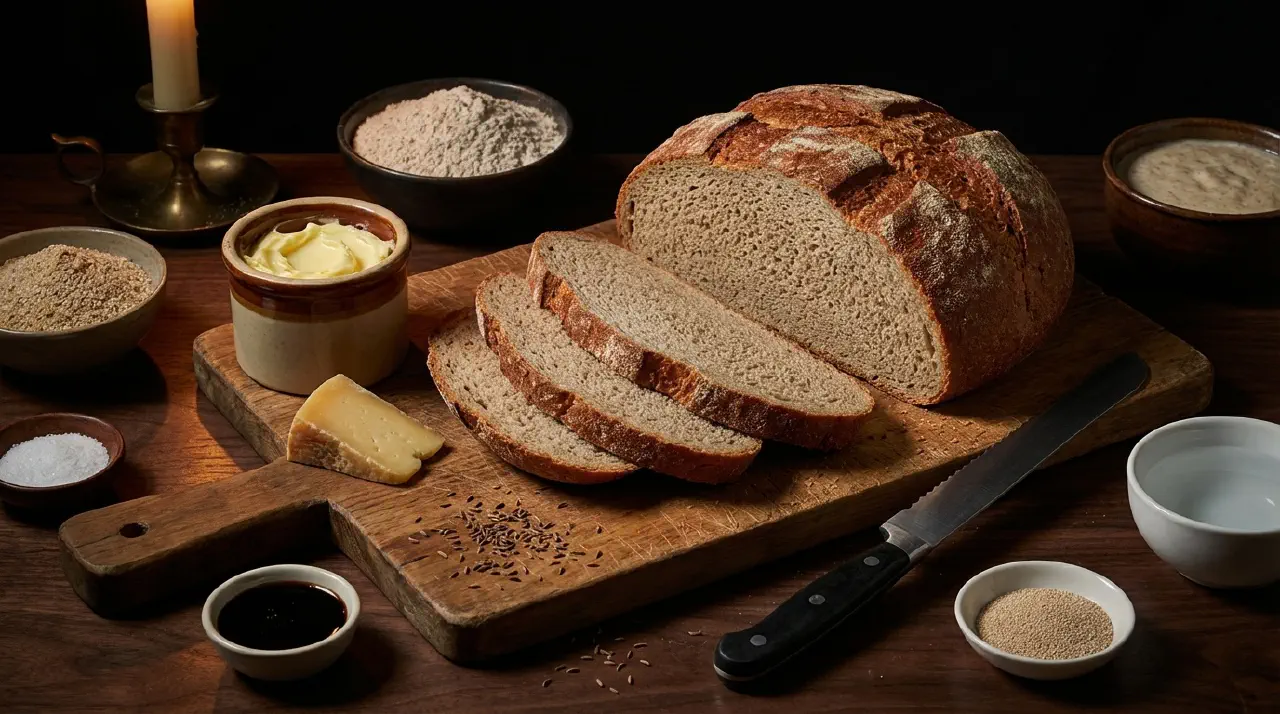
Pumpernickel Bread © kvalifood.com
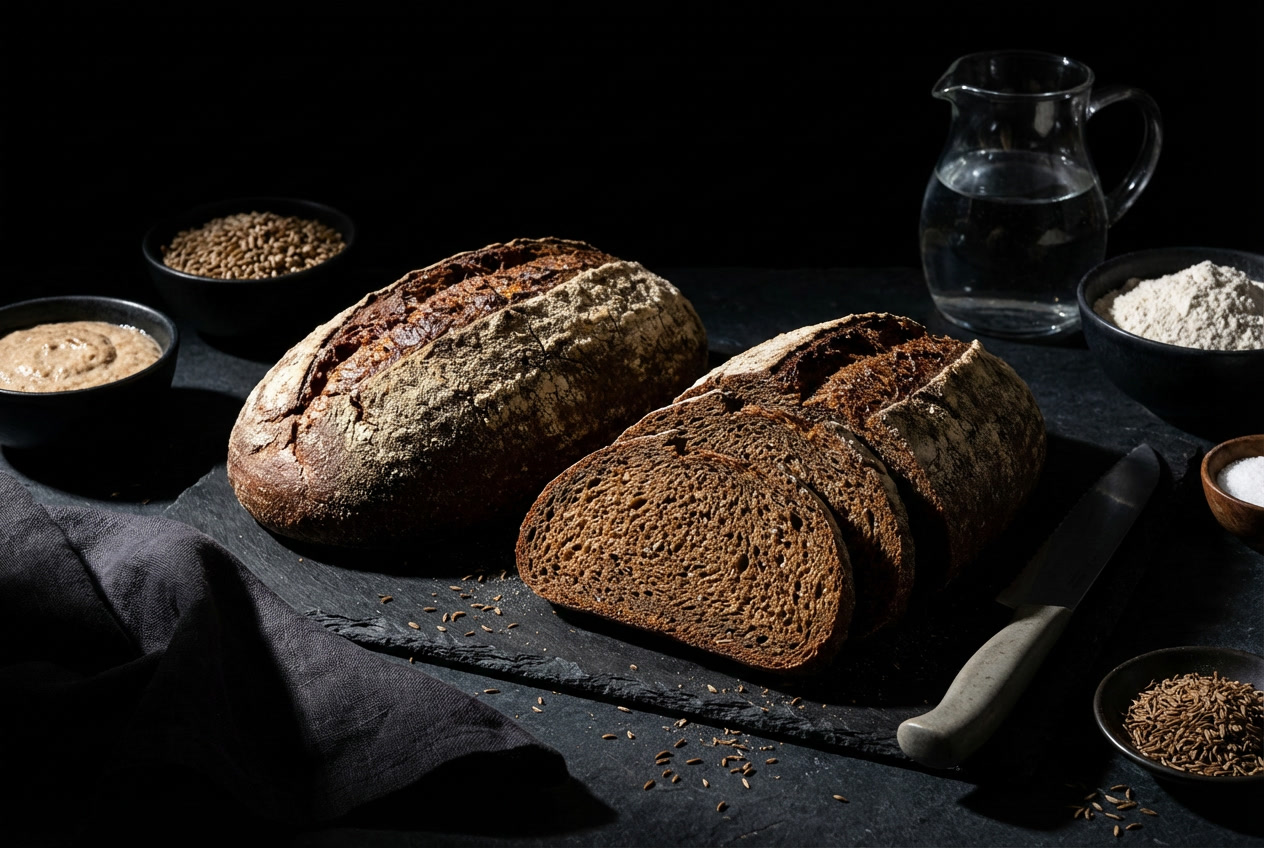
A traditional dark rye bread made with coarsely ground whole-rye flour, using a rye starter combined with commercial yeast for reliable rising. This version is less dense than cocktail-style pumpernickel, making it suitable for slicing and serving.
Ingredients
Makes 2 1-pound loaves
Rye Starter
- 200 g barm
- 120 g coarse whole-rye (pumpernickel-grind) flour
- 170 g water, room temperature
Final Dough
- 260 g unbleached high-gluten, clear, or bread flour
- 2 tbsp brown sugar
- 1 tbsp cocoa powder, or carob powder, instant coffee, or 1 tsp liquid caramel coloring
- 1½ tsp salt
- 1¼ tsp instant yeast
- 110 g bread crumbs, dry or fresh, preferably from rye bread (optional)
- 2 tbsp vegetable oil
- About 55 g water, room temperature
- Semolina flour, cornmeal, or coarse whole-rye flour, for dusting
Directions
Day 1: Rye Starter
The day before making the bread, prepare the starter. Mix together the barm, rye flour, and water in a bowl. It will make a wet, pasty barm. Cover with plastic wrap and ferment at room temperature for 4 to 5 hours, or until the sponge becomes bubbly and foamy. Immediately put it in the refrigerator overnight.
Day 2: Dough
Remove the rye barm from the refrigerator about 1 hour before making the dough to warm it.
To make the dough, stir together the flour, sugar, cocoa, salt, and yeast in a 4-quart mixing bowl. Add the rye barm, bread crumbs, and oil, and stir until the ingredients form a ball. Add water if the dough doesn’t pick up all the flour, or add more bread flour if the dough seems too wet.
Sprinkle high-gluten, clear, or bread flour on the counter and transfer the dough to the counter. Knead the dough for about 6 minutes, adding flour as needed to make a smooth, pliable dough. It should be tacky but not sticky. Note: rye bread becomes gummy if mixed too long, so make all adjustments early and minimize kneading time. The dough should pass the windowpane test and register 77–81°F (25–27°C). Lightly oil a large bowl and transfer the dough, coating it with oil. Cover with plastic wrap.
Ferment at room temperature for 2 hours, or until the dough doubles in size.
Sprinkle a small amount of flour on the counter and transfer the dough, being careful to degas it as little as possible. Divide the dough into 2 equal pieces and shape them into either boules or bâtards for freestanding loaves, or sandwich loaves. Line a sheet pan with baking parchment and sprinkle with cornmeal, semolina flour, or coarse whole-rye flour, or lightly oil two 8½ by 4½-inch bread pans. Transfer the dough to the pan(s), mist with spray oil, and loosely cover with plastic wrap or a towel.
Proof at room temperature for approximately 90 minutes, or until the dough crests 1 inch above the lip of the bread pans at the center, or rises to 1½ times its original size for freestanding loaves.
For freestanding loaves: Prepare the oven for hearth baking with an empty steam pan in place. Preheat the oven to 450°F (230°C). Score the loaves.
For loaf-pan breads: Preheat the oven to 350°F (175°C) with the rack on the middle shelf. Place the loaf pans on a sheet pan.
For freestanding loaves: Transfer the dough to the baking stone (or bake directly on the sheet pan). Pour 1 cup hot water into the steam pan and close the door. After 30 seconds, open the door, spray the oven walls with water, and close the door. Repeat twice more at 30-second intervals. After the final spray, lower the oven to 400°F (205°C) and continue baking for another 15 to 30 minutes. Check the breads and rotate 180 degrees if necessary. The finished loaves should register 200°F (93°C) in the center and sound hollow when thumped on the bottom.
For loaf-pan breads: Transfer the sheet pan with the loaf pans to the oven. Bake for about 20 minutes, then rotate the sheet pan 180 degrees for even baking. Continue baking for another 20 to 30 minutes, or until the loaves register 185–195°F (85–91°C) in the center and sound hollow when thumped on the bottom.
Remove the finished loaves from the pans and cool on a rack for at least 1 hour before slicing or serving.
Notes
- Mixed-method leavening: This version combines wild-yeast starter with commercial yeast. The starter improves flavor while the commercial yeast ensures reliable rising and reduces sourness.
- Rye acidification: The rye flour is fermented into a rye barm to acidify it, activating enzymes for flavor and improving digestibility. Rye bread is improved by using an acidic starter even when commercial yeast provides the final rise.
- Coloring agents: Cocoa is traditional, but carob powder, instant coffee, or liquid caramel coloring are effective alternatives. You may also leave this out entirely.
- Bread crumb texture: In some Eastern European villages, this bread was made by adding crumbs from previously baked loaves. This gives the bread a wonderful texture and is an excellent way to use dried-out leftover slices. Optional but recommended.
- Extra-sour option: If you prefer extra-sour bread, omit the instant yeast and treat the dough as a sourdough, allowing for longer fermentation cycles.
See Also
Swedish Rye (Limpa)
New York Deli Rye
100 Percent Sourdough Rye Bread
Sunflower Seed Rye
Poilâne-Style Miche