Soy Sauce & Tamari - Complete Reference
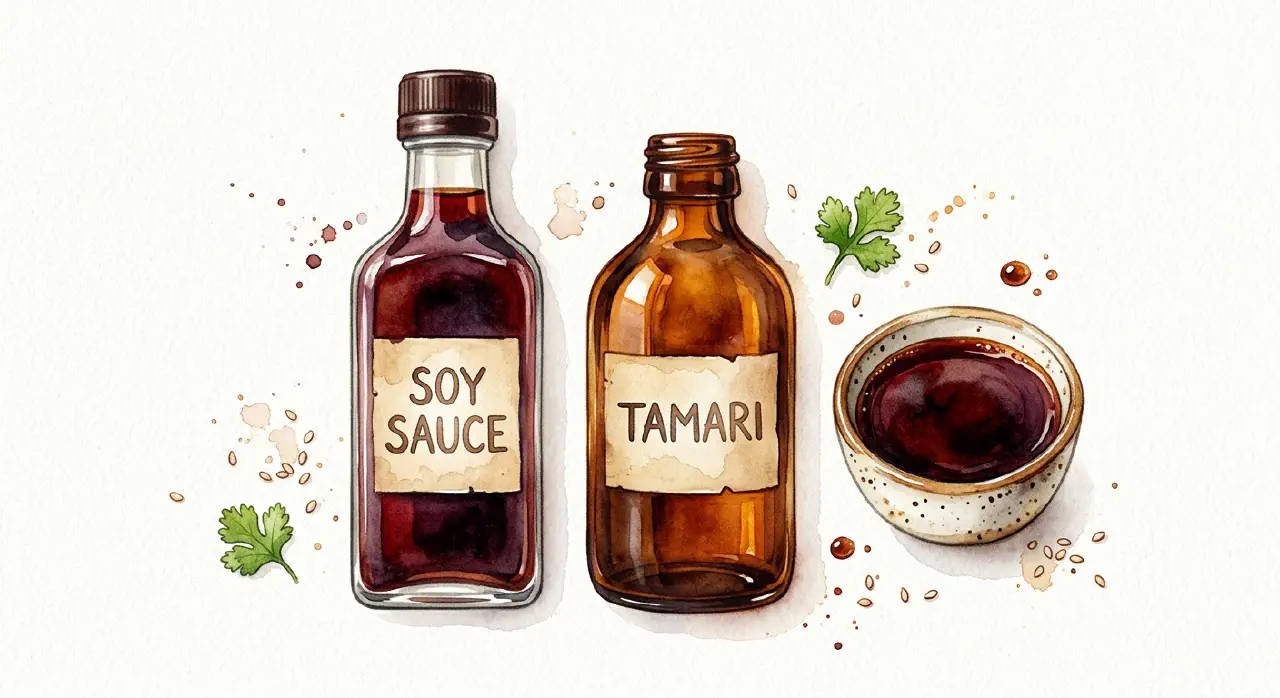
Soy Sauce © kvalifood.com
Soy sauce is one of the oldest and most versatile condiments in the world - a deeply savory, umami-rich liquid that has been seasoning food across East and Southeast Asia for over 2,000 years. Made from fermented soybeans, it brings saltiness, depth, and complexity to everything it touches: stir-fries, marinades, braises, dipping sauces, glazes, and broths. A splash can round out a sauce, a marinade can transform a piece of meat overnight, and a small bowl on the side can elevate the simplest meal.
Tamari is its close cousin - richer, darker, and made with little to no wheat, making it the go-to choice for those avoiding gluten and for anyone who wants a deeper, rounder flavor.
What most people don’t realize is that “soy sauce” is not a single thing. There are dozens of regional styles across Japan, China, Korea, and Southeast Asia - each with a distinct flavor, saltiness, color, and purpose. Knowing which one to reach for makes a real difference in the kitchen.
Table of Contents
- Types of Soy Sauce
- Tamari - Deep Dive
- Culinary Applications
- Quality, Brands, and Buying Guide
- Storage and Shelf Life
- Substitutions
- How Soy Sauce Is Made
- Industrial vs. Traditional Production
- Nutrition
- Flavor Chemistry
- Origins and History
Types of Soy Sauce
Japanese (Shoyu)
Japan has five officially recognized styles under the JAS (Japanese Agricultural Standards):
1. Koikuchi (濃口) - “Thick Mouth”
- Most common (~80% of Japanese production)
- Deep reddish-brown; well-balanced between saltiness, sweetness, umami, and aroma
- Made with roughly equal parts soybeans and wheat
- The default “Japanese soy sauce” most people know
- Salt: ~16-17%
- Brands: Kikkoman, Yamasa
2. Usukuchi (薄口) - “Thin Mouth”
- Lighter amber color but saltier than koikuchi (~18-19% salt)
- Less aroma; used when you want seasoning without darkening the dish
- Often contains amazake (sweet rice wine) or mirin
- Dominant in Kansai (Osaka/Kyoto) cuisine
- Common mistake: people assume “light” = less salty. The opposite is true.
3. Tamari (溜まり) - see Tamari - Deep Dive
4. Shiro (白) - White Soy Sauce
- Very light gold/amber color
- Made with mostly wheat, very little soy
- Delicate, slightly sweet, subtle umami
- Used in high-end Japanese cooking where color must not be introduced (chawanmushi, clear soups, delicate sauces)
- Short shelf life; oxidizes and darkens quickly after opening
- Produced mainly in Aichi prefecture
5. Saishikomi (再仕込み) - Twice-Brewed / “Refermented”
- Moromi is brewed using previously made soy sauce instead of brine
- Much more complex, darker, richer, and more expensive
- Very thick and deeply savory
- Best used as a dipping sauce or finishing condiment; cooking heat wastes the complexity
- Also called kanro shoyu (甘露醤油) - “sweet dew soy sauce”
Chinese Soy Sauce
Chinese soy sauces are typically wheat-free or low wheat, made from soybeans + roasted grain (sometimes), and tend toward a different flavor profile - less sweet, more savory and sharp.
Light Soy Sauce (生抽 - Sheng Chou)
- Thin, reddish-brown
- All-purpose seasoning; used for stir-fries, marinades, dipping
- Saltier than dark
- The default Chinese cooking soy sauce
Dark Soy Sauce (老抽 - Lao Chou)
- Aged longer; often has caramel or molasses added
- Very dark, thick, slightly sweet
- Used primarily for color in braises, red-cooked dishes, noodles
- Lower saltiness than light; would undersalt a dish if used alone
Double Dark / Black Soy Sauce
- Even thicker and darker than lao chou; more molasses
- Common in Southeast Asian Chinese cooking (Malaysian, Singaporean)
- Kecap manis (Indonesian) is essentially an extreme version of this category
Superior Soy Sauce
- A premium light soy sauce made from first-press liquid
- Used in high-end Cantonese cooking as a finishing sauce
Mushroom Soy Sauce
- Light or dark soy sauce infused with straw mushroom extract
- Deeper, earthier umami; popular in Chinese-American cooking
Korean Soy Sauce (Ganjang, 간장)
Korea has a parallel fermentation tradition using meju - brick-shaped blocks of dried, fermented soybeans inoculated with naturally occurring molds and bacteria (not just controlled koji).
Joseon/Guk-Ganjang (조선간장 / 국간장) - Traditional
- Lighter amber color, sharper and saltier
- Byproduct of doenjang (Korean fermented soybean paste) production; contains no wheat
- Very different flavor from Japanese/Chinese - more mineral, fermented-funk notes
- Used in soups (guk) and light seasoning
Yangjo Ganjang (양조간장) - Brewed
- Modern style, brewed using Japanese-influenced methods with koji and wheat
- Darker, milder, more similar to koikuchi shoyu
- Everyday Korean cooking soy sauce
Southeast Asian Styles
Kecap Manis (Indonesia)
- “Sweet soy sauce” - thick, almost syrup-like; can contain up to 50% palm sugar (gula jawa)
- Originated on Java in the 19th century - Chinese fermentation techniques adapted to local tastes
- Defining condiment in Indonesian cuisine: nasi goreng, satay, babi kecap
- Not interchangeable with regular soy sauce in cooking without adjusting sugar
Kecap Asin (Indonesia)
- “Salty soy sauce” - closer to Chinese light soy sauce
- Thinner and saltier than kecap manis
Toyo (Philippines)
- Filipino soy sauce; often lighter and slightly less complex than Chinese/Japanese
- Paired with calamansi for dipping (toyomansi)
Thai Soy Sauce (Si-Ew)
- Si-ew khao (white/light): all-purpose
- Si-ew dam (black): sweet, used for color; similar to kecap manis but less sweet
Tamari - Deep Dive
What Makes It Different
Tamari is made with little to no wheat - 90-100% soy - giving it a distinctly different character from regular Japanese shoyu.
| Factor | Koikuchi Shoyu | Tamari |
|---|---|---|
| Wheat | ~50% of grain | None or trace (<5%) |
| Soy ratio | 50/50 soy:wheat | 90-100% soy |
| Protein content | Moderate | Higher |
| Fermentation | 6-18 months | Often 12-24 months |
| Pressing method | Mechanical press | Often traditional fune press |
| Moromi texture | Pourable mash | Very thick, almost solid |
Flavor Profile
- Thicker viscosity - coats surfaces better, clings to food
- Darker color - very deep mahogany/brown
- Richer, rounder umami - higher glutamic acid content due to higher soy protein
- Less sharp, less sweet than koikuchi
- More complex finish - less volatile brightness, longer persistence
- Some describe a slight wine-like depth or chocolatey quality in premium tamari
The absence of wheat aromatics makes tamari taste “quieter” but deeper. Side-by-side tasting: koikuchi is bright and punchy; tamari is dark and resonant.
Gluten-Free Considerations
Traditional tamari contains no wheat. However:
- Many modern commercial tamaris add a small amount of wheat (often 3-10%) - always check the label
- Certified gluten-free tamari (e.g., San-J) is tested to <20 ppm gluten - the FDA threshold
- In Japan, labeling is less rigorous for gluten-free claims; cross-contamination in shared facilities is a real concern
- For strict celiac needs: buy explicitly certified GF tamari from dedicated producers
Key Tamari Producers
- San-J (Japanese-American, produces in Japan): Most widely available GF tamari in Western markets
- Ito Shoten (愛知県): Premium traditional producer in Aichi; very small batch, aged 2+ years
- Marukin: Established Aichi producer
- Yamaki: Traditional Aichi producer, makes both regular and premium tamari
Origins
Tamari originated as the liquid that accumulates (溜まる, tamaru) and drains from miso during its fermentation and pressing. The origin story traces to 1254 (Kamakura era), when the Zen monk Kakushin returned from China with the Kinzanji method of miso-making and taught it to villagers in Kishu Yuasa (Wakayama). He noticed that the liquid seeping out of the fermenting miso tasted exceptional - that liquid became tamari.
Traditional miso production in Japan - particularly in the Chubu region (Aichi, Mie, Gifu prefectures) - continued to produce this liquid as a valuable byproduct. Over centuries, producers began deliberately crafting moromi to maximize this liquid, effectively making tamari on purpose.
Culinary Applications
Matching the Right Soy Sauce to the Application
| Application | Best Choice | Why |
|---|---|---|
| Stir-fry seasoning | Koikuchi / Chinese light | Good balance, can take heat |
| Adding color to braises | Chinese dark / lao chou | Color first, low saltiness |
| Dipping sauce (sashimi, dumplings) | Koikuchi or tamari | Tamari for richer dip |
| Marinades | Koikuchi, tamari | Penetrates protein, tamari clings better |
| Glazes | Tamari, saishikomi | Thickness, depth, less burning |
| Clear Japanese soups/chawanmushi | Shiro (white) | No color contamination |
| Finishing/table sauce | Saishikomi, premium tamari | Complexity wasted by cooking |
| Ramen broth (tare) | Koikuchi or blended | Backbone flavor |
| Indonesian rice dishes | Kecap manis | Correct flavor profile |
| Korean soups | Joseon/guk-ganjang | Traditional flavor |
| Gluten-free cooking | Certified GF tamari | Direct 1:1 substitute |
Heat and Cooking Behavior
- Don’t add soy sauce early to high-heat wok cooking - the volatile aromatics evaporate rapidly; much of the complexity is lost
- Adding at the end of cooking preserves aroma; adding early deepens color and saltiness
- For maximum flavor layering: use a small amount early (for Maillard/umami base) + a finishing splash at the end (for aroma)
- Tamari and saishikomi are more heat-stable than shiro or delicate usukuchi
Pairing Logic
Soy sauce’s umami amplifies other umami sources through glutamate + nucleotide synergy:
- + Dashi (inosinate from bonito): explosive umami
- + Mushrooms (guanylate): very deep, earthy umami
- + Tomato (glutamate): redundant umami but compatible
- + Fat: Umami compounds are fat-soluble; soy sauce penetrates marbled meat very effectively
- + Acid (rice vinegar, citrus): Acidity brightens and lifts; balances soy sauce’s weight
Quality, Brands, and Buying Guide
Reading a Japanese Soy Sauce Label
- 本醸造 (Honjozo): Fully naturally brewed - quality minimum
- 天然醸造 (Tennen Jozo): Naturally brewed without temperature control - traditional, higher complexity
- Look for fermentation time: 1年 (1 year), 2年 (2 years), etc.
- No additive symbols: 無添加 (no additives), 無化学調味料 (no chemical seasonings)
Tiers and Notable Producers
Japanese Koikuchi:
- Entry: Kikkoman (ubiquitous, consistent, honjozo)
- Mid: Yamasa, Higashimaru
- Premium: Kishibori Shoyu (18-month, cedar barrel), Kamebishi (2-3 year, unusual koji-less method using mugi/barley), Yamaroku (4-year cedar barrel)
Tamari:
- Accessible: San-J (widely available, GF certified), Kikkoman Tamari
- Premium: Ito Shoten (Aichi, very limited export), Marukin
Chinese:
- Light: Pearl River Bridge (Superior Light), Lee Kum Kee Premium Soy Sauce
- Dark: Pearl River Bridge Dark, Lee Kum Kee Dark Soy Sauce
Kecap Manis:
- ABC Kecap Manis (Indonesian standard), Bango (high quality, uses palm sugar)
What to Avoid
- Any product listing “hydrolyzed soy protein” or “hydrolyzed vegetable protein (HVP)” as a main ingredient without also saying “naturally brewed”
- Very cheap soy sauces - often largely or entirely HVP-based
- Soy sauce in plastic bottles that’s been on a grocery shelf for unknown time - oxidation significantly degrades flavor
Storage and Shelf Life
Unopened
- Shelf stable for 2-3 years at room temperature in a dark place
- Traditionally brewed soy sauce has higher natural preservative compounds (organic acids, ethanol, salt) that extend shelf life
After Opening
| Storage | Shelf Life | Notes |
|---|---|---|
| Room temperature | 3-6 months | Flavor degrades faster; fine for frequent use |
| Refrigerator | Up to 2 years | Recommended; significantly slows oxidation |
| Tamari/premium sauces | Refrigerate immediately | Higher fat/protein = faster degradation |
| White (shiro) shoyu | Refrigerate; use within 3 months | Very oxidation-sensitive |
Signs of Degradation
- Color darkening significantly (oxidation)
- Loss of aroma - smells flat or musty
- Cloudiness or sediment (some sediment is normal in unpasteurized sauces; cloudiness with off-smells is spoilage)
- Soy sauce does not typically “go bad” in a food safety sense due to high salt, but flavor quality degrades meaningfully
Substitutions
| If you need | And only have | Use this substitution |
|---|---|---|
| Tamari | Koikuchi shoyu | Direct 1:1; slightly less rich, more wheat-forward |
| Koikuchi shoyu | Tamari | Direct 1:1; slightly brighter, less thick |
| Chinese light soy sauce | Koikuchi | 1:1; koikuchi slightly sweeter/less sharp |
| Dark soy sauce | Koikuchi + sugar | 1 tsp dark ≈ 1 tsp koikuchi + ½ tsp brown sugar + extra for color |
| Usukuchi | Koikuchi + salt/water | Very imperfect; different flavor profile |
| Soy sauce (any) | Coconut aminos | 1:1 to 1.5:1; significantly less salty, slightly sweet; works for GF/soy-free |
| Soy sauce (any) | Fish sauce | ½ to 1:1; no wheat/soy, similar umami but totally different flavor |
How Soy Sauce Is Made
Core Ingredients
| Ingredient | Role |
|---|---|
| Soybeans | Primary protein source → amino acids → umami |
| Wheat | Sugars for fermentation → aroma, sweetness |
| Salt | Preservation, salinity, controls microbial activity |
| Water | Brine medium |
| Koji mold (Aspergillus oryzae / A. sojae) | Enzyme production |
Tamari uses little to no wheat.
Stage 1 - Koji Cultivation (2-3 days)
Steamed soybeans (and roasted, crushed wheat) are inoculated with koji spores and spread on flat trays in a temperature- and humidity-controlled room. The mold grows through the grain and produces a library of enzymes:
- Proteases → break proteins into peptides and free amino acids (especially glutamic acid = umami)
- Amylases → break starches into fermentable sugars
- Lipases → break fats into fatty acids (contribute to aroma)
The resulting cultured grain is called koji (麹).
Stage 2 - Moromi Fermentation (months to years)
Koji is mixed with salt brine (~17-20% salinity) to form a thick mash called moromi (諸味). This is where the long fermentation happens.
Multiple microbial populations work in sequence:
- Lactic acid bacteria (Tetragenococcus halophilus) - salt-tolerant, lower the pH, produce organic acids, create a stable environment
- Yeasts (Zygosaccharomyces rouxii, Candida spp.) - produce ethanol and hundreds of aroma compounds
- Ongoing enzymatic activity - proteases continue converting proteins to glutamates throughout
The moromi is stirred periodically (traditionally with wooden paddles) and darkens progressively through oxidation and Maillard reactions.
Fermentation duration:
- Industrial: 3-6 months
- Traditional/artisanal: 12-36 months
- Premium (e.g., saishikomi): up to 3 years
Stage 3 - Pressing
The mature moromi is pressed to separate the liquid from the solids. Methods range from modern mechanical presses to traditional cloth-lined wooden boxes weighted with stones (fune pressing). The pressed liquid is called nama shoyu (raw soy sauce).
Stage 4 - Pasteurization and Finishing
- The raw soy sauce is heated to ~70-80°C to stop microbial activity, deactivate enzymes, and trigger a final burst of Maillard browning that deepens color and flavor.
- Filtered for clarity.
- Optionally blended, aged further, or adjusted with sugar/caramel (for dark styles).
Industrial vs. Traditional Production
Chemical/Acid Hydrolysis (HVP)
The cheapest and fastest method. Defatted soybean meal is treated with hydrochloric acid at high heat, breaking proteins into amino acids. The acid is then neutralized with sodium carbonate.
- Time: ~3 days total (acid treatment is hours; neutralization, filtration, and blending add time)
- Cost: Very cheap
- Flavor: Flat, harsh, one-dimensional - only provides glutamate saltiness, none of the hundreds of fermentation-derived aroma compounds
- Issues: Can produce 3-MCPD (3-monochloropropane-1,2-diol), a carcinogenic byproduct; heavily regulated in EU. A 2001 UK FSA study found 22% of tested HVP-based soy sauces exceeded safe limits - the worst sample was 700× over the EU threshold. Naturally brewed soy sauce contains negligible 3-MCPD.
- Labeling: Often listed as “hydrolyzed soy protein” or “HVP”
Blended Production
Many commercial brands use a blend: fermented shoyu base + HVP to cut costs while maintaining some fermentation complexity. Widely used in mid-tier commercial products.
Traditional Brewing (Honjozo)
In Japan, honjozo (本醸造) is the legal designation for fully naturally brewed soy sauce, with no HVP additions. This is the quality benchmark.
Nutrition
Per 1 tablespoon (15ml), typical koikuchi shoyu:
| Nutrient | Amount |
|---|---|
| Calories | 8-10 kcal |
| Sodium | 900-1,000 mg (~40% DV) |
| Protein | ~1g |
| Carbohydrates | ~1g |
| Glutamic acid | ~150-200 mg free |
Sodium
Soy sauce is high in sodium - the primary health consideration. Reduced-sodium versions typically cut sodium by 40-50% using various methods (dilution + flavor enhancement, or post-fermentation desalting). They sacrifice some flavor complexity.
Tamari tends to have slightly lower sodium than koikuchi due to the higher amino acid concentration providing more perceived flavor per unit of salt.
Beneficial Compounds
- Antioxidants: Melanoidins (Maillard compounds) have demonstrated antioxidant activity in studies; shoyu contains more antioxidant capacity than red wine per unit volume (though volume consumed is much smaller)
- Short peptides: Some fermentation-derived peptides show ACE-inhibitory (blood pressure-lowering) effects in vitro
- Isoflavones: Present in trace amounts from soybeans; degraded significantly during fermentation
Allergens
- Soy allergen: Present (major allergen)
- Wheat allergen: Present in most soy sauces; absent in tamari (check label)
- Histamine: Fermented products contain biogenic amines including histamine - relevant for histamine intolerance
“Soy Sauce is Basically MSG” - The Truth
Soy sauce contains large amounts of naturally occurring free glutamic acid - the same ion that makes MSG savory. The umami mechanism is identical. The difference is that soy sauce also contains ~300 other flavor compounds that MSG does not. From a chemistry standpoint, if you’re comfortable eating soy sauce, you’re eating glutamate.
Flavor Chemistry
Soy sauce is one of the most chemically complex condiments - over 300 volatile flavor compounds have been identified.
Umami - Glutamic Acid
The dominant taste driver. Fermentation by proteases breaks soy protein into free amino acids, primarily glutamic acid. This is the same compound as MSG, present naturally in soy sauce at very high levels (~1,000-1,700 mg/100ml). It activates umami receptors and enhances other flavors.
Additional nucleotides (5’-GMP, 5’-IMP) amplify umami synergistically when combined with glutamate - this is why soy sauce paired with fish (high in IMP) or mushrooms (high in GMP) tastes more intensely savory than either alone.
Key Aroma Compounds
| Compound | Aroma Contribution |
|---|---|
| 4-HEMF (2-ethyl-4-hydroxy-5-methyl-3(2H)-furanone) | Characteristic “soy sauce” note - caramel-like, meaty |
| HDMF / Furaneol | Sweet, caramel, fruity |
| Ethanol | Carries and releases other aroma compounds |
| Lactic acid | Sourness, freshness, rounds harsh salt |
| Vanillin | Vanilla, subtle sweetness (from wheat breakdown) |
| 4-ethylguaiacol | Smoky, spicy, clove-like |
| Isoamyl alcohol | Fruity, banana-like (yeast-derived) |
| Phenylethyl alcohol | Floral, rose-like (yeast-derived) |
4-HEMF is the signature compound - it’s responsible for the unmistakable “smells like soy sauce” recognition. It’s produced by Z. rouxii yeast from sugars during moromi fermentation. Longer fermentation = more 4-HEMF.
Maillard Reactions
Both during fermentation (ambient, slow Maillard) and during pasteurization (rapid), amino acids and reducing sugars react to produce hundreds of brown color compounds (melanoidins) and flavor molecules. This is why pasteurized soy sauce is darker and more flavorful than raw pressed liquid.
Color
The deep brown-red color comes from:
- Enzymatic browning during fermentation
- Maillard reactions (amino acid + sugar)
- Added caramel coloring (in dark/kecap styles)
- Oxidation after pressing/opening
Origins and History
China - The Birthplace (~2nd century BCE)
Soy sauce descends from jiang (醬), a broad category of Chinese fermented pastes and condiments dating back at least to the Zhou dynasty (1046-256 BCE). Early jiang was made from meat or fish, but soy-based versions emerged as Buddhism spread vegetarianism across East Asia.
The liquid that pooled on top of fermenting soybean paste was collected separately - this was the earliest precursor to soy sauce, called shi zhi (豉汁) or qing jiang (清醬). By the Han dynasty (206 BCE-220 CE), written records describe it clearly. The name jiang you (醬油, literally “paste oil”) became standard in Chinese.
Japan - Shoyu Diverges (~7th-13th century)
Chinese jiang techniques arrived in Japan via Buddhist monks and diplomats, likely in the 7th century. The Japanese adapted the concept, and over centuries it evolved into shoyu (醤油), which incorporated wheat alongside soybeans - a defining difference from most Chinese styles.
The pivotal development came through miso production. When miso (fermented soybean paste) was pressed, the liquid runoff was collected. In the Kinki region (near Kyoto and Nara), this byproduct was refined into what became tamari (溜まり), literally meaning “that which accumulates/pools.” The oldest records of shoyu as a distinct product appear around the 13th-14th century in the Wakayama and Chiba areas.
By the Edo period (1603-1868), soy sauce production was industrialized. The city of Noda (Chiba prefecture) and Choshi became the centers of large-scale shoyu brewing, supplying Edo (Tokyo). The major brewing family businesses of this era - including Kikkoman (originally Mogi family) - trace their roots here.
Global Spread
- 17th century: Dutch East India Company (VOC) exported Japanese shoyu to Europe; it became a luxury condiment in royal courts.
- Southeast Asia: Chinese migrants brought their methods; local adaptations produced kecap (Indonesia), toyo (Philippines), and others.
- 19th-20th century: Industrial production enabled global distribution.
- Post-WWII: Kikkoman’s 1973 Wisconsin brewery marked the beginning of large-scale Western production.
See Also
- Soy Sauce & Tamari - Home Chef Guide - practical basics for everyday cooking
- Fish Sauce Definitive Guide - parallels in fermentation and umami chemistry