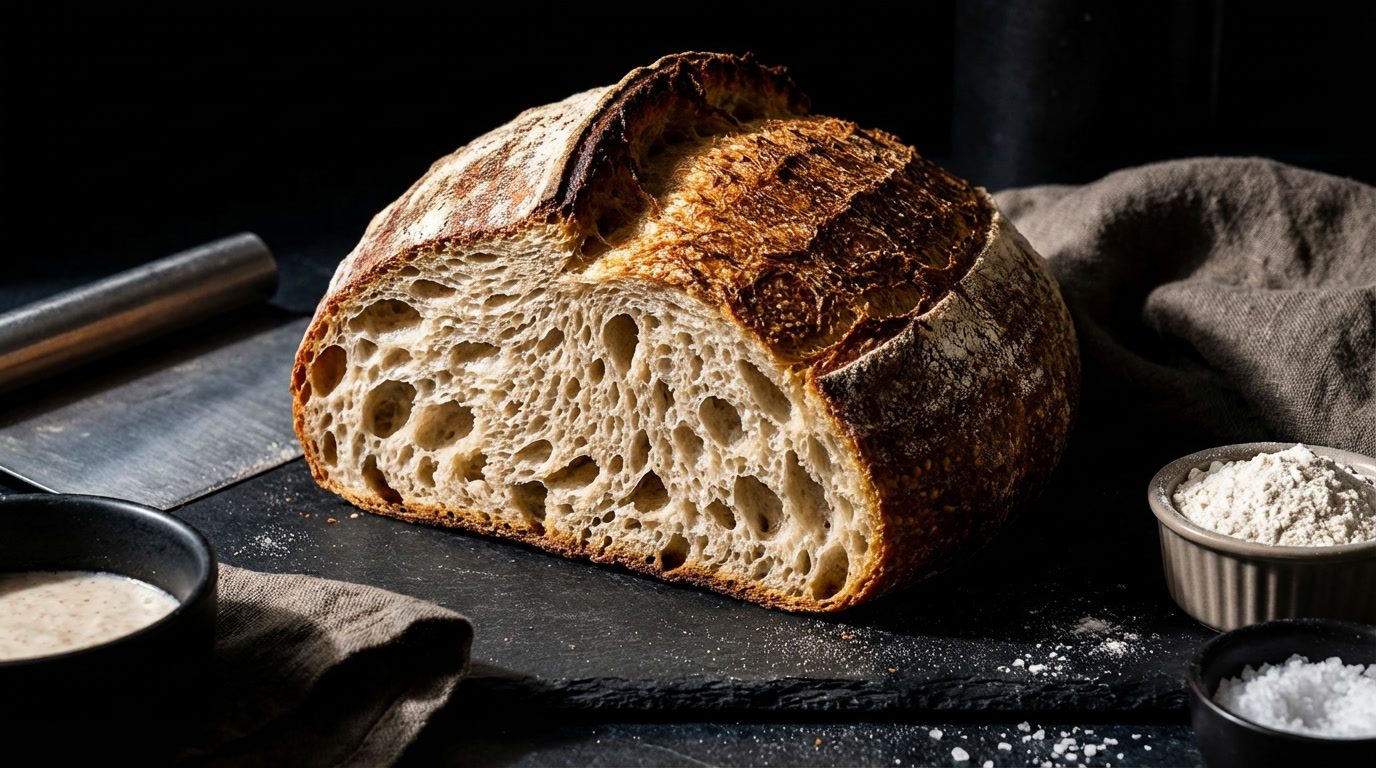
Sunflower Seed Rye
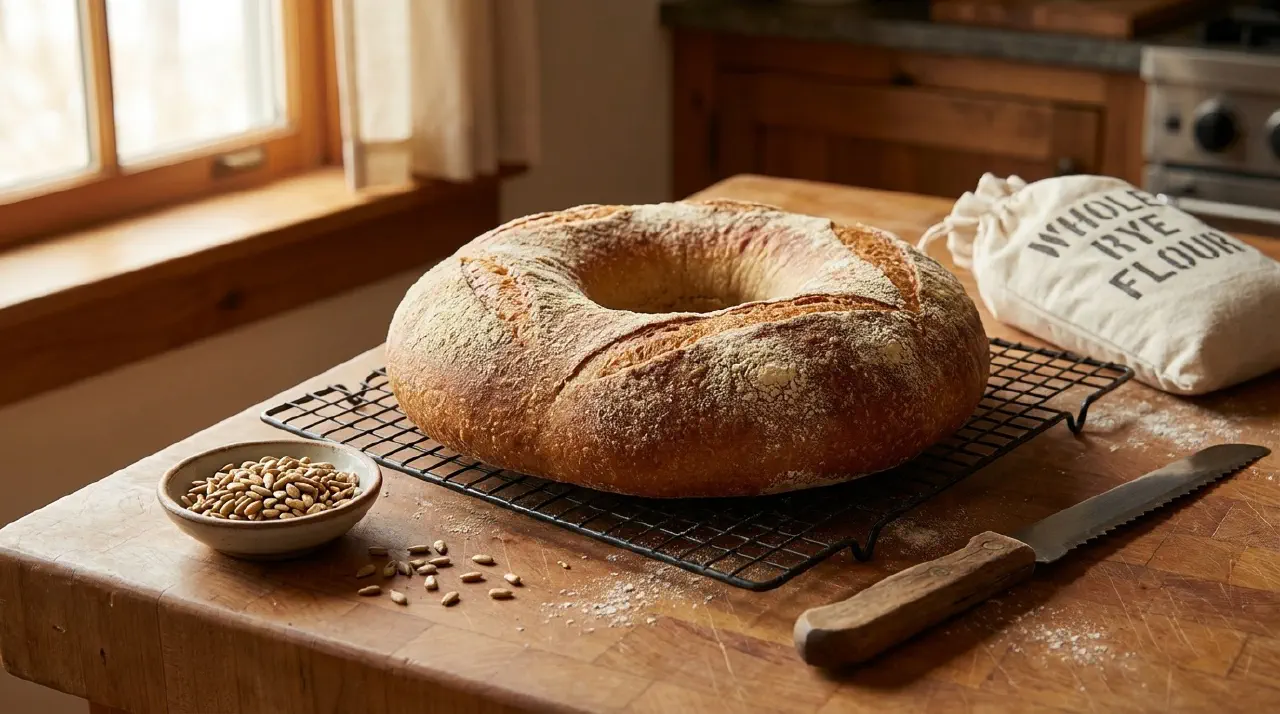
Sunflower Seed Rye © kvalifood.com
A hearty rye bread loaded with toasted sunflower seeds for both nutrition and a long, nutty finish. This bread requires three components—a soaker, a firm starter, and the final dough—making it a commitment, but the results are memorable. Based on a formula developed by Craig Ponsford and the 1995 Coupe du Monde team.
Ingredients
Makes 2 1-pound loaves
Soaker
- 160 g coarse whole-rye (pumpernickel-grind) flour or rye meal
- 170 g water, room temperature
Dough
- 160 g firm starter
- 260 g unbleached high-gluten or bread flour
- 1½ tsp (0.38 oz) salt
- 1¼ tsp (0.14 oz) instant yeast
- 110–170 g water, lukewarm (90–100°F (32–38°C))
- 55 g toasted sunflower seeds
- Semolina flour or cornmeal, for dusting
Directions
Day 1: Soaker and Starter Preparation
The day before making the bread, make the soaker by stirring together the coarse rye flour and water in a small bowl. The rye will soak up the water quickly, but all of it will hydrate. Cover with plastic wrap and leave out overnight at room temperature.
Also on Day 1 (or up to 3 days before baking), prepare a firm starter.
Day 2: Dough
Remove the starter from the refrigerator 1 hour before making the dough. Sprinkle a little flour on the counter and transfer the starter to the counter. Cut it into 8 to 10 pieces with a pastry scraper or serrated knife. Mist with spray oil, cover with a towel or plastic wrap, and let sit for 1 hour to warm.
To make the dough, stir together the flour, salt, and yeast in a 4-quart mixing bowl. Add the soaker and starter pieces and then slowly add the water, stirring with a large metal spoon, until the ingredients form a soft ball.
Sprinkle flour on the counter, transfer the dough to the counter, and knead. Sprinkle on bread flour (not rye) as needed until the dough feels soft and supple, tacky but not sticky. Accomplish this within 4 minutes by hand or machine to avoid overmixing (rye flour becomes gummy if mixed too long). Add the sunflower seeds by gradually working them into the dough within the next 2 minutes. Total mixing time should not exceed 6 minutes if possible. The dough should pass the windowpane test and register 77–81°F (25–27°C). If it does not reach 77°F (25°C) it will take longer to ferment, but do not continue mixing. Lightly oil a large bowl and transfer the dough, rolling it to coat with oil. Cover with plastic wrap.
Ferment the dough at room temperature for 90 minutes, or until it doubles in size.
Sprinkle flour on the counter and gently transfer the dough to the counter, being careful to minimize degassing. Divide the dough into 2 equal pieces and gently form them into boules. Let them rest on the counter for 5 minutes, then shape them into a couronne. Transfer the dough to a sheet pan lined with baking parchment and misted with spray oil, or use the couche method. Mist the dough with spray oil and cover loosely with plastic wrap or a towel.
Proof the dough at room temperature for 60 to 90 minutes, or until it increases to about 1½ times its original size.
Prepare the oven for hearth baking with an empty steam pan in place. Preheat the oven to 500°F (260°C).
Generously dust a peel or the back of a sheet pan with semolina flour or cornmeal and gently transfer the dough to the peel or pan. Slide the dough onto the baking stone (or bake directly on the sheet pan). Pour 1 cup hot water into the steam pan and close the door. After 30 seconds, open the door, spray the walls with water, and close the door. Repeat twice more at 30-second intervals. Then lower the oven temperature to 450°F (230°C) and bake for 10 minutes. Check the breads and rotate 180 degrees if necessary. Lower the oven temperature to 425°F (220°C) and continue baking until the loaves are golden brown and register at least 200°F (93°C) in the center. This should take 15 to 25 minutes longer.
Remove the loaves from the oven and cool on a rack for at least 1 hour before slicing or serving.
Notes
- Sunflower seed loyalty: Sunflower seeds are nutritious and flavorful, with a long, nutty finish that fills the mouth, making you enjoy the bread long after eating.
- Rye mixing caution: Rye flour becomes gummy if overmixed, so keep total mixing time to 6 minutes or less, preferably less.
- Multiple components required: This bread requires advance preparation of a soaker and firm starter, making it more involved than single-stage doughs, but the flavor payoff is worth the effort.
- Firm starter versus barm: You can substitute barm (wet starter) for the firm starter, but remember to cut back on the water in the final dough.
See Also
Swedish Rye (Limpa)
New York Deli Rye
100 Percent Sourdough Rye Bread
Pumpernickel Bread
Poilâne-Style Miche