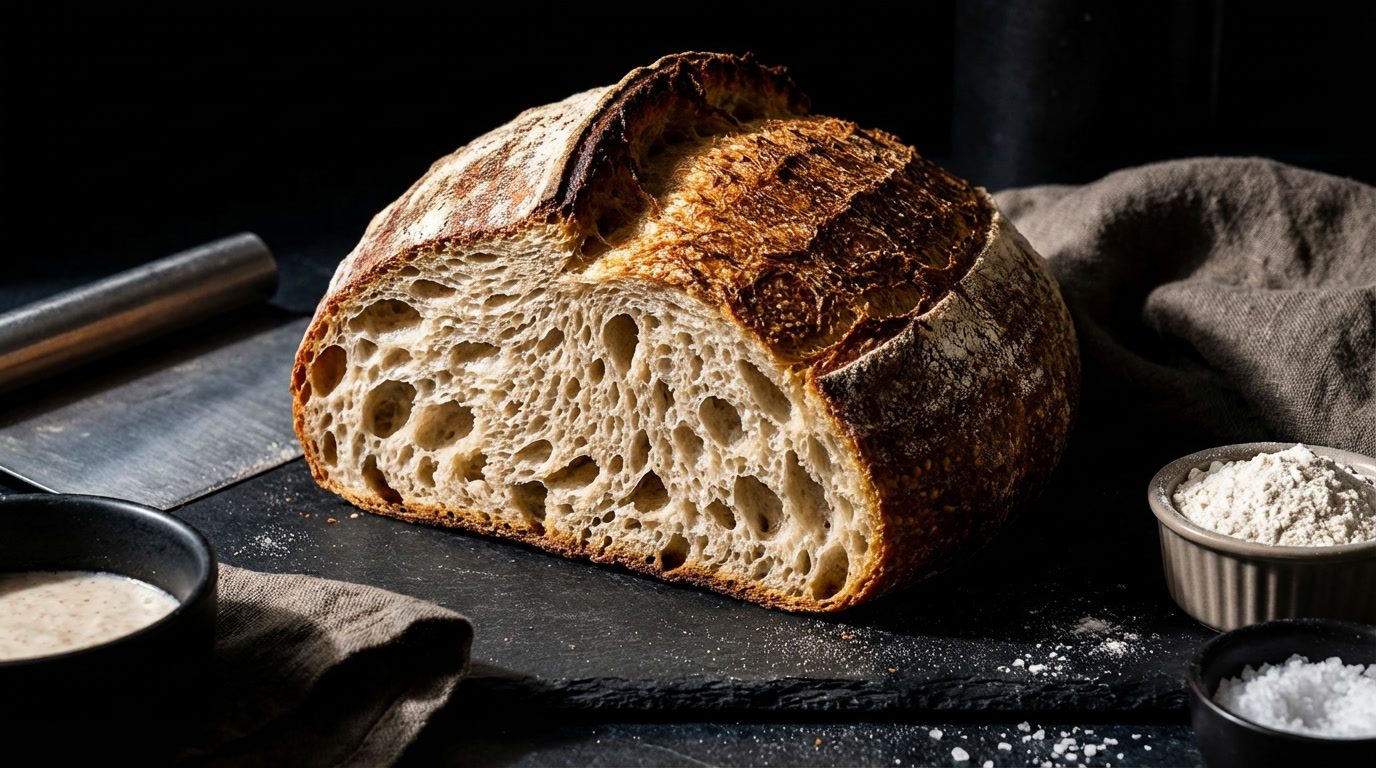
Swedish Rye (Limpa)
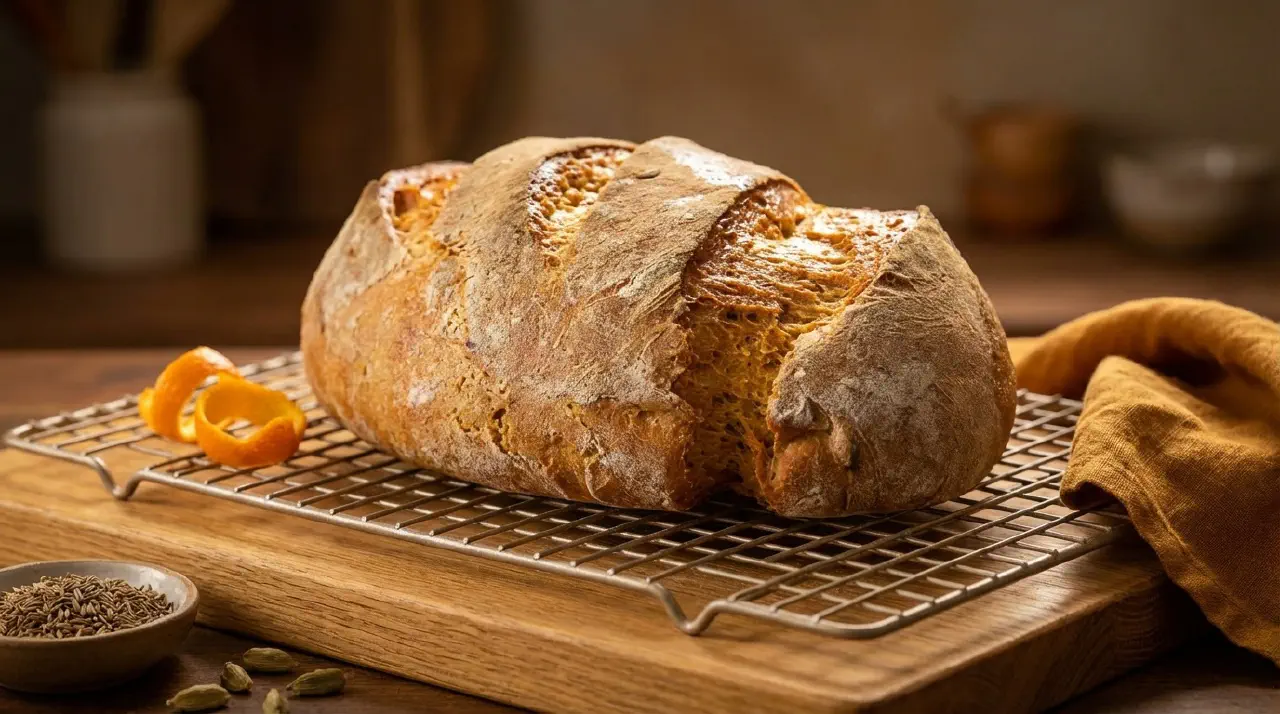
Swedish Rye (Limpa) © kvalifood.com
A spiced rye bread flavored with licorice-forward spices, orange peel, and cardamom. This two-day recipe uses both a sourdough-style sponge and commercial yeast for complex flavor development.
Ingredients
Makes 2 1-pound loaves or 1 large loaf
Sponge
- 200 g water
- 50 g molasses
- 1 tablespoon (0.33 oz) dried orange peel, or 1 teaspoon orange oil
- 1 teaspoon (0.11 oz) ground aniseeds
- 1 teaspoon (0.11 oz) ground fennel seeds
- 1 teaspoon (0.11 oz) ground cardamom
- 200 g sourdough starter or barm
- 140 g white rye flour
Dough
- 320 g unbleached bread flour or high-gluten flour
- 6 g teaspoons instant yeast
- 11 g teaspoons salt
- 65 g packed brown sugar
- 30 g vegetable oil or melted shortening
- Semolina flour or cornmeal, for dusting
- 1 egg white, whisked (optional, for egg wash)
Directions
Day 1: Make the sponge. Combine the water, molasses, orange peel, aniseeds, fennel seeds, and cardamom in a saucepan. Bring to a boil, then remove from heat and cool to lukewarm. Stir in the sourdough starter and rye flour until fully hydrated and evenly distributed. The mixture should be thick. Cover with plastic wrap and ferment at room temperature for 4 hours, or until foamy. Refrigerate overnight.
Day 2: Prepare the sponge and mix the dough. Remove the sponge from the refrigerator 1 hour before making the bread. In a large mixing bowl, stir together the bread flour, yeast, salt, and brown sugar. Add the sponge and melted oil, then mix with a spoon until the dough forms a ball. Sprinkle flour on the counter, transfer the dough, and knead for approximately 4 minutes, adjusting with additional flour if needed. The dough should be slightly tacky but not sticky. Do not overknead, as the rye flour will become gummy. The entire process should take no more than 6 minutes. The dough should pass the windowpane test and register 77°F (25°C) to 81°F (27°C). Lightly oil a large bowl, transfer the dough to the bowl, and coat with oil. Cover with plastic wrap.
Ferment at room temperature for about 2 hours, or until the dough doubles in size.
Remove the dough from the bowl and knead for 1 minute to degas. Divide the dough in half for two 1-pound loaves, or leave intact for a larger loaf. Shape into sandwich loaves or oblong forms for freestanding loaves. Lightly oil two 8½-by-4½-inch pans or one 9-by-5-inch pan. For freestanding loaves, line a sheet pan with parchment and dust with cornmeal or semolina flour. Transfer the loaves to the pan(s), then score the top with 3 parallel slashes. Mist with spray oil and cover loosely with plastic wrap.
Proof at room temperature for approximately 90 minutes, or until the dough crests 1 inch above the bread pans at the center, or rises 1½ times its original size for freestanding loaves.
Preheat the oven to 350°F (175°C). For freestanding loaves, brush the egg white over the surface just prior to baking (optional for pan loaves). Bake for 20 minutes, then rotate the pan(s) 180 degrees. Continue baking for 15 to 30 minutes, depending on loaf size. The bread should register 190°F (88°C) in the center, be light golden brown, and sound hollow when thumped on the bottom. If the sides are still pale or soft, return to the oven to finish.
Remove the loaves from the pans immediately and cool on a rack for at least 1 hour before slicing.
Notes
- Spice flavors: The aniseeds and fennel bring forward licorice notes that set this bread apart from rye breads made with caraway. You can adjust the intensity to taste.
- Sponge fermentation: The 4-hour fermentation followed by overnight refrigeration develops acidity and flavor, while also conditioning the flour and extending shelf life.
- Scoring before proofing: Scoring before the final rise changes the appearance compared to scoring at bake time; the cuts will spread and seem to “heal” during baking, leaving a different shade on the crust.
- Rye flour handling: Rye contains less gluten than wheat, so avoid overworking the dough to prevent a gummy texture. Keep mixing and kneading time to 6 minutes or less.
See Also
Sunflower Seed Rye
New York Deli Rye
100 Percent Sourdough Rye Bread
Pumpernickel Bread
Poilâne-Style Miche