Whole-Wheat Bread
Whole-Wheat Bread © kvalifood.com
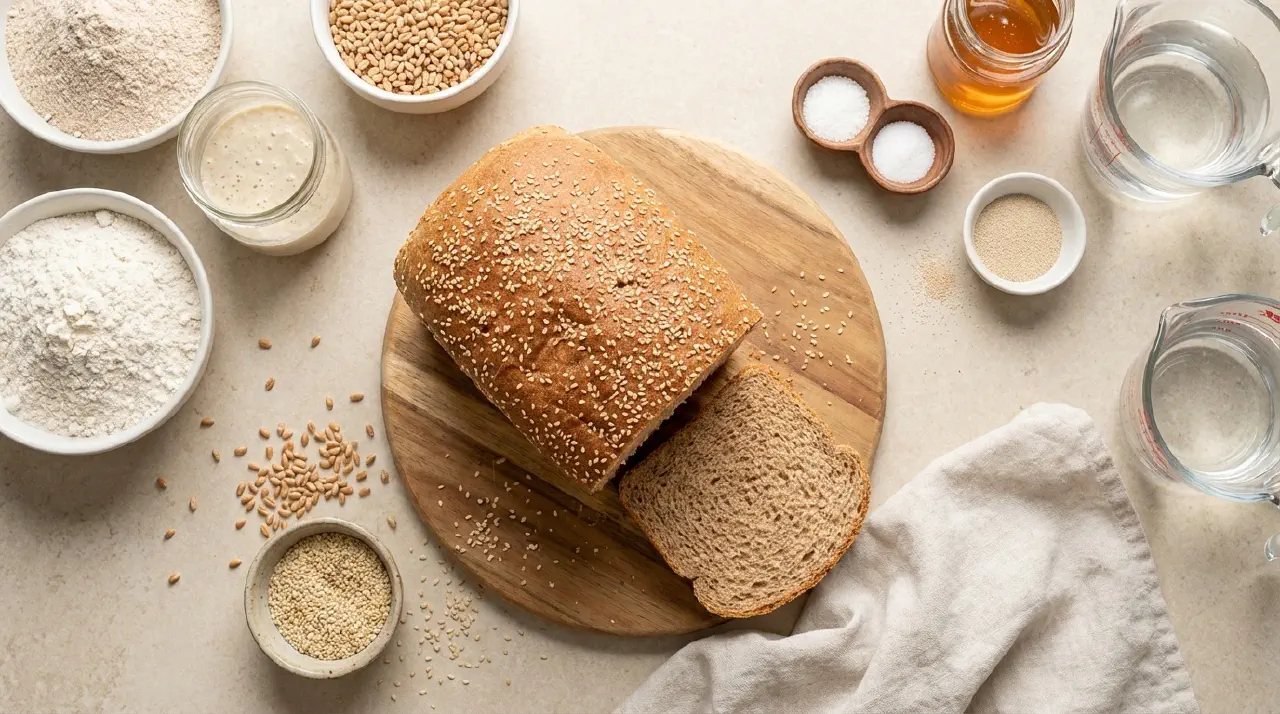
A two-day whole-wheat bread that combines both a soaker and a poolish pre-ferment to develop full grain flavor and open crumb structure. The long fermentation helps balance the grassy and bitter notes of the bran while bringing out the natural sweetness of the grain.
Ingredients
Makes 2 1-pound loaves
Soaker
- 120 g coarse whole-wheat flour, or other coarsely ground whole grains (oats, corn, barley, rye)
- 170 g water, at room temperature
Poolish
- 190 g high-protein whole-wheat flour
- ¼ teaspoon (0.028 oz) instant yeast
- 170 g water, at room temperature
Dough
- 260 g high-protein whole-wheat flour
- 9 g teaspoons salt
- 1 teaspoon (0.11 oz) instant yeast
- 45 g honey
- 1 tablespoon (0.5 oz) vegetable oil (optional)
- 45 g large egg, slightly beaten (optional)
- 2 tablespoons sesame seeds, poppy seeds, quick oats, or wheat bran, for garnish (optional)
Directions
Day 1: Make the soaker and poolish. For the soaker, mix together the coarse whole-wheat flour and water in a bowl. Cover with plastic wrap and leave at room temperature until the next day.
For the poolish, mix together the whole-wheat flour and yeast, then stir in the water to make a thick paste. Stir only until all the flour is hydrated. Cover the bowl with plastic wrap and ferment at room temperature for 2 to 4 hours, or until it begins to bubble. Transfer to the refrigerator overnight.
Day 2: Make the dough. Remove the poolish from the refrigerator 1 hour before making the dough to warm it. In a mixing bowl, stir together the whole-wheat flour, salt, and yeast. Add the poolish, soaker, honey, oil, and egg (if using). Stir with a large metal spoon until the dough forms a ball, adding more water or flour if needed.
Sprinkle whole-wheat flour on the counter, transfer the dough, and knead. Add flour if necessary and knead until the dough forms a firm, supple texture. This will take 10 to 15 minutes by hand, or slightly less by machine. The dough should be tacky but not sticky. It should pass the windowpane test and register 77°F (25°C) to 81°F (27°C). Lightly oil a large bowl, transfer the dough, and coat with oil. Cover with plastic wrap.
Ferment at room temperature for approximately 2 hours, or until the dough doubles in size.
Divide the dough into 2 equal pieces (they should weigh about 18 oz each). Shape them into sandwich loaves. Lightly oil two 8½-by-4½-inch pans and place the loaves in the pans. Mist the tops with spray oil and loosely cover with plastic wrap.
Proof at room temperature for about 90 minutes, or until the dough nearly doubles in size and crests above the lip of the pans.
Preheat the oven to 350°F (175°C) with the oven rack in the middle. Just before baking, you may mist the tops with water and sprinkle on sesame seeds, poppy seeds, oats, or wheat bran.
Bake for about 30 minutes, then rotate 180 degrees if necessary for even baking. Continue baking for 15 to 30 minutes longer. The finished bread should register 185°F (85°C) to 190°F (88°C) at the center and sound hollow when thumped on the bottom. The loaves should be golden brown all around and firm on the sides as well as the top and bottom. If soft and squishy on the sides, return to the pans and continue baking until done.
Remove the loaves immediately from the pans and cool on a rack for at least 1 hour, preferably 2 hours, before slicing.
Notes
- High-protein flour: The bread will develop a more open crumb if using high-protein whole-wheat flour, often found at natural food markets. Hard spring wheat varieties are strongest. Regular whole-wheat flour from the supermarket is acceptable, though results will differ.
- Coarse flour weight: Coarse whole-wheat flour weighs less per cup than regular grind flour because it contains more air and doesn’t pack tightly, which is why coarse flour measures 4.25 oz per cup compared to 4.5 oz for regular grind.
- Soaker technique: A soaker is especially effective when coarse grains are part of the formula and allows for substituting other grains such as corn or oats in place of wheat to vary texture and flavor.
- Tenderizing options: Oil and/or egg are optional additions that tenderize the bread. If using either, add extra flour during the final mixing as needed. Alternatively, substitute milk or buttermilk for water in the poolish for a tender crumb.
- Flavor development: The poolish extends fermentation time by developing acidity, which balances the earthy flavors of the bran and germ while bringing out the natural sweetness of the grain.
See Also
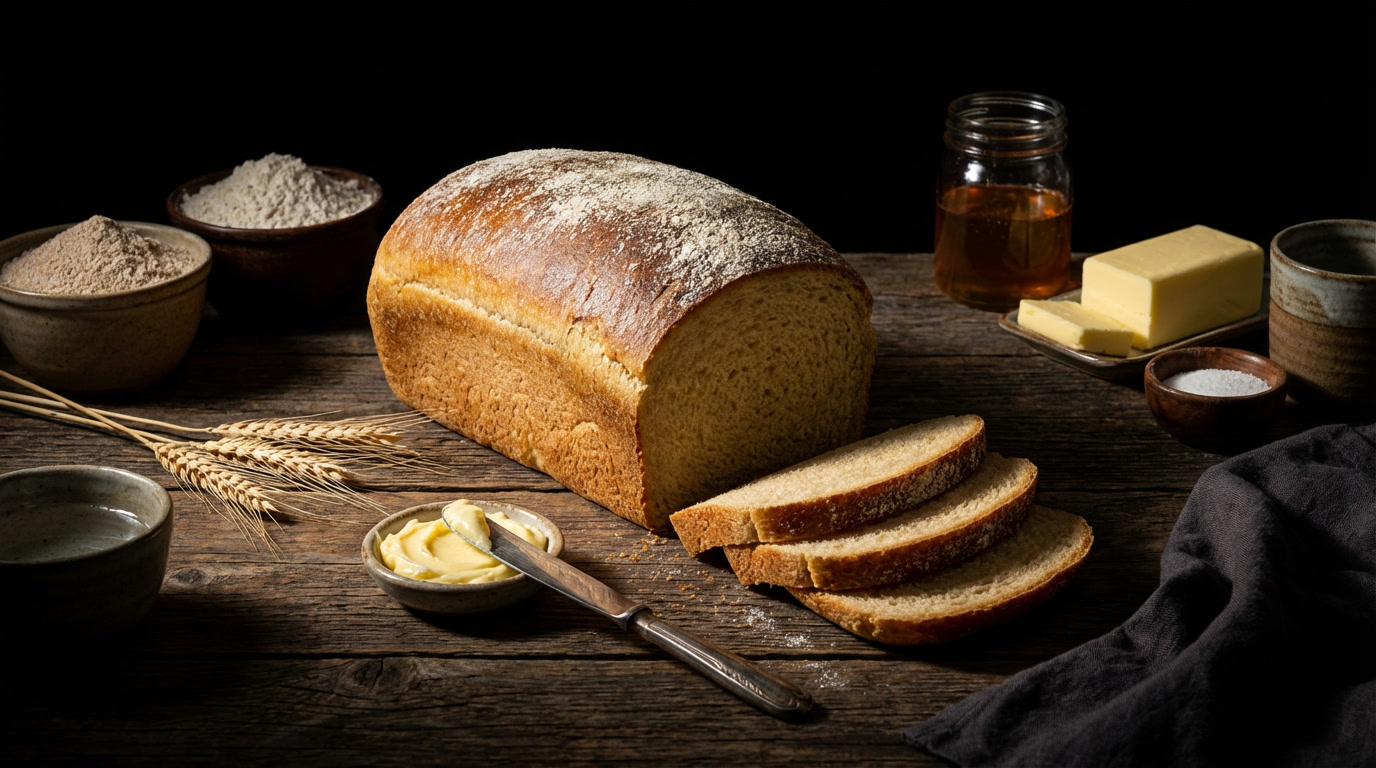
Light Wheat Bread
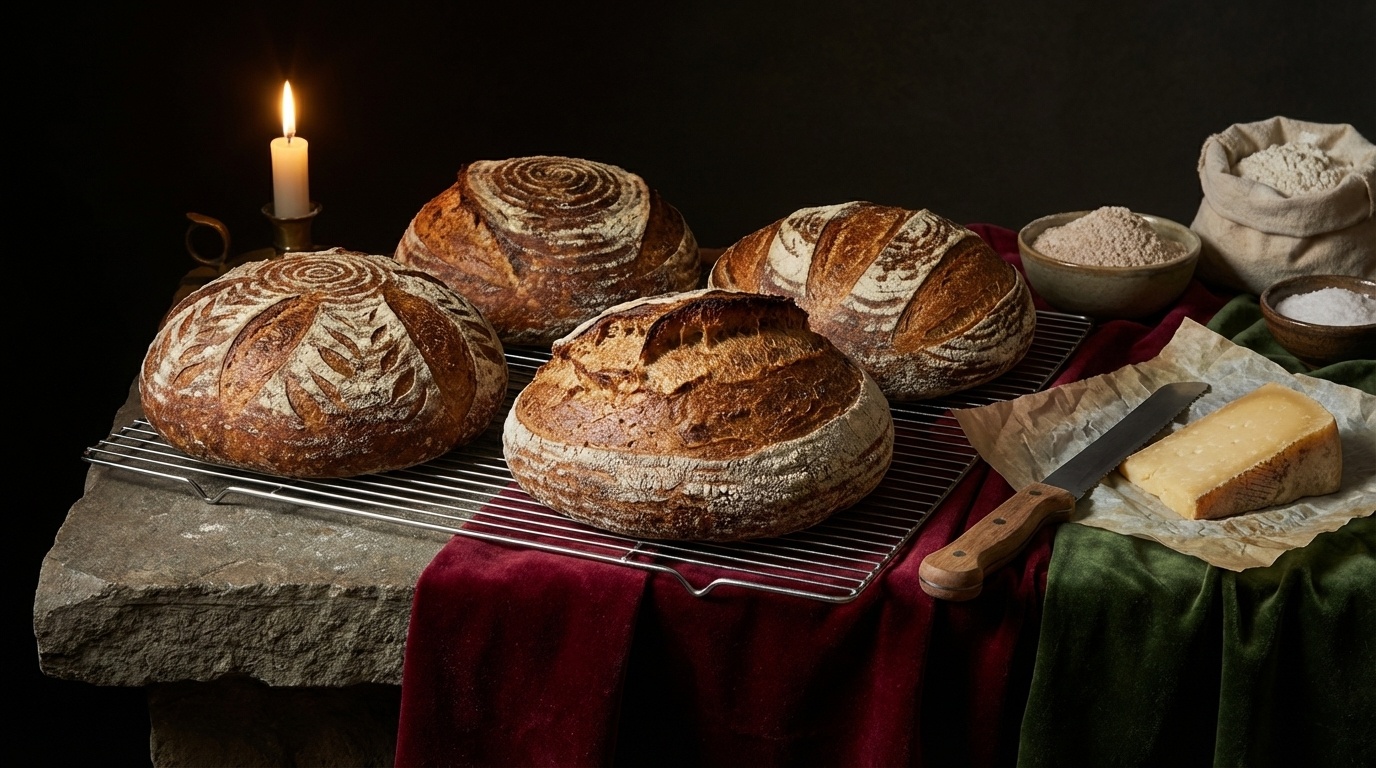
Poilâne-Style Miche
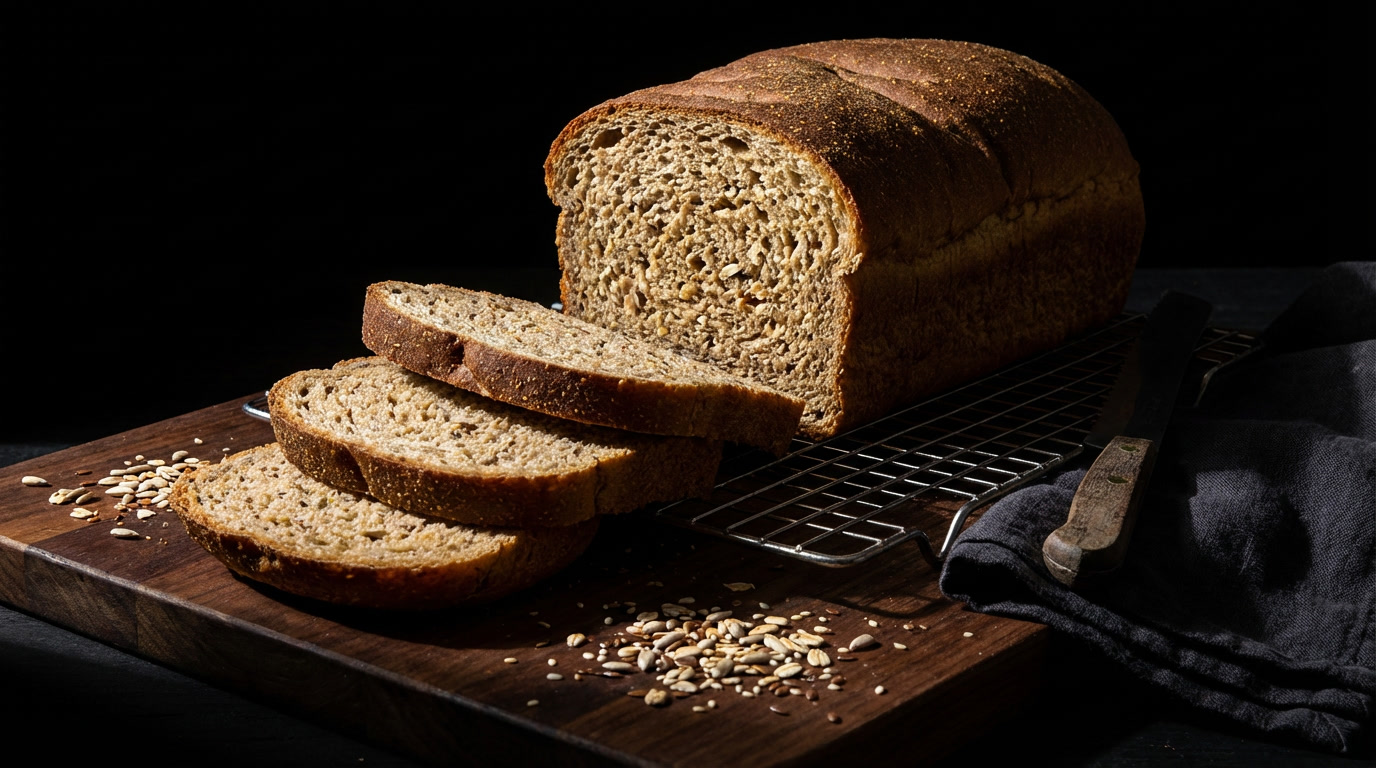
Multigrain Bread Extraordinaire