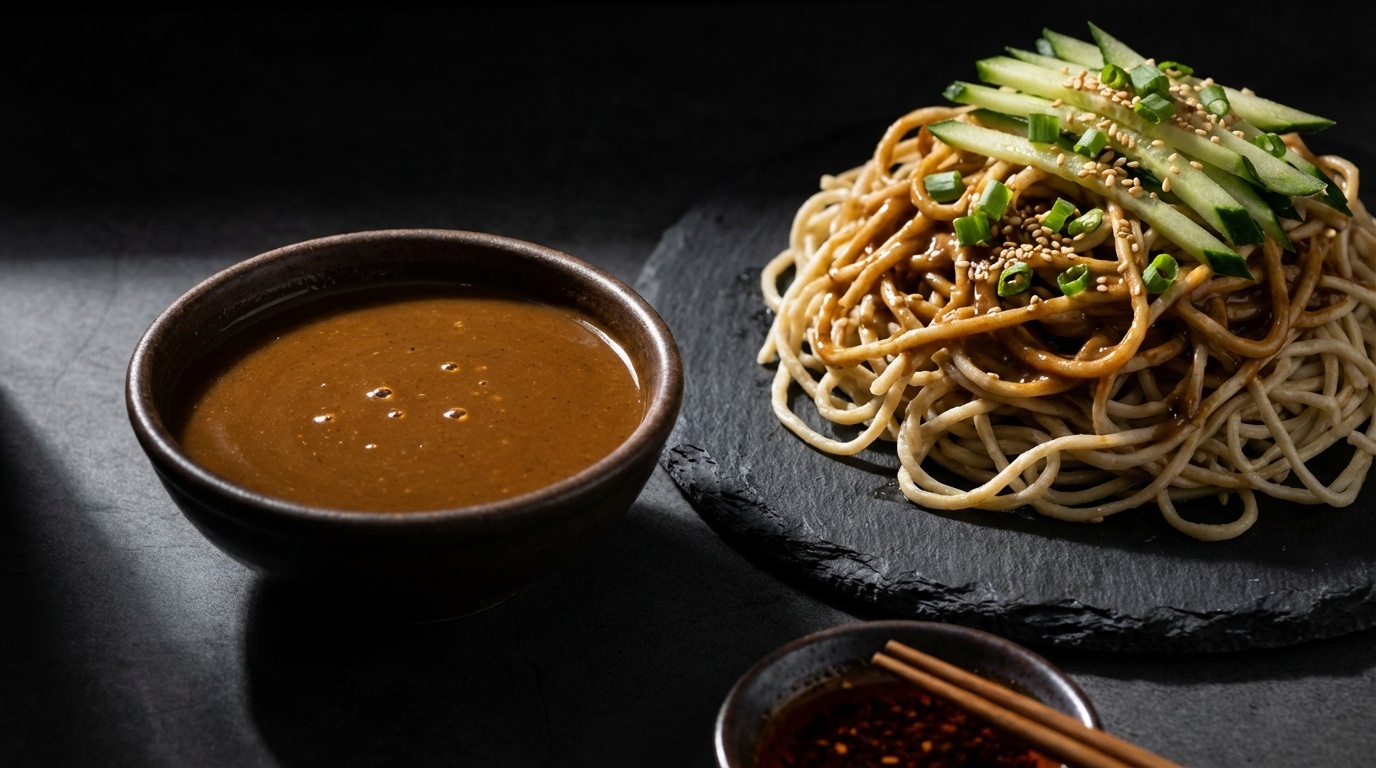
Yu Xiang Sauce (鱼香酱汁)
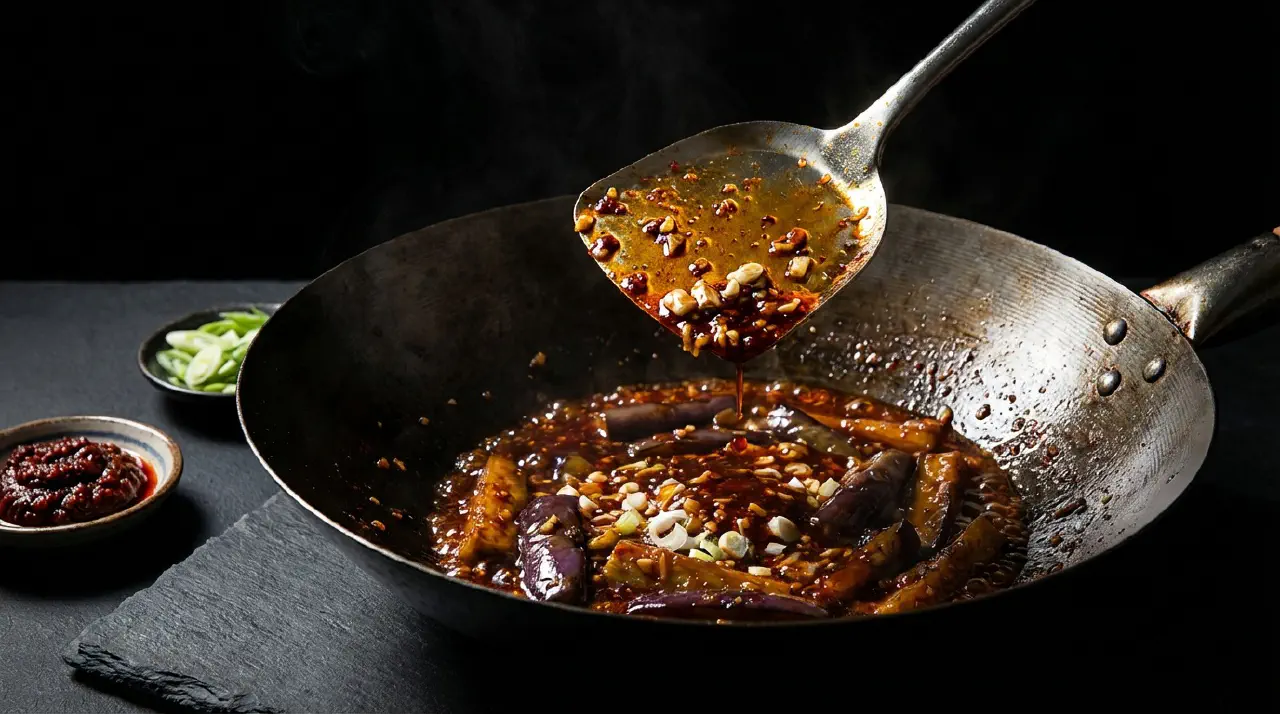
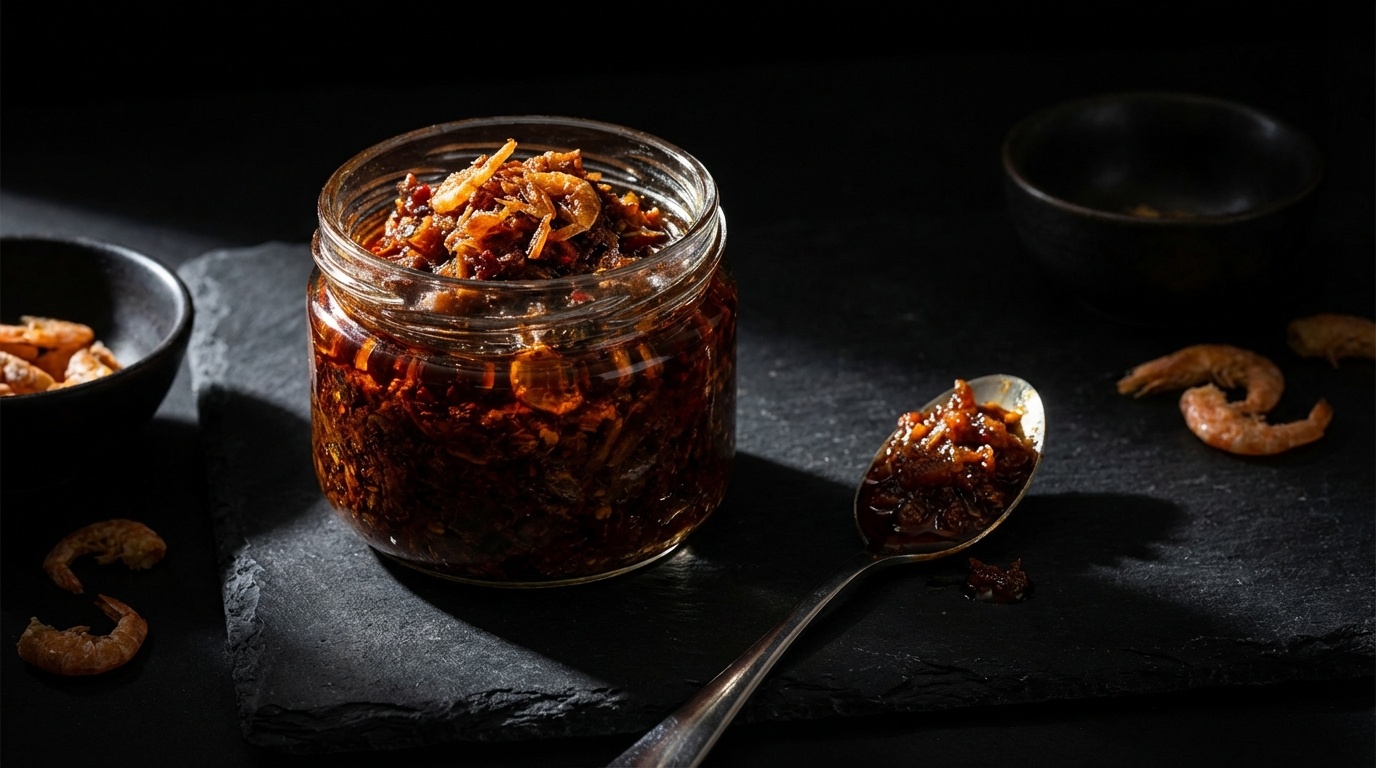
Yu xiang sauce © kvalifood.com
Yu xiang (鱼香, “fish-fragrant”) is a flavour profile from Sichuan - not an ingredient. The sauce contains no fish. The name comes from the spice combination traditionally used for freshwater fish in Sichuan: doubanjiang, ginger, garlic, vinegar and sugar. Five elements in balance - salty, sweet, sour, spicy and aromatic - is what defines the profile. Used primarily on aubergine (鱼香茄子), shredded pork (鱼香肉丝) and prawns. The sauce is always built fresh in the wok, never in advance.
Ingredients
Yields 2 servings, enough for 400 g aubergine, 250 g shredded pork or 300 g prawns
Chilli paste
- 1 tbsp Pixian doubanjiang (郫县豆瓣酱), finely chopped if coarse
- 1 tbsp pickled chilli (泡椒, paojiao), finely chopped (can be replaced with 1 extra tsp doubanjiang)
Pre-mixed sauce
- 1½ tbsp sugar
- 1 tbsp Chinkiang vinegar (镇江香醋)
- 1 tbsp light soy sauce (生抽)
- 1 tsp Shaoxing rice wine (绍兴酒), optional
- 4 tbsp water (or unsalted chicken stock)
- 1 tsp cornstarch
Aromatics
- 4 cloves garlic (ca. 20 g), finely chopped
- 1 tbsp fresh ginger (ca. 10 g), finely chopped
- 2 spring onions, white part finely chopped, green part sliced into rings (kept separate)
Oil
- 2 tbsp neutral oil (peanut or rapeseed)
Directions
Stir sugar, vinegar, soy sauce, wine (if using), water and cornstarch together in a small bowl. Stir well - the cornstarch sinks quickly. Have the bowl ready by the wok.
Chop garlic, ginger and the white part of the spring onions finely. Keep them together - they are added at the same time. Slice the green part of the spring onions into thin rings and keep separate for garnish.
Heat oil in a wok over medium heat. Add doubanjiang and paojiao. Fry 30-60 seconds until the oil is visibly red and the aroma is deep. Be careful not to burn it.
Add garlic, ginger and the white part of the spring onions. Fry 15-20 seconds until fragrant.
Stir the sauce mixture through once (the cornstarch!) and pour it into the wok along the rim. Let the sauce come to a boil and thicken - about 30-60 seconds over high heat. It should become slightly glossy and syrup-thick.
Add the green part of the spring onions. Stir through and serve immediately.
Uses
The sauce is built in the wok together with the main element:
- Aubergine (鱼香茄子): Fry or deep-fry aubergine pieces first. Build the sauce in the empty wok, add the aubergine and toss.
- Shredded pork (鱼香肉丝): Fry marinated pork first, remove it. Build the sauce, add the meat back.
- Prawns: Fry prawns quickly, remove them. Build the sauce, add the prawns back.
Notes
- Taste the sauce mixture before cooking. It should taste distinctly sweet-sour with saltiness from the soy. Adjust sugar or vinegar to taste.
- Doubanjiang is salty. Be careful with extra salt. Always taste before adding more soy sauce.
- Chinkiang vinegar is the right vinegar. Rice vinegar can be used as a substitute but gives a milder, less complex acidity.
- Paojiao (pickled chilli) gives a more authentic, fresh-spicy flavour than doubanjiang alone. Can be bought at Asian supermarkets, often in jars labelled “泡椒”.
- Scaling: The ratio is what matters: about 1.5 parts sugar : 1 part vinegar : 1 part soy sauce : 1-2 parts chilli paste.
See Also
Chinese Sweet and Sour Sauce (糖醋汁)
Sichuan Chili Oil (红油, hóng yóu)
XO Sauce (XO酱)