Cooking Science Wiki
 read more
Butter
Butter
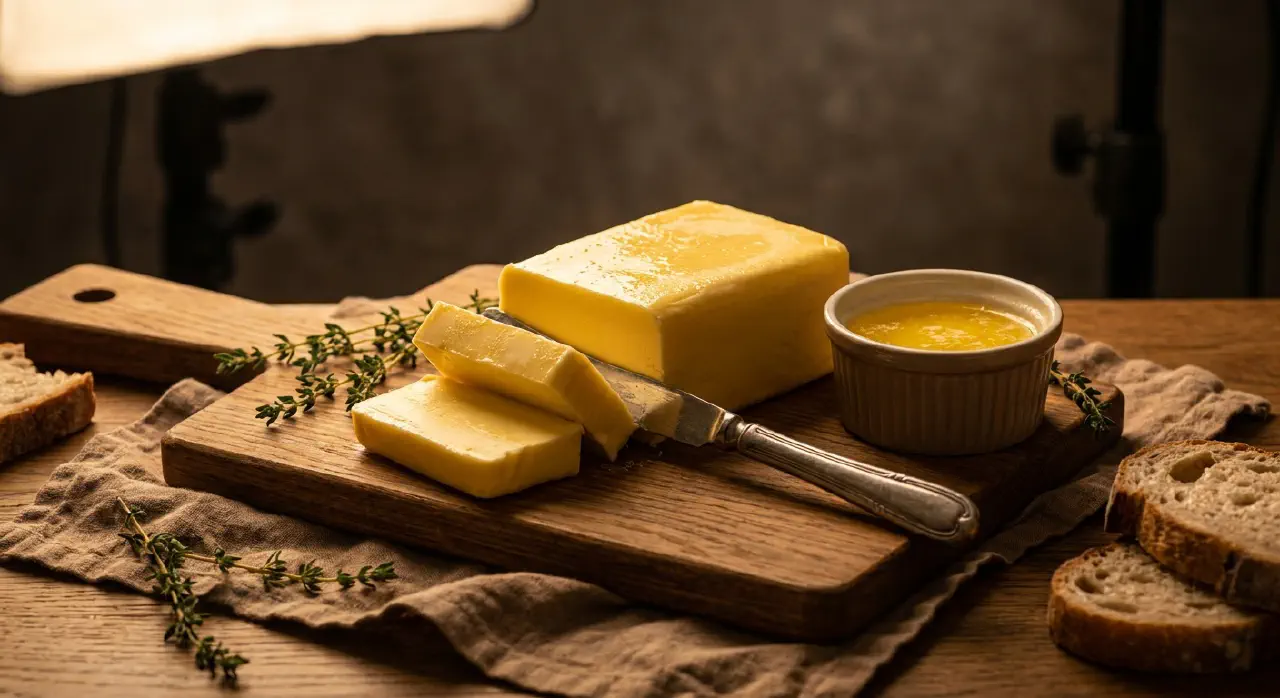
Butter is an inverted emulsion — cream turned inside out. Where cream suspends fat droplets in water, butter suspends water droplets in fat. This inversion, achieved by churning, gives butter its unique properties: solid enough to handle at room temperature, melting on the tongue at body temperature, and capable of both enriching and structuring everything from sauces to pastry.
Composition
- Fat: 80–82% (American standard) or 82–86% (European/continental)
- Water: 15–17%
- Milk solids: 1–2% (proteins, lactose, minerals)
- Salt: 0–2% (when added)
The fat is highly saturated (~60–70%), courtesy of rumen microbes that convert unsaturated fatty acids from the cow’s diet into saturated forms. This is why butter is solid at room temperature — its melting point is 90–95°F/32–35°C, right around body temperature.