Chinese Sesame Paste Sauce (芝麻酱)
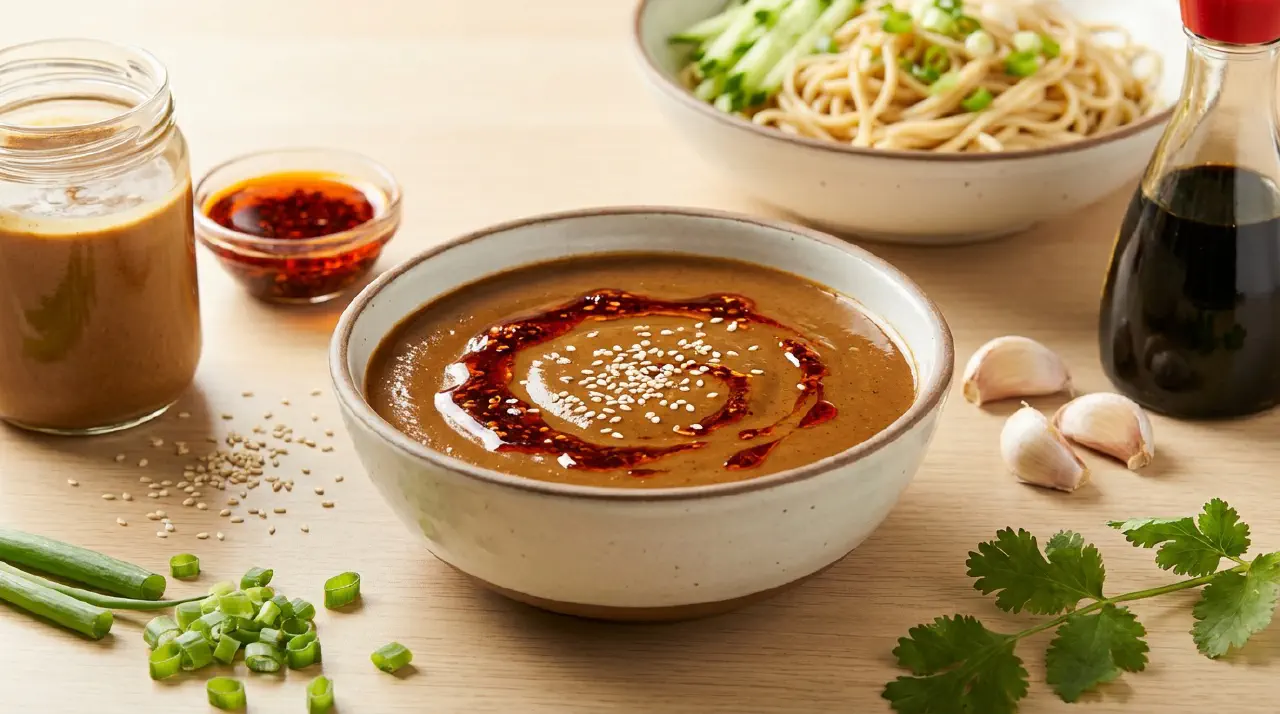
Chinese Sesame Paste Sauce (芝麻酱) - kvalifood.com
Chinese sesame paste sauce is a staple condiment across northern China and Taiwan. It works as a coating for cold noodles or as a base for Beijing-style hot pot dipping sauce. Chinese sesame paste is made from roasted, unhulled white sesame seeds – darker, nuttier, and more intense than Middle Eastern tahini, which is not a substitute.
Key distinction: Chinese sesame paste is made from roasted, unhulled white sesame seeds, making it darker, nuttier, and more intensely flavored than Middle Eastern tahini (which uses raw, hulled seeds). This is not interchangeable.
Ingredients
Core sauce
- 3 tbsp Chinese sesame paste (芝麻酱, ~48 g) – made from roasted, unhulled white sesame seeds
- 2 tbsp light soy sauce (~30 mL)
- 1 tsp Chinese black vinegar (or rice vinegar, ~5 mL)
- 1 tsp toasted sesame oil (~5 mL)
- 1 tsp sugar (4 g)
- 4-6 tbsp hot water (~60-90 mL) – noodle cooking water preferred
For noodle sauce, add
- 1 tbsp dark soy sauce (~15 mL) – for color and depth
- 1-2 cloves garlic, minced (~5-10 g)
- Chili oil, to taste (optional)
For hot pot dipping sauce, add
- 1 block red fermented bean curd (腐乳, ~15 g) – mashed
- 1-2 tsp fermented leek flower sauce (韭菜花, optional)
- 1-2 cloves garlic, grated (~5-10 g)
- 1 tsp chili oil (optional)
- 1 tbsp minced cilantro
- 1 tbsp minced scallion
Directions
-
Thin the paste. Spoon the sesame paste into a medium bowl. Add hot water one tablespoon at a time, stirring continuously in one direction after each addition. The paste will seize up and thicken at first – this is normal. Keep adding water and stirring until the paste becomes smooth and pourable, with a consistency that coats the back of a spoon but drips off slowly. Use 4-6 tbsp depending on how thick your paste is.
-
Season the base. Add light soy sauce, vinegar, sesame oil, and sugar. Stir until sugar dissolves and the sauce is uniform.
-
Customize for application:
- For noodles (麻酱面): Stir in dark soy sauce and minced garlic. Taste and adjust salt (via soy sauce) and sweetness. The sauce should be thin enough to coat noodles when tossed – add more hot water if needed. Pour over cooked, drained wheat noodles while still hot. Top with chili oil, julienned cucumber, chopped scallion.
- For hot pot dipping (麻酱蘸料): Mash the fermented bean curd into the sauce until fully incorporated. Add fermented leek flower sauce if using. Stir in grated garlic. The sauce should be thicker than the noodle version – just pourable. Finish with chili oil, cilantro, and scallion.
Notes
- Making paste from scratch: Wash 250 g white sesame seeds 2-3 times, discarding floaters. Dry-fry over high heat until water evaporates, reduce heat and continue until aromatic and seeds crumble easily between fingers. Cool completely. Process in food processor with 90 mL sesame oil, adding oil in thirds. Blend until smooth. Store in airtight jar, refrigerated, up to 1 month.
- Buying paste: Look for Chinese sesame paste (芝麻酱) at Chinese/Asian grocery stores. It should be dark brown, thick, and have a strong toasted aroma. The oil will separate on top – stir before using. Do not substitute tahini.
- The “seize” is normal: When you first add liquid to the thick paste, it will clump and seem to get thicker. Keep stirring in one direction and adding liquid gradually. It will smooth out.
- Beijing “two-eight sauce” (二八酱): Traditional Beijing hot pot sauce uses a ratio of 80% sesame paste to 20% peanut butter as the base. Some chefs invert this. For the most sesame-forward flavor, keep sesame paste dominant or use it alone.
- Taiwanese vs. Beijing noodle sauce: Taiwanese versions tend to use both light and dark soy sauce and no peanut butter. Beijing versions may include a small amount of peanut butter. Both are legitimate regional approaches.