Chinese Sweet and Sour Sauce (糖醋汁)
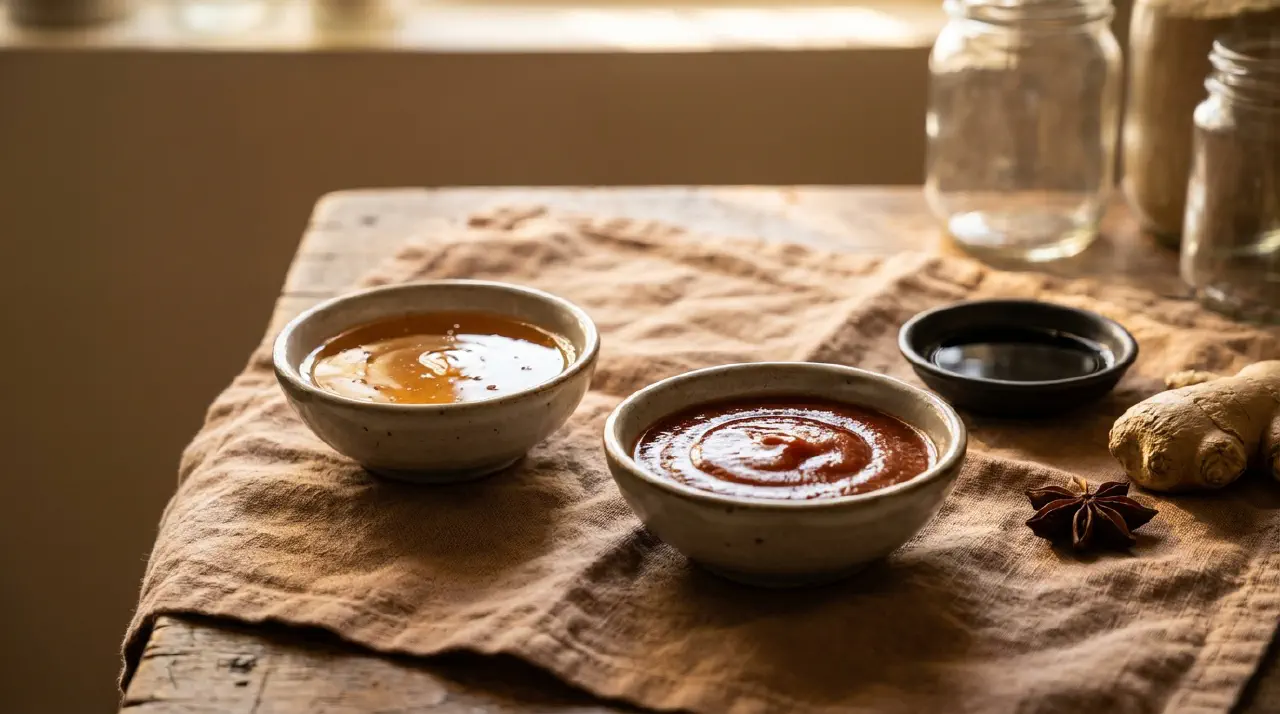
Chinese sweet and sour sauce © kvalifood.com
糖醋 (táng cù) - sugar-vinegar - is one of the oldest flavour principles in Chinese cooking. There are two traditions: the classic Chinese version is a clear, translucent sauce based on Chinkiang black vinegar, sugar and soy sauce, without tomato. The Cantonese export version uses tomato paste and is thicker and reddish. Both are made fresh - there is no bottled sauce in traditional Chinese cooking.
Here are both versions.
Ingredients
A: Classic 糖醋汁 (without tomato)
Yields ca. 150 ml sauce, enough for 2 servings of fried meat or fish
- 3 tbsp sugar
- 2 tbsp Chinkiang black vinegar (镇江香醋)
- 1 tbsp Shaoxing wine (绍兴酒)
- 1½ tbsp light soy sauce
- 3 tbsp water (or light chicken stock)
- 1 tsp potato starch (or cornstarch), dissolved in 1 tbsp cold water
A: Aromatics (fried in the wok)
- 1 tbsp neutral oil
- 1 tbsp finely chopped ginger (ca. 10 g)
- 2 cloves garlic (ca. 10 g), finely chopped
- 1 spring onion, finely chopped (white and green parts separate)
B: Cantonese 糖醋汁 (with tomato)
Yields ca. 300 ml sauce, dipping sauce or for 4 servings
- 2 tbsp tomato paste (not ketchup)
- 65 g sugar
- 80 ml white vinegar (5% acidity, or rice vinegar)
- 120 ml water
- 1 tbsp light soy sauce
- 2 tbsp cornstarch, dissolved in 2 tbsp water
B: Aromatics
- 1 tbsp neutral oil
- 1 slice ginger, thin
- 1 star anise
Directions
A: Classic version
Stir sugar, vinegar, wine, soy sauce and water together in a bowl until the sugar is dissolved. Mix the potato starch with cold water in a separate small bowl. Have both ready by the wok.
Heat oil in a wok over high heat. Add ginger, garlic and the white part of the spring onion. Fry 15-20 seconds until fragrant - it burns quickly, so be ready with the sauce.
Pour the sauce mixture into the wok immediately. Bring to a boil. Stir the starch mixture through and pour it in while stirring. The sauce thickens in 10-15 seconds.
Pour the sauce over fried meat or fish. Sprinkle with the green part of the spring onion.
B: Cantonese version
Heat oil in a small saucepan over medium-low heat. Add ginger and star anise and fry about 1 minute until the ginger begins to caramelise.
Add tomato paste. Stir constantly for 2 minutes until it darkens slightly and smells concentrated.
Stir in sugar, water, vinegar and soy sauce. Bring to a simmer until the sugar is fully dissolved. Simmer 10 minutes over low heat - the sauce should lightly coat a spoon.
Remove the star anise and ginger and discard them.
If the sauce is to be used as a dipping sauce: mix cornstarch with water and stir it slowly into the simmering sauce until desired thickness. For wok use, the sauce can be used as is.
Notes
- Ratio rule of thumb: 3-2-1 (sugar-vinegar-soy sauce in tbsp) is a good base. Adjust sugar up for sweeter, vinegar up for more sour.
- Chinkiang vinegar is the key. It has a complex, slightly smoky flavour that regular vinegar cannot replace. Balsamic is the closest substitute.
- Potato starch gives a clearer, more translucent sauce than cornstarch.
- Speed is essential. The sauce is made in the wok in under 1 minute. Everything must be prepared and mixed beforehand.
- Tomato paste vs. ketchup: Tomato paste gives a cleaner flavour and better control over sweetness and acidity. Ketchup can be used (4 tbsp ketchup replaces 2 tbsp tomato paste + a little extra sugar).
- Star anise adds a subtle depth without dominating. Always remove it before serving.
- Shelf life: The Cantonese version can be stored in the fridge for up to 1 week.
- Pineapple juice: 60 ml pineapple juice can be added to the Cantonese version for the classic Cantonese-American flavour. Reduce the water accordingly.
See Also
Yu Xiang Sauce (鱼香酱汁)
XO Sauce (XO酱)
Sichuan Chili Oil (红油, hóng yóu)