Yu Xiang Sauce (鱼香汁)
Prep 5 min Total 5 min
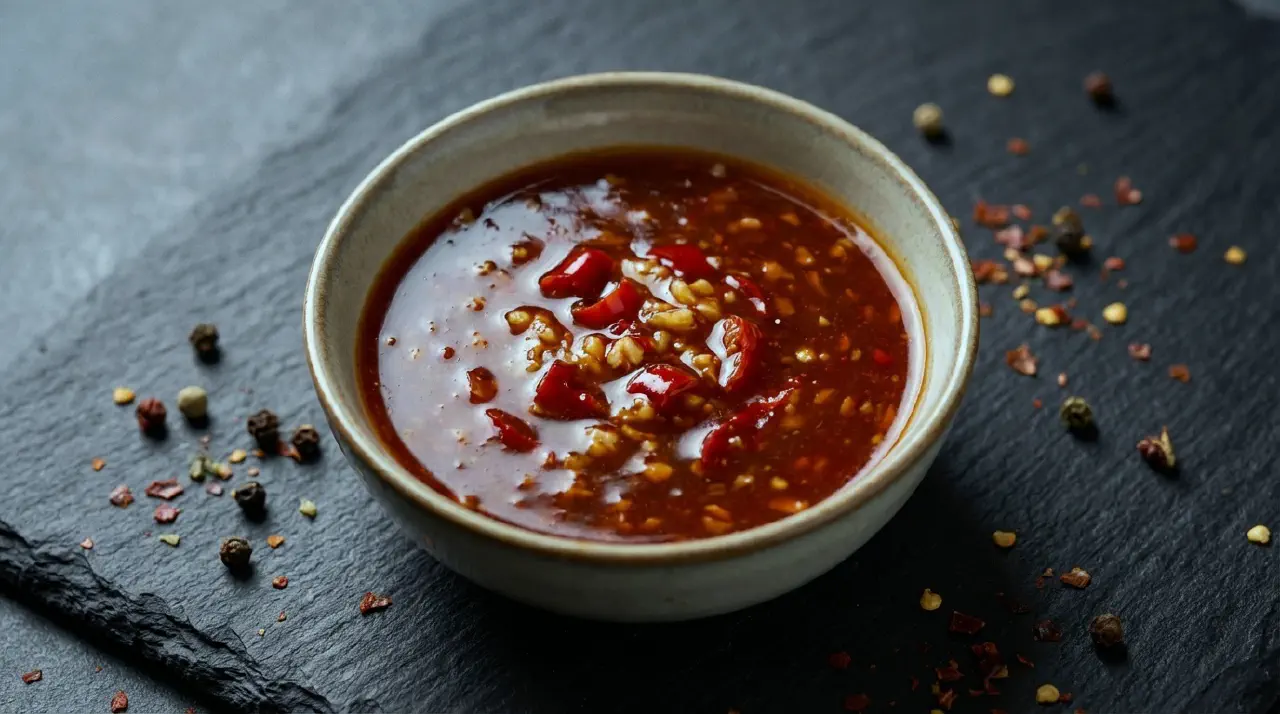
Yu Xiang Sauce (鱼香汁) - kvalifood.com
Yu xiang (鱼香, “fish fragrant”) is one of the seven canonical flavor profiles of Sichuan cuisine. Despite the name, it contains no fish or seafood. Use it to stir-fry eggplant (yu xiang qie zi), shredded pork (yu xiang rou si), or tofu. It also works with green beans, chicken, and shrimp.
Makes ca. 200 mL sauce, enough for 1 stir-fry serving 2-4 people
Ingredients
Chili base
- 1 tbsp Pixian doubanjiang (~18 g)
- 1.5 tbsp pickled chili paste (pao la jiao, ~22 g)
Aromatics
- 4 garlic cloves, finely minced (~20 g)
- 1 tbsp fresh ginger, finely minced (~12 g)
- 2 scallions, finely sliced, white parts separated from green (~20 g)
Sauce liquid (pre-mix in a bowl)
- 2 tbsp sugar (24 g)
- 1.5 tbsp Chinkiang black vinegar (~22 mL)
- 1 tbsp light soy sauce (~15 mL)
- 1 tbsp Shaoxing wine (~15 mL)
- 3 tbsp chicken stock (or water, ~45 mL)
- 1 tsp cornstarch (3 g)
Cooking
- 2-3 tbsp neutral oil (peanut or rapeseed)
Directions
Pre-mix the sauce liquid. Combine sugar, vinegar, soy sauce, Shaoxing wine, stock, and cornstarch in a small bowl. Stir well to dissolve sugar and cornstarch. Set aside.
Bloom the chili paste. Heat oil in a wok over medium heat. Add the doubanjiang and pickled chili paste. Stir-fry for 30-60 seconds until the oil turns red and the paste is fragrant (炒出红油). Do not burn.
Add aromatics. Add ginger and garlic. Stir-fry for 15-20 seconds until fragrant. Add the white scallion parts. Stir-fry another 10 seconds.
Add the sauce liquid. Give the pre-mixed sauce a stir (cornstarch settles), then pour it into the wok. Increase heat to high. Stir continuously as the sauce bubbles and thickens, about 30-60 seconds.
Finish. Once the sauce has thickened and coats a spoon, remove from heat. Stir in the green scallion parts. Adjust: add a pinch of sugar if too tart, a splash of vinegar if too sweet.
Notes
Pixian doubanjiang (郫县豆瓣酱) is a fermented chili bean paste from Pixian county near Chengdu, Sichuan. It’s made from broad beans (fava beans) and red chilies, slowly fermented for months or even years. The long fermentation gives it a deep, savory, slightly funky flavor that fresh chili pastes can’t match. It’s the backbone of many Sichuan dishes. Look for it in Asian grocery stores - the label usually says “Pixian broad bean paste” or “Pixian doubanjiang.” A well-aged one will be dark reddish-brown and thick. Regular doubanjiang from other regions works in a pinch, but the Pixian version has a complexity worth seeking out.