Panettone
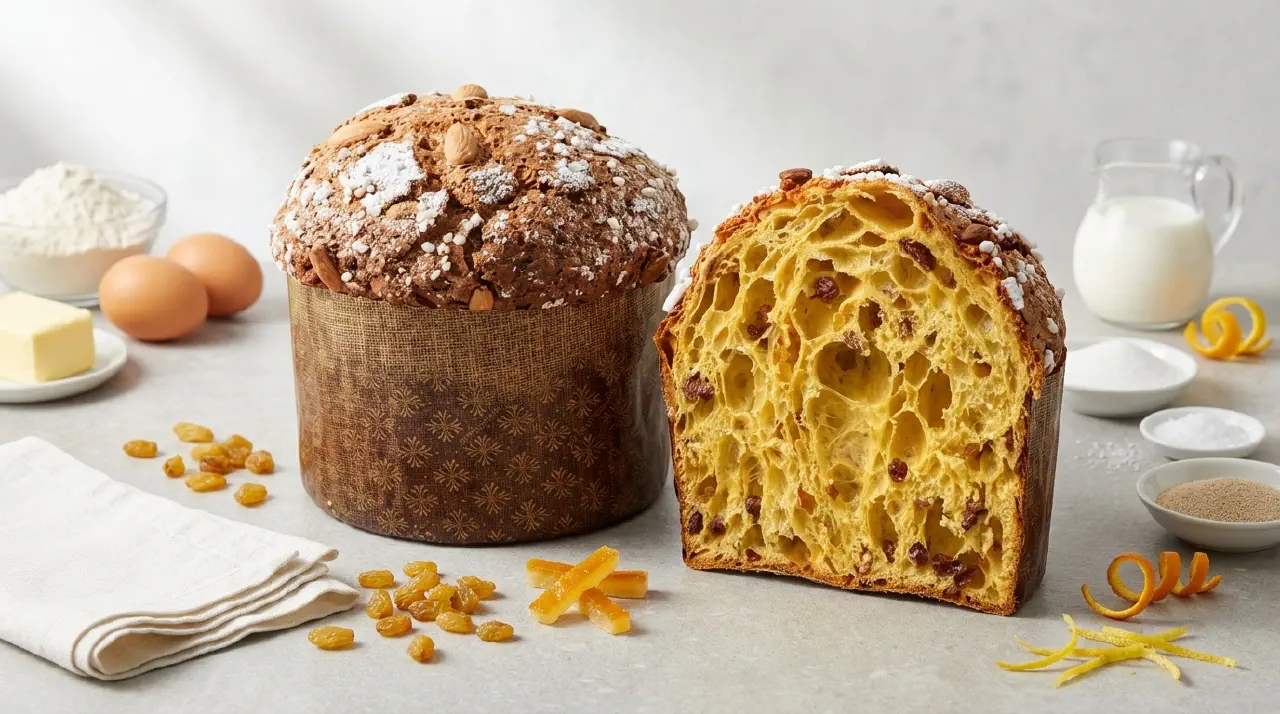
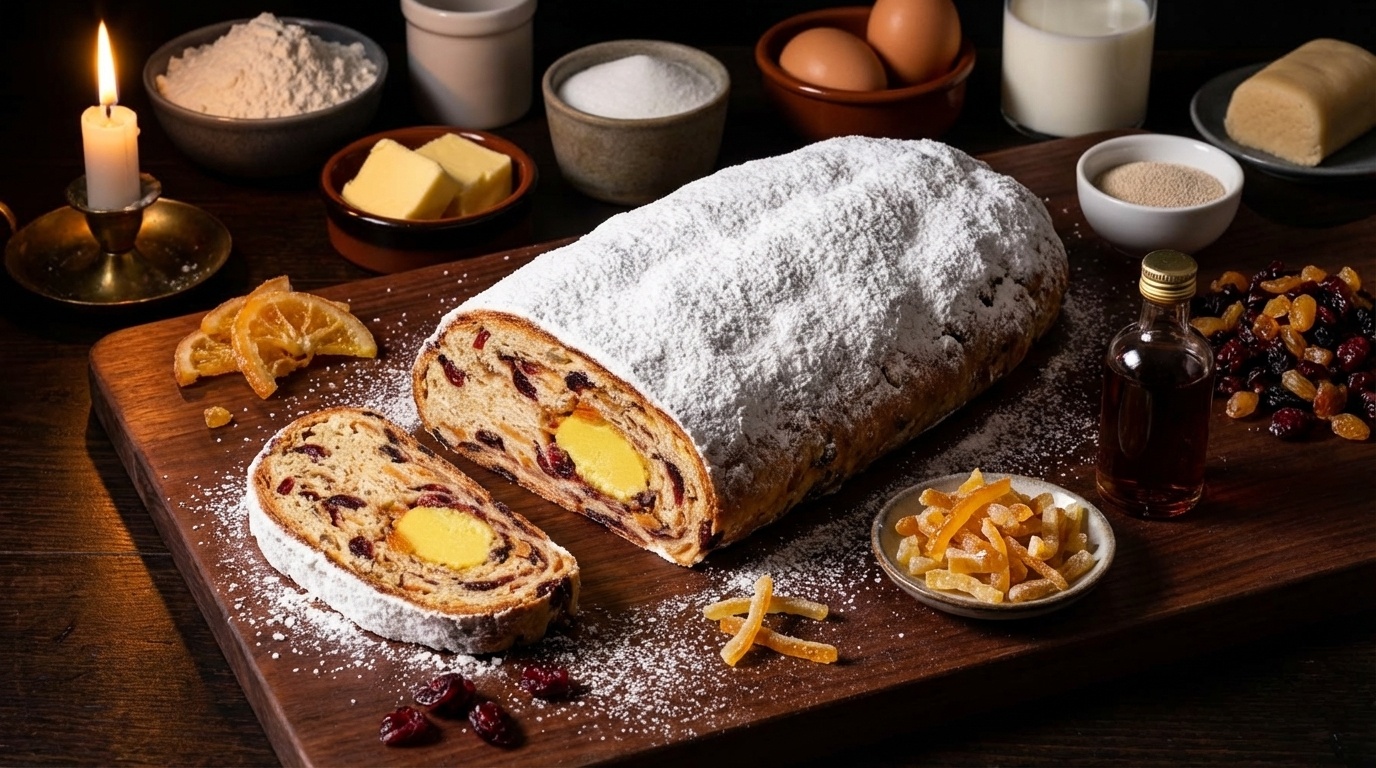
Panettone © kvalifood.com
A rich Italian Christmas bread from Milan, traditionally filled with butter, dried and candied fruits, nuts, and sugar. This version uses wild-yeast fermentation augmented with commercial yeast, producing a loaf with excellent shelf life and complex flavor.
Ingredients
Makes 2 large or many small loaves
Wild-Yeast Sponge (Day 1)
- 200 g barm
- 230 g milk, lukewarm (90–100°F (32–38°C))
- 130 g unbleached all-purpose flour
Fruit Blend
- 170 g golden raisins
- 170 g candied fruit blend
- 110 g brandy, rum, or whiskey
- 1 tbsp (.5 oz) orange or lemon extract
- 1 tbsp (.5 oz) vanilla extract or Fiori di Sicilia
Dough (Day 2)
- 380 g unbleached all-purpose flour
- 3 tbsp (1.5 oz) granulated sugar
- ¾ tsp (.19 oz) salt
- 1 tbsp (.33 oz) instant yeast
- 45 g large egg, at room temperature, slightly beaten
- 1 large egg yolk (.65 oz)
- 55–85 g water, lukewarm (90–100°F (32–38°C))
- 110 g unsalted butter, at room temperature
- 140 g blanched slivered or chopped almonds
Directions
Day 1: Prepare Sponge and Fruit
Make the wild-yeast sponge by stirring together the barm, milk, and flour just long enough to hydrate all the flour. Cover with plastic wrap and ferment at room temperature for approximately 4 hours until it begins to foam and bubble. Refrigerate overnight.
While waiting for the sponge, mix the raisins and candied fruit in a bowl. Add the liquor and extracts, cover, and let sit overnight to allow the fruit to fully absorb the liquid.
Day 2: Mix and Develop
Remove the sponge from the refrigerator 1 hour before making the dough to take off the chill.
In a large bowl, stir together the flour, sugar, salt, and yeast. Add the sponge, egg, and egg yolk. Stir together until they form a firm but supple ball, adding as much lukewarm water as needed. Let rest for 20 minutes to allow the gluten to develop. Add the softened butter and the soaked fruit mixture and continue mixing until evenly distributed.
Sprinkle flour on the counter and transfer the dough. Knead gently for 2–4 minutes until soft and supple but not overly sticky (it can be very tacky). Add flour in small amounts as needed to keep from sticking to your hands, using only the minimum necessary. Gradually work in the almonds until evenly distributed. The entire process after the resting period should take 6–10 minutes. The dough must be soft, supple, and tacky but not sticky. It should pass the windowpane test and register 77–81°F (25–27°C). Oil a bowl, transfer the dough, and coat with oil. Cover with plastic wrap.
Ferment at room temperature for approximately 2 hours. The dough will rise very slowly and should increase to only about 1½ times its original size.
Shaping
If not using professional panettone papers, prepare pans as follows: Use the bottom of a round pan to trace a circle on baking parchment, cut it out, and place it in the bottom of the pan.
Divide the dough into the desired sizes. For large 2-pound loaves, divide in half and round into 2 boules. Place them in the baking papers or prepared pans (6 inches in diameter). Press the dough down slightly to spread it into the papers or pans; it should reach halfway up. Mist with oil and loosely cover with plastic wrap. For mini panettones, use individual-size papers or grease muffin pans and fill each cup halfway. (Muffin pans don’t need parchment collars or bottoms.)
Proof at room temperature for approximately 2 hours until it nearly doubles and rises just to the height of the papers or pans.
Baking
Preheat the oven to 325°F (165°C) with the rack in the lower third.
Bake large loaves for up to 1½ hours; bake mini loaves for 25–35 minutes. The top may darken before the center reaches 185°F (85°C). If so, cover with aluminum foil or parchment. The finished breads should sound hollow when thumped on the bottom, be golden brown all around, and register at least 185°F (85°C) in the center. If using papers, leave the bread in the paper while cooling, but remove from pans. Transfer to a cooling rack and cool thoroughly for at least 2 hours before serving.
Storage
Wrap in aluminum foil after completely cooling. Store at room temperature for up to 2 weeks. Freeze for up to 3 months for special occasions.
Notes
- Fruit Options: The formula calls for candied fruit, but many prefer dried fruit such as cranberries, apricots, and apples. Substitute as preferred.
- Yeast Choice: SAF gold-labeled yeast is osmotolerant and performs well in acidic, sweet doughs, but regular instant yeast also works.
- Liquor and Extract: Experiment freely with brandy, rum, whiskey, or orange liqueur. Extracts like almond, orange, or lemon work too. Fiori di Sicilia (available through specialty retailers) is an ideal blend for this bread.
- Professional Papers: Panettone baking papers are available at kitchenware stores and come in various sizes. Mist with oil even though they don’t require it.
- Bread Brûlé Dessert: Bake in small rounds, hollow out, and fill with bread pudding, then caramelize the top under a broiler for an impressive presentation.
See Also
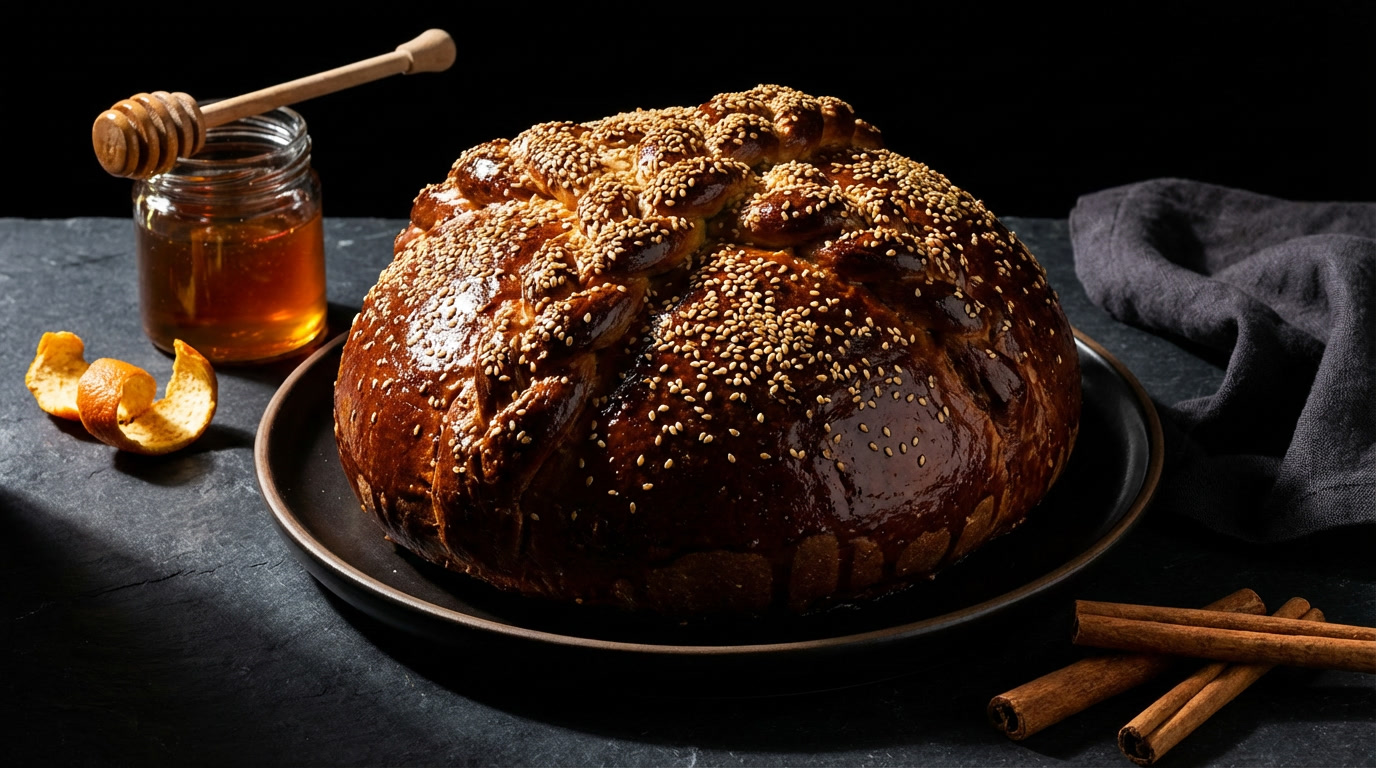
Artos - Greek Celebration Breads
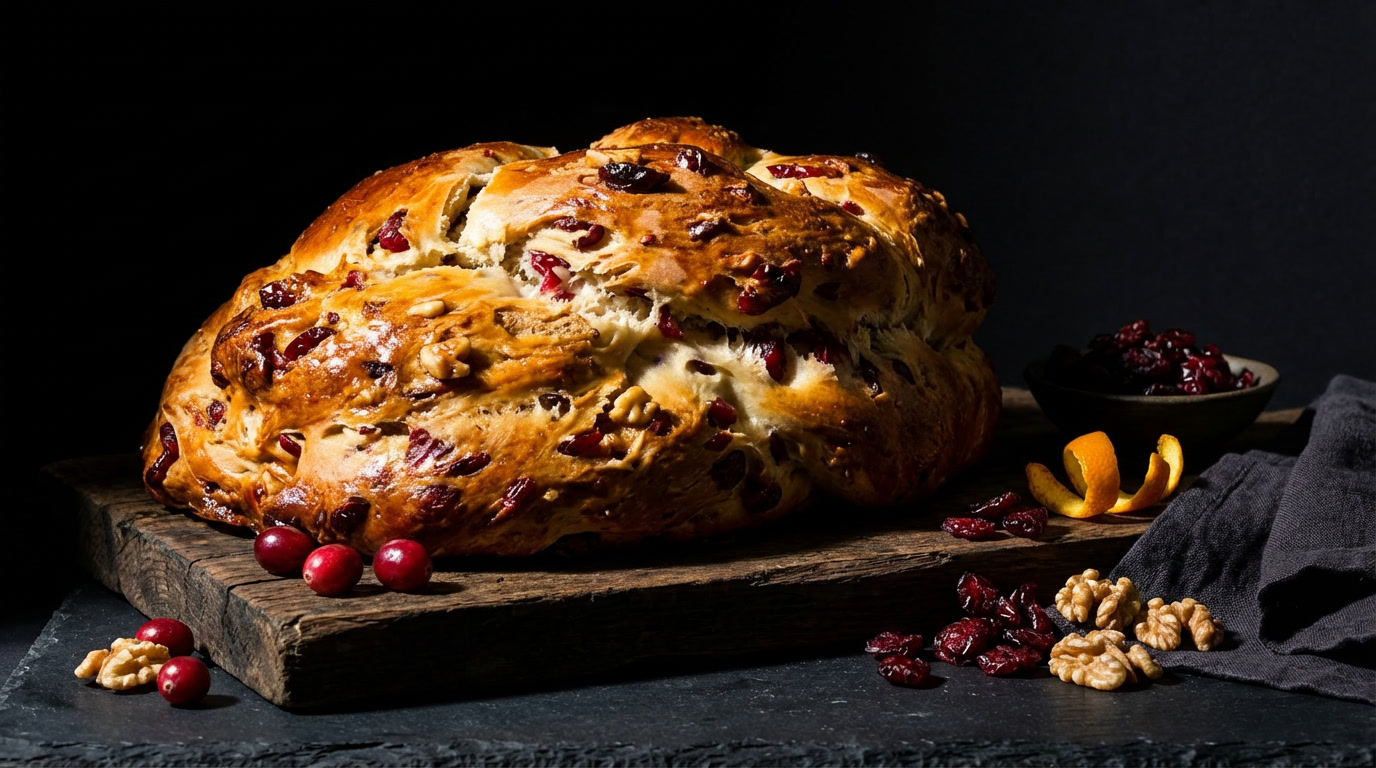
Cranberry-Walnut Celebration Bread