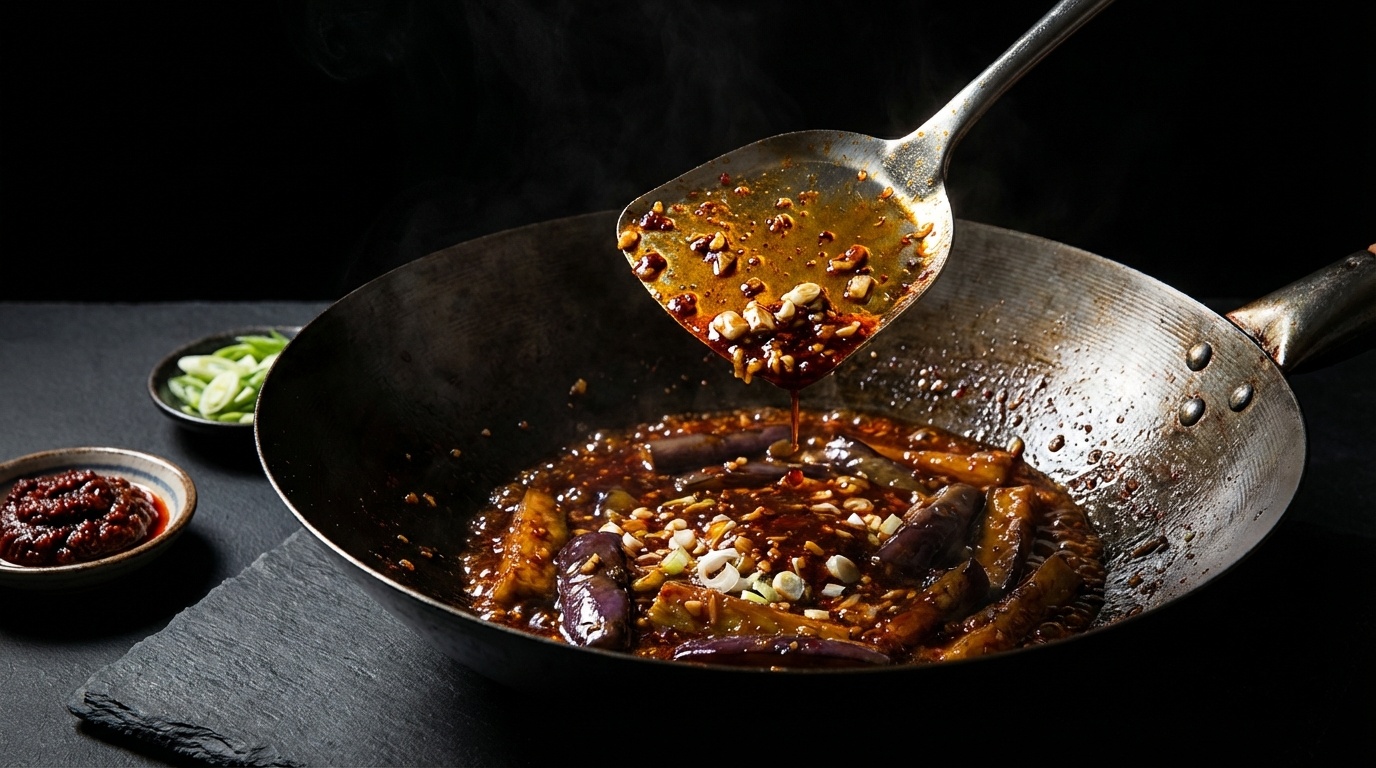
Sesame Paste Sauce for Cold Noodles (麻酱面)
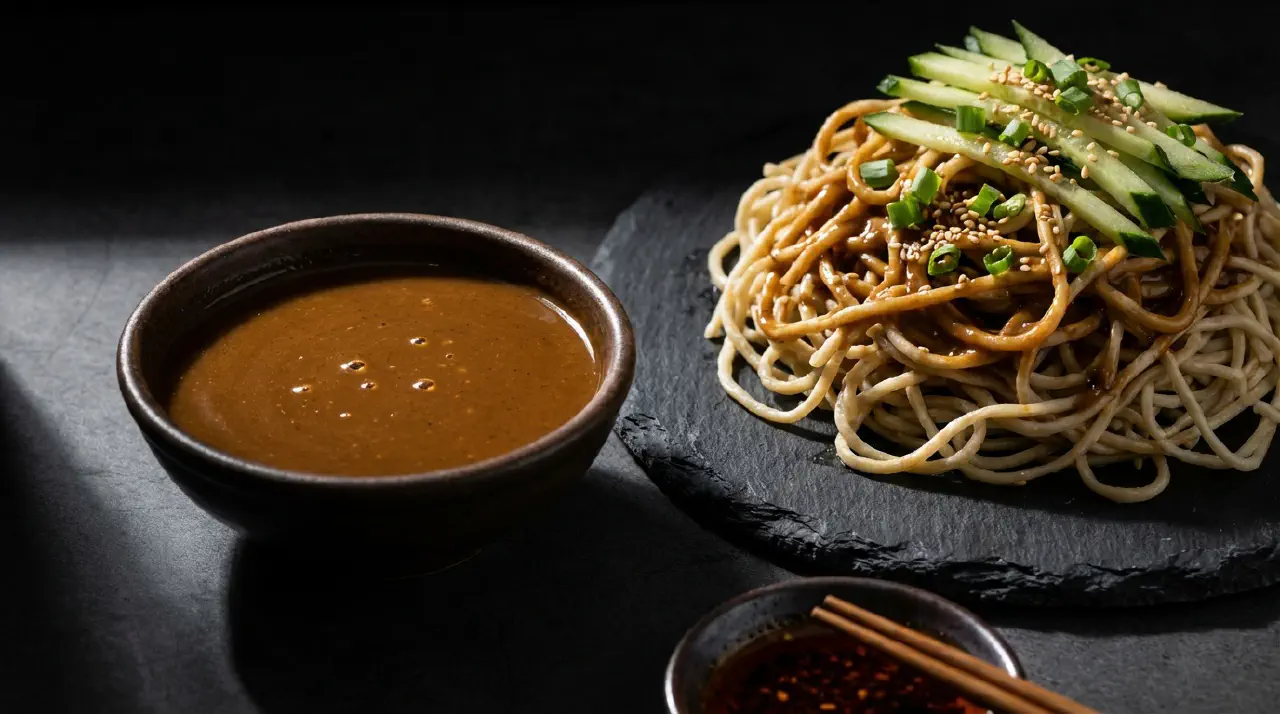
Sesame paste sauce for cold noodles © kvalifood.com
Chinese sesame paste - darker, nuttier and more intense than tahini - is the foundation of a whole family of sauces in northern Chinese cooking. This version is the noodle sauce: sesame paste thinned with warm water to a creamy consistency, seasoned with soy, black rice vinegar and garlic. Used on cold noodles (liáng miàn), warm noodles, and as a dressing for blanched vegetables. The sauce is mixed raw - no cooking - and can be varied with chilli oil or Sichuan pepper to taste and by region.
Ingredients
Yields ca. 120 ml sauce, for 2 servings
Sauce
- 3 tbsp Chinese sesame paste (芝麻酱, ca. 45 g)
- 2 tbsp warm water, plus more, as needed
- 1½ tbsp light soy sauce (生抽)
- 1 tbsp Chinkiang vinegar (镇江香醋)
- 1 tsp toasted sesame oil
- ½ tsp sugar
- 1 clove garlic (ca. 5 g), finely chopped
Optional additions
- 1-2 tsp chilli oil (辣椒油)
- ½ tsp Sichuan pepper oil (花椒油)
- 1 tsp toasted sesame seeds
- spring onion, chopped
- fresh coriander, chopped
Directions
Stir the jar of sesame paste thoroughly first - the oil separates from the thick paste at the bottom.
Put 3 tbsp sesame paste in a bowl. Add the warm water one tablespoon at a time. Stir vigorously after each addition. The paste will seem thicker and lumpy at first - keep stirring, it will become smooth. Add more water until the consistency resembles runny honey.
Stir in soy sauce, vinegar, sesame oil and sugar. Taste - the sauce should balance nutty, salty, sour and slightly sweet.
Mix in the chopped garlic. Add chilli oil or Sichuan pepper oil if you want heat.
Pour the sauce over noodles and toss thoroughly so everything is coated. Top with spring onion, coriander, cucumber strips and toasted sesame seeds.
Notes
- Consistency: Make the sauce thinner than you think it needs to be - it thickens when mixed with noodles.
- Chinese sesame paste vs. tahini: Chinese paste is made from roasted, whole sesame seeds and is darker and stronger. Tahini is made from raw, hulled seeds and gives a milder result. It can be used in a pinch, but the flavour is notably different.
- For cold vegetables: The same sauce works on blanched spinach, beans or aubergine - make it a bit thinner with more water.
- Storage: The sauce can be mixed 1-2 days ahead. It thickens in the fridge - thin with a little water before serving.
- Peanut butter: Shanghai and Taiwanese tradition adds peanut butter (ca. 1 tbsp per serving). It makes the sauce milder and rounder, but masks the sesame flavour.
- Hotpot dipping sauce: Beijing-style dipping sauce for hotpot is an entirely different variant with fermented tofu (腐乳) and fermented chive sauce (韭菜花酱) - it deserves its own recipe.
See Also
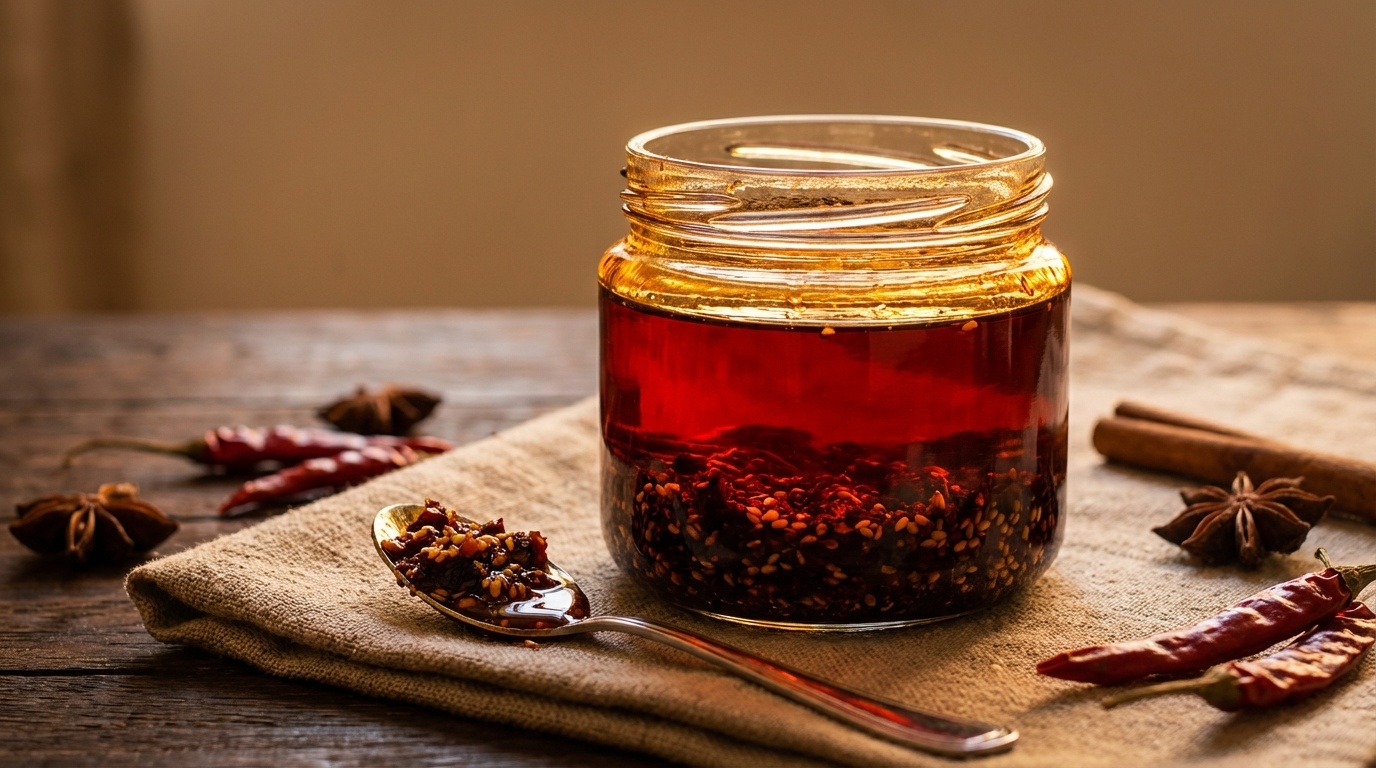
Sichuan Chili Oil (红油, hóng yóu)
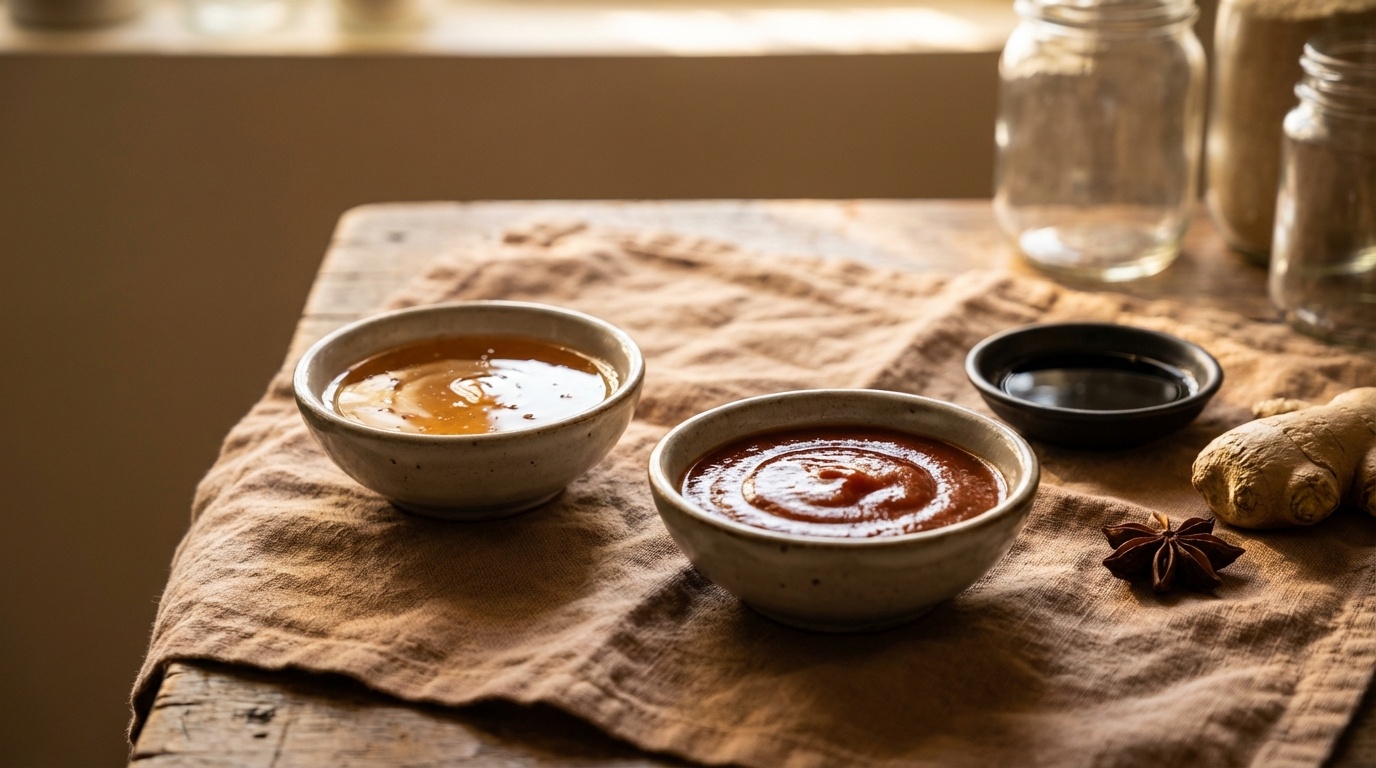
Chinese Sweet and Sour Sauce (糖醋汁)