Leafy Greens
Leafy Greens
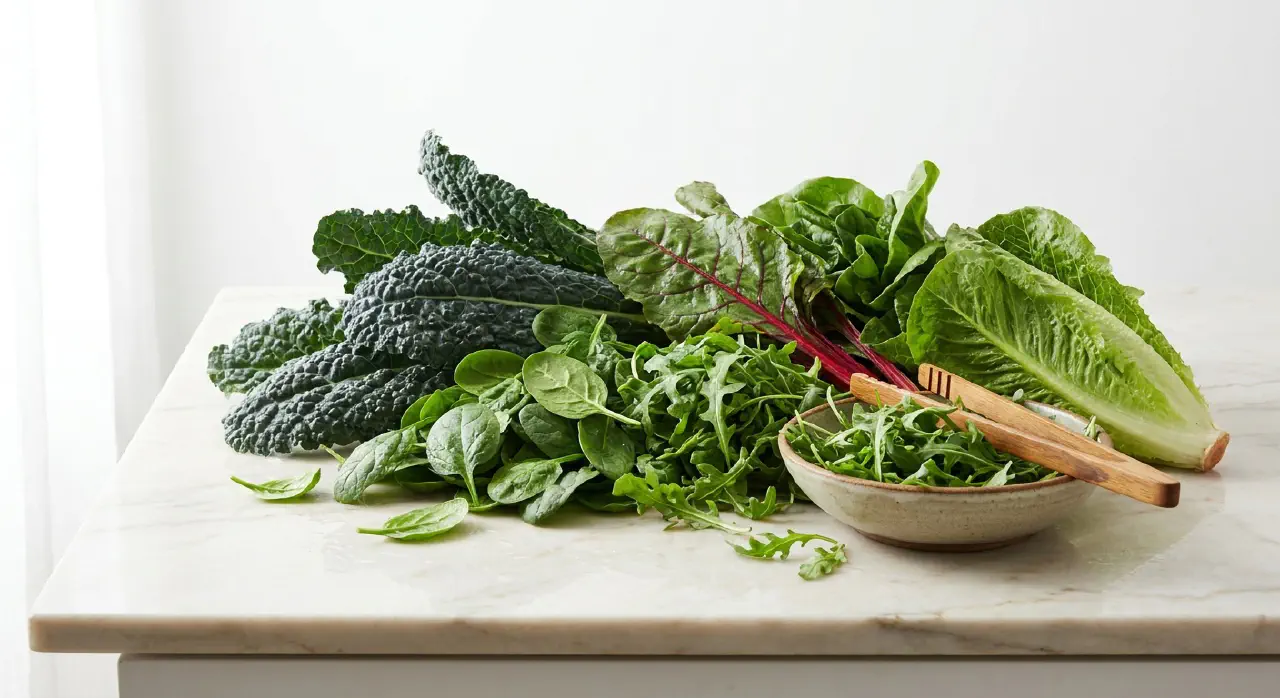
Leaves are the quintessential vegetable — a salad of raw greens is arguably the most primeval dish. Nearly all tender spring leaves in temperate regions are edible, and cultures worldwide have traditions of cooking leaves from weeds, root crops, and fruit plants alike. The science of leafy greens revolves around three concerns: the volatile “green” aroma, the management of bitterness, and the peculiarities of salad construction.
The “green” note
The fresh, grassy aroma of cut leaves comes from hexanol (“leaf alcohol”) and hexanal (“leaf aldehyde”) — 6-carbon molecules produced when cell damage frees enzymes that break apart long fatty-acid chains in chloroplast membranes. Cooking inactivates these enzymes and causes the products to react with other molecules, so the fresh green note fades and other aromas become prominent. This is why raw and cooked greens taste so different — the characteristic smell of a salad is literally a wound response.
Plant Flavor
Plant Flavor
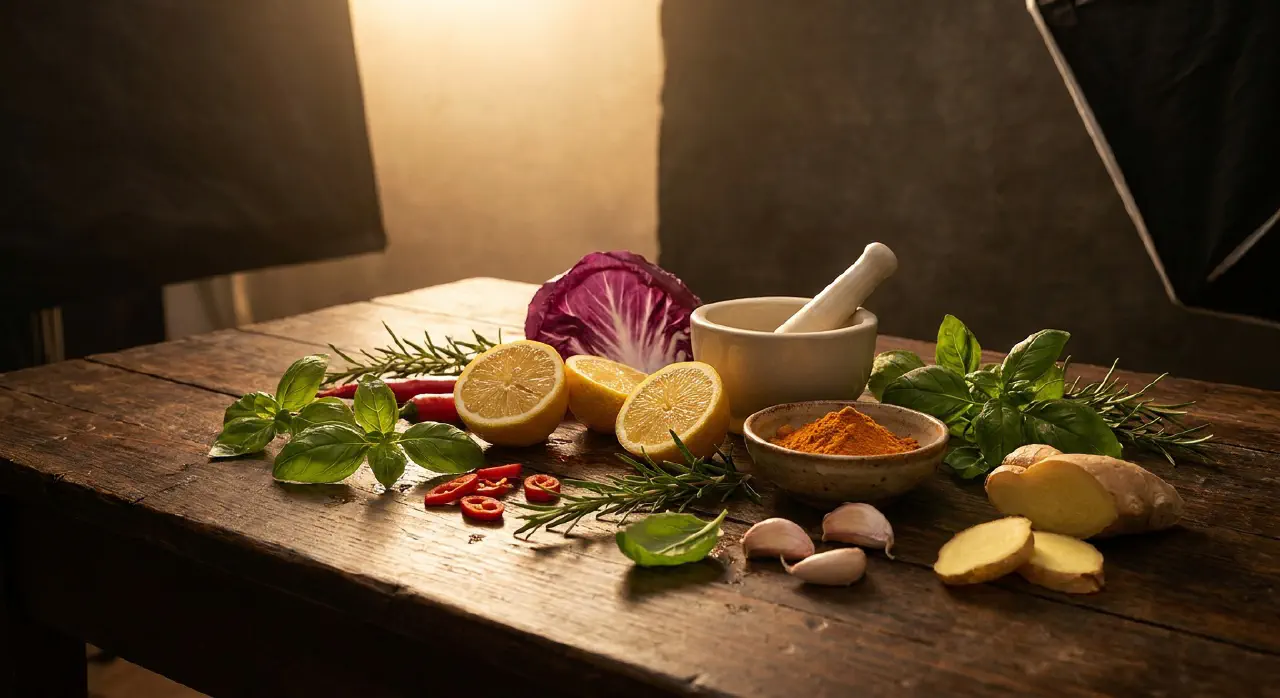
Plant flavor is a composite of four distinct sensory channels: taste (tongue), touch (mouth feel), irritation (pain receptors), and aroma (olfactory receptors). Taste tells you the basic composition — sweet, sour, bitter, savory. Touch reveals astringency. Pain receptors register pungency. And aroma, with its hundreds of volatile molecules, is where the fine discriminations happen — the difference between an apple and a pear, between basil and oregano.
Taste: the basic composition
Sweetness
Sugar is the main product of photosynthesis, so plants are inherently sweet. Ripe fruits average 10–15% sugar by weight. In unripe fruit, sugar is locked away as tasteless starch, then converted to sugar during ripening while acid content simultaneously drops — making the fruit seem even sweeter than the sugar alone would suggest.