Plant Flavor
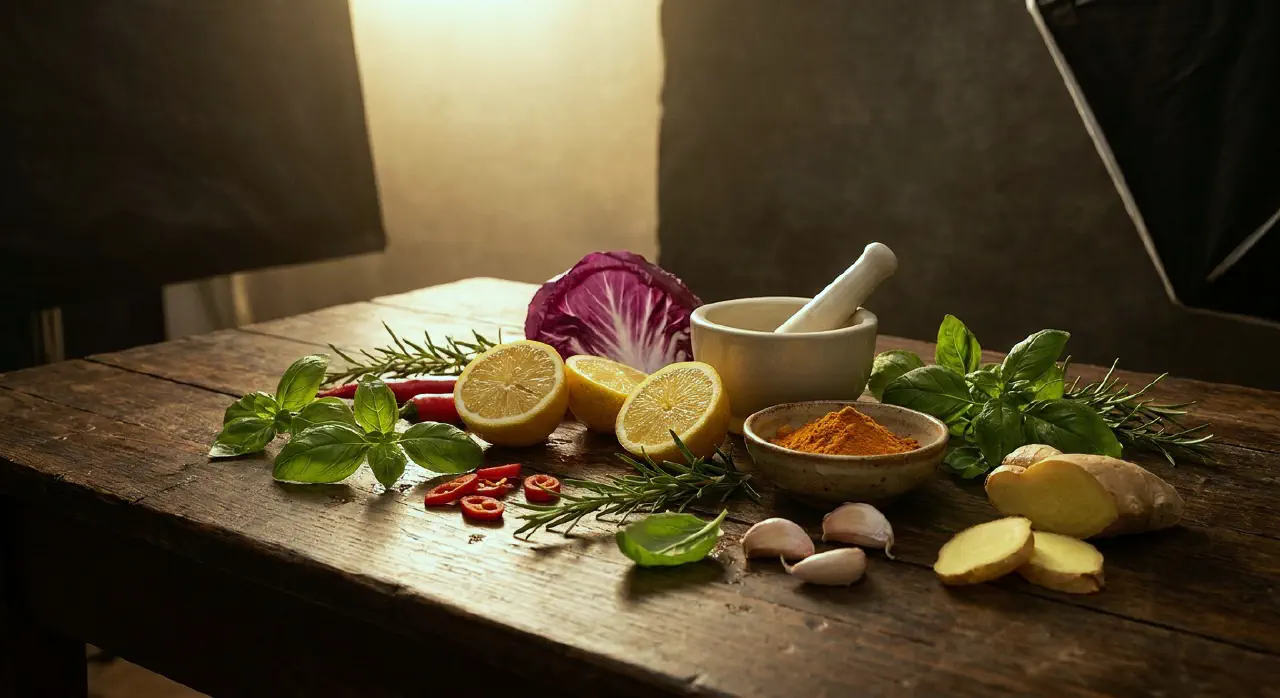
Plant flavor is a composite of four distinct sensory channels: taste (tongue), touch (mouth feel), irritation (pain receptors), and aroma (olfactory receptors). Taste tells you the basic composition - sweet, sour, bitter, savory. Touch reveals astringency. Pain receptors register pungency. And aroma, with its hundreds of volatile molecules, is where the fine discriminations happen - the difference between an apple and a pear, between basil and oregano.
Taste: the basic composition
Sweetness
Sugar is the main product of photosynthesis, so plants are inherently sweet. Ripe fruits average 10–15% sugar by weight. In unripe fruit, sugar is locked away as tasteless starch, then converted to sugar during ripening while acid content simultaneously drops - making the fruit seem even sweeter than the sugar alone would suggest.
Vegetables contain only moderate sugars, and they deteriorate fast: corn and peas lose half their sugar within hours at room temperature (converted back to starch or consumed for cellular energy). Just-picked vegetables are substantially more flavorful than store-bought. Plant parts designed to hibernate - onions, potatoes - maintain their sugar stores longer (see produce-handling).
Sourness
Several organic acids accumulate in plant vacuoles: citric acid, malic acid, tartaric acid, and oxalic acid. Plants use these as alternative energy stores, chemical defenses, or metabolic waste. The sweet-sour balance is especially important in fruit flavor - it’s why a perfectly ripe peach is more satisfying than one that’s simply sweet.
Bitterness
Bitterness comes from alkaloids and other chemical defenses evolved to discourage animals from eating the plant. Thousands of years of breeding have reduced bitterness in most cultivated vegetables (lettuce, cucumbers, eggplant, cabbage), but some cultures prize it - chicory, radicchio, bitter gourd, and various cabbage relatives. The cultural belief that bitterness signals medicinal value has some basis in fact: many bitter compounds are biologically active phytochemicals.
Savory (umami)
Though characteristic of protein-rich animal foods, some plants contain significant glutamic acid - the active component of MSG. Tomatoes are the standout example: glutamic acid combined with balanced sweetness and acidity may explain why tomatoes pair so successfully with both meat and other vegetables. Oranges and many seaweeds are also notable sources.
Touch: astringency
Astringency is not a taste or an aroma but a tactile sensation - the dry, puckery, rough feeling from strong tea, red wine, or unripe persimmon. It is caused by tannins: phenolic compounds with 3–5 carbon rings, sized to span and bond two or more separate protein molecules.
In the mouth, tannins bond to salivary proteins that normally provide lubrication. The bonding clumps the proteins, increasing friction between tongue and palate - the puckery sensation. The word “tannin” itself derives from the historic use of these compounds for tanning animal hides into leather (bonding skin proteins into a durable matrix).
Tannins are concentrated in immature fruit (preventing consumption before seeds are viable), nut skins, and plant parts strongly pigmented with anthocyanins - red-leaf lettuce is noticeably more astringent than green. Unlike most flavor sensations, astringency strengthens with each successive dose and lingers, making it potentially tiresome in excess but desirable in moderation (it gives “substance” to red wine and tea).
Irritation: pungency
The “heat” of chillis, black pepper, ginger, mustard, horseradish, onions, and garlic is most accurately described as irritation and pain - these are chemical defenses meant to repel attackers.
Two distinct mechanisms are at work:
Enzyme-activated pungency (mustard family, onion family): Very reactive sulfur compounds that do mild membrane damage to unprotected tissue. The key detail: these compounds are created only when tissue damage mixes normally separated enzymes and targets. Crushing garlic or cutting onions triggers the reaction. Cooking inactivates the enzymes, which is why cooked onions and garlic are mild while raw ones are fierce.
Preformed pungency (peppers, ginger): These plants stockpile their defensive compounds in advance. Capsaicin (peppers) and gingerols (ginger) bind to specific pain receptors on cell membranes. Cooking does not reduce this type of pungency - a cooked habanero is just as hot as a raw one.
Aroma: the five families
Plant aromas are composites of many volatile molecules - a dozen or two in vegetables and herbs, several hundred in fruits. Usually a handful of molecules create the dominant character while others supply background and complexity. Shared aroma molecules explain food affinities (why carrots share piney aromatics with Mediterranean herbs, why cherries contain clove’s dominant element).
Green/cucumber/mushroom aromas
Produced when tissue damage mixes the enzyme lipoxygenase with unsaturated fatty acids in cell membranes. The enzyme breaks long fatty acid chains into small, volatile fragments - the fresh-cut-grass smell. Delicate; reduced by cooking (which stops the enzymes and alters the chemicals).
Fruity aromas
Intact fruit enzymes combine acids with alcohols to produce esters - the volatile compounds behind apple, pear, banana, pineapple, and strawberry aromas. Delicate and altered by cooking.
Terpene aromas
Built by long enzyme sequences from small building blocks (the same pathway that produces carotenoid pigments). Range from flowery to citrusy, minty, herbaceous, and piney. Found in sage, thyme, rosemary, mint, nutmeg, and citrus. Preformed, strong, and persistent - these survive cooking well.
Phenolic aromas
Produced from amino acids along a pathway that also makes lignin (the wood-strengthening compound in plant-biology). Spicy, warming, pungent molecules: cinnamon, clove, anise, basil, vanilla. Preformed, strong, and persistent.
Sulfur aromas
Usually produced when tissue damage mixes enzymes with nonaromatic precursors - the same mechanism as pungency in the onion and cabbage families. Most are pungent chemical defenses, but some add subtle exotic or musky notes to tropical fruits. Strong and persistent; often altered and intensified by cooking.
Post-harvest flavor loss
Vegetables deteriorate rapidly after harvest. Corn and peas convert sugar to starch within hours. Bean pods, asparagus, and broccoli use sugar to build tough lignified fibers. Leafy vegetables lose water and turgor. The exceptions are plant organs designed for dormancy - onions, potatoes, and root vegetables maintain flavor longer. See produce-handling for storage strategies.
See also
- plant-biology - the cellular architecture that houses flavor compounds
- plant-color - the phenolic compounds that overlap with tannins and browning
- alliums - the sulfur chemistry of onions and garlic in detail
- vegetable-cooking - how cooking methods alter flavor compounds
- produce-handling - post-harvest deterioration and storage strategies
- fermentation-overview - microbial transformation of plant flavors
- fruit-ripening - ester synthesis during ripening, sugar-acid balance development
- citrus - dual aroma system (peel terpenes vs juice esters), surprising glutamate content
- berries - black currant sulfur compounds echoing sauvignon blanc, raspberry ketone
- tropical-fruits - protease enzymes, durian sulfur chemistry paralleling alliums
- stone-fruits - benzaldehyde from seed chemistry, lactone aromas in peaches
- flavor-chemistry - terpene vs phenolic distinction, essential oil chemistry, pungency mechanisms
- culinary-herbs - volatile defense compounds as kitchen flavorings
- legumes - lipoxygenase beany flavor; lactone/furan sweet cooked notes
- nuts - lipoxygenase parallels; roasted pyrazine and nutty aromas
- pungent-spices - alkyl-amide and isothiocyanate pungency systems in detail