Plant Preservation
Plant Preservation
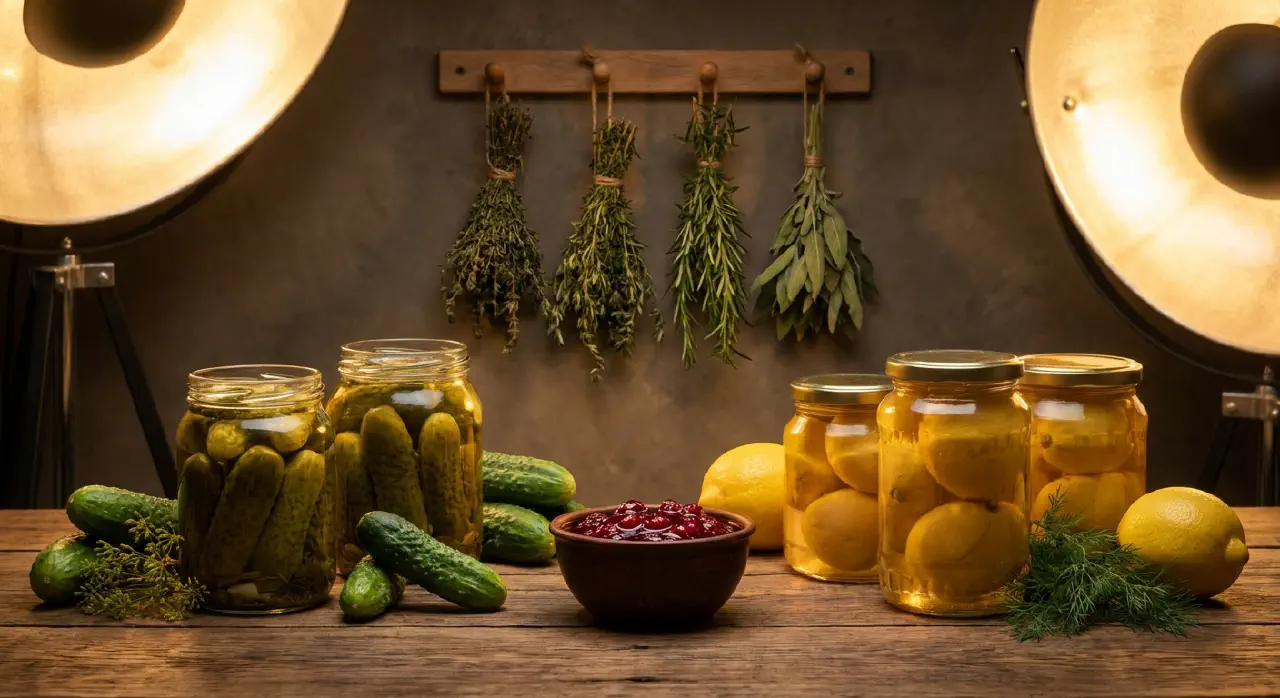
Preserving fruits and vegetables indefinitely requires two things: inactivating the plant’s own enzymes (which cause self-digestion) and making the environment inhospitable to microbes. Every preservation method achieves this through some combination of removing water, adding acid, adding sugar, adding salt, excluding oxygen, or applying heat. The methods range from prehistoric (sun-drying, fermentation) to industrial-age (canning, freeze-drying).
Drying
The oldest method. Reducing tissue water content from ~90% to 5–35% creates conditions in which little can grow.
Preserved Fish
Preserved Fish
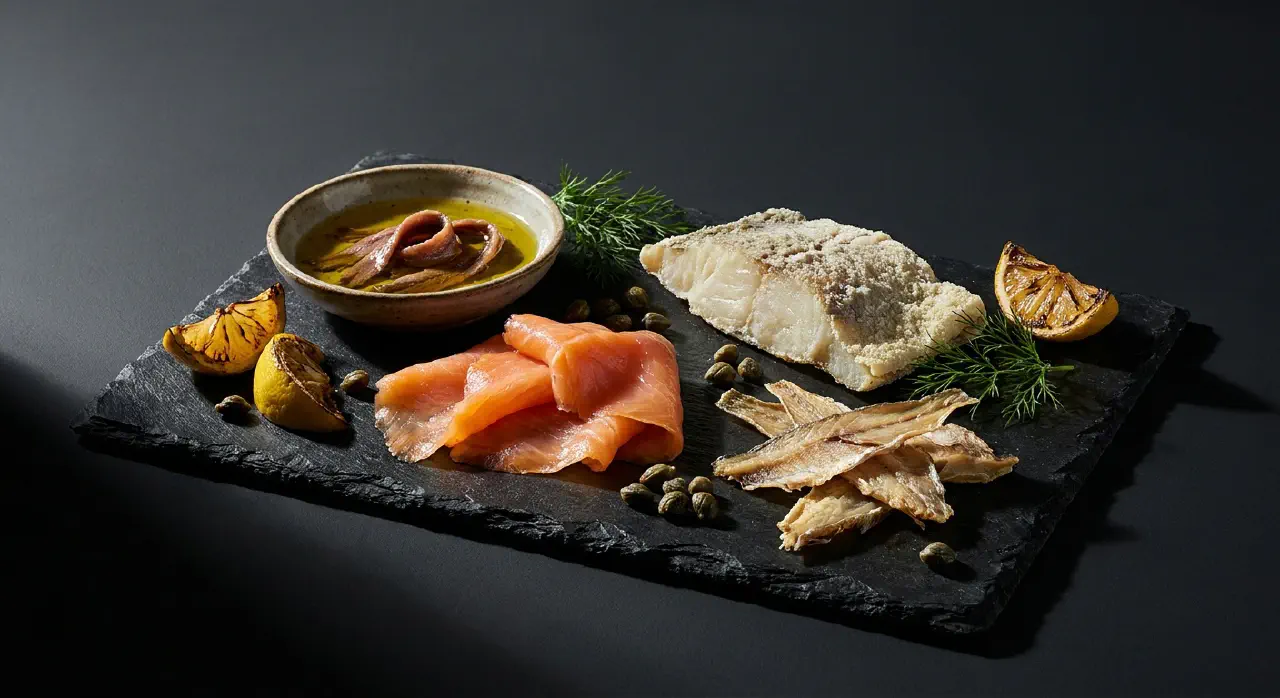
Fresh fish is about 80% water and spoils faster than any other animal protein. Before refrigeration, most harvested fish required immediate preservation — and the methods developed to solve this problem created some of the most complex flavors in any cuisine. Drying, salting, smoking, and fermenting didn’t just preserve fish; they transformed it into tradeable commodities that built European maritime prosperity and underpin Asian flavor systems to this day.