Plant Preservation
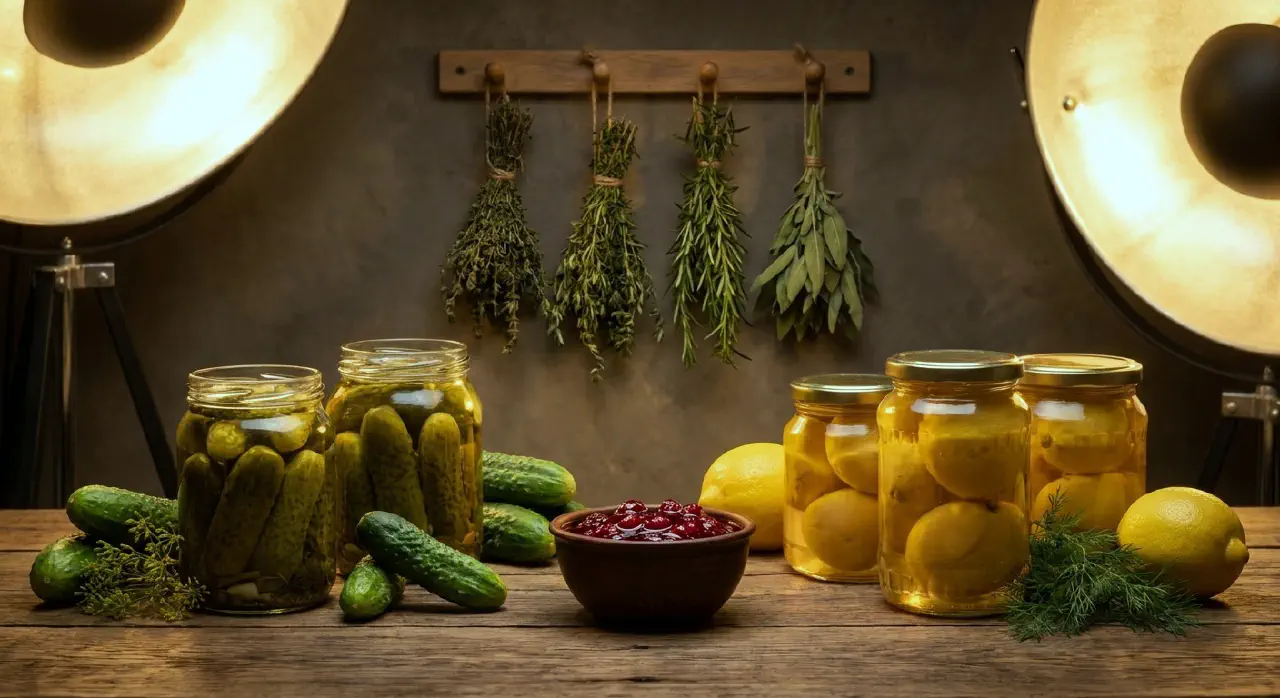
Preserving fruits and vegetables indefinitely requires two things: inactivating the plant’s own enzymes (which cause self-digestion) and making the environment inhospitable to microbes. Every preservation method achieves this through some combination of removing water, adding acid, adding sugar, adding salt, excluding oxygen, or applying heat. The methods range from prehistoric (sun-drying, fermentation) to industrial-age (canning, freeze-drying).
Drying
The oldest method. Reducing tissue water content from ~90% to 5–35% creates conditions in which little can grow.
Traditional sun-drying has given way to forced hot-air drying at 130–160°F/55–70°C - low enough to minimize flavor and color loss, and slow enough to avoid case-hardening (surface drying too fast, trapping interior moisture). Dried vegetables are usually blanched first to inactivate enzymes that would destroy vitamins and pigments. Dried fruits are often treated with sulfur compounds to prevent enzymatic browning, oxidation, and vitamin loss.
Relatively moist dried products have pleasant soft texture but are vulnerable to hardy yeasts and molds - they should be refrigerated.
Freeze-drying is controlled sublimation: frozen water converts directly to vapor under vacuum, without passing through a liquid phase. No heating or oxygen exposure means flavor and color stay relatively fresh. The ancient Andean preparation of chuño (potatoes trampled, frozen overnight, sublimated by day) predates the industrial version by centuries.
Fermentation and pickling
One of the oldest and simplest preservation techniques - requiring only a container, perhaps salt or seawater, and time. No special climate, cooking, or fuel needed.
How plant fermentation works
Plants naturally host benign lactic acid bacteria. In the right conditions (submerged in brine, oxygen excluded), these bacteria flourish: they consume plant sugars first, producing lactic acid, CO₂, and alcohol that suppress spoilage microbes. The process leaves most plant material intact - including vitamin C, which is protected from oxidation by the CO₂ atmosphere. The bacteria often add B vitamins and generate volatile compounds that enrich aroma.
Key variables: Salt concentration and temperature determine which microbes dominate. Low salt at moderate temperature (64–76°F/18–24°C) favors Leuconostoc mesenteroides, which produces mild but complex acids, alcohol, and aromas. Higher temperatures favor Lactobacillus plantarum, which produces almost exclusively lactic acid. Microbial succession is common: Leuconostoc early, then Lactobacillus as acidity rises.
Classic examples: Sauerkraut (fermented cabbage), olives, kimchi, Moroccan preserved lemons, Japanese pickled plums and radishes, Indian pickled fruits and vegetables.
Common problems
Inadequate or excessive salt, improper temperature, and air exposure all encourage undesirable microbes - causing discoloration, softening, and rotten smells. Surface film (yeasts, molds, air-requiring bacteria) forms if vegetables aren’t weighted below the brine; the film consumes lactic acid and lowers the protective acidity.
Unfermented pickles
A faster alternative: adding vinegar directly for a final acetic acid concentration of ~2.5%. Less complex in flavor than fermented pickles but faster and more controllable. Usually heat-treated at 185°F/85°C for 30 minutes.
Pickle texture
Crispness can be enhanced by cross-linking cell-wall pectins with calcium or magnesium ions - from unrefined sea salt, alum, or pickling lime (calcium hydroxide). Once pickled, the acid-stabilized cell walls resist further softening even during subsequent cooking.
Sugar preserves
Sugar, like salt, dissolves and binds water molecules, drawing moisture from living cells and crippling them. Fruit preserves boost sugar content to ~65% of the final mixture - a concentration that prevents microbial growth.
Pectin gelation: the science of jams and jellies
Fruit preserves are gels: water trapped in a sponge-like network of pectin chains. Pectin - the same molecule that holds plant cell walls together - dissolves from cut fruit when heated near boiling. But dissolved pectin chains cannot simply re-form a gel because they accumulate negative electrical charges (repelling each other) and are diluted in too much water.
The cook must do three things simultaneously:
- Add sugar - sugar molecules attract water, pulling it away from pectin chains and exposing them to each other.
- Boil the mixture - evaporates water, concentrating pectin chains closer together.
- Add acid - neutralizes the electrical charge on pectin chains, allowing them to bond.
Optimal conditions: pH 2.8–3.5 (about orange juice acidity), 0.5% acid by weight, 0.5–1.0% pectin, and 60–65% sugar. The target temperature is 217–221°F/103–105°C at sea level, indicating sufficient sugar concentration. Below ~180°F/80°C the gel sets; it firms rapidly at 86°F/30°C and continues firming for days.
Pectin sources: Quince, apple, and citrus peel are pectin-rich and traditionally supplement pectin-poor berries. Commercial pectin (liquid or powdered) is the modern alternative. Low-sugar preserves use modified low-methoxyl pectin that gels with added calcium ions instead of sugar.
Common problems
Failure to set usually means inadequate acid, poor-quality pectin, or prolonged cooking that damaged the pectin chains. Weeping (fluid seepage) means too much acid created an overfirm gel that squeezes out water.
Canning
Invented by Nicolas Appert around 1810. Preserves without desiccation, salt, sourness, or excessive sweetness - but the food is unmistakably cooked.
How it works
Food sealed in airtight containers and heated sufficiently to destroy enzymes and harmful microbes. The seal prevents recontamination. Room-temperature storage without spoilage follows.
The botulism problem
Clostridium botulinum thrives in low-acid, airless conditions - exactly what a sealed can provides - and produces a deadly nerve toxin. The toxin itself is easily destroyed by boiling, but the bacterium’s dormant spores are extraordinarily hardy and survive prolonged boiling. The spores germinate when the can cools, and toxin accumulates.
Prevention: Low-acid foods (most vegetables, pH 5–6) require pressure-cooking at temperatures above boiling to kill spores. High-acid foods (tomatoes, most fruits) inhibit the bacterium and need only a boiling water bath at 185–195°F/85–90°C for ~30 minutes. As a safety margin, some authorities recommend boiling any home-canned produce after opening.
Rule: Discard all suspect cans, especially bulging ones (bacterial gas pressure).
See also
- fermentation-overview - the broader science of microbial food transformation
- plant-biology - pectin in cell walls, the molecule exploited in both cooking and preserving
- plant-color - how sulfur treatments and acid management preserve color during drying and pickling
- produce-handling - short-term storage strategies before preservation becomes necessary
- preserved-fish - parallel preservation techniques applied to seafood
- salt - the role of salt in fermentation, pickling, and curing
- dried-fruits - dates, figs, raisins, prunes, pomegranate - drying and browning science
- pome-fruits - apple pectin for jellies, cider, quince marmalade origin
- citrus - citrus peel pectin, marmalade, preserved lemons
- berries - cranberry exceptional pectin, raisins, grape preparations