Grains (Corn, Oats, Rye, Barley, and Ancient Grains)
Grains (Corn, Oats, Rye, Barley, and Ancient Grains)
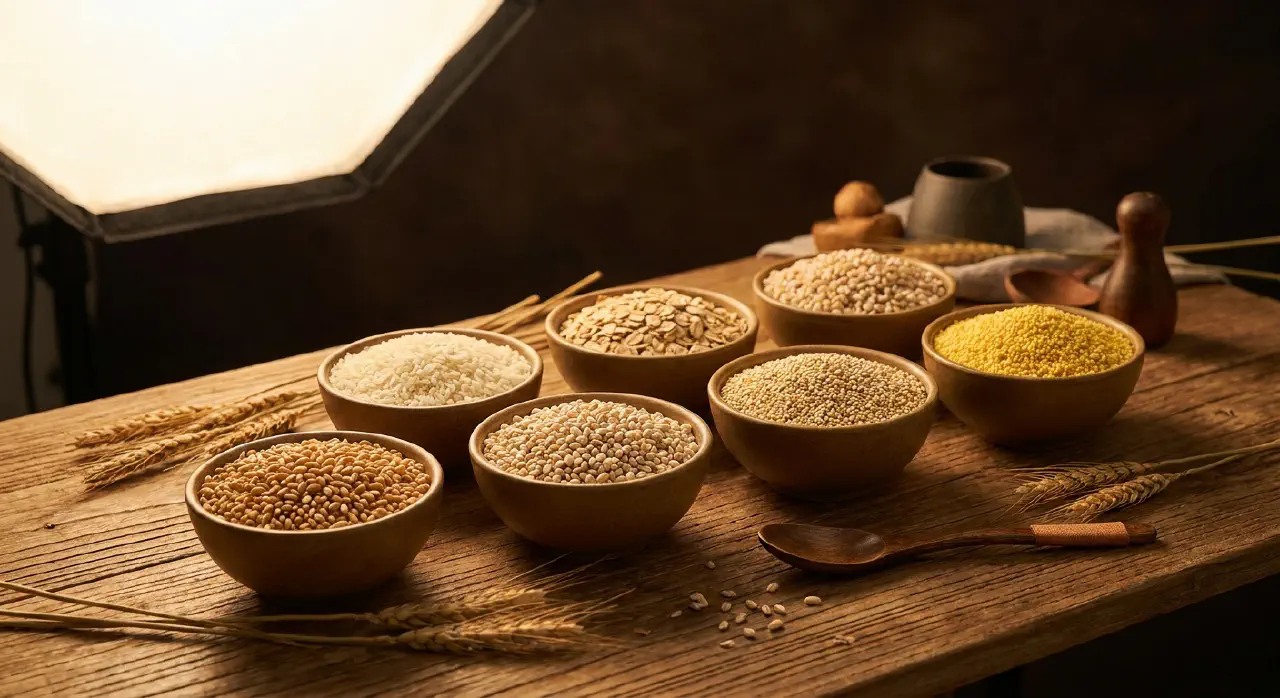
Beyond wheat and rice, a dozen cereal species and several pseudo-cereals have shaped human diets across climates and cultures. Each has a distinct carbohydrate or protein chemistry that explains both its culinary limitations and its special strengths. Several (corn, rice, buckwheat, quinoa, amaranth, teff, millet) contain no gliadin — the protein implicated in celiac disease — making them safe for gluten-intolerant cooks.
Rice
Rice
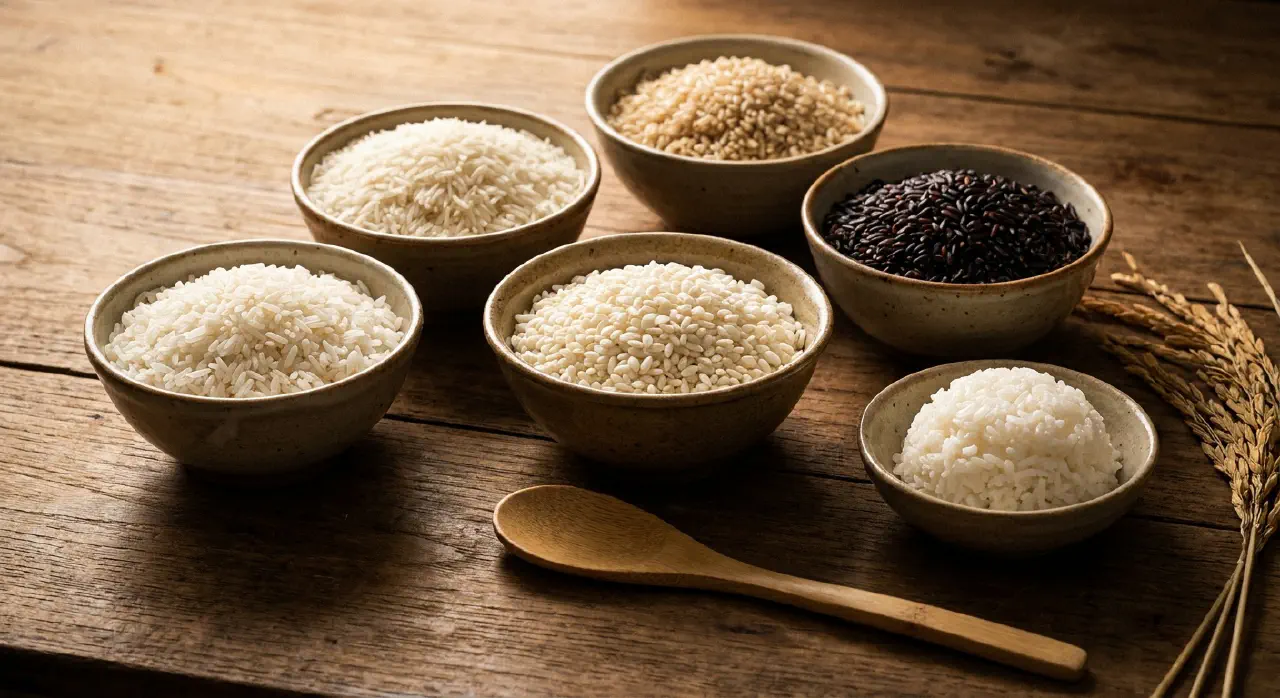
Principal food for roughly half the world’s population — in Bangladesh and Cambodia, a single crop providing nearly 75% of daily energy — rice illustrates the amylose/amylopectin principle more clearly than any other grain. The starch ratio determines whether cooked grains separate or cling, firm up dramatically when cold or stay tender, and whether a dish becomes risotto or sticky rice. Understanding that single variable predicts most of rice’s kitchen behavior.