Condiments
Condiments
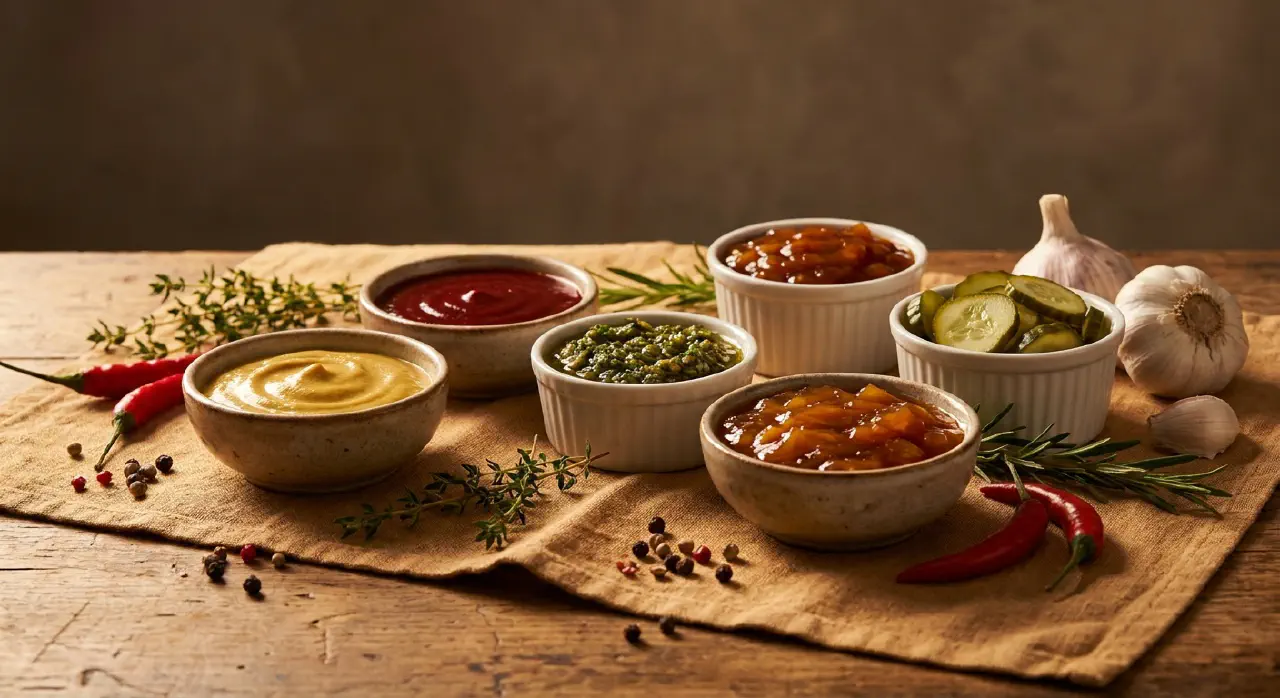
Condiments are the sauces that come to the table rather than the stove — flavor concentrates meant to contrast, brighten, or deepen the food they accompany. They divide broadly into fresh preparations (salsas, pesto, vinaigrettes) and fermented or preserved preparations (mustard, ketchup, soy sauce, fish sauce, vinegar, chutneys). The fermented condiments represent some of the oldest food technologies: salt and time converting perishable ingredients into shelf-stable, intensely flavored liquids.
Soy Products
Soy Products
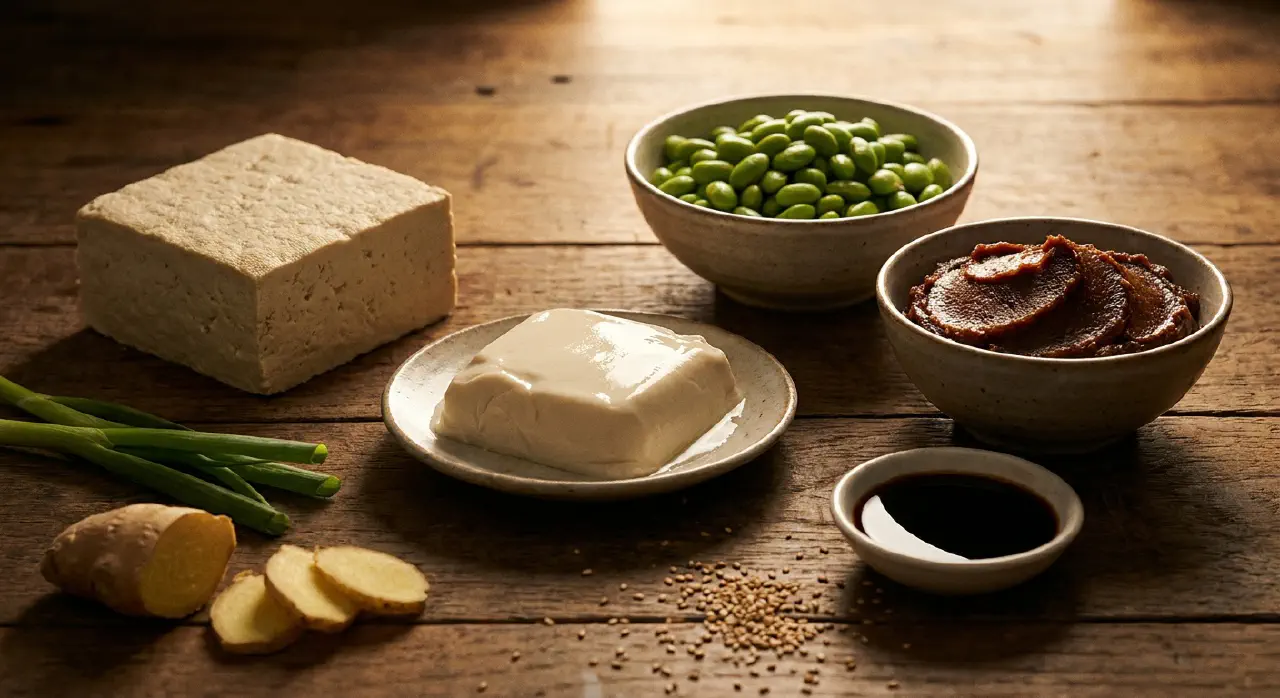
Soybeans present a palatability paradox: double the protein of other legumes, near-ideal amino acid balance, rich oil — yet raw or plainly boiled, they’re strongly “beany,” full of gas-producing oligosaccharides, antinutritional compounds, and a texture that’s firm rather than creamy (they contain negligible starch). Chinese cooks solved this with two fundamentally different approaches: extraction (separating desirable proteins and oil from everything else to make soymilk and tofu) and fermentation (using microbes to consume the undesirable compounds while generating savory complexity). The results — bean curd, soymilk, yuba, miso, soy sauce, tempeh, natto — are among the most versatile fermented foods in any tradition.