Cooking Science Wiki
 read more
Caramelization
Caramelization
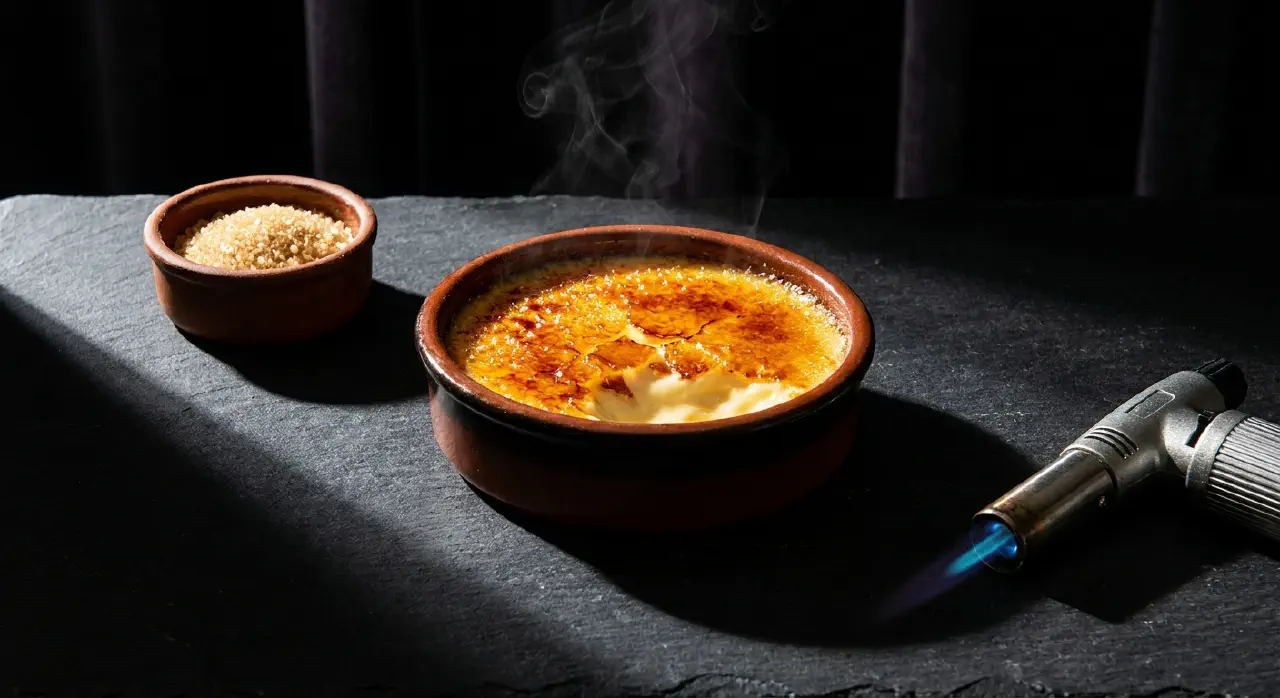
Caramelization is the simplest browning reaction — pure sugar, heated until it breaks down into hundreds of new compounds that produce the characteristic color, aroma, and bittersweet complexity of caramel. Unlike the maillard-reaction, no proteins are involved.
The process
When sucrose is heated above ~330°F/165°C, it melts into a thick syrup and begins to decompose. The sugar molecules fragment and recombine into a cascade of products:
- Organic acids (acetic acid and others) — contribute sourness
- Sweet and bitter derivatives — the bittersweet complexity of caramel
- Volatile aromatic molecules — butterscotch (diacetyl), nutty (furans), sherry-like (acetaldehyde), fruity (esters), and the distinctive caramel note (maltol)
- Brown polymers (melanoidins) — the color
The process is progressive: light yellow (mild, mostly sweet) through amber (complex, bittersweet) to dark brown (increasingly bitter, eventually burnt). The cook’s job is to stop at the right point.