Caramelization
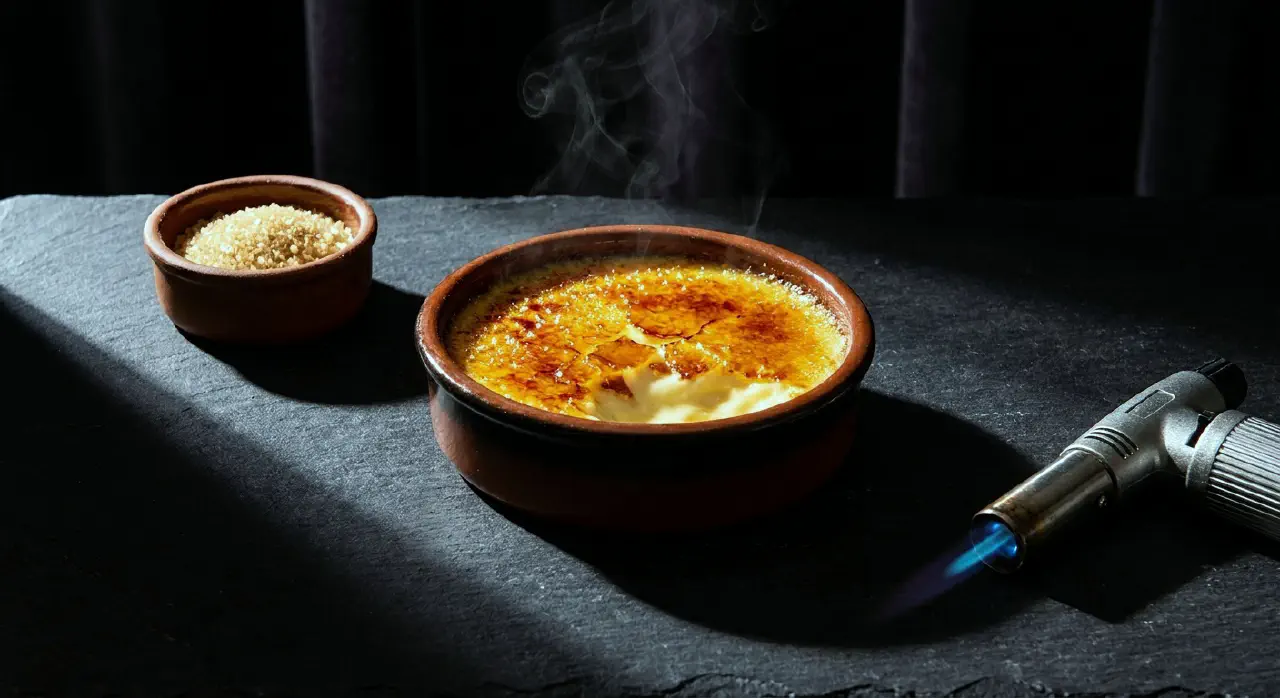
Caramelization is the simplest browning reaction - pure sugar, heated until it breaks down into hundreds of new compounds that produce the characteristic color, aroma, and bittersweet complexity of caramel. Unlike the maillard-reaction, no proteins are involved.
The process
When sucrose is heated above ~330°F/165°C, it melts into a thick syrup and begins to decompose. The sugar molecules fragment and recombine into a cascade of products:
- Organic acids (acetic acid and others) - contribute sourness
- Sweet and bitter derivatives - the bittersweet complexity of caramel
- Volatile aromatic molecules - butterscotch (diacetyl), nutty (furans), sherry-like (acetaldehyde), fruity (esters), and the distinctive caramel note (maltol)
- Brown polymers (melanoidins) - the color
The process is progressive: light yellow (mild, mostly sweet) through amber (complex, bittersweet) to dark brown (increasingly bitter, eventually burnt). The cook’s job is to stop at the right point.
Caramelization vs. Maillard
Caramelization requires only sugar. The maillard-reaction requires both sugar and amino acids, starts at a lower temperature (~280°F/140°C vs. ~330°F/165°C), and produces a much wider range of flavors because nitrogen and sulfur atoms from proteins create molecular families (pyrazines, thiazoles, etc.) that pure sugar chemistry cannot.
In practice, both reactions often happen simultaneously - browning onions involves both caramelization of their sugars and Maillard reactions between sugars and amino acids.
Temperature thresholds by sugar type
Different sugars begin caramelizing at dramatically different temperatures, because their molecular stability varies:
Fructose: ~220°F/105°C - by far the lowest threshold, making fructose-rich foods (honey, fruit) brown easily at relatively low temperatures.
Glucose: ~300°F/150°C - the midpoint. Corn syrup (mostly glucose chains) caramelizes here.
Sucrose: ~340°F/170°C - the highest common threshold. Sucrose actually breaks into glucose and fructose before the fragments begin the caramelization cascade.
In practice, sucrose goes through recognizable stages as it heats past its melting point (186°C): light caramel (160–180°C, pale yellow, mostly sweet), medium golden caramel (180–200°C, amber, complex bittersweet - the classic sauce and dessert stage), dark caramel (200–220°C, deep brown, increasingly bitter), and burnt (>220°C, acrid, irreversible). The transition from light to burnt spans only about 60°C - and because the Arrhenius rule applies, the final stages accelerate rapidly. Having cold water or cream ready to arrest the reaction is essential.
Practical applications
Caramel sauce: Sucrose heated to amber stage, then arrested with cream or butter. The fat and water stop the browning and create an emulsion.
Crème brûlée: A thin sugar layer torched to caramel - pure caramelization on top of a custard set by egg protein coagulation.
Caramelized onions: Primarily Maillard, but the onions’ sugars (up to 8% by weight) also caramelize as moisture evaporates and surface temperatures rise.
See also
- maillard-reaction - the more complex browning reaction involving proteins
- emulsions - caramel sauces are emulsions of sugar syrup and fat
- cooking-temperatures - the Arrhenius rule that governs how fast caramelization accelerates
- sugar-science - sugar types, sweetness, and caramelization temperatures by sugar
- candy-making - caramelization in caramels, toffees, brittles, and sugar work
- honey - reducing sugars that caramelize at lower temperatures than sucrose
- chocolate - caramelization alongside Maillard browning during roasting and conching
- heat-transfer - why dry heat enables caramelization (surface temps above 330°F)
- grilling-broiling - high-temperature surface caramelization
- roasting-baking - oven caramelization of vegetables, meats, pastries
- crust-engineering - browning and crust formation strategies
- starch-browning - the browning process specific to starch coatings
- temperature-switches - phase transitions driven by temperature