Maillard Reaction
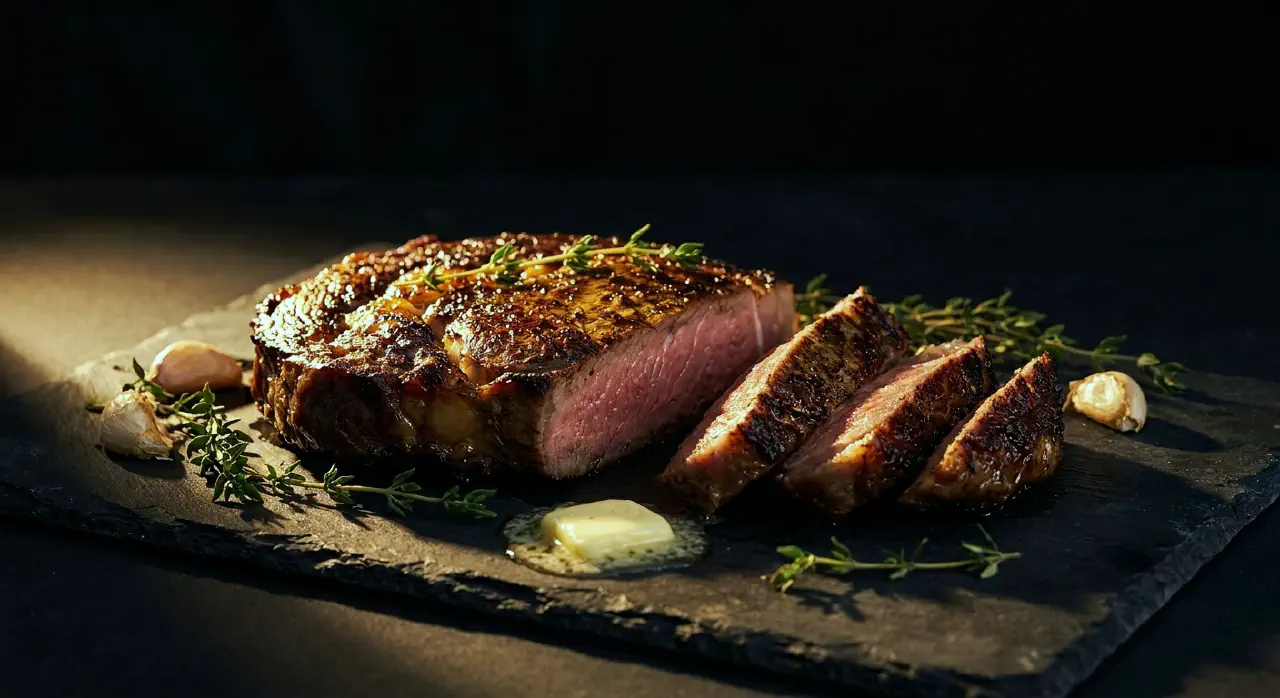
The Maillard reaction is the most important flavor-generating chemical process in cooking - the reaction between amino acids and sugars that produces the brown color and complex flavors of bread crusts, seared meat, roasted coffee, and chocolate.
The chemistry
Named after French physician Louis Camille Maillard (discovered ~1910), the reaction begins when a carbohydrate molecule meets an amino acid. They form an unstable intermediate that cascades into hundreds of different by-products - brown pigments (melanoidins), volatile aroma compounds, and new flavor molecules.
The reaction becomes noticeable around 280°F/140°C, roughly 100°F/50°C below the threshold for caramelization. This is why seared food browns before sugar alone would - the presence of proteins lowers the browning temperature.
Key reactants:
- Sugars: Glucose and fructose are more reactive than sucrose. Free sugars react faster than bound sugars in starch.
- Amino acids: Can be free or part of a protein chain. Different amino acids produce different flavor profiles. Sulfur-containing amino acids (cysteine, methionine) generate meaty and eggy notes.
Why it’s more complex than caramelization
Caramelization involves only sugars and produces sweet, nutty, butterscotch flavors. The Maillard reaction introduces nitrogen and sulfur atoms from amino acids, creating entirely new families of aromatic molecules. This is why seared steak tastes fundamentally different from caramelized sugar - the amino acids add dimensions that pure sugar chemistry cannot.
Flavor compounds produced
The reaction generates distinctive molecular rings, each contributing different aromas:
- Pyrazines - earthy, potato, chocolate, roasted notes
- Pyrroles - various aromatic qualities
- Pyridines - leafy, green vegetable notes
- Thiophenes - sulfur aromas
- Thiazoles - meaty, savory notes
- Oxazoles - floral notes
- Furans - nutty, caramel-like (shared with caramelization)
The specific mix depends on which amino acids and sugars are present, which is why bread crust, roasted coffee, and grilled meat all taste different despite all being Maillard products.
Practical implications
Surface moisture is the enemy of browning. Water boils at 212°F/100°C - well below the Maillard threshold of 280°F/140°C. A wet surface cannot get hot enough to brown. This is why patting meat dry before searing makes such a difference, and why crowded pans (which trap steam) produce grey meat instead of brown.
Alkaline conditions accelerate the reaction. This is why pretzel dough is dipped in lye solution before baking - the high pH speeds browning dramatically.
Sugar and protein availability matter. Foods with more free sugars and amino acids brown faster. A sprinkle of sugar on a steak or a brushing of milk on bread crust aren’t just tradition - they’re supplying extra Maillard reactants.
Health considerations
Some Maillard products can damage DNA. Acrylamide, identified as a concern in 2002 by Swedish researchers, forms in fried starchy foods from reactions between reducing sugars and the amino acid asparagine at temperatures above 120°C - a specific pathway within the broader Maillard cascade. Potatoes are particularly high in free asparagine, making fried and baked potato products significant acrylamide sources. The health significance of typical dietary acrylamide exposure remains unclear despite decades of human epidemiological study. Some browning products actually appear to protect against DNA damage. The practical recommendation: aim for golden rather than deeply dark browning on starchy foods, and avoid cold-storing potatoes before frying (cold temperatures convert starch to reducing sugars, increasing acrylamide precursors).
The crustacean anomaly
Crustaceans (shrimp, lobster, crab) develop nutty, popcorn-like pyrazines and thiazoles at boiling temperature - reactions that normally require the much higher temperatures described above. The likely explanation: crustacean muscle contains unusually high concentrations of free amino acids and sugars (accumulated for osmotic balance), enabling Maillard chemistry at lower activation energies. This is why boiled shrimp tastes “roasted” in a way that boiled chicken never could. Similarly, scallops sear to rich brown crusts unusually fast thanks to high amino acid and glycogen content.
See also
- caramelization - pure sugar browning, the simpler cousin
- protein-denaturation - what heat does to proteins before browning begins
- deep-frying - where Maillard browning meets oil temperature management
- bread-baking - crust formation is largely a Maillard process
- butter - brown butter (beurre noisette) is Maillard browning of milk solids
- shellfish-crustaceans - the low-temperature Maillard anomaly in shrimp, lobster, crab
- coffee - roasting chemistry (browning reactions drive 800+ aroma compounds)
- spice-handling - dry-toasting and spice-paste frying generate Maillard pyrazines
- wood-smoke - wood protein browning, barrel-aging chemistry
- aromatic-seeds - vanilla curing involves Maillard browning alongside enzyme action
- chocolate - gentle roasting develops 600+ aroma compounds via Maillard browning
- candy-making - caramels, toffees, and brittles rely on sugar-milk protein browning
- syrups - maple syrup flavor from Maillard reactions during boiling
- heat-transfer - why dry heat enables browning (surface dehydration above 280°F)
- grilling-broiling - intense infrared browning
- roasting-baking - oven convection browning
- pan-frying - conduction browning at the pan-food interface
- wet-heat-methods - slow browning under alkaline/concentrated moist conditions
- crust-engineering - browning and crust formation strategies
- starch-browning - the browning process specific to starch coatings
- acrylamide - the asparagine-specific browning byproduct in fried and baked starchy foods
- precision-cooking - temperature precision techniques and tools