Cookware Materials
Cookware Materials
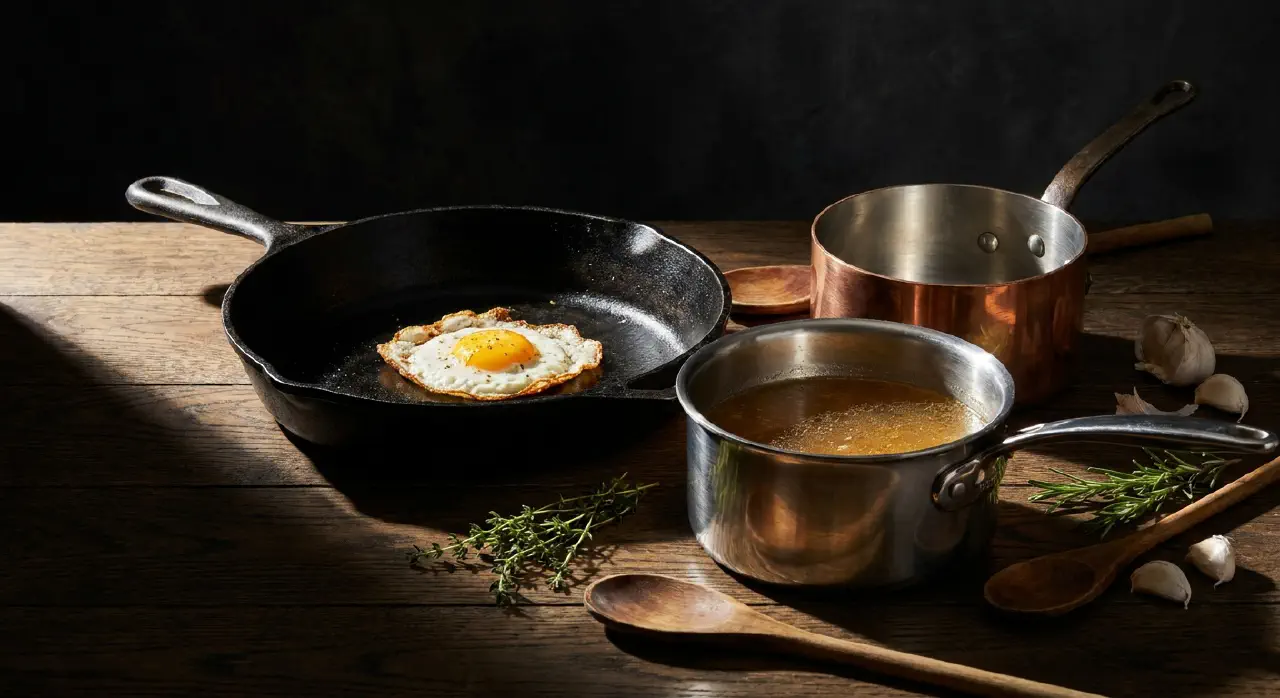
The material a pan is made from determines how it transfers heat to food — how fast it heats, how evenly it distributes energy across its surface, how quickly it responds to temperature changes, and whether it reacts with acidic or alkaline foods. The same electron-mobility mechanism that makes metals good electrical conductors makes them good thermal conductors, which is why all serious cookware is metal. But the metals differ enormously, and each involves tradeoffs between conductivity, reactivity, weight, and cost.
Heat Transfer in Cooking
Heat Transfer in Cooking
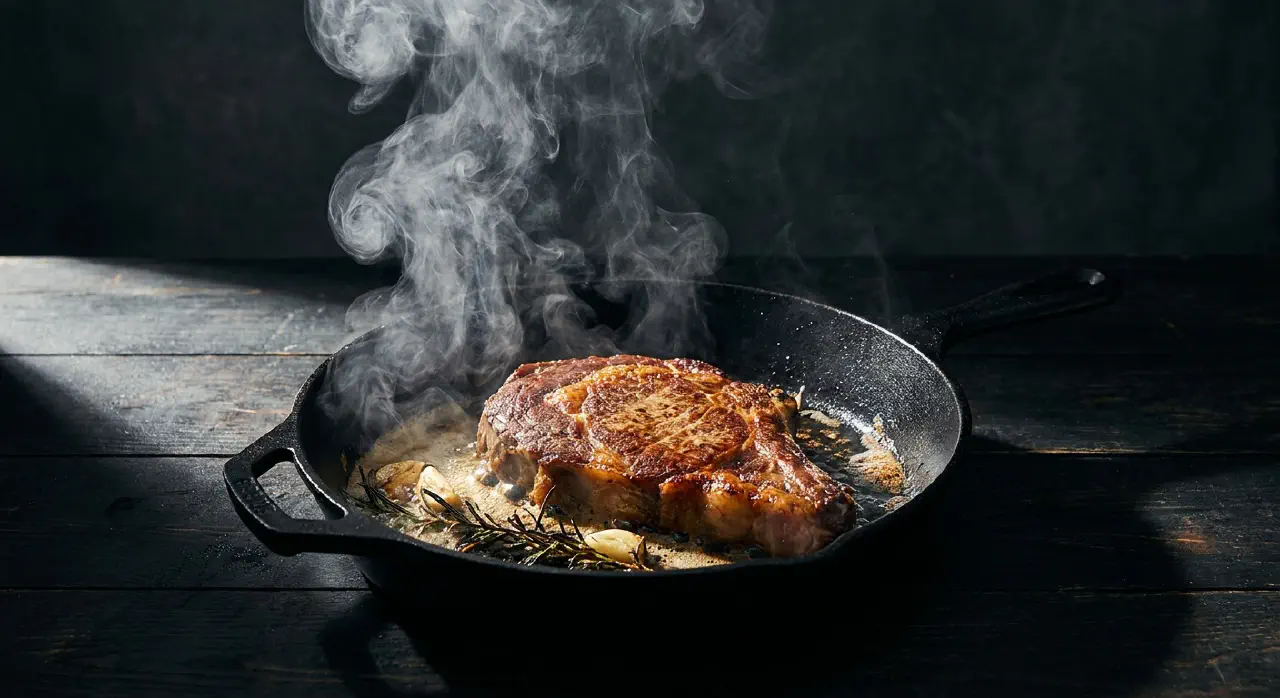
All cooking is heat transfer — getting thermal energy from a source into food. Three physical mechanisms do this work, and every cooking method is a particular combination of them. Understanding the three forms explains why different methods produce different results, why pan material matters, and why heating times vary with food size and shape.
Conduction: direct contact
Thermal energy passes from one particle to a nearby one through collision. The mechanism differs dramatically by material: