Salt
Salt
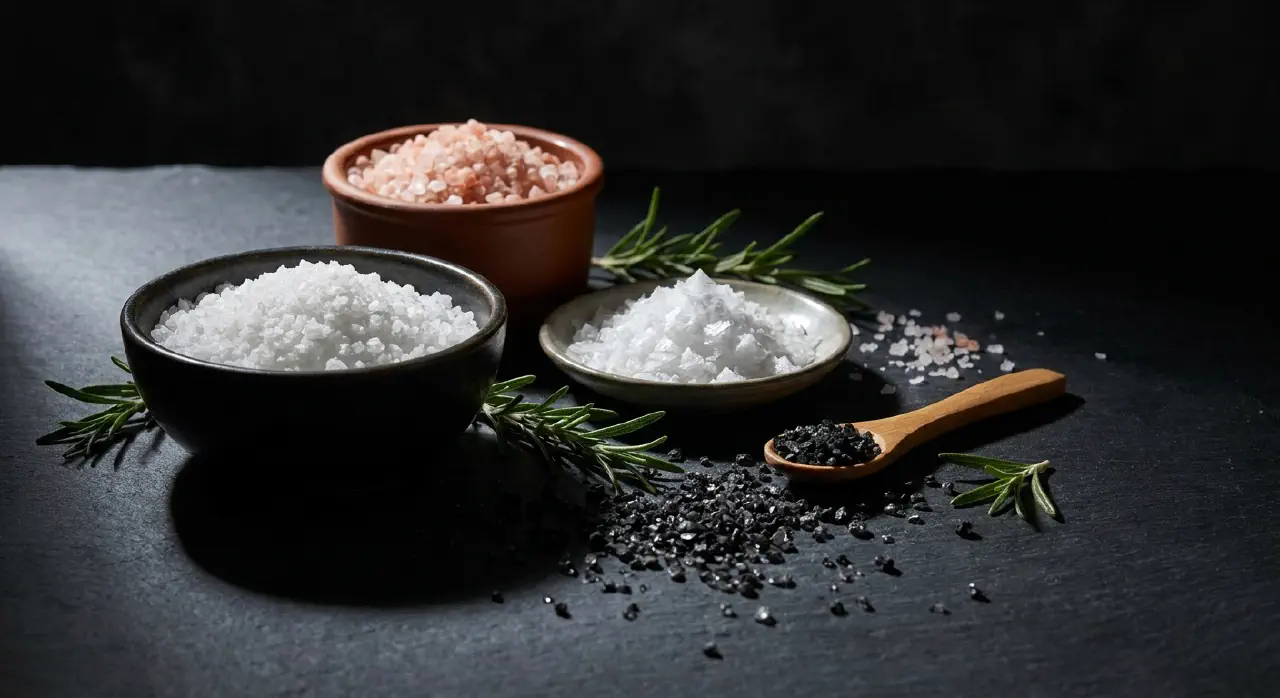
Salt (sodium chloride) is the only mineral we eat in pure form and the most fundamental seasoning in cooking. But its effects extend far beyond taste — salt alters protein behavior, controls water activity, preserves food, and modifies texture in ways that make it one of the most scientifically important ingredients in the kitchen.
Effects on proteins
Salt dissolves into sodium and chloride ions that cluster around charged portions of protein molecules, neutralizing their mutual electrical repulsion. This has two major consequences:
Water in Cooking
Water in Cooking
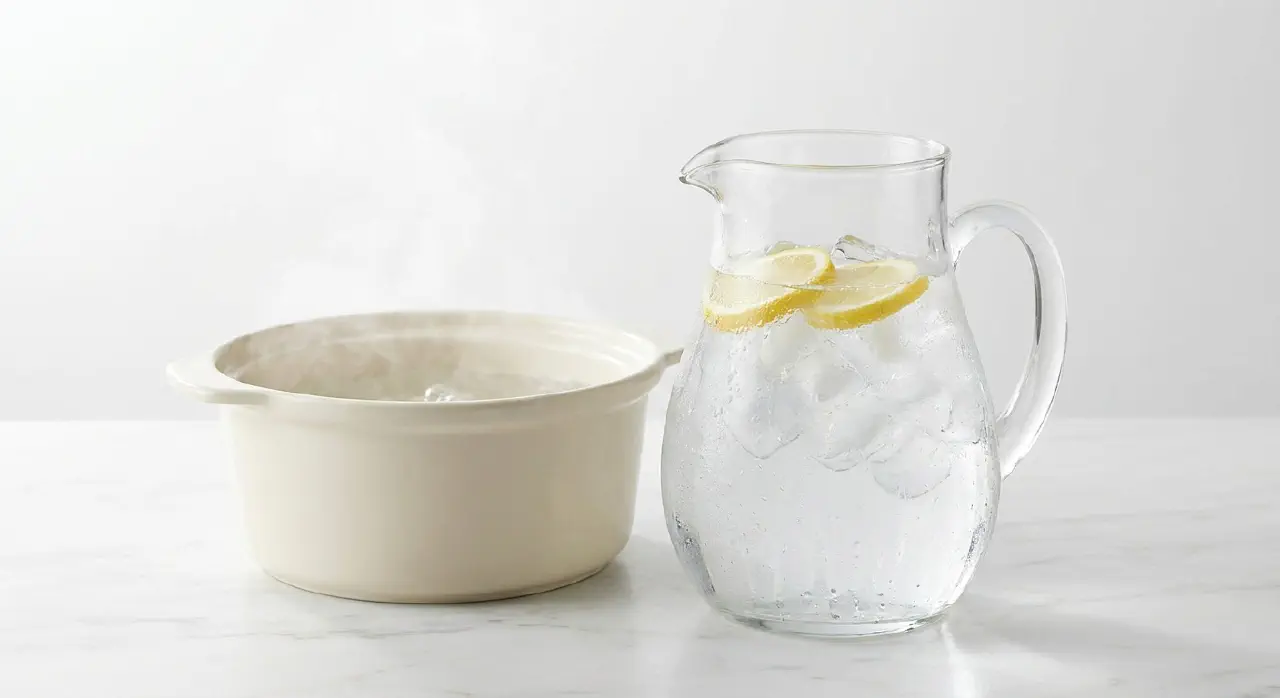
Water is the dominant molecule in nearly all foods — raw meat is ~75% water, fruits and vegetables up to 95%, human bodies ~60%. Its seemingly simple structure (two hydrogens, one oxygen) conceals unusual physical properties that govern almost every aspect of cooking: how food heats, how it freezes, why steam scalds, why salt preserves, and why oil and water won’t mix.
Hydrogen bonding: the master property
Oxygen pulls more strongly on shared electrons than hydrogen does, making water an electrically asymmetrical (polar) molecule — positive at the hydrogen end, negative at the oxygen end. This polarity creates hydrogen bonds: weak electrical attractions between the negative oxygen of one molecule and the positive hydrogen of another. In liquid water, each molecule participates in 1–4 hydrogen bonds at any moment, constantly forming and breaking.