Salt
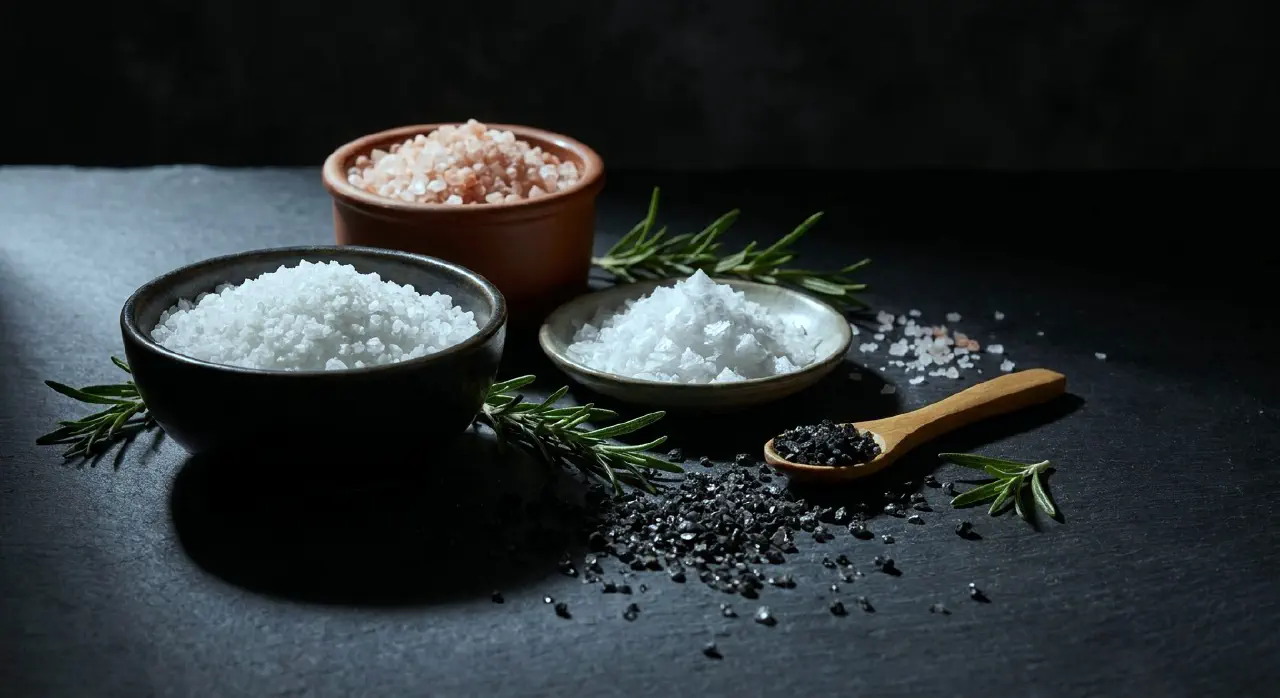
Salt (sodium chloride) is the only mineral we eat in pure form and the most fundamental seasoning in cooking. But its effects extend far beyond taste - salt alters protein behavior, controls water activity, preserves food, and modifies texture in ways that make it one of the most scientifically important ingredients in the kitchen.
Effects on proteins
Salt dissolves into sodium and chloride ions that cluster around charged portions of protein molecules, neutralizing their mutual electrical repulsion. This has two major consequences:
- Proteins coagulate sooner - with their charges neutralized, proteins approach each other more readily.
- But the result is more tender - proteins that bond while still relatively compact form a looser network. This is the same paradox seen with acid: earlier coagulation, gentler texture.
This is why salting eggs before cooking produces creamier scrambled eggs, not tougher ones. The old myth that salt toughens eggs has the mechanism exactly backwards.
In meat, salt dissolves some muscle proteins (particularly myosin), which then act as emulsifiers and gelling agents - the basis of sausage texture and brined meat’s ability to retain moisture during cooking.
Seasoning and flavor enhancement
Salt suppresses bitterness and enhances the perception of other flavors - sweetness, umami, and aromatic compounds all seem more present in properly salted food. This isn’t just masking; salt appears to affect how taste receptors respond to other molecules.
Salting timing matters: Salt needs time to penetrate food and equilibrate. Salting a steak an hour before cooking (or overnight) produces more evenly seasoned meat than salting right before - the salt draws moisture out, dissolves in it, and the brine is reabsorbed.
Preservation
Salt preserves food by lowering water activity - the amount of “free” water available for microbial growth. At high enough concentrations (above ~10%), salt inhibits most spoilage bacteria. This is the mechanism behind salt-cured meats (prosciutto, country ham, salt cod) and fermented vegetables (where salt selects for salt-tolerant lactic acid bacteria while suppressing pathogens).
See also
- eggs - salt’s effect on egg protein coagulation
- protein-denaturation - how salt changes protein behavior
- fermentation-overview - salt’s role in selecting beneficial microbes