Wheat
Wheat
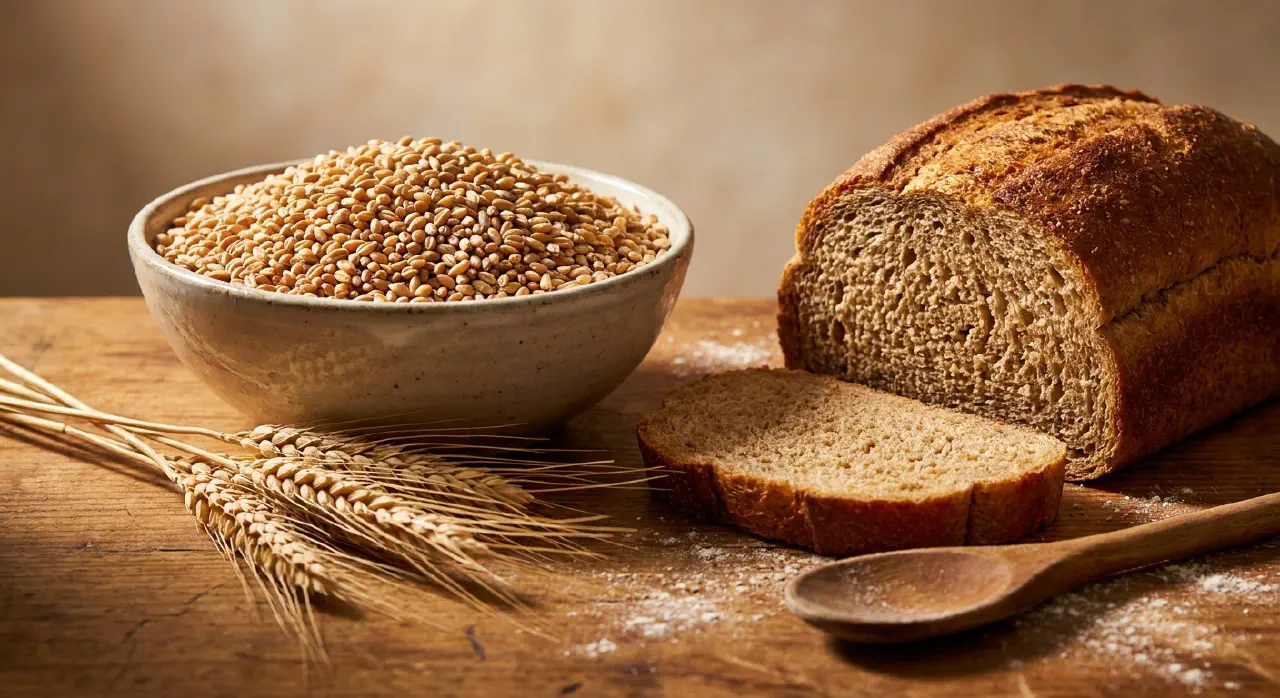
Wheat is the most important cereal in Mediterranean civilization and Western cooking, responsible for leavened bread, pasta, pastry, and a vast range of other preparations. What makes wheat unique is its gluten — a protein network of exceptional elasticity that no other grain can replicate. That elasticity comes from a genetic accident: bread wheat’s six chromosome sets, the result of an unusual hybridization ~8,000 years ago, produced a glutenin protein with uniquely springy bonds.
Wheat Flour
Wheat Flour
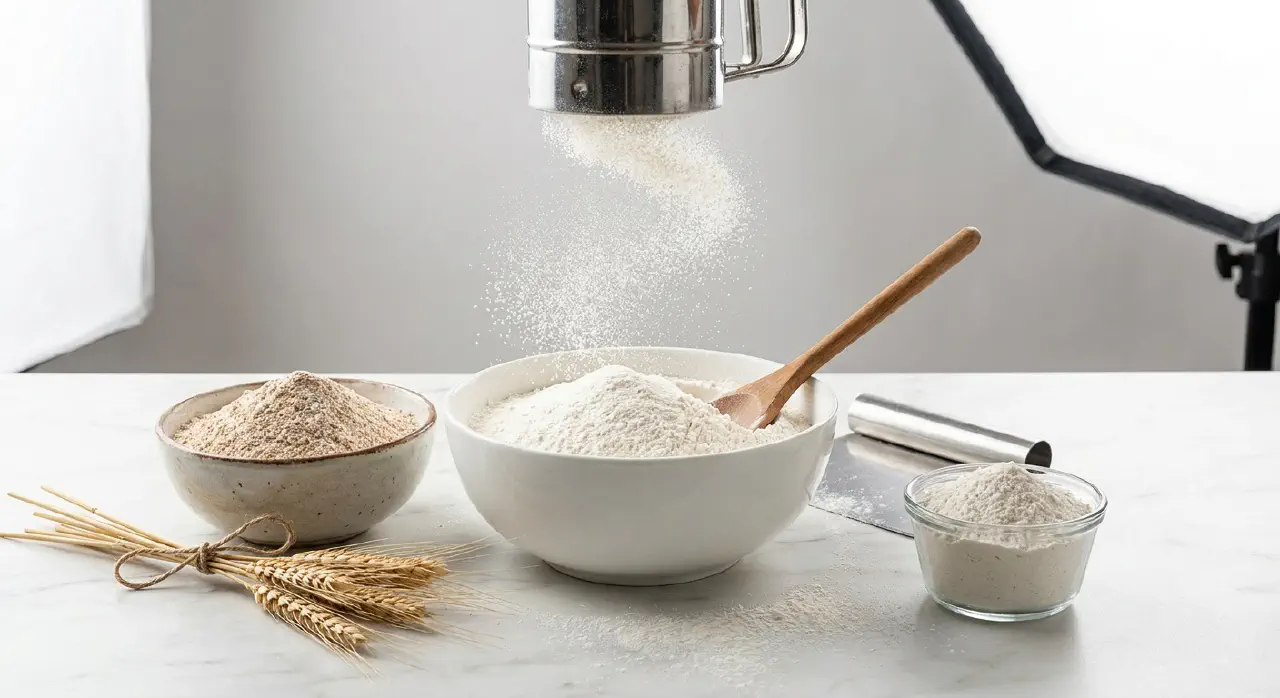
Wheat flour is the most important grain product in Western cooking — the foundation of bread, pastry, pasta, cakes, and thickened sauces. Its unique power comes from gluten, a protein network that no other grain can produce with the same strength and elasticity.
Composition
Flour is primarily starch (~70–75%) and protein (~8–14%), with small amounts of fat, fiber, and minerals. The protein content determines the flour’s character:
- Bread flour: ~12–14% protein. Strong gluten network. Chewy, structured crumb.
- All-purpose flour: ~10–12% protein. Versatile middle ground.
- Cake/pastry flour: ~7–9% protein. Minimal gluten. Tender, delicate crumb.
- Semolina (durum wheat): Very hard, high-protein. Used for dried pasta.
Whole wheat flour retains the bran and germ, adding fiber, fat, and nutrients — but the bran’s sharp particles physically cut gluten strands, producing denser results.