Wheat Flour
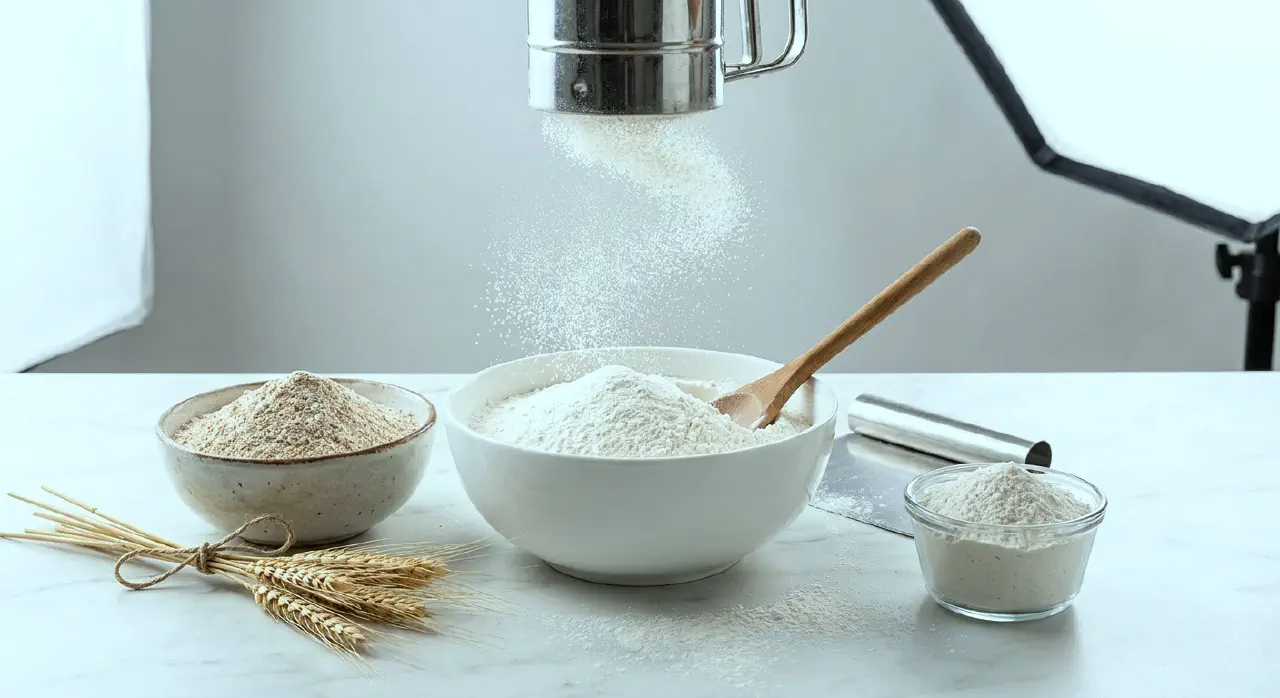
Wheat flour is the most important grain product in Western cooking - the foundation of bread, pastry, pasta, cakes, and thickened sauces. Its unique power comes from gluten, a protein network that no other grain can produce with the same strength and elasticity.
Composition
Flour is primarily starch (~70–75%) and protein (~8–14%), with small amounts of fat, fiber, and minerals. The protein content determines the flour’s character:
- Bread flour: ~12–14% protein. Strong gluten network. Chewy, structured crumb.
- All-purpose flour: ~10–12% protein. Versatile middle ground.
- Cake/pastry flour: ~7–9% protein. Minimal gluten. Tender, delicate crumb.
- Semolina (durum wheat): Very hard, high-protein. Used for dried pasta.
Whole wheat flour retains the bran and germ, adding fiber, fat, and nutrients - but the bran’s sharp particles physically cut gluten strands, producing denser results.
Gluten: the defining feature
Gluten doesn’t exist in flour - it forms when two wheat proteins, glutenin and gliadin, hydrate and bond during mixing. Glutenin provides strength and elasticity (it springs back); gliadin provides extensibility (it stretches without snapping). Together they create a viscoelastic network that can trap gas from yeast fermentation or chemical leavening, giving baked goods their rise and structure.
Gluten development depends on:
- Hydration: No water, no gluten. The proteins must absorb water to unfold and bond.
- Mechanical work: Kneading aligns and cross-links gluten strands, strengthening the network.
- Time: Autolyse (resting hydrated flour before kneading) allows gluten to develop passively.
- Fat and sugar: Both interfere with gluten formation - fat coats proteins, sugar competes for water. This is why enriched doughs (brioche) need more kneading.
Starch’s role
Flour’s starch serves double duty. In baking, gelatinized starch sets the crumb structure as bread bakes - absorbing water released by proteins and forming a rigid framework. In sauces, flour starch (via roux or slurry) thickens by the same mechanism.
Retrogradation - starch molecules rebonding after cooling - is the primary cause of bread staling, not moisture loss.
See also
- gluten-science - full gluten mechanics: glutenin/gliadin, development control, flour type table, aging
- wheat - wheat varieties (einkorn to bread wheat), milling, bulgur, seitan, celiac disease
- seed-biology - amylose vs amylopectin, insoluble grain proteins, cooking principles
- starch-gelatinization - how flour starch thickens sauces and sets crumb structure
- bread-baking - where gluten and starch work together
- pasta-noodles - durum semolina’s role in pasta; soft wheat in egg pasta and Asian noodles
- pastry - how fat distribution in flour controls tenderness and flakiness
- cakes-batters - cake flour’s chlorine-modified starch; starch as primary structure in cakes
- maillard-reaction - flour’s proteins contribute to crust browning